
The roar of a Yamaha R15 is unmistakable, a symphony of precision engineering and sporty ambition that has captivated Indian motorcyclists for over a decade. From its inception, the R15 has been synonymous with accessible performance, razor-sharp handling, and a design language that mirrors its larger R-series siblings. It’s a machine that sparks passion, ignites the desire for spirited riding, and often serves as the gateway for many into the thrilling world of track-focused motorcycling. However, even icons are not immune to the forces of market dynamics and economic shifts. Recently, Yamaha Motor India made an announcement that has reverberated through the enthusiast community: a uniform price hike across its beloved R15 lineup. This adjustment affects all three variants – the formidable R15S, the technologically advanced R15 V4, and the premium R15M – pushing their ex-showroom prices higher by a noticeable margin. For prospective buyers and loyalists alike, the pertinent question arises: at its new price point, does the Yamaha R15 still offer the unparalleled value and thrill that has defined its legacy, or has it edged into territory where competition becomes fiercer than ever? Effective immediately, Yamaha Motor India has implemented a standardized increase of Rs 4,900 across the entire R15 range. This move means that irrespective of the variant you choose, you'll be shelling out close to five thousand rupees more than before. While this might seem like a modest sum in the grand scheme of vehicle purchases, for a segment where every rupee is often scrutinized, it's a significant consideration. Let's delve into the updated price structure: *All prices mentioned are ex-showroom, Delhi, and are subject to change based on location and additional charges.* The Yamaha R15's enduring success stems from its ability to offer a compelling package of performance and style that punches above its weight. While the price hike is uniform, the underlying offerings of each variant remain distinct, catering to different preferences and budgets within the enthusiast spectrum. The R15S essentially carries forward the legacy of the previous generation R15 V3, albeit with a crucial ergonomic revision: a single, stepped seat. This design choice significantly improves pillion comfort, making it a more practical option for those who occasionally carry a passenger. Visually, it retains the sharp lines and aggressive front fairing that defined the V3, still looking contemporary and sporty. Underneath, it employs a traditional telescopic fork, which, while not as visually striking or performance-oriented as the USD unit, offers a compliant ride for everyday commuting and occasional spirited rides. Its appeal lies in offering the proven R15 performance and reliability at a slightly more accessible price point, making it an excellent choice for riders seeking a blend of sportiness and practicality without all the bells and whistles of the V4 or M. The R15 V4 marked a significant leap forward in the series, introducing a host of premium features and a revamped aesthetic. Its most prominent upgrade is the Upside-Down (USD) front fork, which not only enhances the bike's visual appeal with its golden finish but also improves front-end feel and stability, especially during hard braking and cornering. Select variants also benefit from an up-only quickshifter, a feature typically found on much larger and more expensive sportbikes. This allows for clutchless upshifts, providing a smoother and faster acceleration experience, particularly useful on the track or during spirited highway riding. The V4 also sports a more aggressive, sharper design, drawing inspiration directly from Yamaha's flagship R7 and R1 superbikes. It positions itself as the ideal choice for riders who demand modern technology, enhanced dynamics, and a truly contemporary sportbike experience. At the zenith of the R15 range sits the R15M, a variant designed to offer the most sophisticated and exclusive experience. It builds upon the V4's strong foundation by adding a full-colour TFT instrument display, a stark contrast to the V4's monochrome LCD unit. This vibrant display not only looks premium but also offers more information and better readability. Crucially, the quickshifter comes as standard across all R15M variants, eliminating the need to choose specific trims. Furthermore, the R15M distinguishes itself with unique paint schemes, including the iconic MotoGP edition and the R1M-inspired livery, which add an undeniable aura of exclusivity and racing heritage. For the discerning rider who seeks the best of what the R15 platform has to offer in terms of technology, aesthetics, and bragging rights, the R15M remains the undisputed choice, serving as a mini-superbike experience within the 155cc category. Despite their individual distinctions in styling, suspension, and features, all three R15 variants share a common, highly revered powertrain and chassis. Powering the entire lineup is Yamaha's renowned 155cc single-cylinder, liquid-cooled engine. This motor, known for its refinement and free-revving nature, produces a healthy 18.4hp and 14.2Nm of torque. A key technological highlight is Yamaha's Variable Valve Actuation (VVA) system, which ensures a strong surge of power across the entire RPM range, bridging the gap between low-end tractability and top-end performance. Mated to a slick 6-speed gearbox, this engine offers a sublime riding experience, whether navigating city traffic or carving corners on winding roads. The delta box frame, lightweight alloy wheels, and efficient disc braking hardware (with dual-channel ABS as standard) are also consistent across the range, ensuring that the core riding dynamics – the R15's true essence – remain uncompromised, regardless of the variant chosen. In an increasingly competitive and cost-sensitive market like India, any price adjustment, especially upwards, is bound to raise eyebrows and generate discussion. The uniform Rs 4,900 increase across the R15 portfolio prompts an inevitable question: why now, and what does it mean for the consumer? Several factors typically contribute to such price revisions in the automotive industry. Rising input costs are a perpetual challenge. The cost of raw materials like steel, aluminum, and plastics, along with fluctuating global commodity prices, directly impacts manufacturing expenses. Inflationary pressures across the economy also play a role, affecting everything from logistics and labour to energy costs. Furthermore, the automotive sector has been grappling with ongoing supply chain disruptions, which can lead to higher component costs and production bottlenecks. Manufacturers might also factor in increased R&D expenditure, especially after significant upgrades like those seen in the R15 V4 and R15M. Investing in new technologies, design innovations, and compliance with stricter emission norms all add to the overheads. From a strategic perspective, Yamaha might also be subtly repositioning the R15 as an even more premium product within its segment. By gradually increasing prices, they could be aiming to enhance its perceived value and exclusivity, distinguishing it further from more budget-oriented offerings. However, this strategy comes with its own set of challenges and potential negative consequences. \"While the R15's legacy of performance and refinement is undeniable, pushing the price closer to the two-lakh mark for the top-end M variant forces a direct comparison with a broader range of motorcycles, including more powerful 200cc and even some 250cc offerings. At nearly Rs 2 lakh, does the 155cc R15M still deliver an unmatched value proposition, or does it risk alienating price-sensitive buyers looking for sheer cubic capacity and raw power?\" This price hike inevitably brings the R15 into a more direct confrontation with competitors from higher segments. For instance, the KTM RC 200, with its significantly more powerful 199.5cc engine, might start looking like a more attractive proposition for those prioritizing outright performance, even if it comes with its own set of compromises. Similarly, other 200cc sport-tourers and naked bikes from brands like Bajaj, TVS, and Suzuki offer compelling packages that provide greater power and often more commuter-friendly ergonomics at a comparable or slightly lower price point. Yamaha's challenge will be to convince buyers that the R15's refined 155cc engine, superior handling, and premium features still justify its higher cost, despite the availability of larger displacement motorcycles. The \"negative view PR\" here stems from the potential buyer's dilemma: paying near 2-lakh for a 155cc when 200-250cc options are within reach. To aid prospective buyers in their decision-making process, a balanced look at the R15's strengths and weaknesses, especially in light of the new pricing, is crucial: The Yamaha R15 series has long held a special place in the hearts of Indian sportbike enthusiasts, carving out a niche for itself as the quintessential entry-level track machine and a stylish, spirited daily rider. Its blend of cutting-edge technology, striking aesthetics, and Yamaha's legendary reliability has ensured its sustained popularity, selling over 100,000 units in 2023 alone. With the recent price hike of Rs 4,900 across all variants, the R15's ex-showroom prices now range from Rs 1.57 lakh for the R15S to a formidable Rs 1.96 lakh for the R15M. This adjustment, while potentially justifiable due to increasing input costs and inflationary pressures, undoubtedly places the R15 in a more challenging competitive landscape. The R15M, in particular, now nudges dangerously close to the 2-lakh mark, prompting buyers to seriously consider alternatives from the 200cc and even 250cc segments that offer more power and sometimes a similar feature set for a comparable outlay. Despite the higher cost, the core strengths of the R15 remain undiminished. Its 155cc VVA engine is still a benchmark for refinement and performance in its class. The handling dynamics, especially on the V4 and M with their USD forks, continue to offer a level of precision and confidence that few rivals can match. For those who prioritize a lightweight, agile, and technically advanced sportbike with a strong racing pedigree and the promise of Yamaha's build quality, the R15 still presents a compelling case. Ultimately, the decision for prospective buyers will come down to a nuanced assessment of their priorities. If sheer cubic capacity and raw power are paramount, the higher price points of the R15 might lead them elsewhere. However, for those who value the R15's unique blend of refinement, superior handling, advanced features (on V4/M), and an iconic design that truly evokes the spirit of Yamaha's R-series, the premium might still be a worthwhile investment. The R15's journey continues, and while the road ahead is a little pricier, its allure for the passionate rider remains as strong as ever.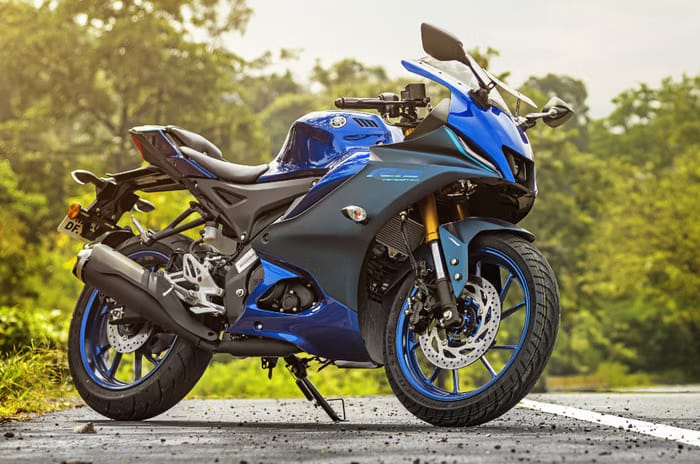
Yamaha R15 Lineup Gets a Price Bump: Is the Iconic Sportbike Still Your Top Pick?
The Shifting Landscape: Yamaha R15 Price Adjustment Details
Unpacking the R15 Lineup: Features, Evolution, and Value Proposition
Yamaha R15S: The Accessible Icon
Yamaha R15 V4: The Modern Evolution
Yamaha R15M: The Pinnacle of Premium Performance
The Heart of the Beast: Common Denominators
Navigating the Market Dynamics: Why the Price Hike?
Yamaha R15 Lineup: A Balanced Perspective
Pros:
Cons:
Conclusion: The R15's Enduring Appeal in a Changing Market