
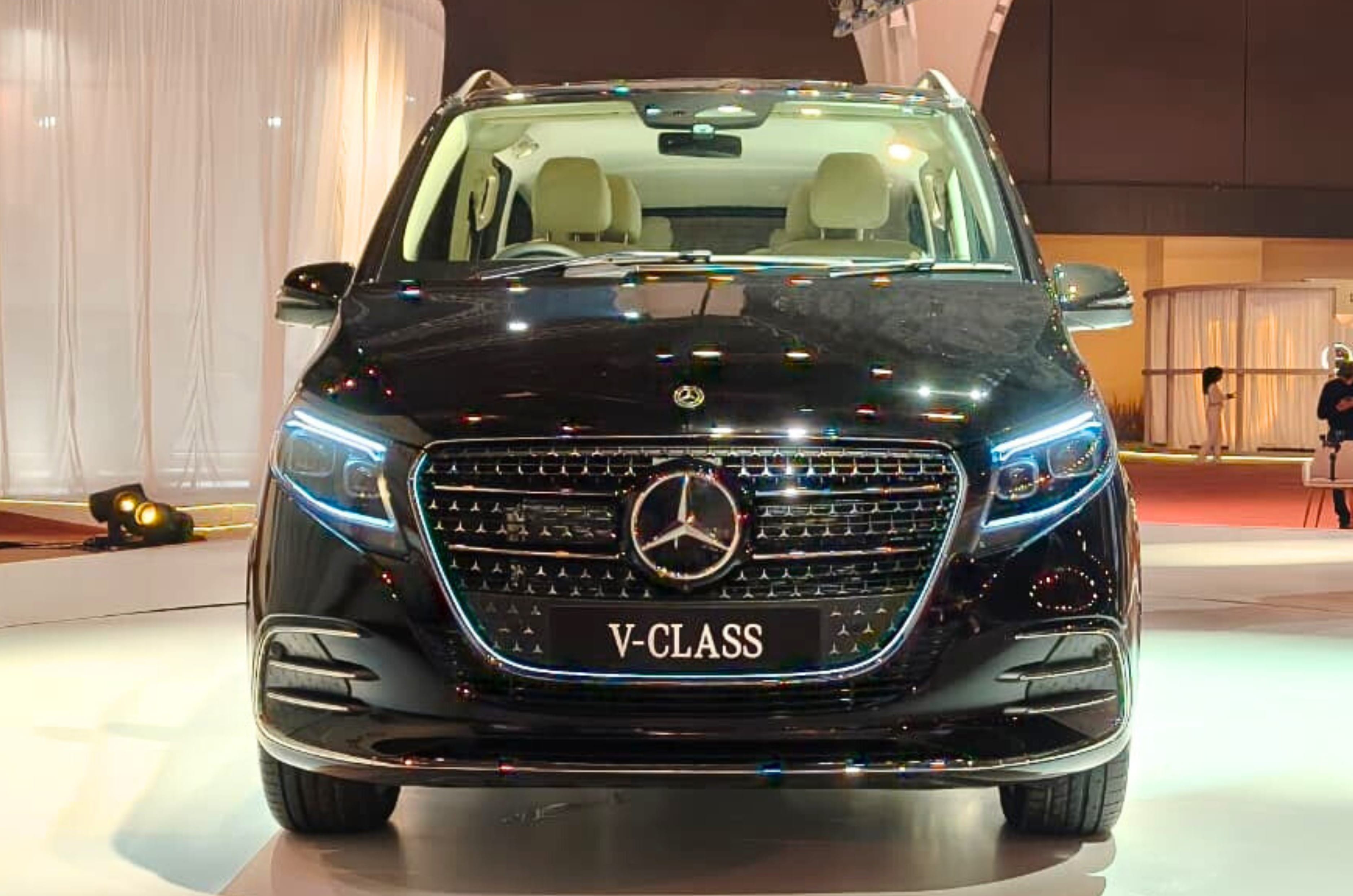
In an automotive landscape increasingly dominated by SUVs, Mercedes-Benz is making a bold, calculated move in India, reintroducing the V-Class, a vehicle designed not for the thrill of the track, but for the pinnacle of executive comfort and familial luxury on the move. Priced at an assertive Rs 1.4 crore, this isn't merely an MPV; it's a statement, a mobile sanctuary aimed at carving out a niche in a market that, until recently, barely acknowledged the concept of a high-end van. But can a luxury van truly captivate the hearts and wallets of India's discerning elite, or is Mercedes-Benz venturing into an aspirationally rich, yet volume-scarce, territory? Let's delve deep into the strategy, the vehicle, and the potential pitfalls and triumphs awaiting the V-Class.
Mercedes-Benz India's decision to reintroduce the V-Class marks a significant expansion into the luxury MPV segment, a territory previously considered nascent but now perceived as ripe for disruption. The German luxury marque isn't chasing raw sales figures; rather, it's aiming to broaden the addressable luxury market itself. Managing Director and CEO Santosh Iyer articulates this vision succinctly: \"There is a clear white space in the van market.\" This isn't just marketing rhetoric; it's a strategic recognition of unmet demand for premium, spacious, and versatile mobility solutions that transcend the traditional sedan or SUV offerings.
The V-Class previously graced Indian roads in 2019, but according to Iyer, the market wasn't quite ready then. Fast forward to today, and the landscape has evolved significantly. India's affluent class is growing, and their automotive needs are diversifying beyond the conventional. The \"vacant space\" Iyer refers to sits squarely between the Rs 1 crore and Rs 2 crore price brackets, a sweet spot where luxury, practicality, and brand prestige converge. The decision to localize assembly, moving from a Completely Built Unit (CBU) import model to domestic production later this year, underscores Mercedes' long-term commitment and strategy to penetrate this segment deeply. This not only helps manage the sticker price but also potentially improves parts availability and service network efficiency, crucial for a high-end product.
The V-Class isn't envisioned as the sole vehicle in a high-net-worth individual's garage. Instead, it’s positioned as a strategic addition – a second or third car – catering to specific, yet frequent, needs. Imagine seamless airport transfers, luxurious weekend getaways with family, or even a sophisticated mobile office for executives on the go. This positioning acknowledges the evolving multi-car ownership trend among the affluent, where each vehicle serves a distinct purpose. It offers a unique blend of comfort, space, and prestige that traditional sedans or SUVs might struggle to match for group travel or specific luxury requirements.
In the burgeoning luxury MPV space, the V-Class will find itself nestled between established players like the Toyota Vellfire and the even more exclusive Lexus LM. While the Vellfire has carved a respectable niche with its opulent interiors and reliable Toyota badge, and the Lexus LM elevates the concept further with ultra-premium appointments, the V-Class aims to differentiate itself with classic Mercedes-Benz refinement, a distinct driving dynamic, and a heritage of luxury transport. The key challenge for Mercedes will be to convince buyers that its \"van\" offers a superior experience that justifies its premium over, for instance, a fully-loaded luxury SUV.
The reintroduction of the V-Class is not an isolated event but a calculated move aligning with Mercedes-Benz's broader global and local strategy of strengthening its top-end portfolio. This strategy has proven remarkably successful in India, where luxury buyers are increasingly gravitating towards higher-value models. Last year, one in four Mercedes-Benz cars sold in India came from its top-end segment, which witnessed an impressive 11 percent growth. This focus on higher-margin vehicles has significantly impacted the company's financial health, driving revenue growth even as overall sales volumes might fluctuate.
Despite a slight dip in overall sales to 19,007 units in 2025 (down around 2 percent year-on-year), Mercedes-Benz India recorded its highest-ever revenue. This paradoxical outcome is a direct consequence of a richer product mix, where the average selling price has climbed to approximately Rs 1 crore. Iyer emphasized, \"Our average selling price has now gone up to around Rs 1 crore. That clearly shows the kind of mix we are selling.\" This deliberate shift towards premium offerings ensures not just profitability but also reinforces the brand's exclusive image and high residual values.
Looking ahead, Mercedes-Benz anticipates single-digit growth this year, underpinned by an ambitious product offensive. The company plans to launch 12 new models across internal combustion and electric powertrains, maintaining a strong focus on its core and top-end segments. This strategy prioritizes sustainable growth and brand protection over chasing sheer volume, which can often dilute brand exclusivity and erode residual values. The V-Class perfectly embodies this philosophy, targeting a niche but highly profitable segment.
The Mercedes-Benz V-Class is meticulously crafted as a chauffeur-focused luxury MPV, placing paramount importance on rear-seat comfort, privacy, and an uncompromised travel experience. Its feature list reads like a menu from a five-star hotel. Plush, multi-adjustable captain seats offer unparalleled support and space, ensuring passengers arrive refreshed. The innovative Airmatic suspension system adapts to road conditions, delivering a magic carpet ride quality that isolates occupants from the imperfections of Indian roads. Heat-insulating glass and rear blinds provide optimal climate control and privacy, while the immersive 15-speaker Burmester sound system transforms the cabin into a private concert hall, perfect for relaxation or focused work.
Safety, a hallmark of Mercedes-Benz, is not overlooked. The V-Class comes equipped with seven airbags and a suite of advanced driver assistance features, including Active Lane Assist (which helps keep the vehicle centered in its lane) and DISTRONIC (Mercedes' adaptive cruise control system that maintains a set distance from the vehicle ahead). These technologies work in concert to enhance both active and passive safety, providing peace of mind for both the driver and the precious cargo in the rear.
For the Indian market, the V-Class is offered with two robust engine choices. The petrol variant generates a healthy 231hp and benefits from a mild-hybrid assist system, optimizing efficiency and responsiveness. The diesel option delivers 237hp, known for its strong torque delivery and excellent highway cruising capability, a preferred choice for many Indian luxury buyers covering long distances. These powertrains are designed to provide effortless performance befitting a luxury vehicle, ensuring smooth acceleration and refined operation.
While global automotive trends are rapidly shifting towards electrification, Mercedes-Benz India has adopted a cautious approach for the V-Class. Although electric vans are under development globally, there are no immediate plans to introduce a fully electric V-Class in India. \"We will evaluate once the global car is launched. Nothing for this year,\" affirmed Santosh Iyer. Similarly, a plug-in hybrid variant is not currently under consideration. This decision, while pragmatic given India's evolving EV charging infrastructure and the current preference for ICE in luxury segments, might be viewed as a missed opportunity by environmentally conscious buyers or early adopters of electric mobility. It suggests Mercedes is prioritizing immediate market acceptance and established preferences over pushing bleeding-edge technology in this specific segment for now, potentially leaving some room for competitors to offer electrified luxury MPV alternatives in the future.
Unmatched Luxury and Comfort: With features like Airmatic suspension, captain seats, and a premium sound system, it offers a truly first-class travel experience. Spacious and Versatile Interior: Ideal for families, executive transport, or even as a mobile office, offering flexibility that sedans and SUVs often lack. Brand Prestige and Safety: Carries the revered Mercedes-Benz badge, synonymous with luxury, engineering excellence, and comprehensive safety features. Benefits of Local Assembly: Eventual local production aims to optimize pricing, service, and potentially lead to better customization options for the Indian market. Strategic Market Positioning: Fills a 'white space' for ultra-luxury group mobility, catering to a specific, affluent demographic. Exorbitant Price Tag: At Rs 1.4 crore, it's a significant investment, limiting its appeal to a very niche segment of buyers. Many might question paying this much for what is essentially a \"van,\" irrespective of its luxury. Niche Market Acceptance: The \"luxury van\" concept, while growing, still faces cultural resistance in India where sedans and SUVs traditionally signify status. No Immediate Electrification Option: The absence of an EV or PHEV variant might deter environmentally conscious buyers or those seeking future-proof technology, falling behind some global trends. Intense Competition: Faces formidable rivals like the Toyota Vellfire and Lexus LM, which are well-established in their own right and offer compelling luxury propositions. Perceived as a Commercial Vehicle: Despite its luxury, some potential buyers might still associate its body style with commercial vans, a perception challenge Mercedes-Benz will need to overcome.
The re-launch of the Mercedes-Benz V-Class in India is more than just a new vehicle introduction; it's a strategic declaration by the German luxury giant. It underscores Mercedes-Benz's unwavering confidence in the discerning tastes of India's affluent consumers and its commitment to exploring every facet of the luxury mobility spectrum. By targeting \"triple-digit annual volumes\" and backing it with local assembly, the company is making a calculated bet on the maturity of the Indian luxury market and its readiness to embrace a truly high-end MPV.
While the V-Class arrives with an undeniable aura of luxury, unparalleled comfort, and the prestige of the three-pointed star, its journey won't be without challenges. The steep price point, the cultural perception of vans, and the absence of immediate electrification options present hurdles that Mercedes-Benz will need to expertly navigate. However, by positioning it as an indispensable \"second or third car\" for unique luxury needs and integrating it into a broader strategy of focusing on high-margin, top-end models, Mercedes-Benz aims to not just sell cars, but to define a new segment of opulent, spacious travel. As India's luxury market continues to evolve, the V-Class is poised to play a crucial role, proving that true luxury isn't confined to traditional segments but is defined by an unparalleled experience, wherever the road may lead. The V-Class isn't merely an option; it's a statement about the expanding horizons of luxury in India.
Mercedes-Benz V-Class: Redefining Luxury Mobility for India's Elite – Is This MPV Worth Its Hefty Price Tag?
Mercedes-Benz V-Class: A Strategic Re-Entry into India's Luxury MPV Space
A Second or Third Car: The Modern Affluent Lifestyle Enabler

A Pillar of Mercedes-Benz's Top-End Strategy in India
Mercedes-Benz V-Class: Features, Performance, and the Electrification Question


Powertrain Options: Internal Combustion Takes the Lead, Electrification on Hold
Pros and Cons of the Mercedes-Benz V-Class in India
Pros
Cons
Conclusion: A Bold Gamble for the Future of Indian Luxury Mobility