
In the hyper-competitive arena of global automotive manufacturing, India stands as a unique paradox: a market of immense potential, yet notoriously challenging to conquer. For Toyota, a titan revered worldwide for its engineering prowess, bulletproof reliability, and pioneering hybrid technology, India has proven to be an enigma – a land where its customary strategies have often needed significant recalibration. While globally it is a leader, in India, Toyota Kirloskar Motor (TKM) often finds itself playing catch-up in terms of sheer market volume. This isn't for a lack of effort, but rather a testament to the complex dynamics of the Indian consumer.
The narrative of Toyota in India is a fascinating study in adaptation, strategic partnerships, and the relentless pursuit of relevance in a landscape dominated by value-conscious buyers and aggressive domestic players. From its initial foray focusing on premium segments to its controversial yet pragmatic alliance with Maruti Suzuki, Toyota's \"India game plan\" is a multi-faceted approach aimed at cracking the code of one of the world's fastest-growing automotive markets. But is this evolving strategy truly a masterstroke setting them up for future dominance, or is it a series of calculated risks that could still miss the mark? Let's take a deep dive into the intricacies of Toyota's Indian journey, dissecting its strategies, challenges, and the road ahead.
India's automotive market defies easy categorization. It's a land where fuel efficiency is paramount, sticker price sensitivity dictates buying decisions, and the compact segment reigns supreme. Consumers here demand a delicate balance of affordability, practicality, resale value, and robust service networks. Unlike developed markets where brand loyalty often drives repeat purchases in the same segment, Indian buyers are highly aspirational, often leapfrogging segments as their economic fortunes improve. This creates a highly fluid and competitive environment.
For decades, Toyota's global reputation was built on its premium offerings, unparalleled quality, and advanced, albeit pricier, technologies. While models like the Innova Crysta and Fortuner have achieved cult status and segment leadership due to their bulletproof reliability and strong resale value, they cater to a niche, albeit profitable, segment. The challenge for Toyota has always been to penetrate the high-volume, entry-level and mid-segment markets, which are dominated by local giants like Maruti Suzuki and Tata Motors, and aggressive foreign players like Hyundai and Kia.
Historically, Toyota's attempts at smaller, mass-market cars in India, such as the Etios and Liva, met with lukewarm success. While competent, they often failed to capture the imagination of Indian buyers who prioritize features, modern design, and sometimes, even perceived prestige over raw reliability in that price bracket. This experience underscored a crucial lesson: what works in other global markets doesn't automatically translate to success in India. The emphasis shifted from merely offering reliable cars to understanding the nuances of Indian consumer desires, which often include a generous feature list, stylish aesthetics, and a competitive price point, all while maintaining low running costs. The Indian customer, despite budget constraints, often seeks a \"premium\" experience, even if it's within an affordable package.
Recognizing the uphill battle of developing India-specific models from scratch for every segment, Toyota adopted a two-pronged strategy: leveraging a strategic partnership and simultaneously strengthening its core independent offerings.
Perhaps the most talked-about aspect of Toyota's recent strategy has been its global partnership with Maruti Suzuki. This collaboration led to badge-engineered products like the Glanza (based on the Baleno), Urban Cruiser (based on the Vitara Brezza), and more recently, the Urban Cruiser Hyryder and Grand Vitara (developed jointly).
Concurrently, Toyota has continued to invest in its independent offerings, particularly in segments where its brand strength is undisputed. The new Innova HyCross, for example, is a testament to Toyota's commitment to bringing advanced, self-developed products to India. It features strong hybrid technology, a monocoque chassis, and a host of modern features, positioning it as a more refined, fuel-efficient, and premium MPV option.
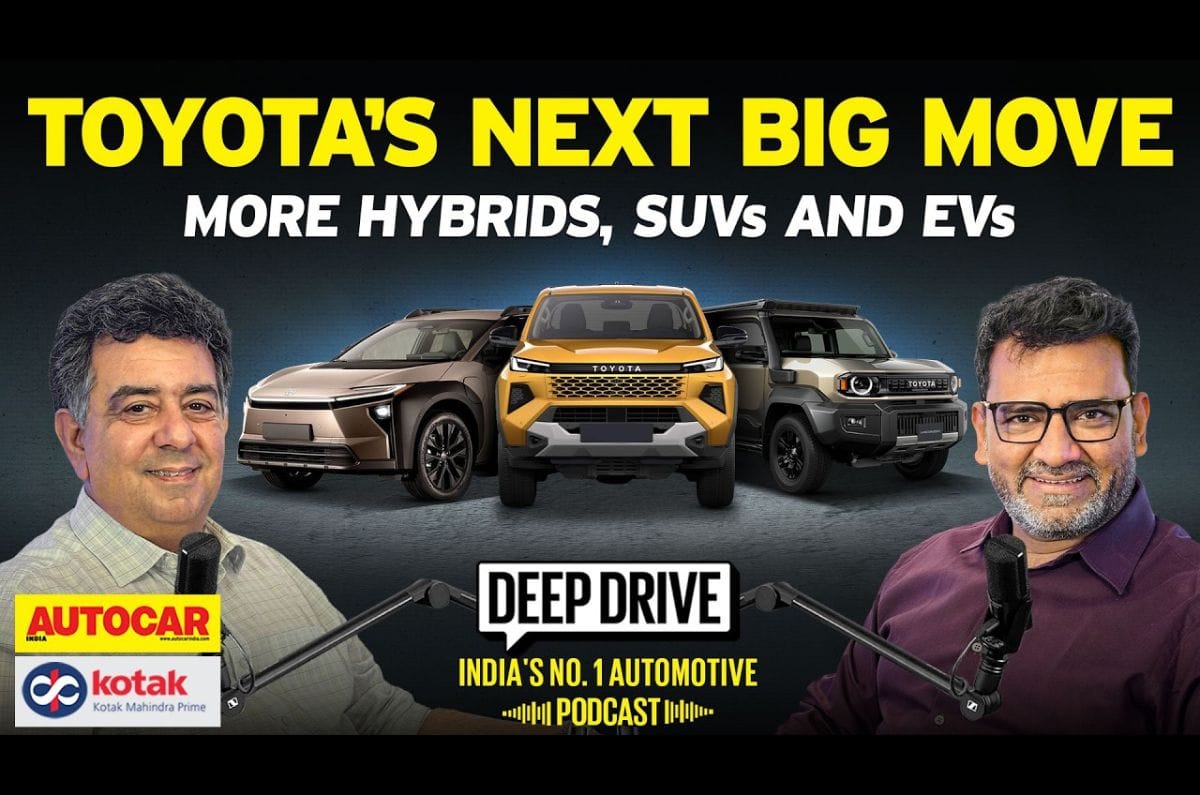
Toyota's global leadership in hybrid technology has become a cornerstone of its India strategy. While pure electric vehicles (EVs) are still in nascent stages of adoption due to infrastructure and cost concerns, strong hybrids offer a practical bridge. They provide significant fuel efficiency benefits without range anxiety, making them an attractive proposition for Indian consumers. Models like the Camry Hybrid, Hyryder Hybrid, and Innova HyCross showcase this commitment. Toyota believes that hybrids, especially locally manufactured ones, are the most sensible immediate step towards decarbonization for India, offering a better real-world environmental impact than early-stage EVs relying on grid electricity.
The future of the Indian automotive market is undeniably electric, but the pace and path of this transition remain subjects of intense debate. Toyota, while a pioneer in electrification with its hybrids, has been perceived by some as slow to embrace pure Battery Electric Vehicles (BEVs) globally, and even more so in India.
Toyota's cautious approach to BEVs in India stems from practical considerations: the lack of robust charging infrastructure, the higher upfront cost of EVs, and the current reliance on thermal power for electricity generation. Their argument is that a well-developed hybrid ecosystem, with strong local manufacturing and supply chains, offers a more immediate and sustainable reduction in carbon footprint compared to importing expensive BEV components and relying on a nascent charging network. This pragmatic stance, however, has drawn criticism from those who believe Toyota should be more aggressive in introducing competitive BEV offerings to capture early adopters and shape the future market. As competitors like Tata Motors and Mahindra push aggressively into the EV space with diverse portfolios, Toyota risks being left behind in the pure-electric race.
A critical aspect of Toyota's long-term vision is deeper localization. This involves increasing the percentage of locally sourced components, which helps reduce costs, hedge against currency fluctuations, and make products more competitive. Furthermore, India is increasingly being viewed not just as a domestic market, but as a potential export hub, especially for developing markets in Africa and ASEAN regions. By localizing production and integrating India into its global supply chain, Toyota aims to leverage India's cost efficiencies and skilled workforce.
The challenge, however, lies in scaling this localization to truly mass-market levels without compromising Toyota's legendary quality standards. This requires significant investment in vendor development, R&D, and manufacturing capabilities within India, an area where some critics argue Toyota has been more conservative compared to its peers.
To fully understand the potential outcomes of Toyota's current strategy, it's essential to weigh its strengths against its weaknesses and the inherent risks.
Toyota's India game plan is a complex tapestry woven with pragmatism, patience, and a deep understanding of long-term automotive trends. It's a calculated gamble designed to navigate a market that has historically resisted conventional approaches. The partnership with Maruti Suzuki provides immediate market access and addresses the volume challenge, while the independent focus on hybrids and premium segments leverages Toyota's core strengths and global technological leadership.
However, the path is fraught with challenges. The perception of value, the rapid shift towards electrification, and intense competition from players far more entrenched in the mass-market segments mean Toyota cannot afford to rest on its laurels. The criticism around rebadged products and the slower adoption of pure EVs represent genuine concerns that Toyota must address, not just through technology, but through compelling communication and competitive product offerings that resonate with the evolving Indian buyer.
Ultimately, Toyota's success in India will hinge on its ability to strike a delicate balance: maintaining its revered QDR standards, aggressively localizing to make its products more affordable, continuing its hybrid push, and critically, developing or adapting compelling pure EV products that specifically cater to Indian tastes and infrastructure realities. It's not just about selling cars; it's about winning the hearts and minds of a truly discerning and diverse consumer base. Only time will tell if this carefully crafted strategy will culminate in a resounding victory for the Japanese automotive giant in the vibrant, yet volatile, Indian market. The stakes are high, but for a company of Toyota's stature, the potential rewards are equally immense.
Toyota's India Odyssey: Masterstroke or Misfire in the World's Toughest Auto Market?
The Indian Conundrum: Decoding a Market Like No Other
Toyota's Multi-pronged Approach: From Strategic Alliance to Independent Innovation
The Maruti Suzuki Partnership: A Necessary Evil or a Stroke of Genius?
Strengthening Core Offerings and Hybrid Focus: The Independent Path
The Road Ahead: Electrification, Localization, and the Quest for Market Share
Navigating the EV Landscape
Localization and Export Hub Aspirations
Toyota's India Game Plan: Pros & Cons
The Verdict: A Calculated Gamble with High Stakes