VinFast VF7 AWD vs. Tata Harrier EV AWD: A High-Voltage Performance Showdown in India's Electric SUV Arena
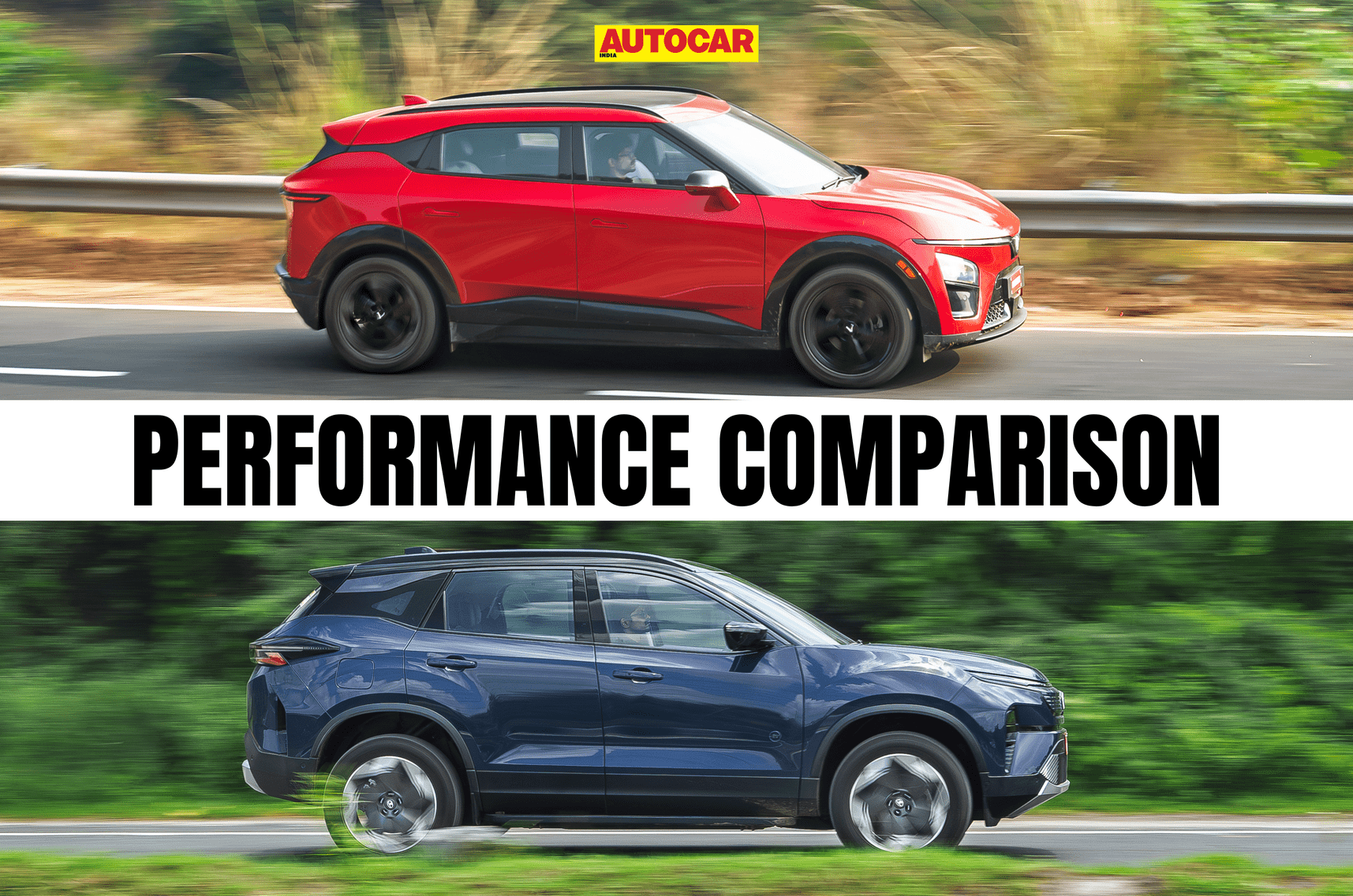
The Indian automotive landscape is undergoing an electrifying transformation, with a rapid influx of sophisticated Electric Vehicles (EVs) challenging conventional perceptions of mobility. In this fiercely competitive mid-size electric SUV segment, two formidable contenders have emerged: the homegrown Tata Harrier EV and the ambitious Vietnamese entrant, VinFast VF7. Launched respectively in June 2025 and April 2026, both promise thrilling performance and sustainable driving. But beneath their stylish exteriors and advanced features lies a fascinating dichotomy in their engineering philosophies and real-world capabilities. Our comprehensive testing of the top-spec all-wheel-drive (AWD) variants uncovers which electric SUV truly holds the performance edge and why, delving into the nuances that separate these electrifying rivals. For a full breakdown of specifications, features, and pricing, be sure to explore our in-depth VF7 vs Harrier EV comparison.
Engineering Philosophies: Dedicated EV vs. Adapted Architecture
The foundation upon which an electric vehicle is built often dictates its inherent strengths and limitations. Here, the Tata Harrier EV and VinFast VF7 represent two distinct approaches. The Harrier EV leverages a heavily modified version of the OMEGA (Optimal Modular Efficient Global Advanced) architecture, which underpins its combustion-powered counterpart. This strategy allows for quicker development cycles and cost efficiencies by utilizing existing production lines and supply chains. However, it can also present compromises in terms of optimal battery packaging, weight distribution, and interior space utilization, as the platform was not conceived with a large battery pack and electric motors as its primary design brief.
In stark contrast, the VinFast VF7 is built on a purpose-built, dedicated EV platform. This \"skateboard\" architecture, designed from the ground up for electric propulsion, offers numerous advantages. It allows for a flat floor, maximizing interior room, and a lower center of gravity due to underfloor battery placement, which benefits handling and stability. Furthermore, dedicated EV platforms often facilitate better crash structures for EV-specific components and can integrate advanced driver-assistance systems (ADAS) more seamlessly. This fundamental difference in their underlying architecture sets the stage for many of the performance discrepancies we observed.
Power Play: Decoding the Specifications & Performance Metrics
At the heart of any EV comparison lies the raw data—the specifications that translate into on-road character. While both the VinFast VF7 AWD and Tata Harrier EV QWD (Tata's nomenclature for AWD) are dual-motor setups, their power delivery and overall heft create noticeable differences.
The Harrier EV Has the Larger Battery, But the VF7 Has More Power
VinFast VF7 AWD vs Tata Harrier EV AWD: Specifications
| |
VinFast VF7 AWD |
Tata Harrier EV QWD |
| Battery capacity (kWh) |
70 |
75 |
| Electric motor setup |
Dual |
Dual |
| Power (hp) |
353 |
313 |
| Torque (Nm) |
500 |
504 |
| Kerb weight (kg) |
2,218 |
2,335 |
| Power-to-weight (hp/tonne) |
159.1 |
134 |
| Torque-to-weight (Nm/tonne) |
225.4 |
215.8 |
| Claimed 0-100kph time (seconds) |
5.8 |
6.3 |
| ARAI range (km) |
510 |
622 |
While the Tata Harrier EV QWD boasts a 5kWh larger battery pack (75 kWh vs. 70 kWh), the VinFast VF7 AWD counters with a significant advantage in raw power, fielding an impressive 353 hp compared to the Harrier EV's 313 hp. More critically, the VF7 is a lighter vehicle, tipping the scales at 2,218 kg, which is 117 kg less than the Harrier EV's 2,335 kg. This combination of higher power and lower weight translates directly into superior power-to-weight and torque-to-weight ratios for the VF7 (159.1 hp/tonne and 225.4 Nm/tonne respectively) over the Harrier EV (134 hp/tonne and 215.8 Nm/tonne).
The consequence? VinFast claims its VF7 AWD can sprint from 0-100 kph half a second quicker than the Tata Harrier EV. However, a larger battery typically implies a greater range. Indeed, the Harrier EV boasts a significantly higher ARAI-certified range of 622 km compared to the VF7's 510 km. This highlights an interesting trade-off: explosive acceleration versus extended range. But how do these claimed figures hold up under real-world scrutiny? Our instrumented tests provide the definitive answer.
The Raw Data: Acceleration Timings Unveiled
The true measure of an EV's performance often comes down to its ability to convert instant torque into forward motion. Our tests reveal a clear hierarchy in acceleration.
VinFast VF7 AWD vs Tata Harrier EV AWD: Acceleration timings (seconds)
| |
VinFast VF7 AWD |
Tata Harrier EV QWD |
| 0-20kph |
1.11 |
1.26 |
| 0-40kph |
2.05 |
2.43 |
| 0-60kph |
3.03 |
3.62 |
| 0-80kph |
4.30 |
4.93 |
| 0-100kph |
6.03 |
6.74 |
| 0-120kph |
8.30 |
9.19 |
Our acceleration tests corroborate the theoretical advantage of the VinFast VF7. While both EVs demonstrate impressive initial thrust, accelerating with comparable intensity up to 40 kph, the VF7’s superior power-to-weight ratio begins to truly assert itself beyond this point. The VF7 AWD breaches the 100 kph mark in a brisk 6.03 seconds, a significant 0.71 seconds quicker than the Tata Harrier EV’s 6.74 seconds. This gap further widens to 0.89 seconds by the time both vehicles reach 120 kph, underscoring the VF7's sustained performance advantage at higher speeds.
During our rigorous testing, we noted a tendency for some tire spin in the VF7 when launching it hard, indicating the immense power being put down and perhaps a less conservative tuning of the traction control system. Conversely, the Harrier EV, with its non-defeatable traction control, maintained composure and launched without any drama, albeit with slightly less urgency. This speaks to different engineering priorities: raw, unbridled performance for VinFast versus a more controlled, accessible power delivery for Tata.
Real-World Usability: Rolling Acceleration Tests
Beyond standing starts, an EV’s ability to accelerate quickly from a rolling speed is paramount for real-world driving, especially for swift overtakes on highways or navigating urban traffic with confidence.
VinFast VF7 AWD vs Tata Harrier EV AWD: Rolling acceleration timings (seconds)
| Rolling acceleration tests |
VinFast VF7 AWD |
Tata Harrier EV QWD |
| 20-80kph (in kickdown) |
3.16 |
3.89 |
| 40-100kph (in kickdown) |
3.95 |
4.32 |
The narrative of VinFast's performance supremacy continues into the rolling acceleration tests. The VF7 AWD demonstrates superior urgency in both the 20-80 kph and 40-100 kph kickdown sprints. This translates to an EV that feels more responsive and capable of executing rapid overtakes with greater ease. While the Harrier EV is by no means sluggish, especially for a vehicle of its size and weight, it simply cannot match the instantaneous surge of power delivered by the lighter, more potent VF7. This difference could be a deciding factor for drivers who frequently navigate congested highways or demand exhilarating responsiveness from their electric SUV.
Bringing it to a Halt: Braking Performance & Regeneration
In an era where electric vehicles are growing heavier due to substantial battery packs, braking performance is as crucial as acceleration. An EV must not only be quick off the line but also capable of safe, controlled stops. Equally important is the efficiency of its regenerative braking system, which contributes significantly to overall range and driving dynamics.
VinFast VF7 AWD vs Tata Harrier EV AWD: Braking tests
| Braking tests |
VinFast VF7 AWD |
Tata Harrier EV QWD |
| 80-0kph distance (m) |
24.82 |
24.36 |
| 80-0kph time (seconds) |
2.27 |
2.23 |
| 80-20kph L1 regen distance (m) |
636.14 |
293.26 |
| 80-20kph L2 regen distance (m) |
308.11 |
161.42 |
| 80-20kph L3 regen distance (m) |
161.48 |
130.64 |
Interestingly, this is where the Tata Harrier EV QWD pulls ahead. Despite being the heavier vehicle, the Harrier EV manages to come to a complete stop from 80 kph in a slightly shorter distance (24.36m vs 24.82m) and time (2.23s vs 2.27s) than the VinFast VF7 AWD. This suggests that Tata has invested significantly in optimizing the conventional braking system, possibly with larger discs or a more aggressive brake booster calibration, to manage the Harrier EV’s substantial mass effectively.
Furthermore, the regenerative braking system of the Tata Harrier EV proves to be more effective across all three levels. In the 80-20 kph test, the Harrier EV consistently slows down the SUV significantly faster, indicating a more potent energy recuperation system. This not only enhances active safety by reducing reliance on friction brakes but also contributes directly to the vehicle's impressive real-world range by efficiently converting kinetic energy back into usable electricity. This aspect is crucial for Indian driving conditions, where stop-and-go traffic is common, and effective regeneration can noticeably extend the usable range between charges.
Market Positioning, Value & The Road Ahead
Beyond the cold, hard numbers of performance, factors like pricing, brand perception, and after-sales support play a monumental role in the success of any vehicle, especially in a dynamic market like India. Both VinFast and Tata are making strategic moves to capture a significant share of the evolving EV pie.
VinFast VF7 AWD vs Tata Harrier EV AWD: Prices
| |
VinFast VF7 AWD |
Tata Harrier EV QWD |
| Price range (Rs, lakh) |
26.19-26.79 |
26.49-29.48 |
From a pricing standpoint, the top-spec AWD Sky and Sky Infinity trims of the VinFast VF7 are notably more accessible, priced between Rs 30,000 and Rs 2.69 lakh less than their respective Tata Harrier EV AWD equivalents. This aggressive pricing strategy is a crucial move for VinFast, a relatively new entrant in the Indian market, to entice buyers and build initial traction against established players like Tata Motors. However, the higher upfront cost of the Harrier EV QWD does offer a slightly larger battery pack and, as verified by our real-world range tests, a superior range, which is a significant practical advantage for many Indian consumers.
Despite the VF7's undeniable acceleration advantage and competent braking, VinFast faces the uphill battle of establishing brand trust and a robust service network across India. Consumers in this segment often prioritize reliability, ease of ownership, and strong after-sales support, areas where Tata Motors, with its decades of presence and vast dealership network, holds a considerable advantage. The \"new kid on the block\" appeal of VinFast is certainly strong, with its futuristic design and dedicated EV architecture, but the pragmatic Indian buyer will scrutinize long-term ownership costs and peace of mind.
Pros and Cons: A Balanced Perspective
VinFast VF7 AWD
- Pros:
- Superior Acceleration: Offers quicker 0-100kph and rolling acceleration, providing a more exhilarating driving experience.
- Dedicated EV Platform: Benefits from optimal packaging, potentially better weight distribution, and design flexibility inherent in purpose-built EV architecture.
- Aggressive Pricing: More accessible entry point for a top-spec AWD electric SUV.
- Modern, Distinctive Design: Stands out with a contemporary aesthetic.
- Cons:
- New Market Entrant: Lacks the established brand recognition and widespread service network of competitors in India.
- Lower Claimed Range: Significantly lower ARAI range compared to the Harrier EV, potentially a concern for long-distance travel.
- Traction Control Nuances: Noted tire spin during hard launches might suggest a less refined traction management system compared to the Harrier EV's foolproof approach.
- Uncertain Resale Value: As a new brand, resale values are yet to be established in the Indian market, which can be a psychological barrier for buyers.
Tata Harrier EV QWD
- Pros:
- Superior Range: The larger battery pack and efficient regeneration deliver a significantly higher ARAI-certified and real-world range.
- Established Brand & Network: Benefits from Tata Motors' strong reputation, extensive sales, and service infrastructure in India.
- Competent Braking: Demonstrates better stopping power from 80kph and highly effective regenerative braking.
- Familiar Design & Road Presence: Leverages the well-received design language of the ICE Harrier, offering familiarity and a strong stance.
- Cons:
- Heavier & Slower: Its greater kerb weight and lower power lead to slower acceleration figures compared to the VF7.
- Adapted ICE Platform: While highly modified, it may inherently carry some compromises in packaging and long-term EV-specific optimizations compared to a dedicated platform.
- Higher Price Point: The top-spec variants are more expensive than their VinFast counterpart.
- Non-Defeatable Traction Control: While safe, it might limit the feeling of full driver control for some enthusiasts.
Autocar India’s Testing Standards
To ensure the highest degree of accuracy and impartiality in our performance tests, we adhere to a stringent methodology. Prior to any test, tire pressures are meticulously checked and adjusted according to the manufacturer’s recommendations. Each vehicle is charged to 100 percent to ensure optimal battery performance. All tests are conducted in a controlled environment with two people on board, mimicking real-world occupancy, and all data is collected using highly accurate GPS-based timing equipment. This meticulous approach guarantees that our findings are reliable and representative of the vehicles' true capabilities.
All prices are ex-showroom, India.
Also read:
Conclusion: Performance Prowess vs. Pragmatic Powerhouse
In the electrifying contest between the VinFast VF7 AWD and the Tata Harrier EV QWD, there is no single, undisputed winner; rather, it’s a nuanced decision based on buyer priorities. The VinFast VF7 unequivocally dominates in outright performance. Its lighter dedicated EV platform, coupled with a more powerful motor setup, delivers a significantly more thrilling and responsive driving experience, particularly in acceleration and rolling overtakes. For enthusiasts who prioritize instant torque and spirited driving dynamics, the VF7 presents a compelling, aggressively priced package.
However, the Tata Harrier EV QWD shines brightly in areas that often matter most to the pragmatic Indian consumer: range, braking confidence, and the undeniable peace of mind that comes with an established brand. Its larger battery and more efficient regenerative braking system translate into a superior real-world range, reducing range anxiety for longer journeys. Furthermore, its excellent braking performance provides an added layer of safety. Tata's extensive service network and proven track record in the Indian market cannot be overstated, offering a robust support system that a new entrant like VinFast is still building.
Ultimately, the choice between the VinFast VF7 AWD and the Tata Harrier EV QWD boils down to a fundamental trade-off. Do you crave exhilarating performance, a modern dedicated EV platform, and a more aggressive price point, even if it means betting on a newer brand and slightly less range? Or do you lean towards the tried-and-tested reliability, superior range, confident braking, and extensive support network of a homegrown leader, even if it comes with a slight compromise on outright acceleration? Both vehicles represent significant strides in India's EV journey, but they cater to slightly different, yet equally valid, driving aspirations. The future of electric mobility in India is certainly looking exciting, with choices that are as diverse and dynamic as the market itself.
