
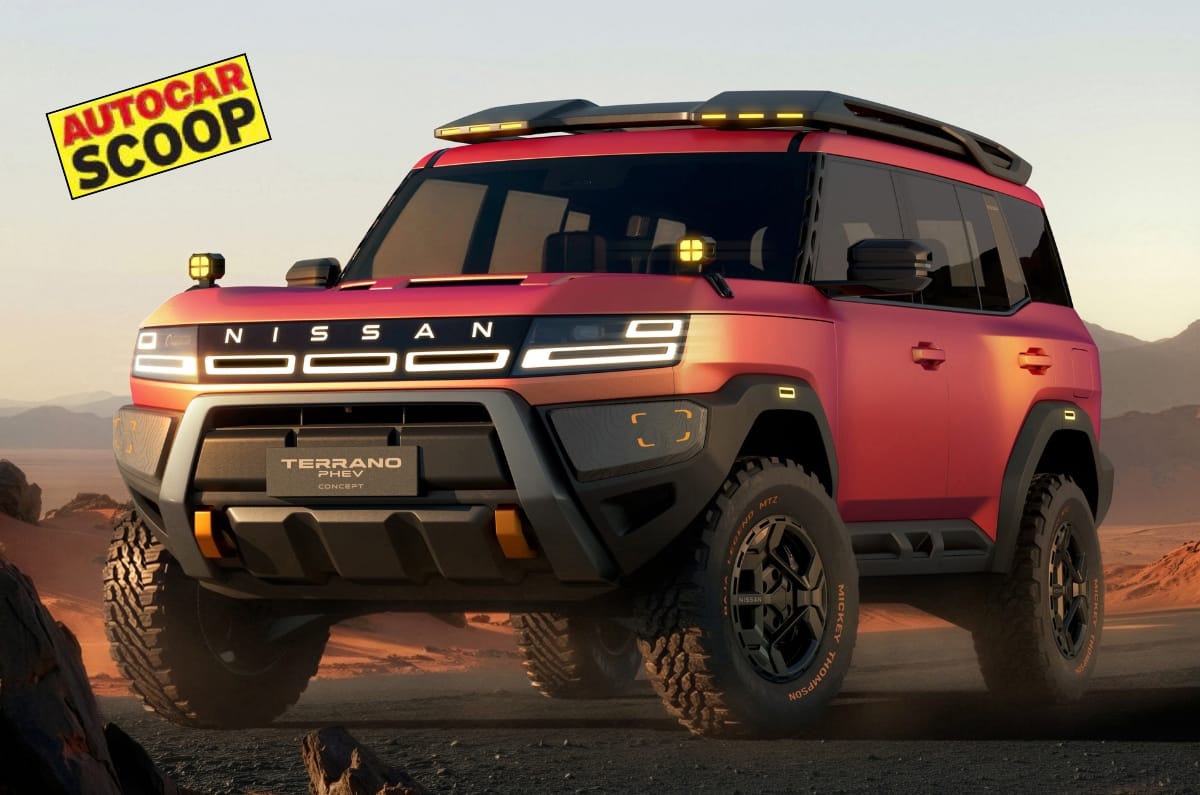
The Indian automotive landscape is notoriously challenging, a graveyard for ambitions not backed by unwavering commitment and a razor-sharp strategy. For years, Nissan India has navigated these choppy waters, often appearing adrift. Following the successful, albeit lone, beacon of the Magnite, the brand's product portfolio has remained relatively thin. However, recent whispers and official statements suggest a seismic shift is underway. With the impending launch of the Tekton and its anticipated three-row sibling, Nissan is set to expand its local offerings to four models. But this, it seems, is merely the overture to a much grander, and arguably riskier, symphony: a strategic pivot towards leveraging its Dongfeng joint venture to introduce distinct, high-impact models, potentially spearheaded by a robust, ladder-frame SUV based on the recently unveiled Terrano PHEV concept. Can this bold move truly turn the tide for Nissan in one of the world's most competitive markets, or is it another roll of the dice in a game where the stakes couldn't be higher? While the initial expansion of Nissan's Indian portfolio involves models shared with alliance partner Renault, a significant shift in strategy has been hinted at by Thierry Sabbagh, President of Middle East, KSA, CIS, and India. Speaking to Autocar India, Sabbagh underscored Nissan's intention to introduce \"its own and distinct models.\" Although he remained tight-lipped, only alluding to the iconic Patrol, informed sources suggest that products stemming from Nissan's 50-50 joint venture with Chinese automaker Dongfeng, established in 2003, are serious contenders for the Indian market. This represents a calculated, yet potentially game-changing, evolution in Nissan's approach. Instead of solely relying on global platforms or alliance products, the Dongfeng JV offers a unique pathway to tailor vehicles specifically for emerging markets like India, leveraging the strengths of a partnership forged over two decades. The implications are profound, suggesting a future where Nissan's Indian lineup boasts a greater degree of individuality and market-specific relevance. The key points under evaluation are: This renewed focus, distinct from its existing alliance operations, signals a pivotal moment. It’s a recognition that simply rebranding existing models may not be sufficient for long-term growth and market penetration in a discerning and ever-evolving market like India. Nissan appears to be betting on differentiation and localization, driven by the unique advantages offered by the Dongfeng partnership. At the heart of Nissan’s potential India offensive is the Terrano PHEV concept, which recently made its global debut at the Beijing Auto Show 2026. This isn't just another urban crossover; it’s a rugged, ladder-frame SUV, a segment still highly revered in India for its commanding presence, durability, and off-road prowess. The concept is essentially an SUV derivative of the Nissan Frontier Pro/Dongfeng Z9 pick-up trucks, inheriting their robust underpinnings and powertrain options. This shared platform approach is crucial for cost efficiencies and rapid development, both critical factors for success in India. What truly makes the Terrano PHEV concept noteworthy is its powertrain strategy. Alongside conventional internal combustion engine options, it features a plug-in hybrid electric vehicle (PHEV) powertrain – a first of its kind for Nissan in this segment. India’s evolving emissions regulations and a growing, albeit nascent, interest in electrified vehicles make the PHEV variant particularly attractive. Nissan’s keenness to bring this specific variant to India suggests a forward-thinking approach, aiming to tap into both the traditional SUV market and the emerging green vehicle segment. A ladder-frame PHEV SUV would be a unique proposition, offering the best of both worlds: rugged capability and environmental consciousness, potentially appealing to a broad spectrum of buyers who desire power without compromising on efficiency. The decision to pit this SUV against stalwarts like the Toyota Fortuner and MG Gloster signifies Nissan's ambition to reclaim a premium, yet accessible, position in the Indian market. This segment demands not just robust mechanics but also a high level of features, comfort, and perceived value. The challenge will be to offer a package that not only matches but perhaps even surpasses the established benchmarks in terms of specifications, cabin experience, and overall ownership proposition, all while maintaining a competitive price point. The strategic rationale behind leveraging the Nissan-Dongfeng JV for the Indian market is multi-faceted. Firstly, China offers a significantly lower-cost base for manufacturing and development. This directly translates into vehicles that can be \"loaded to the gills with features\" – a trait highly sought after by Indian consumers – without driving up the price prohibitively. Indian buyers have a well-documented appetite for technology, comfort features, and value-for-money, making Chinese-developed vehicles, known for their generous equipment lists, a compelling fit. Secondly, the pace of product development within the Dongfeng JV is remarkably swift. While conventional vehicle development cycles can stretch up to 60 months, the Nissan-Dongfeng partnership boasts the capability to fully develop a new vehicle in approximately 30 months. This agility is invaluable in a fast-evolving market like India, allowing for quicker responses to consumer trends and competitive pressures, ensuring products remain fresh and relevant. A critical element for an India launch will be local manufacturing. Despite Nissan no longer holding a direct stake in the Chennai plant it once shared with Renault, it retains a significant capacity reservation of 2,50,000 units per annum. This is well beyond its current utilization. Furthermore, the plant's total capacity of 5,00,000 units per annum remains largely untapped, providing ample room to accommodate the Dongfeng range. However, this move will necessitate additional investments from Nissan to adapt the plant for new models and ensure a high level of localization, a requirement for competitive pricing and long-term sustainability. Guillaume Cartier, Chief Performance Officer at Nissan Motor Co., affirmed the brand's renewed commitment to India, stating, “After the Magnite we didn’t really have a plan but now we have a well thought out one and our ambition is to stay and do well in India.” This strong declaration from global leadership is a positive sign. Despite the strategic advantages, the road ahead is fraught with challenges and potential pitfalls that Nissan must deftly navigate. For years, Nissan has struggled with inconsistent product launches, a fragmented dealer network, and a brand perception that often lagged behind its Japanese and Korean rivals. While the Magnite offered a brief reprieve, it hasn't fundamentally altered the brand's standing. Introducing models from a Chinese joint venture, while economically sensible, can present a unique set of PR challenges in a market often swayed by perceived country of origin and brand legacy. Indian consumers, while feature-hungry, are also discerning about build quality, long-term reliability, and resale value – areas where some Chinese JV products have historically faced skepticism, deserved or not. Nissan will need to invest heavily in marketing and brand building to establish trust and communicate the global engineering standards and quality control embedded in these Dongfeng-sourced vehicles. Overcoming the \"Chinese product stigma,\" however unfair, will be crucial. Furthermore, the full-size SUV segment is not just about price and features; it's about aspiration, heritage, and a strong service network. Can Nissan rapidly scale up its after-sales service and spare parts availability to match the ubiquitous presence of a brand like Toyota, or the aggressive network expansion of MG? These are critical questions that could make or break Nissan's renewed Indian ambitions. Every strategic move in the automotive industry comes with its unique set of advantages and disadvantages. Nissan's pivot towards the Dongfeng JV for its Indian revival is no exception: The journey ahead for Nissan India is a tightrope walk between immense opportunity and significant risk. The Dongfeng partnership could indeed be Nissan’s most potent weapon yet in a market that constantly demands a delicate balance of low prices, generous equipment, and frequent updates. The synergy offered by rapid development cycles and cost-effective manufacturing aligns perfectly with India’s unique market dynamics. If the Terrano PHEV concept-based SUV, or any other Dongfeng-sourced model, can be brought to market within the projected \"under two years\" timeline and at a competitive price point (potentially around Rs 40 lakh ex-showroom for the top variants, challenging the Fortuner directly), Nissan could genuinely disrupt the premium SUV segment. However, history has shown that strong declarations of intent must be backed by consistent execution. Nissan's commitment to \"stay and do well in India\" requires more than just launching new products; it demands a holistic overhaul of its market strategy, including bolstering its brand image, expanding its sales and service network, and ensuring an impeccable customer experience. Without addressing these foundational issues, even the most technologically advanced and value-packed vehicles might struggle to gain traction against deeply entrenched competitors. This is not just a product launch; it's a litmus test for Nissan's long-term viability and ambition in one of the world's most critical automotive markets. Nissan India stands at the precipice of a defining moment. The strategic embrace of its Dongfeng joint venture, particularly with the promising Terrano PHEV concept-based SUV, represents a bold, calculated gamble designed to inject much-needed vitality into its product portfolio. This initiative offers a tangible path to deliver feature-rich, competitively priced vehicles developed with agility, potentially including advanced electrified powertrains. The ability to leverage existing manufacturing capacity in Chennai further strengthens this proposition. Yet, the success of this ambitious revival hinges on more than just product. It demands Nissan's unwavering commitment to localization, significant investment in its brand, and a robust expansion of its sales and after-sales network to overcome past inconsistencies and build enduring trust with Indian consumers. The market will undoubtedly scrutinize the quality, reliability, and long-term value proposition of these new models, especially as they enter segments dominated by established giants. If Nissan can successfully navigate these challenges, transforming potential skepticism into genuine excitement, this Dongfeng-powered strategy could indeed script a remarkable comeback story, cementing its place as a significant player in the vibrant Indian automotive narrative. The next two years will reveal if Nissan’s gamble pays off, or if the Indian market will once again prove to be a formidable adversary.Nissan's High-Stakes Bet: Can a Chinese JV SUV Revive Its Indian Fortunes?
Nissan's Ambitious Revival: A New Chapter with Dongfeng
The Terrano PHEV Concept: Nissan's Ladder-Frame Challenger
Strategic Advantages & Lingering Doubts: The Dongfeng Factor
The Elephant in the Room: Lingering Doubts and Negative Perceptions
Pros & Cons of Nissan's Dongfeng Strategy for India
Pros:
Cons:
The Road Ahead: A Make-or-Break Moment for Nissan India
Conclusion: Nissan's Defining Chapter in India