
In a move that signals a mature understanding of the evolving automotive landscape, Mahindra, a titan in the Indian SUV segment, is charting a multi-faceted course for its future powertrains. While its bold commitment to Born-Electric Vehicles (BEVs) remains unwavering, recent developments suggest a pragmatic pivot: an aggressive exploration of diverse hybrid technologies. This isn't a retreat, but rather a strategic expansion, acknowledging current market realities and positioning the brand for resilience and growth in a complex, transitioning era. Is this a shrewd maneuver, or a sign of faltering confidence in the pure-EV dream? Let's delve deeper into Mahindra's ambitious dual-path strategy. The global automotive industry finds itself at a fascinating crossroads. For years, the narrative was overwhelmingly focused on a headlong rush towards Battery Electric Vehicles (BEVs), heralded as the ultimate solution for sustainable mobility. Major manufacturers poured billions into dedicated EV platforms, battery development, and charging infrastructure. Mahindra itself committed over USD 1 billion towards its groundbreaking INGLO born-electric platform, intended to spawn a new generation of cutting-edge SUVs like the XEV 9e, BE 6, and XEV 9S. However, the pace of EV adoption, particularly in markets like India, hasn't quite matched the optimistic projections. While EV penetration in India's passenger vehicle market is slowly growing, it hovers around a modest 4.25 percent. This figure falls significantly short of earlier industry expectations, including Mahindra's own internal projection of 20-30 percent EV penetration by FY2028. This disparity between ambition and current reality has compelled a significant re-evaluation across the industry. Stalwarts like Stellantis, Mercedes-Benz, Ford, and Honda have publicly acknowledged a need to recalibrate their EV investments, scaling back or adjusting timelines to align with present market dynamics. This emerging landscape highlights a critical truth: the transition to full electrification is not a linear sprint, but a complex, multi-stage marathon. Consumers grapple with issues of range anxiety, charging infrastructure availability, initial purchase costs, and the sheer practicality of integrating an EV into their daily lives. In this context, hybrid vehicles have emerged as a compelling intermediary solution. They offer the immediate benefits of improved fuel efficiency and reduced emissions compared to pure internal combustion engine (ICE) vehicles, without the complete dependence on a nascent charging network. This crucial 'bridge technology' allows buyers to experience electrification's advantages with minimal compromise, making it a powerful growth segment for the foreseeable future. Mahindra's strategic move into hybrids is thus a pragmatic response to these nuanced market forces and evolving regulatory pressures. Beyond satisfying customer demand for efficiency, the impending Corporate Average Fuel Efficiency (CAFE) norms in India are a significant driver. These stricter emissions regulations compel manufacturers to lower the average carbon footprint of their vehicle fleets. Hybrids, with their inherent efficiency gains, offer a vital pathway to achieve compliance, especially for a brand like Mahindra with a strong, often diesel-heavy, SUV portfolio. Sources close to Mahindra indicate an extensive evaluation of multiple hybrid powertrain options for its future SUVs. This includes both range-extender EVs (REEVs) and strong hybrids. Internal project codes W613 and W623 are understood to be associated with this ambitious hybrid SUV program. The latter, W623, is particularly interesting, slated to manifest as a distinctive coupe-styled SUV around 2028, showcasing Mahindra's commitment to design innovation alongside powertrain diversification. One of the most intriguing aspects of Mahindra's new strategy involves adapting its Born-Electric INGLO platform for hybrid applications, specifically focusing on range-extender technology. The XEV 9e (internally codenamed W623), a sleek coupe-SUV, is believed to be among the first models under evaluation for this sophisticated setup. Unlike conventional hybrids where a petrol engine can directly drive the wheels, a range-extender EV utilizes the combustion engine primarily as a generator to charge the battery. The wheels are almost exclusively driven by the electric motor. This configuration offers the best of both worlds: the smooth, torque-rich, and quiet driving experience characteristic of an EV, combined with the extended range and quick refueling capability of a conventional car. It effectively mitigates range anxiety, a significant hurdle for many potential EV buyers, particularly in regions with developing charging infrastructure. Technical studies and extensive testing are already underway, with the aforementioned 1.2-litre and 1.5-litre engine units being assessed for their suitability on the INGLO platform. However, this undertaking is far from straightforward. Adapting a dedicated born-EV platform, meticulously engineered for electric powertrains, to accommodate a combustion engine presents considerable engineering challenges. EV architectures are inherently designed without provisions for components like an engine block, gearbox, exhaust system, fuel tank, and additional cooling hardware. Mahindra engineers face the formidable task of rethinking: This extensive re-engineering requires significant R&D investment, rigorous testing protocols, and fresh crash safety validation to meet stringent global standards. Parallel to the INGLO-based range-extender projects, Mahindra is also aggressively pursuing strong hybrid technology for future SUVs built on its existing ICE platforms. The XUV 7XO, expected to be a refreshed or extended version of the highly successful XUV700, is anticipated to be among the first models to feature such a setup, potentially arriving as early as 2027. Based on Mahindra’s robust W601 monocoque platform, this strong hybrid system will integrate an electric motor and battery pack with a conventional combustion engine (likely derived from Mahindra's mStallion or mHawk series). A strong hybrid system offers greater flexibility than a mild hybrid. It allows the vehicle to run solely on electric power for short distances at lower speeds, significantly improving city fuel efficiency and reducing emissions. The combustion engine can seamlessly kick in to provide additional power during acceleration or to recharge the battery, and can also directly drive the wheels when required, offering robust performance for highway cruising. This technology mirrors the highly successful hybrid powertrains seen in popular models like the Toyota Urban Cruiser Hyryder and the Maruti Suzuki Grand Vitara, both of which have garnered significant market acceptance in India. The embrace of hybrid technology by a major player like Mahindra underscores its relevance in today's automotive market. Understanding the advantages and disadvantages is key for consumers and industry observers alike. Mahindra's decision to embrace a dual-path electrification strategy—pursuing both pure BEVs and a diverse range of hybrids—is a testament to its agility and foresight. It's not merely about offering more options; it's about building a robust and resilient portfolio that can navigate the unpredictable currents of future mobility. By expanding beyond just BEVs, Mahindra acknowledges the current limitations of infrastructure and consumer readiness in key markets, while simultaneously laying the groundwork for a fully electric future. This strategy positions Mahindra to capitalize on the growing demand for efficient, yet practical, vehicles. It allows them to meet stringent CAFE regulations with their existing popular SUV models, thereby safeguarding their market share and ensuring sustained profitability. More importantly, it demonstrates a commitment to sustainable mobility that is grounded in market realities, rather than purely aspirational targets. The forthcoming hybrid SUVs, whether the XEV 9e range-extender or the XUV 7XO strong hybrid, promise to deliver compelling value, combining Mahindra's renowned SUV capabilities with cutting-edge powertrain efficiency. As the automotive world continues its inexorable march towards electrification, the path will undoubtedly be winding and complex. Mahindra, by diversifying its approach, is not merely reacting to market shifts but actively shaping its destiny. This thoughtful and pragmatic strategy ensures that the brand remains a formidable player, offering innovative and relevant solutions to a broad spectrum of consumers, paving the way for a greener, yet thoroughly Mahindra-esque, driving experience.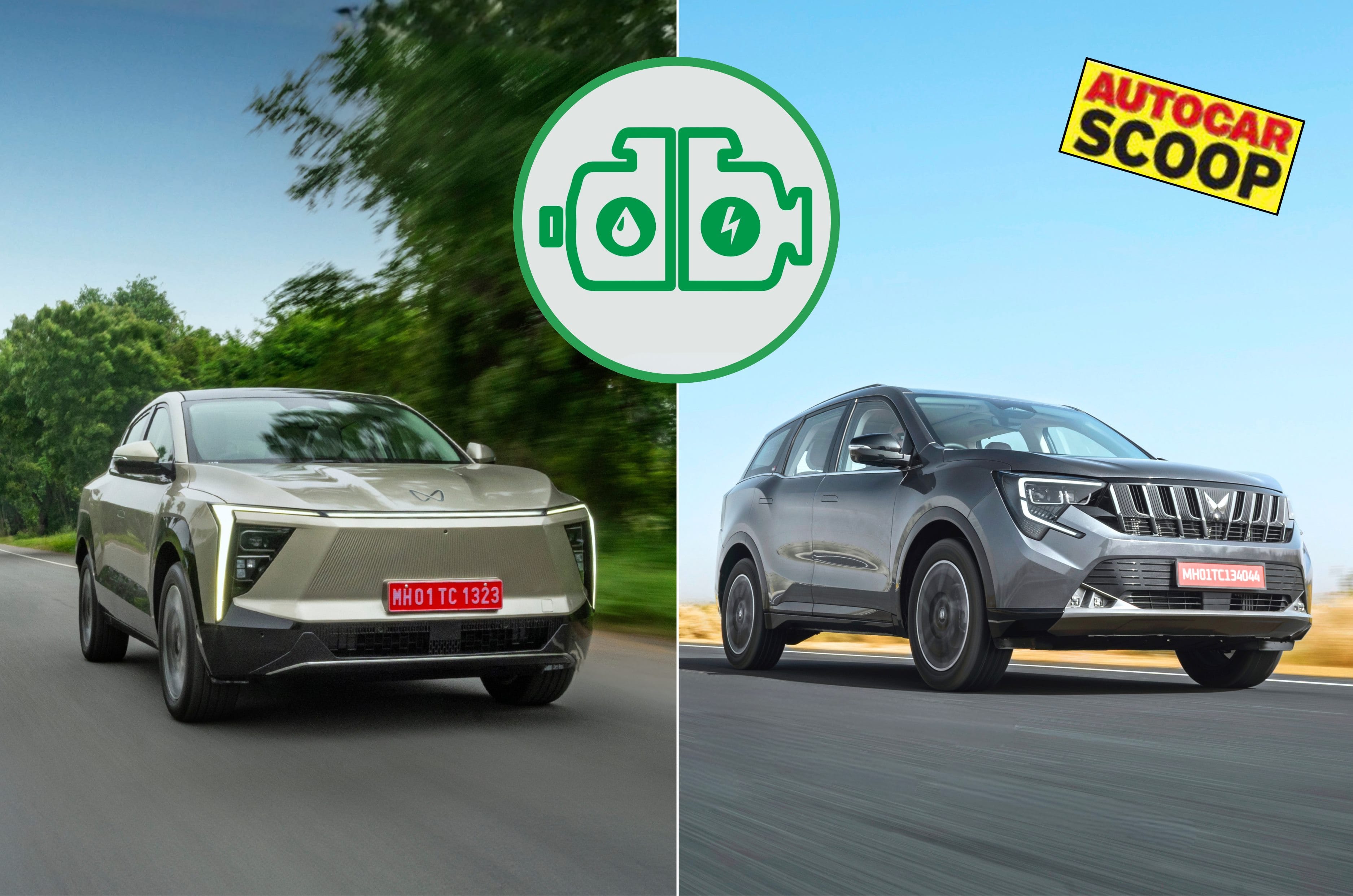
Mahindra's Hybrid Gamble: A Pragmatic Pivot Towards Electrification's Nuanced Future
The Shifting Sands of Automotive Electrification: Why the Hybrid Renaissance?
Mahindra's Dual-Path Electrification Strategy: The Hybrids are Coming
INGLO Platform's Hybrid Frontier: The XEV 9e and Range-Extender EVs
Strong Hybrid Advancements: The XUV 7XO and Existing Platforms
Decoding Hybrid Technology: Pros and Cons for the Modern Driver
The Pros of Hybrid Vehicles
The Cons of Hybrid Vehicles
The Road Ahead: Mahindra's Resilient Electrification Trajectory