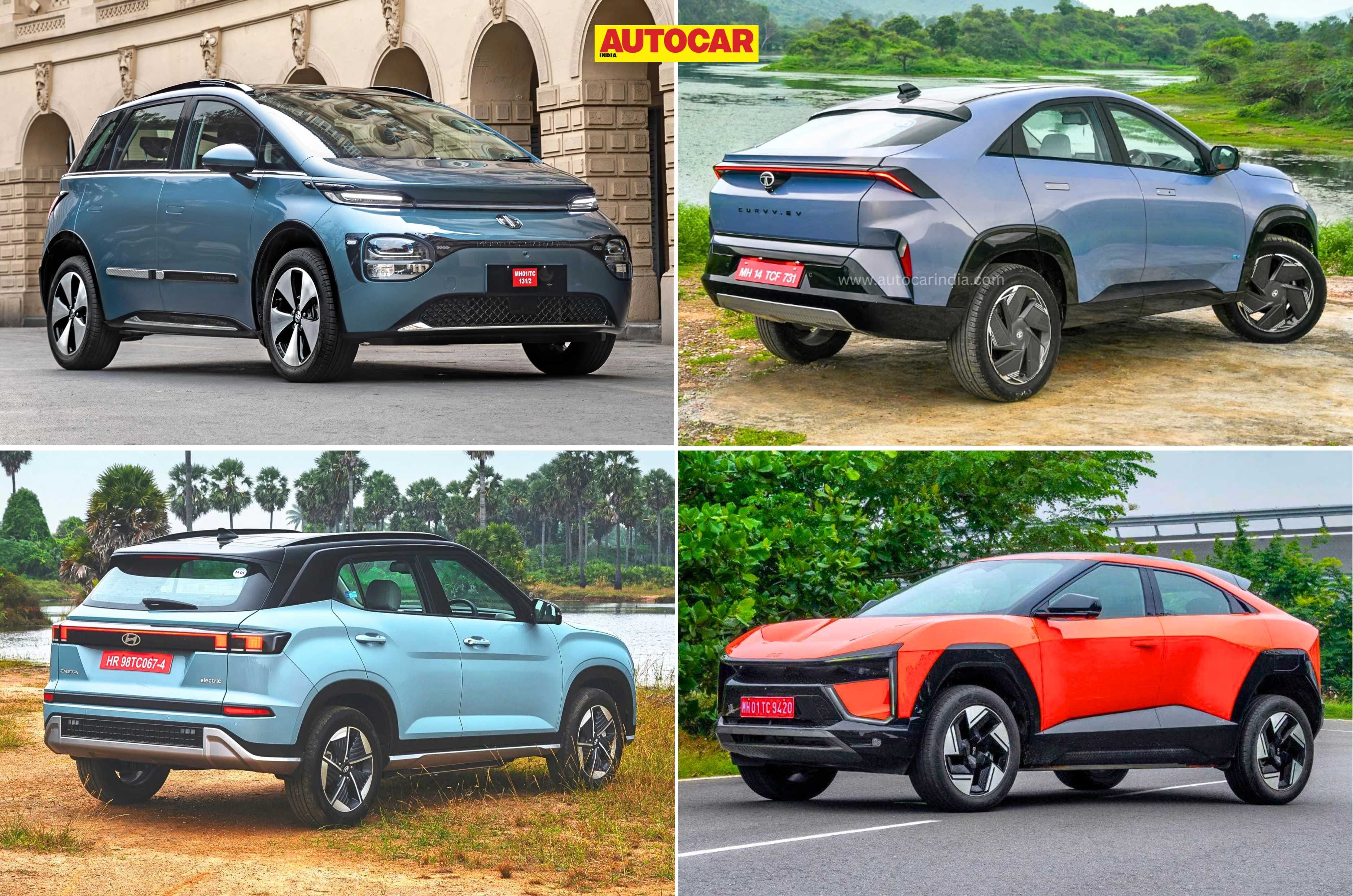
Power Up Faster: Unveiling India's Quickest Charging Electric Midsize SUVs
In the rapidly evolving landscape of automotive technology, electric vehicles (EVs) have emerged as the vanguard of sustainable mobility. Specifically, the electric midsize SUV segment has witnessed an unprecedented surge in popularity across India. These vehicles represent a sweet spot for discerning buyers, expertly balancing urban maneuverability with commanding road presence, practicality with cutting-edge features, and exhilarating performance with a surprisingly accessible price point. Yet, for many prospective EV owners, a lingering concern persists: range anxiety. While battery capacities continue to grow, the true antidote lies not just in longer ranges, but in quicker, more efficient charging solutions.
Carmakers are acutely aware of this challenge, investing heavily in technologies that dramatically reduce the time spent tethered to a charging point. Our focus today is on shedding light on how swiftly these electric workhorses can recharge. We've meticulously compiled and ranked the claimed AC charging times of every electric midsize SUV currently available in the Indian market, presenting them in a descending order of their charging prowess. This analysis specifically emphasizes AC fast charging, as it represents the most common and practical method for daily home or workplace charging.
Note on Inclusions: The Vinfast VF6, a notable entrant to the market, has been excluded from this particular AC charging comparison. While it boasts an impressive 10-70 percent DC fast charging time of just 25 minutes, its official AC charging specifications are yet to be fully disclosed, preventing a direct comparison with its peers on this metric.
Understanding the Charging Game: Why AC Matters for Daily EV Life
Before we dive into the specifics of each model, it's crucial to understand the nuances of electric vehicle charging. While DC fast charging stations are becoming more prevalent on highways and major urban arteries, providing rapid top-ups on the go, the backbone of everyday EV ownership remains AC charging. This is typically done at home, overnight, or at the workplace, where vehicles spend extended periods parked. The efficiency and speed of AC charging, therefore, directly impact the convenience and viability of an EV for daily commutes and routine usage.
The charging times we're discussing here refer to Level 2 AC charging, usually facilitated by a dedicated wall charger installed at your premises. Common power outputs for these chargers in India are 3.3kW, 7.2kW, and 11kW. A higher kW rating generally translates to faster charging, assuming the vehicle's onboard charger can handle the input. This is a critical distinction, as some entry-level variants may only support slower AC charging rates, even if higher-powered chargers are available as an option. This tiered approach by manufacturers can sometimes be a point of friction for consumers, who might expect a certain level of charging capability to be standard across all variants of an EV. The cost and installation of these higher-powered AC chargers can also add a significant, often overlooked, layer to the total ownership cost, a factor where manufacturers differentiate themselves considerably.
The Contenders: Ranking India's Electric Midsize SUVs by AC Charging Speed
5. Mahindra BE 6: A Bold Statement with Measured Charging
0-100 percent in 8.7 hours (7.2kW) - for 59kWh battery
Mahindra's BE sub-brand is synonymous with futuristic design and ambitious electrification, and the Mahindra BE 6 is arguably the most visually striking offering from the Indian automotive giant. Breaking conventions with its coupe-SUV silhouette and radical aesthetics, the BE 6 aims to turn heads and redefine electric vehicle design. Underneath its avant-garde skin, it offers a choice of two substantial battery packs: 59kWh and 79kWh. When it comes to AC charging, the 59kWh variant, using a 7.2kW AC charger, takes a claimed 8.7 hours to go from completely flat to a full charge. This positions the BE 6 as the slowest charger among the current crop of electric midsize SUVs for its entry-level 7.2kW standard.
However, it's essential to put this into perspective. The BE 6 packs one of the largest battery capacities in its class, directly contributing to its impressive claimed range figures (557km for 59kWh, 683km for 79kWh). Larger batteries inherently require more time to charge fully. Moreover, Mahindra offers a more robust 11.2kW AC charger as an optional extra for Rs 75,000, which significantly improves charging times. With this upgrade, the 59kWh battery can be fully charged in a more respectable 6 hours, while the 79kWh pack takes 8 hours. This flexibility allows buyers to prioritize initial cost savings or invest in quicker home charging convenience. The additional cost for the charger, however, is a notable point, adding to the initial outlay for consumers seeking faster charging and potentially raising the barrier to entry for a truly convenient ownership experience.
The MG ZS EV holds the distinction of being one of the first electric midsize SUVs to grace Indian roads, originally launched in 2020 and subsequently updated with a facelift in 2022. It has played a crucial role in popularizing the segment. Powering all variants is a 50.3kWh battery pack, which requires approximately 8.5-9 hours for a complete 0-100 percent charge using its standard 7.4kW AC charger. This places it marginally ahead of the Mahindra BE 6 in terms of AC charging speed for its primary battery option.
A significant advantage for MG ZS EV buyers is that the company commendably includes the cost of the 7.4kW fast charger and its installation, removing an additional financial burden that some competitors impose. This \"charger included\" policy is a strong positive for customer satisfaction. Furthermore, MG has embraced innovative ownership models, making the ZS EV available with a Battery-as-a-Service (BaaS) programme. This initiative aims to reduce the upfront purchase cost, making EV ownership more accessible to a wider audience, a clever strategy to counter the higher initial price point of electric vehicles.
Interestingly, despite the ZS EV's battery being 8.7kWh smaller than the Mahindra BE 6's entry-level 59kWh unit, their 7.x kW AC charging times are quite similar. This discrepancy highlights a common challenge in EV design: older, ICE-derived platforms, like that of the ZS EV, often integrate electric powertrains with less inherent efficiency compared to purpose-built \"born-electric\" architectures, which can optimize for charging and thermal management from the ground up. This means newer platforms, even with larger batteries, can sometimes achieve competitive charging speeds through superior engineering, leaving some earlier models playing catch-up in efficiency metrics.
MG ZS EV Charging Specifications
Battery pack
50.3kWh
7.4kW AC charging time (0-100 percent)
8.5-9 hours
50kW DC charging time (0-80 percent)
60 mins
Claimed range (km)
461
7.4kW charger cost (Rs)
Free
3. MG Windsor EV: The Compact Contender's Edge
10-100 percent in 7 hours (7.4kW) - for 38kWh battery
The MG Windsor EV, while perhaps not fitting the conventional visual mold of a rugged midsize SUV, aligns perfectly with the segment's dimensional characteristics, positioning itself as a practical and value-oriented option. This popular EV from MG offers two battery options: a 38kWh pack and a larger 52.9kWh unit. Focusing on the more accessible 38kWh variant, it boasts a claimed 7 hours for a 10-100 percent charge using a 7.4kW AC charger, a notable improvement over its ZS EV sibling and the Mahindra BE 6 for its corresponding battery size.
As the most affordable EV on this list by a considerable margin, especially with the BaaS option, the Windsor EV represents a compelling value proposition for those entering the electric SUV segment. Its quicker charging time for the smaller battery, coupled with its aggressive pricing, makes it highly attractive for urban commuters and first-time EV buyers who prioritize convenience and cost-effectiveness. This approach by MG demonstrates a clear understanding of the Indian market's price sensitivity.
However, there's a crucial caveat that potential buyers must be aware of: the 7.4kW AC charger is not universally available across all 38kWh Windsor EV variants. The Excite and Exclusive trims of the 38kWh model are disappointingly limited to a slower 3.3kW AC charging rate, which extends the 10-100 percent charging time to a substantial 13.5 hours. Such a lengthy charging duration can significantly diminish the practicality of an EV for many users, especially if they don't have consistent overnight charging opportunities. Only the higher-spec Windsor EV Essence, Exclusive Pro, and Essence Pro variants receive the 7.4kW charger as standard. This tiered approach to charging hardware can lead to confusion and potential dissatisfaction for buyers who might unknowingly opt for a variant with slower charging capabilities, a potential pitfall that MG could address for better customer experience and transparency.
MG Windsor EV Charging Specifications
Battery pack
38kWh
52.9kWh
3.3kW AC charging time (10-100 percent)
13.5 hours
-
7.4kW AC charging time (10-100 percent)
7 hours
9.5 hours
DC charging time (20-80 percent)
45 mins (45kW)
50 mins (60kW)
Claimed range (km)
332
449
7.4kW charger cost (Rs)
Available for free in Essence variant
Free of cost
2. Tata Curvv EV: The Indian Innovator's Swift Charge
When evaluating 7.2kW AC charging speeds, the Tata Curvv EV emerges as a frontrunner, showcasing Tata Motors' aggressive push and engineering prowess in the EV segment. The Curvv EV's 55kWh battery unit demonstrates impressive efficiency, taking a claimed 7.9 hours to charge from 0-100 percent with its 7.2kW AC charger. This performance is particularly noteworthy as it manages to edge out even the MG ZS EV's smaller 50.3kWh battery in terms of overall charging duration, indicating sophisticated battery management and an optimized charging curve inherent to Tata's contemporary EV platform.
A significant advantage for Tata Curvv EV buyers is the inclusion of the 7.2kW charger as standard across all variants. This inclusive policy removes the ambiguity and additional cost seen with some competitors, ensuring all customers can immediately benefit from the quicker charging speeds without an extra financial burden. Tata's commitment to providing a holistic and convenient EV ownership experience is evident here, making the Curvv EV an even more attractive proposition in a competitive market. Its sleek, coupe-SUV design also adds a unique aesthetic appeal, blending style with substance and demonstrating Tata's evolving design language.
Tata Curvv EV Charging Specifications
Battery pack
55kWh
7.2kW AC charging time (10-100 percent)
7.9 hours (0-100%)
DC charging time (10-80 percent)
40 mins (70kW)
Claimed range (km)
502
7.2kW charger cost (Rs)
Free
1. Hyundai Creta Electric: The Segment Leader's Rapid Recharge
10-100 percent in 4 hours (11kW) - for 42kWh battery
The Hyundai Creta Electric, an eagerly anticipated entrant derived from India's perennial bestseller, sets a new benchmark for AC charging speeds in this segment. Hyundai has primarily highlighted its 11kW AC charging capabilities, which means a direct comparison with models using 7.2kW/7.4kW chargers is not entirely apples-to-apples. However, when juxtaposed with the Mahindra BE 6 (the only other SUV here supporting 11kW charging), the Creta Electric's smaller 42kWh battery can achieve a 10-100 percent charge in an astounding 4 hours. This is a full two hours quicker than the BE 6's 59kWh variant, even accounting for the Creta's slightly higher initial state of charge.
This impressive charging performance underscores Hyundai's deep expertise in EV technology, drawing on its global experience with critically acclaimed models like the Kona Electric and Ioniq 5. The faster charging time for the Creta Electric could be a significant draw for buyers who prioritize convenience and minimal downtime, allowing for quicker top-ups even during shorter breaks. However, like the Mahindra BE 6, the Creta Electric's 11kW charger is an optional extra, carrying a substantial price tag of Rs 73,000. This added cost, along with its limited availability across all trim levels (not offered in Executive, Executive Tech, and Executive (O) LR variants), might deter some potential buyers who are looking for an all-inclusive package without hidden costs.
Furthermore, the Creta Electric's faster charging speed is somewhat offset by a smaller battery capacity compared to rivals like the BE 6, resulting in a claimed range deficit of 157-173km. This illustrates the delicate balance manufacturers must strike between battery size, charging speed, and overall cost. Buyers must weigh the benefit of quicker charging against a potentially shorter range per charge, carefully considering their individual driving patterns and reliable access to charging infrastructure. For some, a larger range with slower charging might be preferable, while others might prioritize the rapid turnaround of the Creta Electric.
Hyundai Creta Electric Charging Specifications
Battery pack
42kWh
51.4kWh
11kW AC charging time (10-100 percent)
4 hours
4.83 hours
100kW DC charging time (10-80 percent)
39 mins
39 mins
Claimed range (km)
420
510
11kW charger cost (Rs)
73,000 (not available in Executive, Executive Tech)
73,000 (not available in Executive (O) LR)
The EV Charging Landscape in India: Pros and Cons
Pros of EV Charging in India
Growing Infrastructure: Government initiatives and private players are rapidly expanding the public charging network, especially in urban centers and along national highways, albeit with varying speeds and reliability. This growth offers more charging opportunities than ever before.
Home Charging Convenience: The ability to charge overnight at home (using AC chargers) is a major draw, effectively treating your car like a smartphone and waking up to a \"full tank\" every morning, eliminating the need for frequent fuel station visits.
Reduced Running Costs: Electricity is generally cheaper per kilometer than petrol or diesel, leading to significant savings over the vehicle's lifetime and making daily commutes more economical.
Technological Advancements: Continuous innovation in battery technology and charging systems (faster AC, ultra-rapid DC) promises even quicker charging times and greater energy density in the near future.
Manufacturer Support: Many carmakers now offer complimentary home charger installation or attractive Battery-as-a-Service (BaaS) programs to ease the financial burden and psychological barrier of transitioning to EV ownership.
Cons and Challenges
Inconsistent Infrastructure Quality: While growing, the public charging network still suffers from varied reliability, maintenance issues, and incompatible connector types, leading to frustration and range anxiety persistence for drivers.
High Charger Installation Costs: For faster AC charging at home (7.2kW, 11kW), the charger unit itself and its professional installation can be a significant additional expense, sometimes costing upwards of Rs 50,000-75,000, which many consumers find prohibitive.
Grid Strain and Upgrades: A widespread, rapid shift to EVs will demand substantial upgrades to existing electrical grids, particularly in residential areas, to support high-power home charging without causing overloads or power fluctuations.
\"Range Anxiety\" Persists: Despite improved ranges, the psychological fear of running out of charge, especially in areas with sparse or unreliable public charging options, remains a significant barrier for many potential buyers.
Varying Charging Standards: Different manufacturers and public charging networks might use different connectors and protocols (e.g., CCS2, Type 2 AC), complicating the charging experience and requiring adapters or specific charging points.
Slow AC Charging for Base Variants: As seen with models like the MG Windsor, some entry-level trims are limited to very slow 3.3kW AC charging, which can be impractical for daily use and diminishes the overall EV experience, potentially leading to buyer's remorse.
All prices are ex-showroom, India, and subject to change based on regional taxes and specific variant choices.
The Road Ahead: Towards a Seamless EV Charging Experience
The evolution of the electric midsize SUV segment in India is a testament to the nation's burgeoning interest in sustainable mobility. While range remains a headline figure for marketing, the practicalities of charging, particularly AC charging for daily use, are equally vital for real-world ownership satisfaction. Our detailed analysis reveals a diverse landscape where manufacturers are constantly innovating, balancing crucial factors like battery capacity with charging speed, and grappling with the complexities of infrastructure and evolving consumer expectations.
The competition is intense, and each contender brings its unique strengths to the table. From Mahindra's bold design and long-range ambition to MG's value proposition and innovative ownership models, and Tata's commitment to inclusive charging, to Hyundai's rapid recharge capabilities – buyers have an increasingly wide array of choices. However, the optional nature and significant cost of faster AC chargers remain a point of contention and a crucial factor for many, underscoring the need for greater standardization and more inclusive packages from manufacturers to truly democratize EV ownership.
As India's EV ecosystem matures, we can anticipate even faster charging technologies, a more robust and reliable public charging infrastructure, and clearer, more universal charging standards. The ultimate goal is a future where \"refueling\" an electric vehicle is as seamless and routine as plugging in a smartphone or a home appliance, truly alleviating range anxiety and making electric mobility the default choice for millions. For now, understanding these critical charging metrics is key to making an informed decision in the exciting, yet complex, world of electric midsize SUVs. The journey towards effortless electric driving is well underway, and these rapid chargers are paving the way.