
In the relentless pursuit of defining the future of personal mobility, automotive giants constantly push boundaries, blending radical design with cutting-edge engineering. BMW, a marque synonymous with innovation and the ultimate driving (and riding) machine, has once again captured the industry's attention with a groundbreaking patent application. This isn't just another incremental update; it's a bold reimagining of the two-wheeled experience: a fully enclosed, aerodynamically optimized, and most intriguingly, a *self-balancing* motorcycle. Is this the answer to urban congestion and shifting environmental demands, or a step too far from the visceral thrill of traditional motorcycling? Let's delve deep into BMW's audacious vision and uncover what this revolutionary concept truly entails.
A conceptual rendering illustrating BMW's patented enclosed, self-balancing motorcycle design.
At the core of BMW's latest intellectual property filing lies a design philosophy that marries extreme aerodynamic efficiency with unprecedented low-speed stability for a two-wheeled vehicle. The patent describes a narrow, teardrop-shaped machine encased within a fully integrated body. This isn't merely about aesthetics; the emphasis is unequivocally on minimizing drag through a reduced frontal area and meticulously sculpted airflow management. Such a design choice holds immense implications, particularly for the burgeoning electric vehicle (EV) segment, where every fractional improvement in drag coefficient directly translates into extended range and enhanced performance. For an electric motorcycle, this could be a game-changer, making long-distance commutes more viable and urban efficiency unparalleled.
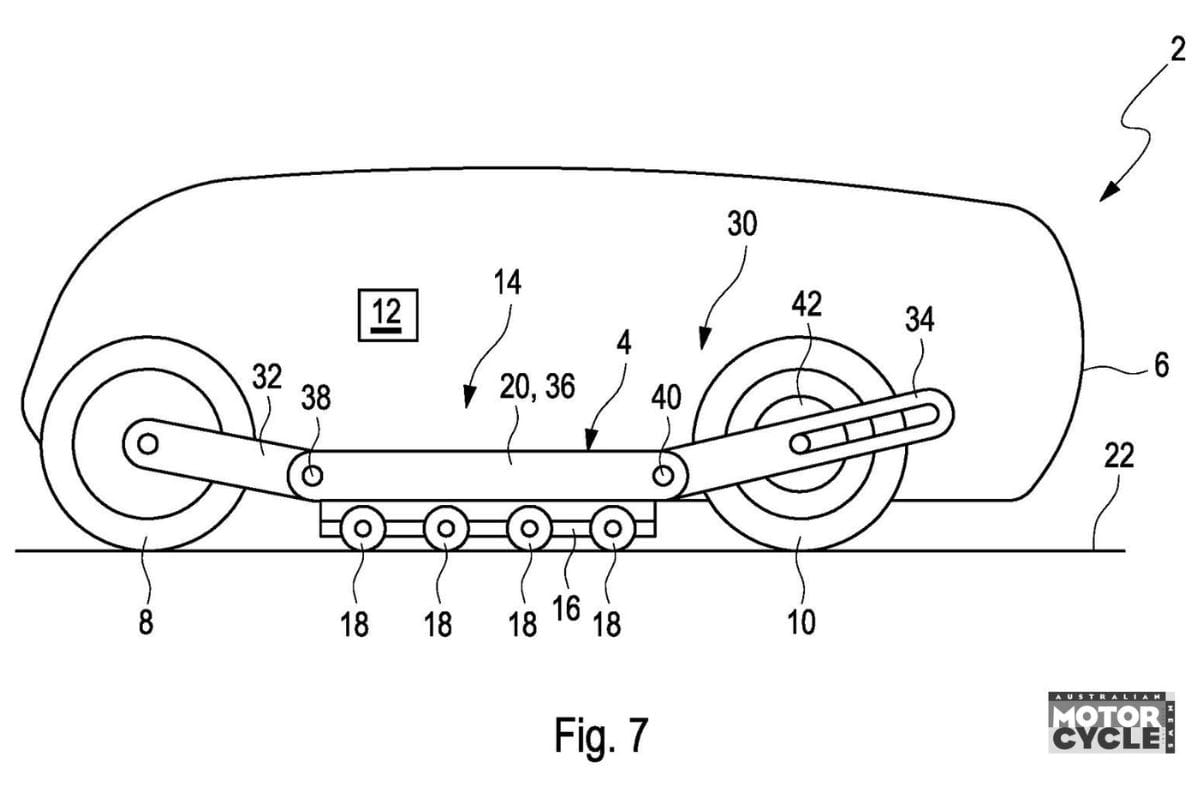
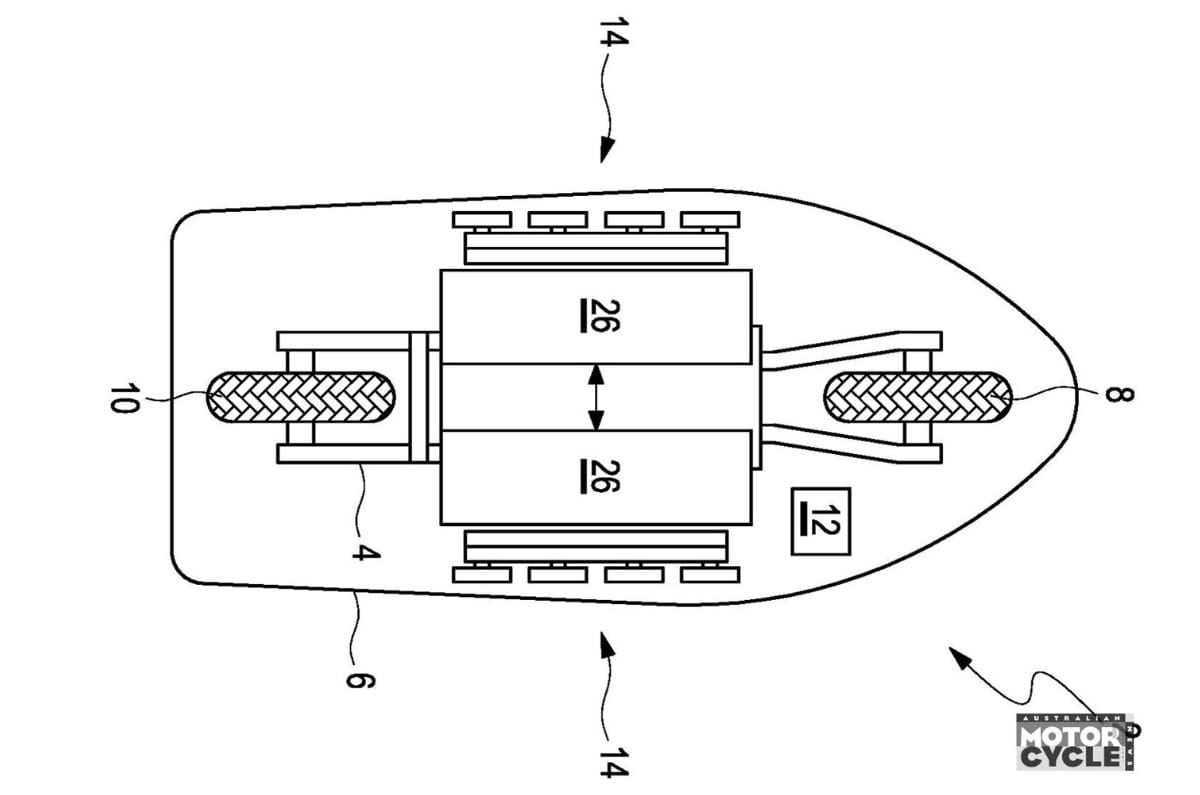
The perennial conundrum with fully enclosed motorcycle designs has always been low-speed maneuverability and stability. Unlike traditional motorcycles, where a rider can intuitively \"put a foot down\" to maintain balance when coming to a halt, an enclosed cabin eliminates this fundamental action. Previous attempts at addressing this have typically involved deployable outrigger wheels, often spaced widely apart. BMW's engineers, however, have envisioned a far more sophisticated and compact solution: an array of eight small support wheels.
An intricate schematic from the patent highlighting the eight small support wheels and their parallel arrangement.
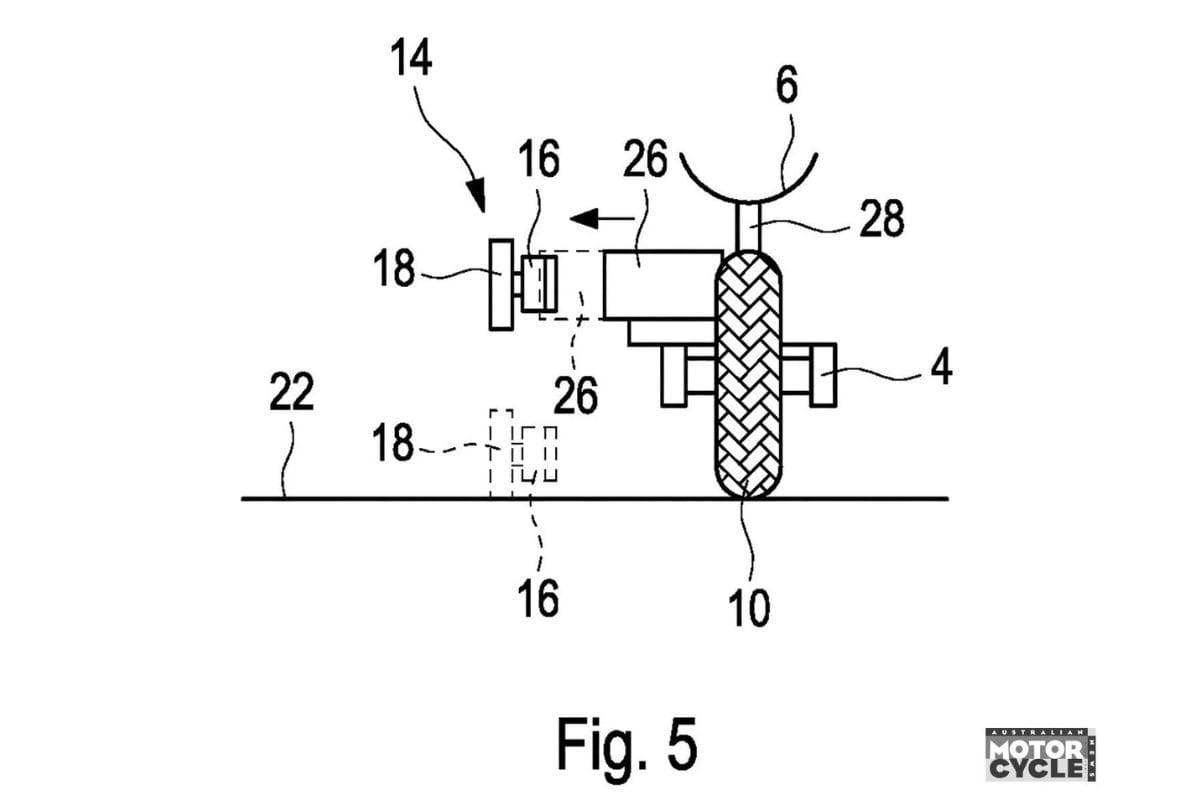
These eight wheels are meticulously arranged in two parallel rows, designed to retract when the vehicle is in motion and deploy seamlessly at low speeds or when stationary. This multi-wheel layout fundamentally diverges from existing enclosed machines like the pioneering Peraves Monoracer, which utilizes a pair of widely spaced, robust stabilizers. BMW's approach appears to prioritize an incredibly narrow overall width, crucial for navigating congested urban environments, while simultaneously offering a superior level of redundancy. The beauty of this design lies in its resilience: even if a few of these diminutive wheels momentarily lose contact with the road surface due to uneven terrain or potholes, the remaining wheels are designed to ensure the vehicle remains upright and stable. This is a significant engineering feat, aiming to combine the agility of a motorcycle with the static stability of a three-wheeler, all within a compact two-wheeled envelope.
It's also worth noting that BMW has extensively explored and evaluated alternative stabilization mechanisms, including gyroscopic systems – a concept famously explored by vehicles like the Gyro-X or more recently, the Lit Motors C-1. However, the patent explicitly indicates that such gyroscopic solutions were likely ruled out for this particular application. The probable reasons for this decision could be manifold: the added weight and complexity of a robust gyroscopic system, its substantial power consumption, the inherent cost implications, and potential challenges in packaging within a truly narrow frame without compromising rider space or vehicle dynamics. BMW's choice of mechanical support wheels, while complex in its own right, might offer a more pragmatic balance of cost, weight, and reliability for a potential production vehicle.
BMW is no stranger to unconventional two-wheeled concepts that blur the lines between motorcycle and car. The early 2000s saw the production of the BMW C1, a roofed scooter designed with enhanced safety features, including a safety cell and seatbelts. While ahead of its time and commercially challenging, the C1 demonstrated BMW's willingness to experiment with enclosed or semi-enclosed urban mobility solutions. Later, the BMW Concept C.L.E.V.E.R. (Compact Low Emission Vehicle for Urban Transport) further explored narrow, lean-capable urban transport formats, emphasizing efficiency and a minimal footprint. This new patent is a logical, albeit significantly more ambitious, progression of this ongoing design exploration.
A detailed view of the proposed enclosed cabin, hinting at a new level of rider comfort and protection.
The advantages described in the patent filing are compelling, particularly in the context of global urban challenges. An enclosed design inherently offers superior weather protection, shielding the rider from rain, wind, and even extreme temperatures. Its small road footprint addresses growing concerns over urban congestion and parking scarcity. Crucially, the improved aerodynamic efficiency, as previously mentioned, is paramount for sustainable mobility, especially as the world transitions towards electric powertrains.
From an Indian market perspective, the concept holds particular allure on paper. With its burgeoning urban populations, chronic traffic congestion, escalating air quality index (AQI) levels, and rising fuel costs, a vehicle that offers the agility and compact footprint of a scooter but with the weather protection, comfort, and perhaps even safety features of a small car, could find a significant niche. Imagine navigating Mumbai's monsoon downpours or Delhi's notorious pollution within a climate-controlled, stable, two-wheeled capsule. The appeal is clear.
While BMW's patent paints an exciting picture, a balanced assessment demands a look at both the opportunities and the potential drawbacks of such a radical departure from conventional motorcycling.
As things currently stand, this remains a patent study – a vital step in protecting intellectual property and exploring theoretical possibilities. However, the depth and detail within the filing suggest a serious, ongoing internal R&D effort at BMW. The company isn't just filing patents for the sake of it; they are strategically mapping out potential future product lines and technological advancements.
The real-world viability of such a concept would hinge on a multitude of factors beyond the immediate technical challenges. These include the ability to mass-produce it cost-effectively, ensuring intuitive ease of maneuverability in the chaotic ebb and flow of urban traffic, and demonstrating robust performance and durability over inconsistent road conditions – particularly relevant in markets like India, where road quality can vary dramatically.
BMW's strategic intent with such a patent is clear: to be at the forefront of mobility innovation. By exploring these unconventional formats, manufacturers are actively rethinking how two-wheelers can evolve to meet the rapidly changing demands for efficiency, practicality, and sustainability. This patent is not just about a new vehicle; it's about a new category of personal transport, potentially bridging the gap between scooters, motorcycles, and micro-cars. It signals a future where personal urban mobility is redefined, offering choices that prioritize comfort, safety, and environmental responsibility without sacrificing the agility inherent in a narrow vehicle footprint.
BMW's patent for an enclosed, self-balancing motorcycle is more than just an engineering curiosity; it is a profound statement about the future trajectory of personal transportation. It represents a confluence of aerodynamic excellence, intelligent stabilization, and a deep understanding of evolving urban needs. While the path from patent to production is often long and fraught with challenges, this concept unequivocally demonstrates BMW's unwavering commitment to pushing the boundaries of what a two-wheeled vehicle can be. As cities grow denser and environmental concerns mount, daring innovations like this will be crucial in shaping a more efficient, comfortable, and sustainable mobility landscape. Whether this specific design makes it to our streets or inspires subsequent iterations, one thing is certain: BMW continues to be a pivotal force, challenging perceptions and redefining the very essence of future rides. The road ahead for personal mobility just got a whole lot more intriguing.
Image source: Australian Motorcycle News / Ben Purvis (for original conceptual renders)
BMW's Visionary Patent: Unveiling the Enclosed, Self-Balancing Motorcycle of Tomorrow
Deciphering BMW's Revolutionary Patent: A Paradigm Shift in Two-Wheeler Design
BMW's History of Enclosed Mobility & Why This Patent Matters Now
Pros & Cons: Weighing the Future of Self-Balancing Enclosed Motorcycles
Pros:
Cons:
The Road Ahead: Will BMW's Vision Become Reality?
Conclusion: BMW's Bold Leap into the Mobility Horizon