
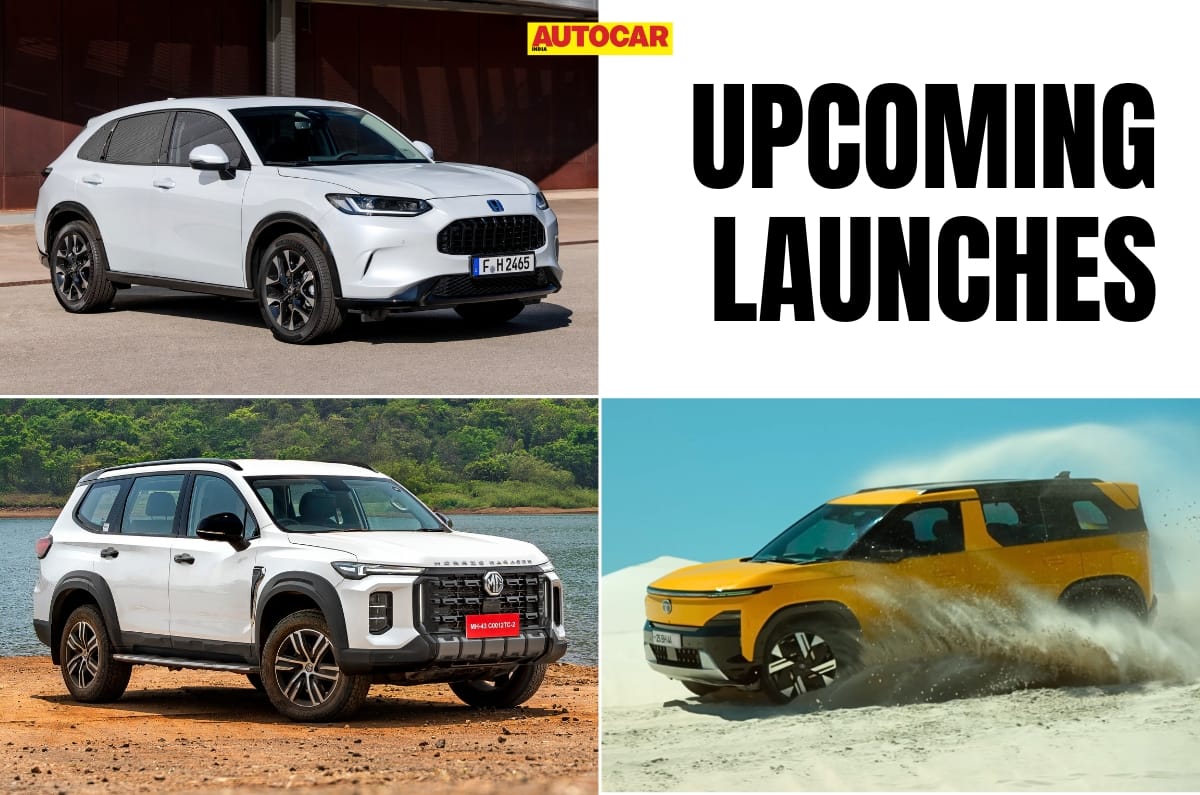
Visual representation of the exciting array of vehicles hitting the Indian market in May.
As the scorching April sun gave way to the promise of May, the Indian automotive landscape continued its relentless pace of innovation and expansion. April itself was a whirlwind of significant launches, seeing the likes of the Vinfast VF MPV 7 marking a new entrant's stride, the refreshed Volkswagen Taigun facelift bringing renewed vigor to the compact SUV segment, and even the formidable locally assembled Range Rover Sport Autobiography redefining luxury accessibility. Not to be outdone, electric vehicle enthusiasts were treated to the Tesla Model Y L and the opulent Mercedes CLA EV, further cementing India’s commitment to sustainable mobility. Yet, if April was a preview, May promises to be the main event, packed with confirmed debuts and eagerly anticipated arrivals across various segments. From updated sedans and commanding SUVs to thrilling performance machines and cutting-edge electric vehicles, the coming weeks are set to redefine expectations. Let's buckle up and navigate through the exciting models poised to make their mark on Indian roads this month.
While SUVs dominate sales charts, the elegance and driving dynamics of a well-engineered sedan continue to hold a special place in the hearts of many Indian consumers. Honda, a brand synonymous with reliability and refined sedans, is set to reinforce its presence with a significant update to its flagship sedan and an intriguing new SUV offering.
The Honda City has been an undisputed champion in the mid-size sedan segment for decades, lauded for its spacious cabin, refined engines, and unwavering reliability. The upcoming 2026 facelift marks the second significant refresh for the fifth-generation model, building upon the enhancements introduced in 2023. While the exterior changes are anticipated to be subtle, focusing on evolutionary tweaks to the headlights, tail-lamps, bumpers, and alloy wheel designs to keep its aesthetic appeal contemporary, the real transformation is expected inside the cabin. Honda is reportedly aiming to elevate the City's premium quotient and feature set to directly counter aggressive competition. This could include highly sought-after additions like a powered driver's seat for enhanced comfort and convenience, ventilated front seats – a blessing in India's climate, a larger and more responsive touchscreen infotainment system for improved connectivity, and a fully digital driver's display, replacing the current semi-digital unit for a more modern cockpit feel.
Under the hood, Honda is likely to stick with its proven and efficient powertrains. The popular 121hp 1.5-litre naturally aspirated petrol engine, paired with either a 6-speed manual or a CVT, is expected to continue. For those seeking greater fuel efficiency and a more environmentally conscious option, the sophisticated 126hp hybrid powertrain, known for its smooth performance and impressive mileage, will also be carried forward, coupled with its e-CVT. This strategy allows Honda to maintain its competitive edge in a segment where performance, fuel economy, and feature-rich interiors are paramount. However, some critics might argue that Honda's reluctance to introduce a turbo-petrol option, prevalent in rivals, might limit its appeal to driving enthusiasts.
Signaling a renewed and aggressive push into the premium segment, Honda is set to introduce the Honda ZR-V to the Indian market. This new nameplate will arrive as a full CBU (Completely Built Unit) import, positioning it firmly in the upper echelons of the five-seat SUV segment. With an expected price tag ranging between Rs 40 lakh and Rs 50 lakh (ex-showroom), the ZR-V will directly challenge established players like the Volkswagen Tiguan and the Lounge variant of the Skoda Kodiaq. This move is crucial for Honda, as it aims to establish the ZR-V as its flagship SUV in India, showcasing the brand's commitment to offering aspirational, high-quality products.
The ZR-V is poised to kick off a new wave of premium halo models from Honda, emphasizing a heightened seriousness in a market increasingly demanding sophisticated SUVs. Globally, the ZR-V stretches approximately 4,568mm in length, providing a substantial road presence. Indian customers can expect a rich suite of features, including a powered driver's seat, dual-zone climate control for optimal comfort, wireless charging for seamless device integration, a convenient powered tailgate, and a comprehensive Advanced Driver-Assistance Systems (ADAS) suite for enhanced safety. Powering this premium SUV is likely to be a 180hp 2-litre four-cylinder petrol-hybrid powertrain, mated to an e-CVT. This hybrid setup promises a compelling blend of performance and efficiency, a hallmark of Honda's hybrid technology. However, the CBU route might make it a niche product, facing stiff competition from locally assembled or more established premium offerings from European rivals, which might offer more brand cachet at a similar price point.
SUVs continue to reign supreme in India, and May's launches underscore this trend with a diverse range, from powerful ladder-frame diesel vehicles to innovative electric models designed for the future.
MG Motor India is poised to introduce the MG Majestor, a successor to the Gloster, signaling a strong intent to carve out a larger share in the full-size SUV segment. With an anticipated price range of Rs 40 lakh to Rs 45 lakh (ex-showroom), the Majestor is clearly setting its sights on the undisputed king of the segment, the Toyota Fortuner. This SUV is designed to offer a blend of commanding presence, luxurious interiors, and formidable off-road capabilities. It will be available in both six and seven-seat configurations, catering to diverse family needs. The cabin promises a tech-rich experience, featuring dual 12.4-inch screens for infotainment and instrumentation, a panoramic sunroof that floods the interior with natural light, a premium 12-speaker JBL sound system, and a sophisticated 3-zone climate control system.
Comfort is paramount, with a 12-way powered driver's seat, an 8-way powered co-driver's seat, front seat ventilation and massage functions, and customizable 64-colour ambient lighting. Powering this behemoth is a potent 2-litre twin-turbo diesel engine, churning out 215hp and a colossal 479Nm of torque. This engine is paired with an 8-speed torque-converter automatic transmission and a robust 4WD system with low range, distinguishing it as a serious off-roader. Further enhancing its rugged credentials are three locking differentials and 10 off-road modes, offering unparalleled versatility across challenging terrains. While the Majestor presents a compelling package of features and power, its ability to truly unseat the Fortuner’s legendary reputation for reliability and resale value, especially in tier-2 and tier-3 cities, remains a significant challenge. Furthermore, as the industry gradually shifts towards petrol and electric powertrains, relying heavily on a large diesel engine might be a point of concern for some forward-thinking buyers, despite its impressive specs.
Tata Motors, a pioneer in India's EV revolution, is gearing up to unleash the Tata Sierra EV, a nameplate that evokes strong nostalgia and promises a futuristic electric experience. Positioned strategically below the Harrier EV flagship, the Sierra EV is set to challenge a burgeoning segment that includes the Hyundai Creta Electric, Maruti e Vitara, Mahindra BE 6, and Vinfast VF6. Visually, the EV variant is expected to differentiate itself from its ICE (Internal Combustion Engine) counterpart with a sleek, sealed front nose finished in body colour, along with revised bumper detailing that optimizes aerodynamics and accentuates its electric identity.
The cabin is anticipated to mirror the premium and tech-forward aesthetics of the ICE version, featuring a 10.25-inch driver's display, a substantial 12.3-inch central touchscreen, and an innovative 12.3-inch passenger screen, creating an immersive digital experience. Other expected features include a panoramic sunroof, powered and ventilated front seats for enhanced comfort, a premium audio system, and customizable drive modes. While specific range, battery, and motor specifications are yet to be fully disclosed, Tata has confirmed both rear-wheel-drive and all-wheel-drive versions, making it the second Tata EV after the electric Harrier to offer both layouts, promising diverse driving dynamics. There's also a strong possibility that the Sierra EV could utilize an integrated drive unit (IDU) similar to the Punch EV, which packages the motor and key ancillaries into a single, compact, and cost-efficient housing, a testament to Tata's engineering prowess. Production is slated for the Sanand plant, alongside the Sierra ICE. However, potential buyers might eye the fierce competition and question if Tata can consistently deliver the fit-and-finish levels expected in this premium EV segment, given some past criticisms of their initial EV offerings. Range anxiety, despite improving technology, also remains a subtle concern for many first-time EV buyers in India.
Toyota's strategic partnership with Maruti Suzuki continues to yield results, with the introduction of the Toyota Urban Cruiser Ebella. Revealed earlier in the year, this badge-engineered sibling of the Maruti e Vitara is highly anticipated, especially regarding its pricing strategy. Given the e Vitara's launch price bracket of Rs 15.99 lakh to Rs 20.01 lakh, the Ebella is expected to fall within a similar competitive range, leveraging Toyota's brand perception for reliability in the burgeoning electric compact SUV segment. The cabin layout will largely resemble that of its Maruti counterpart, focusing on practicality and modern conveniences.
Key features include a 10.1-inch driver's display, a 10.25-inch touchscreen infotainment system with wireless Apple CarPlay and Android Auto, automatic climate control, ventilated front seats for enhanced comfort, and versatile sliding, reclining, and 40:20:40 split-folding rear seats. The Ebella will be offered with two LFP battery and motor options: a 49kWh unit producing 144hp and 189Nm of torque, and a larger 61kWh unit delivering 174hp and 189Nm. The larger battery is claimed to provide an impressive range of 543km (under test conditions), while the smaller one is rated at a still-commendable 440km. Toyota plans to offer the Ebella in three variants: 41kWh-E1, and 61kWh-E2 and 61kWh-E3, allowing customers to choose based on their range and budget requirements. However, the biggest criticism often leveled at such badge-engineered products is the lack of distinct identity. Buyers might question whether the premium associated with the Toyota badge justifies what is essentially a Maruti product underneath, potentially hindering its unique market appeal.
For discerning buyers seeking exhilaration, exclusivity, and sophisticated European engineering, May delivers with several compelling launches from Skoda, BMW, and Mini.
Skoda is set to inject a dose of adrenaline into the premium SUV segment with the launch of the Kodiaq RS, marking the brand's first RS-badged SUV in India. Expected to be priced between Rs 57 lakh and Rs 60 lakh (ex-showroom), the Kodiaq RS promises a compelling blend of practicality and outright performance. Compared to the standard Kodiaq, the RS variant boasts a decidedly sportier aesthetic both inside and out. Exterior enhancements include striking red brake calipers visible behind 20-inch alloy wheels, blacked-out roof rails, and outer rear-view mirror caps, giving it a more aggressive and dynamic stance.
Inside, the cabin adopts an all-black theme, punctuated by vibrant red accents and contrast stitching, creating a sporty yet sophisticated ambiance. A large 13-inch infotainment screen and a digital driver's display ensure a modern and connected driving experience. The true heart of the Kodiaq RS lies under the bonnet: the renowned 'E888' 2-litre turbo-petrol engine, but here it is tuned to an impressive 265hp and 400Nm of torque. This represents a significant boost of 60hp and 80Nm over the regular Kodiaq, promising exhilarating performance. Paired with a rapid 7-speed DCT (Dual-Clutch Transmission) that channels power to all four wheels, Skoda claims a blistering 0-100kph time of just 6.3 seconds and a top speed of 231kph. While impressive, its pricing places it in contention with established luxury brands, and some may question if the Skoda badge carries enough weight to justify a nearly ₹60 lakh price tag against more premium German rivals.
For enthusiasts who crave the exhilaration of open-top motoring combined with potent performance, the BMW M440i Convertible arrives as a compelling proposition. Based on the stylish 4 Series Coupe, it retains the same distinctive design language but distinguishes itself with a sophisticated folding fabric roof. This soft-top can effortlessly open or close in a mere 18 seconds, even at speeds of up to 50kph, allowing for quick transitions between a coupe-like experience and a wind-in-your-hair convertible drive.
At the heart of the M440i Convertible is BMW's acclaimed 3.0-litre B58 turbo-petrol straight-six engine, a powerhouse also shared with the equally impressive M340i. In this application, it delivers a formidable 374hp and 500Nm of torque, ensuring breathtaking acceleration and a thrilling exhaust note. An 8-speed automatic transmission efficiently sends power to all four wheels via BMW's xDrive system, enabling the convertible to sprint from 0-100kph in just 4.9 seconds before reaching an electronically limited top speed of 250kph. While the M440i Convertible offers an undeniable blend of luxury, performance, and style, its niche appeal and likely high price point (being a CBU) mean it will cater to a very specific, affluent demographic, potentially limiting its overall market impact.
Mini is making its premium offerings more accessible to the Indian market with the introduction of the locally assembled Mini Countryman C petrol SUV. Pre-bookings are already underway, indicating the brand's confidence in this new variant. The local assembly aspect is a game-changer, as it is expected to significantly reduce the price point compared to its fully imported siblings, such as the JCW All4, which retails at Rs 64.9 lakh. This strategic move aims to bring the distinctive Mini experience to a wider audience, offering a blend of iconic styling, practical SUV dimensions, and premium features.
The new Countryman C is expected to feature a circular OLED touchscreen, which will be a focal point of its modern interior, alongside steering-mounted controls, a head-up display for crucial driving information, a high-fidelity Harman Kardon sound system, a 360-degree camera for enhanced parking ease, and multiple airbags ensuring comprehensive safety. The Countryman utilizes the versatile UKL2 front-wheel-drive platform, shared with the BMW X1, hinting at robust engineering and refined driving dynamics. Under the bonnet, it is highly likely to share the X1's 1.5-litre three-cylinder turbo-petrol engine, paired with a 7-speed dual-clutch automatic. In the BMW SUV, this engine produces 136hp and 230Nm of torque. While local assembly offers a clear price advantage, some purists might argue that a 1.5-litre three-cylinder engine, even turbocharged, might feel slightly underpowered for an SUV of its size and premium aspirations, especially when compared to rivals offering larger or more potent powerplants. This could be a point of contention for buyers expecting a more spirited driving experience from a Mini-badged vehicle.
The array of vehicles slated for May launches paints a vibrant picture of the Indian automotive market's direction. However, every wave of innovation brings its own set of advantages and challenges.
May 2024 is shaping up to be a truly pivotal month for the Indian automotive industry, marked by a rich tapestry of launches that underscore both innovation and fierce competition. From Honda's calculated moves in the sedan and premium SUV space to MG's bold challenge in the full-size SUV segment, and Tata and Toyota's continued push into electric mobility, the landscape is buzzing with activity. European luxury and performance brands like Skoda, BMW, and Mini are further segmenting the market, offering specialized vehicles for discerning buyers. Each launch carries the weight of brand aspirations, market predictions, and consumer expectations.
As consumers, this period of intense product introduction is a boon, offering more choices, advanced technologies, and a wider array of powertrains. For manufacturers, it's a crucible where design, engineering, pricing, and marketing strategies are put to the ultimate test. The coming weeks will reveal which of these promising contenders manage to capture the imagination of the Indian buyer and truly make their mark. Keep an eye on these launches, as they don't just introduce new vehicles; they reflect the evolving preferences, technological advancements, and the dynamic future of India's automotive journey.
May Madness: Unveiling India's Hottest Upcoming Cars and EVs – A Deep Dive into Automotive Evolution
The Persistent Charm of Sedans & Honda's Strategic Double Play
2026 Honda City Facelift: Refining an Icon with Modern Tech (May 22)
Honda ZR-V: A Premium SUV to Crown the Lineup (May 22)
Dominating the SUV Landscape: From Robust Diesel Beasts to Electric Trailblazers
MG Majestor: The Gloster's Grand Evolution Takes on the Fortuner (Expected by Second Week)
Tata Sierra EV: Reimagining an Indian Icon Electrically (Expected by Third Week)
Toyota Urban Cruiser Ebella: Maruti's Electric Twin for the Mass Market (Expected by Fourth Week)
European Prowess: Performance, Luxury, and Lifestyle Statements
Skoda Kodiaq RS: Unleashing the Sporty SUV (Expected by Fourth Week)
BMW M440i Convertible: Open-Top Driving Thrills (Expected by Fourth Week)
Mini Countryman C: Locally Assembled Charm and Accessibility (Expected by Fourth Week)
May's Automotive Forecast: A Look at the Pros and Cons
Pros:
Cons:
Conclusion: May — A Crucible for Automotive Aspirations