
In the highly competitive and ever-evolving Indian two-wheeler market, manufacturers constantly seek the perfect formula to capture discerning riders. Triumph, a brand synonymous with heritage, performance, and premium British engineering, has once again made a bold move. Fresh from its international unveiling, the highly anticipated Triumph Tracker 400 has officially roared into India, priced at an ex-showroom Delhi tag of Rs 2.46 lakh. But this isn't just another new model; it's a meticulously calculated entry featuring an India-specific downsized 349cc engine, a clear strategic play to navigate the country’s intricate tax structures. Is this a genius stroke of market adaptation or a potential chink in its premium armor? Join us as we dissect every facet of the Tracker 400 – its unique styling, performance credentials, and its audacious bid to redefine the entry-level premium segment.
The introduction of the Tracker 400 marks a significant expansion for Triumph's small-capacity portfolio, following the success of the Speed 400 and Scrambler 400 X. This new entrant isn't just about adding numbers; it's about diversifying the brand's appeal with a distinct flat-track inspired aesthetic, while subtly leveraging localized manufacturing and astute engine modifications to create a compelling, yet competitively priced, package for the Indian consumer.
The most striking aspect of the Indian-spec Triumph Tracker 400 is undoubtedly its engine. While the international variant boasts a 399cc powerplant, Triumph has made a calculated decision to equip the Indian model with a downsized 349cc engine. This isn't a mere reduction; it's a precise engineering feat achieved by shortening the stroke while keeping the bore intact. This strategic adjustment allows the Tracker 400 to fall into a lower 18-percent tax bracket in India, a significant advantage over the higher 40-percent bracket its 399cc sibling would occupy. This move is a testament to Triumph's understanding of market dynamics and its commitment to offering a premium experience at a more accessible price point.
Despite the displacement reduction, the Tracker 400 surprisingly retains a robust performance profile. It delivers a potent 40hp, matching the higher state-of-tune found in the Thruxton 400, unlike the 37hp output of the Speed 400 and Scrambler 400 X. This indicates a sportier, more aggressive engine character designed to thrill. The peak power is also delivered 250rpm higher in the rev range compared to its siblings, suggesting a preference for higher RPM riding, which aligns well with its performance-oriented styling. Torque, however, remains consistent across the range at 32Nm, ensuring ample pulling power through the six-speed gearbox.
While the 349cc engine is a clever move for tax benefits, it’s worth noting that the India-spec Tracker 400 is down by 2hp compared to its international 399cc counterpart. For purists and performance enthusiasts, this might raise an eyebrow. Does this slight power deficit dilute the 'premium' promise, or is the on-road difference negligible for most riders? Triumph is clearly banking on the latter, hoping the overall package – including the tax-friendly pricing – will outweigh this minor perceived drawback. This decision highlights the delicate balance manufacturers must strike between global product offerings and local market demands, a challenge many premium brands face in developing markets.
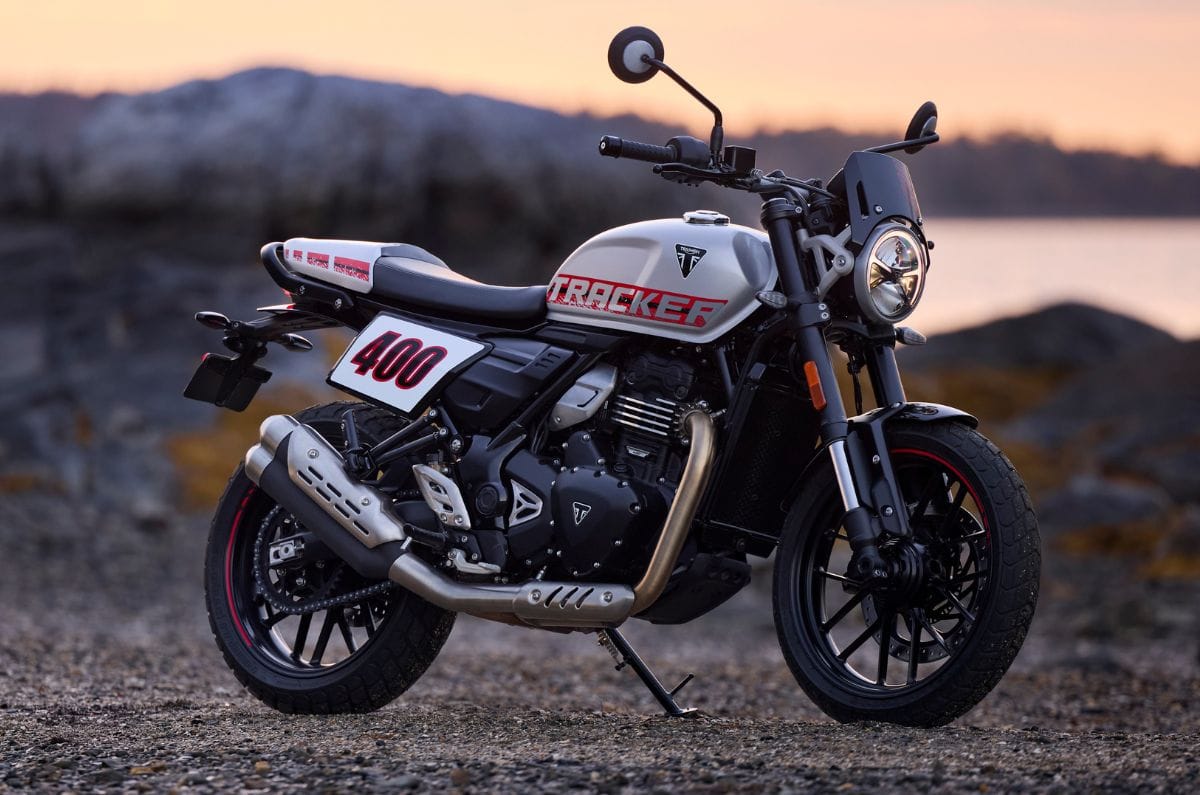
Visually, the Triumph Tracker 400 is a head-turner, embracing a distinct flat-track racing aesthetic that immediately sets it apart. The design language is stripped-back and purposeful, featuring a boxy fuel tank that harks back to classic dirt bikes, a minimalist flyscreen, and unmistakable number-board-style side panels. A colour-coded seat cowl further enhances its sporty, single-rider appearance. The rear three-quarter section, including the sleek rectangular LED tail-light and the seat, appears to be shared with the Thruxton 400, providing a sense of familial consistency within Triumph's performance range. This visual identity is designed to appeal to riders looking for something beyond the conventional naked roadster or scrambler.
Underneath its striking exterior, the Tracker 400 benefits from a robust chassis and suspension setup, largely consistent with its premium siblings. It rides on 17-inch wheels at both ends, featuring a new design distinct from other small-capacity Triumphs. These are shod with MRF REVZ FD1 tyres, known for their grip and durability, promising confident handling in various conditions. The suspension duties are handled by an upside-down (USD) fork at the front and a monoshock setup at the rear, a configuration found across the range (barring the Speed T4 variant, which isn't part of the initial launch lineup). This premium suspension package should translate into a comfortable yet engaging ride, capable of absorbing urban undulations while maintaining composure through corners.
At 181kg, the Tracker 400 is marginally heavier – by 2kg – than the new Speed 400 equipped with the smaller 349cc engine. While this difference is negligible for most riders, it’s a point of comparison that highlights the slight variations within Triumph’s evolving 400cc platform. The combination of its chassis, wheel size, and tyre choice suggests a motorcycle that is agile and responsive, well-suited for urban environments and spirited weekend rides. The three available colour options are expected to complement its flat-track persona, allowing riders to choose a style that best reflects their personality.
The pricing of the Tracker 400 at Rs 2.46 lakh (ex-showroom, Delhi) is meticulously calculated to slot it perfectly between its siblings. It's priced Rs 14,000 more than the Speed 400 and Rs 14,000 less than the Scrambler 400 X. This tiered pricing strategy aims to offer distinct choices at different price points, catering to varying preferences and budgets within the premium small-capacity segment. This also puts it in direct contention with established players like the KTM 390 Duke, Husqvarna Svartpilen 401, and even more traditional offerings from Royal Enfield, albeit with a premium twist.
However, Triumph’s strategy isn’t without its potential pitfalls, inviting a \"negative view PR\" perspective that could engage a wider, more critical audience. Is the downsized 349cc engine, even with its tax advantages, a subtle compromise for a brand that prides itself on 'For The Ride' philosophy? While the performance figures are commendable, some enthusiasts might perceive the 2hp drop from the international 399cc model as a dilution of the pure performance intent. Does Triumph risk alienating a segment of riders who expect unadulterated global specifications, even at a slightly higher cost?
Furthermore, the flat-track inspired styling, while distinctive, is inherently niche. Will this unique aesthetic resonate with a broad enough audience in India, or will it appeal only to a select group of riders seeking something overtly unconventional? Triumph is clearly targeting urban riders who appreciate bespoke design and a touch of performance, but in a market where versatility and everyday practicality often reign supreme, such specialized styling can sometimes be a double-edged sword. The brand's decision to play the tax bracket game, while financially astute, might also lead to questions about whether it's diluting its premium, performance-first image in pursuit of higher volumes. For a brand like Triumph, balancing mass-market appeal with its core premium identity is a delicate tightrope walk.
The Triumph Tracker 400's launch in India is more than just a new motorcycle; it’s a meticulously crafted statement of intent from the British manufacturer. By strategically downsizing its engine to align with Indian tax regulations, Triumph has demonstrated a deep understanding of the market's nuances, aiming to make premium motorcycling more accessible without significantly compromising the core \"Triumph\" experience. The Tracker 400, with its aggressive 40hp tune and distinctive flat-track inspired styling, is poised to carve out a unique niche, appealing to riders who crave individuality and a spirited ride.
While questions about the downsized engine's perception and the niche appeal of its styling remain, the overall package presented by the Tracker 400 is undeniably compelling. Its premium components, brand legacy, and competitive pricing position it as a formidable contender in the rapidly growing 300-400cc segment. Triumph is not just launching a bike; it's extending an invitation to experience its legendary heritage through a modern, market-savvy lens. The Tracker 400 represents a bold new chapter, and it will be fascinating to watch how this flat-track inspired machine performs on the diverse roads and in the competitive hearts of Indian motorcyclists. The ride, indeed, continues to get more interesting.
Triumph Tracker 400 India Launch: A Strategic Downsize, Flat-Track Flair, and the Price of Ambition
The Tactical Downsize: Unpacking the Tracker 400's Heart
Flat-Track Flair Meets Urban Prowess: Design and Dynamics
Market Positioning, Pricing, and the Indian Landscape: A Risky Gamble?
Pros & Cons: A Balanced View
Conclusion: A Bold New Chapter for Triumph India