
In the dynamic and fiercely competitive Indian two-wheeler market, manufacturers are constantly seeking innovative strategies to capture market share and navigate complex regulatory landscapes. Triumph Motorcycles, a brand synonymous with classic British elegance and performance, has recently unveiled a strategic overhaul that has sent ripples through the industry. With a move anticipated for months by industry insiders, the iconic manufacturer has rolled out a downsized iteration of its popular 400cc platform, now featuring a 350cc engine. The intriguing twist? Triumph has opted to retain the '400' designation for these models, a decision sparking both strategic admiration and considerable debate among enthusiasts and critics alike.
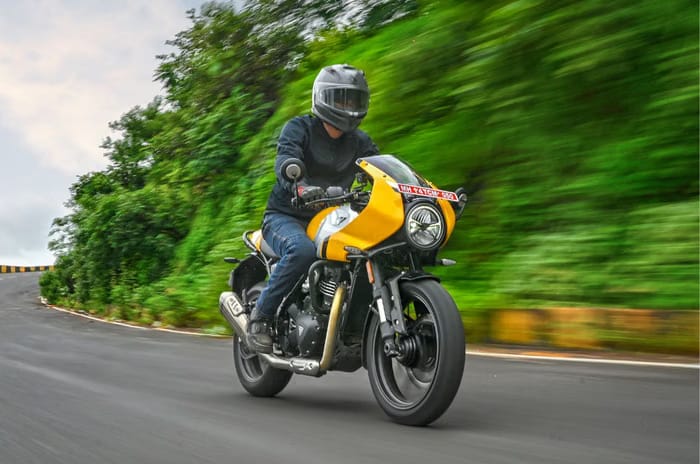
Above: The quintessential Thruxton 400, captured in a dynamic shot, showcases the blend of classic aesthetics and modern performance that Triumph aims to deliver, even with its revised 350cc heart. This image epitomizes the very spirit of the updated lineup.
At the heart of Triumph's audacious decision lies the intricate web of India's Goods and Services Tax (GST) structure. Motorcycles with engine displacements below 350cc attract a lower GST rate of 18 percent, a significant advantage over the 28 percent levied on those above this threshold. For a premium brand like Triumph, operating in a highly price-sensitive market, a 10 percent difference in taxation can translate into substantial savings for the consumer and, critically, improved competitiveness for the manufacturer. This move is a textbook example of market adaptation, designed to make Triumph's entry-level offerings more accessible without fundamentally compromising the brand's premium appeal.
However, the decision to retain the '400' moniker for these 350cc machines is undoubtedly a bold, and potentially contentious, marketing play. While it leverages the established recognition and positive association of the existing 400cc platform, it also walks a fine line. Skeptics argue that this nomenclature could lead to consumer confusion or even a perception of deceptive marketing, especially for riders who value precise specifications. Will buyers feel shortchanged, expecting a genuine 400cc experience but receiving a numerically identical, yet mechanically downsized, motorcycle? Only time will tell if this calculated gamble strengthens Triumph's position or invites an unexpected backlash. It's a clear move to benefit from the tax structure, but the communication strategy around it will be key. For a comprehensive look at GST implications in the automotive sector, consider resources from the official GST portal in India.
The technical heart of Triumph’s revamped '400' series is a 349cc liquid-cooled, single-cylinder engine. This new powerplant shares an 89mm bore with its 398.15cc predecessor but crucially features a shorter 56.1mm stroke, reduced from the previous 64mm. This reduction in stroke is the primary mechanical adjustment enabling the displacement decrease. From an engineering perspective, a shorter stroke engine generally implies a more rev-happy character, capable of achieving higher RPMs more easily, often at the expense of low-end torque. Triumph's engineers have undoubtedly worked to fine-tune this new unit to maintain a balance of rideability and performance characteristic of the brand.
However, the elephant in the room for many enthusiasts is the inevitable dip in peak power and torque figures. For the entry-level Speed T4, the new engine produces 29hp at 7,500rpm and 31Nm at 5,500rpm. This is a noticeable drop from the outgoing 398.15cc engine's 31hp at 7,000rpm and 36Nm at 5,000rpm. Similarly, for the Speed 400, Scrambler 400, and Scrambler 400 XC, peak output now stands at 37hp at 8,500rpm and 32Nm at 7,000rpm, down from 40hp at 8,000rpm and 37.5Nm at 6,500rpm. While these reductions might seem marginal on paper, they can translate to a perceptible difference in real-world riding, especially concerning highway overtakes or spirited acceleration. The shorter stroke, while aiding revs, naturally reduces the leverage applied to the crankshaft, leading to less torque for a given cylinder pressure.
Triumph's engineers have, however, managed to squeeze out a formidable 40hp at 8,750rpm and 32Nm at 7,500rpm for the newly introduced Tracker 400 and the Thruxton 400. This higher state of tune demonstrates the engine's versatility and potential for different power delivery characteristics across the range. It suggests a more aggressive cam profile or different fueling maps to push the power higher up the RPM band, aligning with the sportier aspirations of these models. Despite the power reduction, the liquid-cooling and four-valve head design indicate a modern, efficient, and refined engine architecture, designed for smooth operation and durability, features that are crucial for discerning riders. Further technical deep dives can often be found on specialist sites like Motorcycle News.
Beyond the engine adjustments, Triumph has strategically expanded its lineup with the introduction of the new Tracker 400 to the Indian market. Unlike some international counterparts that might feature the larger engine, the Indian-spec Tracker 400 proudly carries the new, smaller 350cc platform. This new model is positioned to appeal to riders seeking a blend of urban agility and light adventure capability, a growing segment in India. Notably, the Tracker 400, alongside the classic Thruxton 400, receives the most potent version of the new 350cc engine, churning out 40hp at 8,750rpm and 32Nm at 7,500rpm. This higher tune ensures that despite the displacement reduction, these models retain a spirited character befitting their performance-oriented design.
The pricing strategy for this new 350cc-powered range is perhaps the most direct reflection of the GST benefit. The lineup now comprises six distinct models, catering to a broad spectrum of preferences. The Speed T4 retains its highly competitive entry price of Rs 1.95 lakh, serving as a crucial gateway to the Triumph brand. Moving up, the new Speed 400 is priced at Rs 2.32 lakh, making it an attractive proposition in its segment. The Tracker 400, a fresh face, slots in at Rs 2.46 lakh, offering a unique blend of style and versatility. For the adventure-inclined, the Scrambler 400 is available at Rs 2.59 lakh, with the more rugged Scrambler 400 XC priced at Rs 2.90 lakh. Finally, the iconic Thruxton 400, embodying classic cafe racer aesthetics, rounds out the range at Rs 2.66 lakh. These prices, all ex-showroom, Delhi, represent a significant adjustment from their 400cc predecessors, effectively passing on the GST savings to the consumer and making Triumph a more formidable competitor against rivals like Royal Enfield and KTM in the mid-displacement segment.
All prices are ex-showroom, Delhi. Note: Price drops reflect the benefit passed on to the consumer due to the lower GST rate.
Triumph's bold move into the 350cc segment, while retaining the '400' designation, is a double-edged sword. It presents compelling advantages but also comes with certain caveats that potential buyers and the market at large must consider.
Triumph's strategic pivot to a 350cc platform, while boldly retaining the '400' moniker, represents a significant move designed to strengthen its foothold in the crucial Indian market. This tactical maneuver, driven primarily by tax incentives, makes the brand's premium offerings more accessible and competitive. The new 349cc engine, despite its slightly lower output figures compared to its predecessor, promises modern refinement and a spirited ride, particularly in its higher state of tune for models like the Tracker 400 and Thruxton 400, beautifully exemplified by the dynamic Thruxton image we've seen.
While the benefits of lower pricing and expanded market reach are undeniable, the challenge for Triumph will be to manage consumer perception effectively. The balancing act between leveraging an established nameplate and transparently communicating the displacement change will determine the long-term success of this strategy. Will riders prioritize the exceptional value and brand prestige at a lower price point, or will the subtle reduction in performance and the '400' designation on a 350cc engine cause friction?
Ultimately, Triumph is playing a high-stakes game. By carefully recalibrating its product strategy for the Indian market, it aims to ride the wave of demand for premium, yet accessible, motorcycles. The new 350cc '400' range is a testament to the brand's agility and commitment to growth in diverse markets. Its success will undoubtedly serve as a case study for how global manufacturers adapt to local conditions, proving that sometimes, less displacement can indeed mean more opportunity. The road ahead for Triumph's new lineup is certainly one to watch, as it navigates the delicate interplay of performance, price, and perception in a market that never ceases to surprise. For more on Triumph's global offerings, visit Triumph Motorcycles official website.Triumph's Audacious Gambit: Unpacking the New 350cc '400' Platform – A Masterstroke or Misstep?
The Strategic Pivot: Why 350cc is the New 400cc for Triumph
Key Updates at a Glance:
Engineering Nuances: Unpacking the New 349cc Heart and its Performance Realities
Expanding Horizons: The New Triumph Tracker 400 and Comprehensive Pricing
Model
Old Price
New Price
Speed T4
Rs 1.95 lakh
Rs 1.95 lakh
Speed 400
Rs 2.39 lakh
Rs 2.32 lakh (-Rs 0.07 lakh)
Scrambler 400
Rs 2.70 lakh
Rs 2.59 lakh (-Rs 0.11 lakh)
Scrambler 400 XC
Rs 2.97 lakh
Rs 2.90 lakh (-Rs 0.07 lakh)
Thruxton 400
Rs 2.76 lakh
Rs 2.66 lakh (-Rs 0.10 lakh)
Tracker 400
N/A
Rs 2.46 lakh (New Model)
Triumph's 350cc Platform: A Balance of Pros and Cons
The Upside: Strategic Wins
The Downside: Potential Pitfalls
Conclusion: Charting the Course for Triumph's Mid-Displacement Future