
From the moment you lay eyes on the Vinfast VF MPV 7, as captured in the striking image above, its purposeful stance as a modern people-mover is undeniable. Vinfast, a Vietnamese automotive newcomer, has made an astonishing entry into the Indian EV market, rapidly securing a position among the top five best-selling electric vehicle manufacturers in under a year. This aggressive market penetration is a clear statement of intent, and their latest offering, the Vinfast VF MPV 7, is poised to further cement that ambition. This electric seven-seater MPV isn't just another entrant; it's a direct challenger aiming to disrupt established players like the Kia Carens Clavis EV and the upcoming BYD eMax 7. But does it possess the blend of practicality, features, and driving dynamics required to truly win over the discerning Indian family? Let’s embark on a comprehensive journey to uncover the VF MPV 7's strengths, weaknesses, and its potential to carve out a significant niche.
The Vinfast VF MPV 7, known as \"Limo Green\" in its home market (a moniker reserved for fleet operators in India to create clear differentiation from the private buyer-focused VF MPV 7), certainly doesn't shy away from making a visual impact. It possesses an undeniable road presence that commands attention, standing visibly larger than its direct competitor, the Kia Carens Clavis EV, in almost every dimension. More crucially, its proportions feel inherently balanced and purposeful, avoiding the sometimes awkward stretched appearance that can plague large MPVs.
In profile, the VF MPV 7 proudly embraces its identity as a dedicated people-mover, eschewing any pretense of crossover-like styling. However, this functional aesthetic is brilliantly uplifted by several signature design elements. The distinctive V-shaped LED DRLs upfront are unmistakably Vinfast, contributing to a modern and aggressive fascia. Complementing this are the striking 19-inch alloy wheels, which fill the wheel arches confidently and add a touch of premium sportiness. A sleek chrome window line traces the vehicle's silhouette, while the connected LED tail lamps at the rear provide a cohesive and contemporary lighting signature. These thoughtful touches collectively infuse the necessary \"flavour\" to prevent the VF MPV 7 from becoming merely utilitarian.
Beyond aesthetics, the underlying engineering boasts impressive figures that translate directly into potential real-world advantages. A substantial 2.8-meter wheelbase is a critical foundation for superior interior space and ride comfort, especially for a seven-seater. Furthermore, a generous 183mm of ground clearance is a welcome attribute for Indian road conditions, offering peace of mind over speed breakers and uneven terrain, and ensuring this EV MPV can tackle varied urban and semi-urban landscapes with confidence. While the overall design might lean towards functionality, Vinfast has successfully integrated enough stylistic cues to ensure the VF MPV 7 holds its own in a competitive segment.
Stepping inside the Vinfast VF MPV 7 reveals a cabin that largely adheres to the minimalist design philosophy seen in its siblings, the VF6 and VF7. The approach is undeniably functional, prioritizing clean lines and uncluttered surfaces. While this design choice can feel modern and airy to some, it frankly falls short of the \"sense of occasion\" that more premium rivals, such as the Kia Carens Clavis EV, offer with their more elaborate dashboard designs and tactile switchgear. This is a point where potential buyers will need to weigh practicality against perceived luxury.
Despite the minimalistic aesthetic, the fit and finish are commendable, with textured hard plastics that feel robust and pleasant to the touch. Premium touches like a flat-bottomed steering wheel and padded leatherette central and door armrests elevate the cabin's feel. The frameless rearview mirror, with its manual day-night function, further adds to an expensive, contemporary vibe. However, the silver speaker grille styling might prove divisive, leaning into a more industrial look that some might find less appealing than subtle integration.
The centerpiece of the VF MPV 7's digital cockpit is a 10.1-inch touchscreen, a hub that consolidates speedometer readings, air-conditioning controls, outside mirror adjustments, drive modes, and regenerative braking settings. While the idea of centralizing controls is modern, the user experience here leaves significant room for improvement. The most glaring ergonomic oversight is the absence of a conventional instrument cluster or even a head-up display. This forces the driver to divert their gaze from the road to the central screen to check crucial information like vehicle speed – a significant safety concern and a definite negative point for engagement that Vinfast must address. Furthermore, the inability to adjust mirrors while on the move adds a layer of inconvenience not typically expected in a contemporary vehicle. Our test car featured wired Android Auto and Apple CarPlay, which is functional, but the absence of wireless connectivity without an aftermarket dongle feels like a missed opportunity in this segment. The sound quality from its four speakers also left much to be desired, failing to provide the immersive audio experience many modern families expect.
On a positive note, storage solutions are abundant and well-thought-out. Drivers and passengers will appreciate the dedicated phone stowage area, multiple cup holders, a deep central console, and a lower storage area equipped with both USB Type-A and Type-C charging ports, alongside generous door pockets. These practical elements underscore the MPV's family-friendly intentions.
Front seats are broad and extensively cushioned, which may suit some, but they regrettably lack adequate lateral support, which can be an issue on longer journeys or during dynamic driving. The absence of power adjustment and a seat ventilation function, features increasingly common in this segment and offered by competitors, is a notable omission that detracts from the premium feel.
The middle row is a highlight, offering exceptional spaciousness. The theatre-like seating arrangement, where the middle row sits higher than the front, provides occupants with an excellent forward view. While the cushioning again feels excessive, particularly in the thigh support region – an attempt to compensate for a short squab – it can feel somewhat protrusive. Passengers benefit from the ability to slide and recline their seats to find an optimal comfort angle. Three adjustable headrests and a flat floor further enhance comfort. While the cabin width can accommodate three adults abreast, the narrow seat design means outer passengers might experience limited support. Missing features like window sunshades and a central armrest are minor but perceptible drawbacks.
Accessing the third row involves a 60:40 tumble mechanism for the middle row. While functional, it doesn't feel as effortlessly engineered as the Kia Carens' system. However, once inside, headroom is surprisingly generous, even for taller adults, despite the third row being positioned higher. This, coupled with large quarter glass windows, contributes to an airy and less claustrophobic feel. A cleverly integrated step beneath the middle row provides space to tuck feet, significantly improving comfort and preventing a cramped sensation. The backrest reclines to a certain degree, and passengers here have access to roof-mounted rear AC controls and air vents, ensuring a comfortable experience even on longer trips.
The boot space, on initial impression, appears to be on par with the Carens EV. However, a significant practical omission is the lack of a front luggage area (frunk) in the VF MPV 7, a feature increasingly common and highly useful in modern EVs for storing charging cables or smaller items.
Under the hood, or rather, beneath the floor, the Vinfast VF MPV 7 is powered by a 60.13kWh battery pack, delivering energy to a 204hp/280Nm electric motor driving the front wheels. The immediate impression upon acceleration is not one of overwhelming urgency, which, surprisingly, might appeal to many MPV owners seeking a smooth, predictable, and non-jerky power delivery for comfortable family commutes. The power delivery is notably gradual, ensuring a refined driving experience rather than a performance-oriented sprint. Still, for those who demand it, the VF MPV 7 can accelerate from a standstill to 100kph in just under 10 seconds, a respectable figure for a vehicle of its size and purpose.
The vehicle offers three drive modes: Eco, Normal, and Sport. However, on initial impressions, the discernible difference between these modes in terms of power delivery and throttle response felt minimal, suggesting a tuning philosophy that prioritizes consistency over drastic character changes. Interestingly, the top speed in Eco mode is electronically capped at a speedometer-indicated 140kph, while in Normal and Sport modes, it nudges a little over 160kph.
Regenerative braking is adjustable across three levels, with an option to turn it off entirely. Even in its strongest setting, the deceleration doesn't feel overly aggressive, making for a smooth experience for passengers. While the system can bring the vehicle down to a crawl at around 5kph, a full single-pedal drive mode, which allows for near-complete stopping without using the brake pedal, is conspicuously absent – a feature many EV enthusiasts and urban drivers now prefer.
However, the refinement aspect presented some challenges during our initial drive. The electric motor whine was quite prominent, intruding into the cabin more than expected from a modern EV. Furthermore, wind noise at typical legal cruising speeds seemed a bit excessive, indicating a potential area for improvement in sound insulation. These factors could detract from the overall premium experience, especially on longer highway journeys.
Regarding range, Vinfast aims high. While the Vietnamese version has a claimed NEDC range of approximately 450km, Vinfast expresses strong confidence that the Indian-spec VF MPV 7 will deliver a real-world range exceeding 500km. If this translates accurately to actual driving conditions, it would be a significant selling point, alleviating range anxiety for many potential buyers. Charging capabilities are also competitive, with support for up to 80kW DC fast charging speeds, enabling a 10-80 percent charge in a mere 30 minutes, which is crucial for quick top-ups on long trips.
The ride and handling balance of the VF MPV 7 presented a mixed picture during our limited test on the company’s smooth track. High-speed ride quality and stability were indeed impressive, conveying a sense of confidence and composure. However, minor road imperfections at lower speeds revealed a slightly busy ride, suggesting that the suspension might struggle to absorb typical urban road undulations with the same finesse. Body roll, when making quick directional changes, felt a touch excessive, potentially leading to passengers being tossed around, which is less than ideal for an MPV focused on family comfort. The steering, while sharp and confidence-inspiring at the dead centre, felt rather slow-geared thereafter and lacked the precise, consistent feedback found in rivals like the Kia Carens. Braking performance, thankfully, felt strong and predictable, offering good stopping power. It’s important to reserve final judgment on its ride and handling until a full road test on diverse Indian surfaces, especially given Vinfast’s statement that the \"Indian version\" will feature a reworked, softer suspension setup to better cater to our notoriously bumpy road conditions. This promise, however, puts the onus on Vinfast to deliver, and potential buyers will keenly observe if this crucial adaptation materializes effectively.
To aid potential buyers in their decision-making, here’s a concise summary of the Vinfast VF MPV 7's key strengths and areas for improvement:
The Vinfast VF MPV 7 steps into the competitive Indian market with a compelling blend of strong fundamentals and a few noticeable compromises. Its spacious cabin, generous dimensions, and a projected real-world range exceeding 500km are undeniable selling points that cater directly to the needs of large Indian families seeking practical and sustainable mobility. These attributes are further sweetened by Vinfast's potentially aggressive ownership proposition, including a remarkable 10-year warranty, the tantalizing prospect of free charging until 2029, and an attractive ICE to EV incentive. Such a package could significantly lower the total cost of ownership and make the transition to electric a far more appealing prospect for many.
However, the VF MPV 7’s functional approach to its interior design and its noticeable lack of certain premium features, especially in the infotainment and ADAS departments, could deter buyers accustomed to the feature-rich offerings from established competitors. The ergonomic challenges posed by the central touchscreen, the lack of a conventional instrument cluster, and the observed refinement issues in motor and wind noise are critical areas that Vinfast must address as they refine the vehicle for the Indian market. The promise of a \"reworked (softer) suspension\" for Indian roads is a significant one, and its successful implementation will be crucial to its acceptance.
While our comprehensive review highlights both its considerable strengths and areas for improvement, it's clear that the Vinfast VF MPV 7 has the potential to carve out a unique space. It could effectively bridge the gap between more affordable petrol-automatic MPVs like the Maruti Ertiga and XL6, and the more premium electric offerings. Vinfast's past record suggests a highly aggressive pricing strategy, and if they manage to price the VF MPV 7 competitively when it launches this month, its blend of practicality, range, and compelling ownership benefits could make it a proposition that’s genuinely difficult to ignore. The battle for the electric MPV segment in India is heating up, and the Vinfast VF MPV 7 is certainly a contender to watch with keen interest, despite its initial quirks. Its success will ultimately hinge on whether its strong value proposition can outweigh its present shortcomings in the eyes of the Indian consumer.
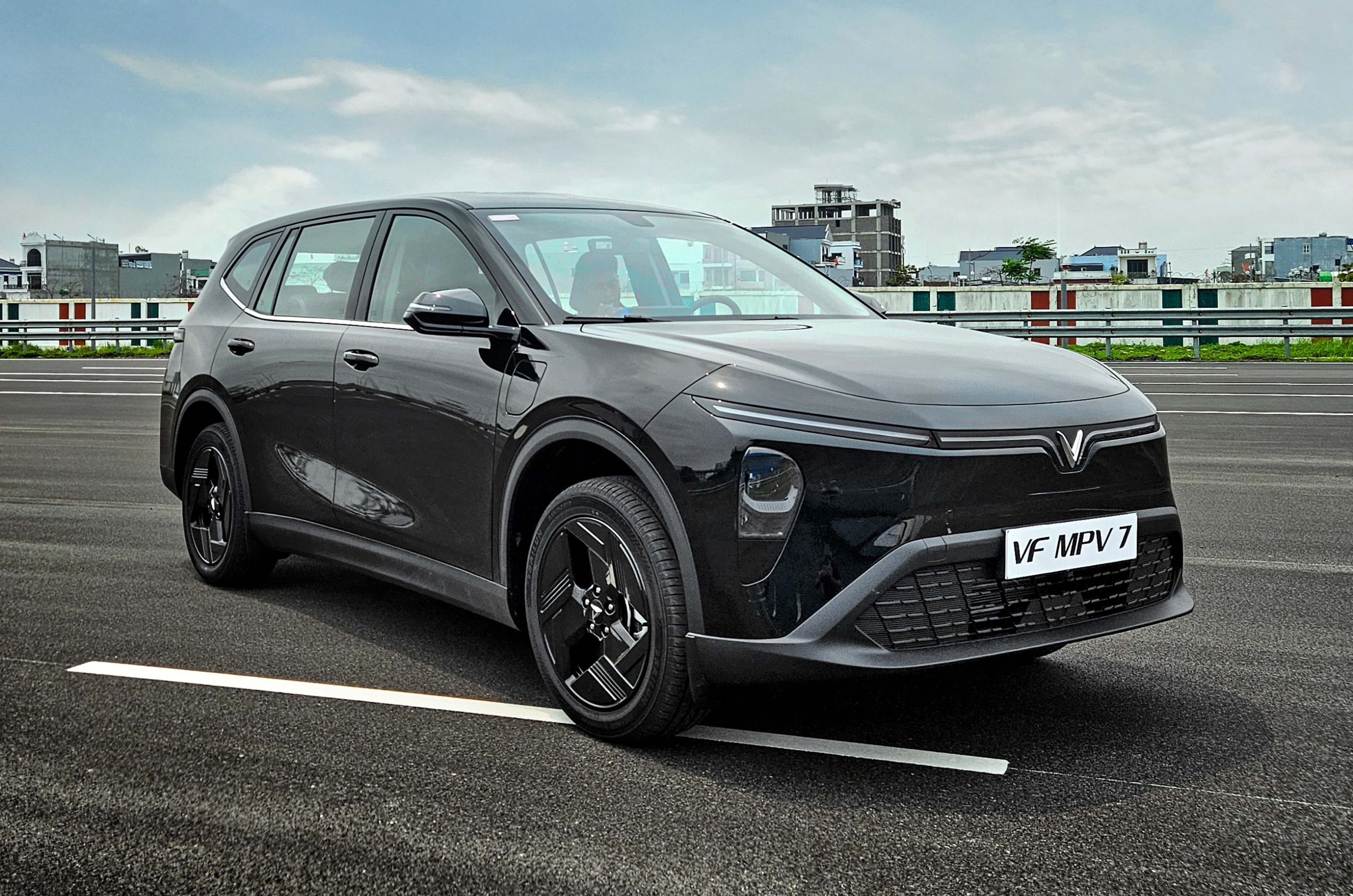
Vinfast VF MPV 7: Can This Electric 7-Seater MPV Redefine Family Mobility in India? A Deep Dive.
A Bold Statement: Design, Dimensions, and Initial Impressions
Inside the Electric Sanctuary: Space, Comfort, and a Question of Features
Driving Dynamics and Range: A Mixed Bag of Promises and Realities
Pros & Cons: A Balanced Perspective
The Verdict: Value, Ambition, and the Road Ahead for Vinfast