
```html
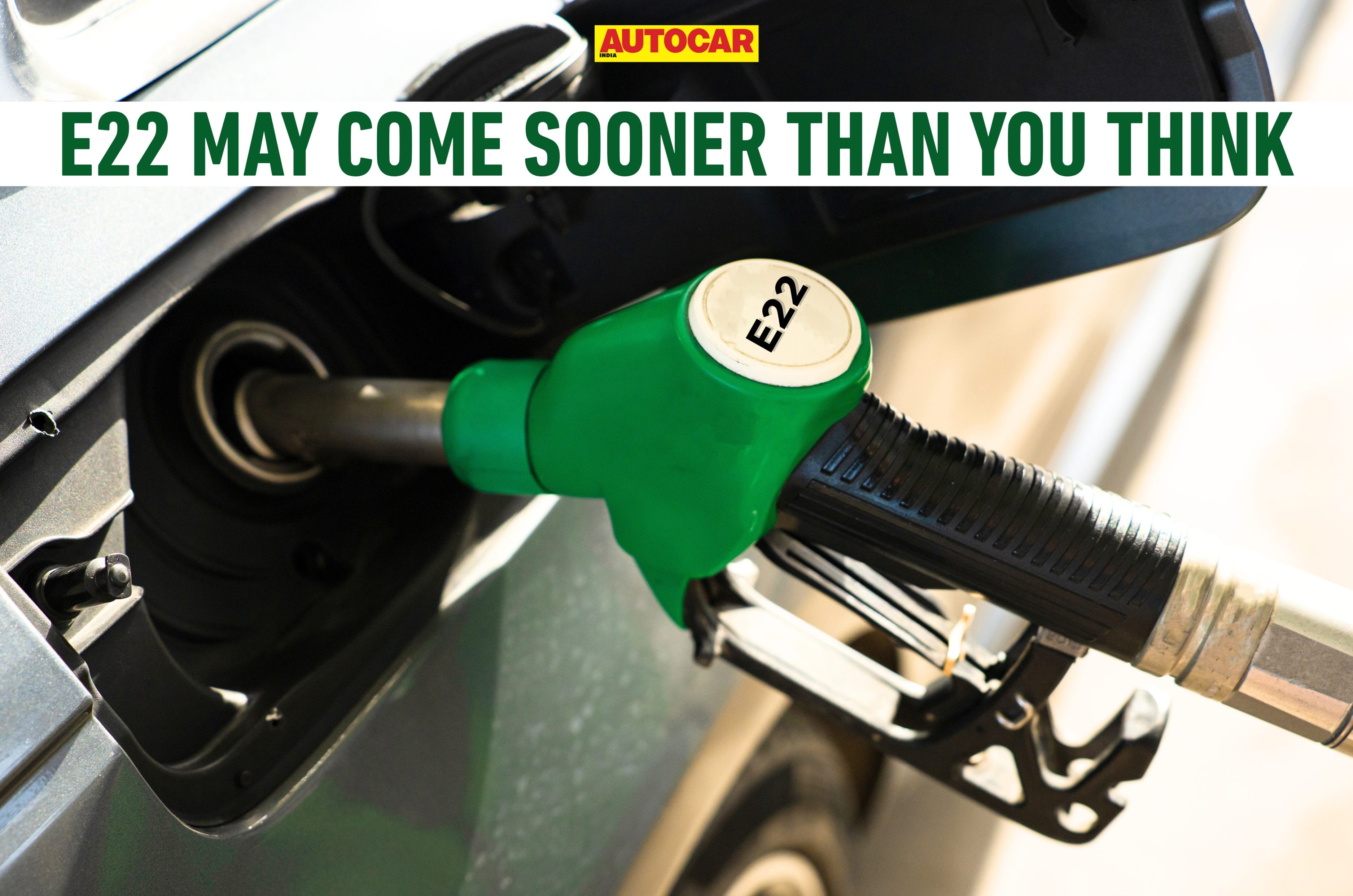
The roar of an engine, once a simple symphony of internal combustion, is now increasingly accompanied by the whisper of policy shifts and environmental mandates. India, a nation perpetually navigating the complexities of energy security and burgeoning demand, finds itself at a pivotal moment in its ambitious ethanol blending program. With a staggering overcapacity in ethanol production juxtaposed against volatile global crude prices, the automotive landscape is poised for significant transformation. Are we truly ready to embrace a higher ethanol future, or are we hurtling towards unforeseen challenges? This image, depicting the crucial discussion around India's E20 to E22 fuel blending, perfectly encapsulates the crossroads the nation's energy policy stands upon. It highlights a critical juncture where policy decisions, economic pressures, and technological advancements converge to redefine the future of automotive fuels in the country. The Indian Sugar and Bio-Energy Manufacturers Association (ISMA) is spearheading a fervent call for the nation to transcend the E20 blending threshold and to cultivate a robust policy ecosystem conducive to the widespread adoption of flex-fuel vehicles. This strategic push isn't just about environmental stewardship; it's a multi-faceted response to an impending domestic overcapacity crisis in ethanol production, escalating global crude oil prices exacerbated by geopolitical tensions, and the persistent quest for energy independence. In a candid conversation with Autocar India, ISMA Director General Deepak Balani articulated the association's strategic imperatives, underpinned by compelling statistical data. The core arguments advocating for a paradigm shift in India's fuel policy are: India's ethanol production infrastructure has expanded at a breathtaking pace, currently boasting an annual capacity of nearly 2,000 crore liters, with an additional 400 crore liters projected to come online in the ensuing year. This robust supply capability, however, casts a long shadow over actual consumption. At the current E20 blending level, the nation utilizes approximately 1,100 crore liters, implying that a mere 50 percent of the installed capacity is being effectively deployed. This stark imbalance threatens the economic viability of distilleries nationwide. Balani underscored the paradoxical situation where governmental incentives initially propelled the rapid expansion of production capacity, yet failed to instantiate commensurate policy support for boosting consumption. This oversight has left many distilleries struggling to operate at economically sustainable utilization rates. Adding to this domestic pressure, the avenue of ethanol exports offers little immediate relief. The structural economics of India’s sugarcane-based ethanol production render it uncompetitive on the global stage. The government's fixed Fair and Remunerative Price (FRP) for sugarcane farmers, which accounts for approximately 75 percent of production costs, places Indian ethanol at a significant cost disadvantage. \"We pay the highest for our sugarcane to the farmer in the world,\" Balani elaborated, highlighting the challenge of competing with nations like the U.S., where corn-based ethanol production operates under different economic frameworks, devoid of equivalent price controls. This intricate web of domestic policy and global economics forms the backdrop for ISMA's urgent advocacy. Rather than advocating for an abrupt leap to significantly higher blends, ISMA champions a pragmatic, incremental transition to E22 as an immediate interim measure. Balani posits that this move is technically sound and largely seamless. Vehicles mandated to be E20-compliant since 2023 are engineered to accommodate slightly higher ethanol concentrations without necessitating extensive recalibration or modifications. \"From E20 to E22 should not be a problem. There is scientific evidence. There are some tests which have been done by ARAI also,\" he asserted, drawing parallels with Brazil's extensive experience where E20-compliant vehicles have reliably operated with blends ranging from 22 to 25 percent. For ethanol producers, the economic rationale is compelling: a transition to E22 would immediately create demand for an additional 150 crore liters of ethanol, significantly alleviating the current overcapacity strain. The debate surrounding fuel efficiency, a hot button issue among consumers and on social media platforms, received a robust defense from Balani. While acknowledging a marginal drop, he characterized much of the public discourse as \"misinformation.\" According to tests conducted by ARAI (Automotive Research Association of India) in collaboration with OEMs, the mileage reduction is estimated to be around 5-6 percent for the 20 percent ethanol component, translating to an overall impact of merely 2-3 percent. Balani suggested that often, reported efficiency losses are attributable to factors like vehicle maintenance rather than solely ethanol content. However, Autocar India's own rigorous testing revealed mileage drops of up to 12 percent during the E10-to-E20 transition, particularly for older or less optimized vehicles. This discrepancy, while partially conceded by Balani as a function of vehicle age and engine calibration, underscores the tangible concerns faced by a segment of motorists. ISMA’s overarching strategic vision extends far beyond incremental blending increases; it aims to firmly establish flex-fuel vehicles (FFVs) as a mainstream powertrain option in India, mirroring the transformative success witnessed in Brazil. In Brazil, flex-fuel vehicles constitute a dominant majority, with the Brazilian Association of Automotive Vehicle Manufacturers (ANFAVEA) reporting that FFVs accounted for an impressive 74.4 percent of all new light vehicle registrations in 2025. This ambitious goal for India hinges on two critical prerequisites: competitive pricing for E100 fuel and the elimination of the current cost premium on FFVs compared to their conventional ICE counterparts. From an economic standpoint, Balani outlined a compelling scenario. With a weighted average ethanol cost of Rs 67 per liter, factoring in a 5 percent GST and dealer margins, E100 at the pump could realistically retail between Rs 80-82 per liter. This pricing would render E100 significantly more affordable than current petrol prices, especially given crude oil’s consistent trading above $100 a barrel. \"If the government is able to rationalise GST on E100, and we can bring the cost of E100 fuel from Rs 95 to around Rs 80–82 rupees, and with a flexible engine costing the same as an ICE engine, I think things can really move,\" he articulated. Encouraging policy signals are emerging. The draft CAFE-3 (Corporate Average Fuel Economy) norms, awaiting formal notification, propose \"super-credit\" provisions of 2.5 for biofuel vehicles. Such incentives could significantly motivate Original Equipment Manufacturers (OEMs) to invest in and produce FFVs. Furthermore, NITI Aayog’s recent Net Zero report explicitly endorses flex-fuel vehicles as a viable pathway towards cleaner mobility. \"These are recognitions by the highest body of the planning commission,\" Balani observed, indicating high-level governmental alignment with the flex-fuel agenda. The ambitious shift towards higher ethanol blends presents a dual-edged sword, offering significant advantages while also posing notable challenges for stakeholders across the spectrum. The automotive industry’s position on ethanol blending has historically been one of cautious pragmatism, often bordering on resistance. The imposition of E20 norms over OEM objections highlights the delicate balance between governmental mandates and industrial feasibility. Another blending hike inevitably entails further recalibration expenditures for manufacturers, at a time when they are already channeling substantial investments into the electric vehicle (EV) transition. Balani acknowledged this friction, stating, \"We are in discussions with almost all the OEMs. We are also in discussion with SIAM, ACMA, and we are trying to see how we can come on the same page.\" The stated goal is a collaborative pathway, distinct from past top-down directives. For the substantial older vehicle parc, which remains most susceptible to the adverse effects of higher ethanol blends, Balani pointed to a \"flex-fit retrofit kit\" developed and tested in collaboration with IIT Delhi as a potential ameliorative solution. However, this initiative remains in its pilot phase, underscoring the considerable ground still to be covered before a widespread, viable solution for legacy vehicles becomes a reality. Most contemporary vehicles rolling off production lines are already designed with E30 material compatibility, anticipating the long-term roadmap. Yet, proper engine calibration for seamlessly operating on E22–E30 blends will only materialize once these fuels are readily available commercially. With India’s ethanol industry grappling with overcapacity, global crude prices surging due to geopolitical instability, and the Prime Minister publicly endorsing the program’s strategic importance for import substitution, 2026 is being posited as a potential watershed year. Balani firmly believes that the government, acutely aware of the twin pressures of domestic surplus and international energy costs, will enact decisive measures. \"The government is looking at how to really increase the consumption of ethanol, and how to reduce the dependence (on crude imports). I believe the government will, in 2026, take some concrete steps to increase the consumption of ethanol,\" he asserted. The pathway championed by ISMA is a two-pronged strategy: a near-term, low-friction transition to E22 for the existing vehicle fleet, coupled with a resolute policy impetus encompassing GST rationalization, vehicle pricing parity, and CAFÉ credits. This comprehensive approach aims to render flex-fuel vehicles commercially viable and scalable. The success of this grand experiment – whether the government advances E22 in the short term while simultaneously laying the foundational policies for widespread flex-fuel adoption, and how the auto industry responds – will ultimately determine if India's substantial investment in ethanol delivers on its promise of bolstering national energy security. The undeniable trade-offs of a higher ethanol blend loom large for the average motorist. A further reduction in fuel efficiency is almost inevitable, directly impacting household budgets. Moreover, the increased ethanol content elevates the risk of accelerated wear and tear due to its corrosive nature, particularly in older vehicles and those with less rigorous maintenance. While many manufacturers have proactively engineered current models for E30 material compliance, the fine-tuning for optimal running on E22–E30 blends will only follow widespread commercial availability. The auto industry initially advocated for retaining E10 as the baseline, a position that was ultimately superseded by the E20 mandate. Now, the baseline is once again under pressure to ascend. This ongoing \"tug-of-war\" pits governmental aspirations for energy independence against the pragmatic warnings from automakers regarding real-world hardships for motorists: diminished mileage, potential reliability issues, and elevated ownership costs. In this high-stakes policy battle, the concerns of the average motorist – those who ultimately bear the brunt at the fuel pump and in the repair workshop – often appear worryingly marginalized. The true measure of success for India's ethanol journey will not just be about production capacity or import reduction, but about its seamless integration into the lives of millions of vehicle owners. With valuable insights from Mugdha Mishra. The path ahead for India's ethanol blending program is fraught with both immense potential and significant challenges. While the drive for energy security and environmental sustainability is commendable, the real-world implications for the automotive sector and, crucially, for millions of consumers, cannot be overlooked. A balanced, transparent approach that prioritizes both national goals and motorist welfare will be paramount in navigating this complex and transformative journey.India's Fuel Crossroads: Decoding the E20-E22 Shift and the Flex-Fuel Future
The Brewing Storm: India's Ethanol Overcapacity and Economic Realities
The Immediate Horizon: Pushing for E22 and Debating Fuel Efficiency
The Long-Term Vision: Flex-Fuel Vehicles and the Road to Higher Blends
Pros and Cons of India's Ethanol Blending Program
Pros:
Cons:
The OEM Relationship: Navigating a Complex Transition
2026: An Inflection Point for India's Ethanol Ambition?
Consumer Concerns and the Road Ahead: A Tug-of-War