
The image above captures a scene familiar to millions of motorists across India: a bustling toll plaza, a momentary pause in an otherwise continuous journey. Soon, however, this very scene will undergo a monumental transformation. Imagine a future where the jingle of coins and the rustle of banknotes are replaced entirely by the silent, swift efficiency of digital transactions. This isn't a distant dream but a concrete reality rapidly approaching, poised to redefine our highway experiences. The Ministry of Road Transport and Highways (MoRTH) has made a landmark announcement: by April 10, 2026, cash payments at India's toll booths will officially cease to exist. This bold move heralds a new era of electronic toll collection, mandating payments exclusively through digital means like FASTag and UPI. But what exactly does this mean for the everyday commuter, the long-haul trucker, and the very fabric of our national road network? This isn't merely a procedural tweak; it’s a profound shift designed to dismantle the perennial bottlenecks at toll plazas, injecting unparalleled fluidity into travel across the country's ever-expanding network of national highways and expressways. For years, the sight of vehicles queuing up for several minutes, sometimes even hours, has been a common frustration, negating the very purpose of high-speed corridors. MoRTH’s declaration is a clear signal of intent: to leverage technology to eradicate these inefficiencies, promising a future of genuinely seamless and swift highway transits. Let's delve deeper into the intricacies of this impending cashless revolution, its implications, and how it will shape the future of Indian mobility. The journey towards a fully electronic toll collection system has been a gradual but determined one. The introduction of FASTag in 2014, and its subsequent mandatory implementation from 2021, laid the crucial groundwork. This RFID (Radio Frequency Identification) based system, affixed to a vehicle’s windshield, enables automatic deduction of toll charges as the vehicle passes through a toll plaza. It was a significant leap from manual cash transactions, drastically reducing waiting times and fuel consumption. However, the continued allowance of cash payments, even in dedicated lanes, meant that the system's full potential for efficiency remained untapped. The April 2026 deadline marks the final, decisive step in this transformation. By eliminating cash entirely, the government aims to achieve several critical objectives: The integration of UPI (Unified Payments Interface) alongside FASTag further broadens the digital payment landscape. UPI, a real-time payment system developed by the National Payments Corporation of India (NPCI), has revolutionized digital transactions in the country. Its inclusion provides an alternative for those who might not have a FASTag or whose FASTag might face temporary issues, ensuring a robust safety net for electronic payments, even if it comes with a penalty in specific scenarios. With a firm deadline in place, understanding the implications of not adhering to the new digital mandate becomes paramount. MoRTH has outlined clear guidelines to ensure compliance and maintain order on the national highways: While the goal is 100% FASTag adoption, the authorities acknowledge that exceptions might occur. If a vehicle approaches a toll plaza without a valid, active FASTag, it will still be permitted to pass. However, this convenience comes at a cost: the driver or vehicle owner will be required to pay 1.25 times the normal toll fee. This payment must be made via UPI. This 25% surcharge serves as a clear deterrent, incentivizing users to maintain a valid FASTag and thus contribute to the system's overall efficiency. It's a pragmatic approach to prevent absolute gridlock while still pushing for compliance. Failure to comply with even the penalized UPI payment provision can lead to more severe consequences. Authorities are empowered to invoke Rule 14 of the National Highway Fee Rules, 2008. This rule grants them the right to refuse entry to a vehicle on the concerned road stretch if the prescribed toll fee is not paid. This is a critical enforcement mechanism, ensuring that the integrity of the toll collection system is maintained. Imagine being turned back from an expressway entry point – a scenario designed to underscore the seriousness of the digital payment mandate. Furthermore, the digital infrastructure extends beyond the plaza. Cameras and RFID readers at toll points can record a vehicle's passage even if no payment is received. In such instances, an e-notice will be issued to the vehicle owner. The owner will then have a grace period of three days to pay the regular toll fee. Should they fail to do so within this timeframe, they will be liable to pay double the amount. This sophisticated digital surveillance and enforcement system aims to minimize evasion and ensure that every road user contributes fairly to the upkeep of the national infrastructure. Another significant amendment introduced by MoRTH is the overhaul of the toll waiver system. Historically, certain government officials have been able to use their identification cards to avail toll exemptions, even for personal travel. This practice has often been a point of public contention, perceived as an unfair advantage and a source of potential misuse. To address this, MoRTH has appealed to government offices and relevant departments to acquire 'Exempted FASTags' or FASTag-based annual passes. Officials have clarified that the exemption will now apply strictly to the government authorities or the official vehicle for official duties, not to the individual holder of an ID card for their private journeys. This move is a crucial step towards standardizing and digitalizing all exemptions, ensuring greater transparency, reducing potential misuse, and fostering a sense of equity among all road users. It levels the playing field, ensuring that exemptions are tied to the purpose of the journey rather than the identity of the occupant, a positive public relations move that should resonate well with the general populace. Beyond the current FASTag system, the National Highways Authority of India (NHAI) is actively working on the next frontier of toll collection: the multi-lane free-flow (MLFF) toll system. This technology represents the ultimate vision for seamless highway travel, where toll collection becomes truly invisible to the driver. Imagine passing through a toll point without ever having to slow down, let alone stop. The MLFF system employs advanced technologies such as Automatic Number Plate Recognition (ANPR) cameras and sophisticated RFID readers mounted on overhead gantries. These systems automatically scan your vehicle's FASTag or number plate as it passes at highway speeds, deducting the toll fee in real-time. There are no physical toll booths, no barriers, and absolutely no need to stop or even slow down significantly. This \"signal-free\" or \"multi-lane-free-flow\" approach is already in use in many developed nations and promises to eliminate congestion entirely at toll points. Should a vehicle lacking a valid FASTag or with an inactive one pass through an MLFF gantry, the system will record its passage via ANPR. An e-notice would then be automatically generated and sent to the vehicle owner, subject to the same penalty and payment deadlines as outlined previously. This ensures that even in a free-flow environment, enforcement remains robust. The implementation of MLFF systems will not only enhance the user experience exponentially but also significantly improve the capacity of our highways, making journeys truly uninterrupted and efficient. While the shift to cashless tolling is largely hailed as a progressive and necessary step, it's essential to examine both its advantages and potential challenges from a balanced perspective. For vehicle owners, the message is clear: proactive preparation is key. Ensure your vehicle has a valid FASTag, properly affixed to the windshield, and regularly monitor its balance. FASTags can be purchased from various banks, online portals, or directly from toll plazas. Recharge facilities are widely available through banking apps, UPI, and dedicated FASTag portals. For commercial fleets, establishing robust FASTag management systems and ensuring driver education will be crucial to avoid penalties and maintain operational efficiency. Government offices and departments must transition swiftly to the 'Exempted FASTag' system to avoid disruptions to official travel and to lead by example in adopting the new policy. This also extends to any other categories previously exempt through manual processes, requiring them to integrate into the digital framework. The success of this transition hinges not just on technological implementation but also on comprehensive public awareness campaigns, robust customer support channels for dispute resolution, and continuous improvement of the underlying digital infrastructure to ensure high reliability and security. Addressing the 'digital divide' through simplified enrollment processes and accessible support will be critical to ensure no citizen is left behind. The Ministry of Road Transport and Highways' mandate to end cash payments at toll booths by April 10, 2026, is far more than an administrative decree. It represents a pivotal moment in India's journey towards modernizing its infrastructure and embracing digital transformation. From mitigating soul-crushing traffic jams to fostering greater transparency and efficiency, the benefits of a fully cashless tolling system are profound and far-reaching. While challenges such as the digital divide and the need for robust technical infrastructure remain, the proactive steps taken by MoRTH and NHAI, including the rollout of multi-lane free-flow systems and stricter enforcement rules, underscore a commitment to a smoother, faster, and more sustainable future for Indian road travel. As we approach the deadline, adapting to this digital shift isn't just about compliance; it's about embracing a more connected, efficient, and forward-thinking automotive landscape. The open road beckons, and soon, it will be a truly seamless experience for every driver in India.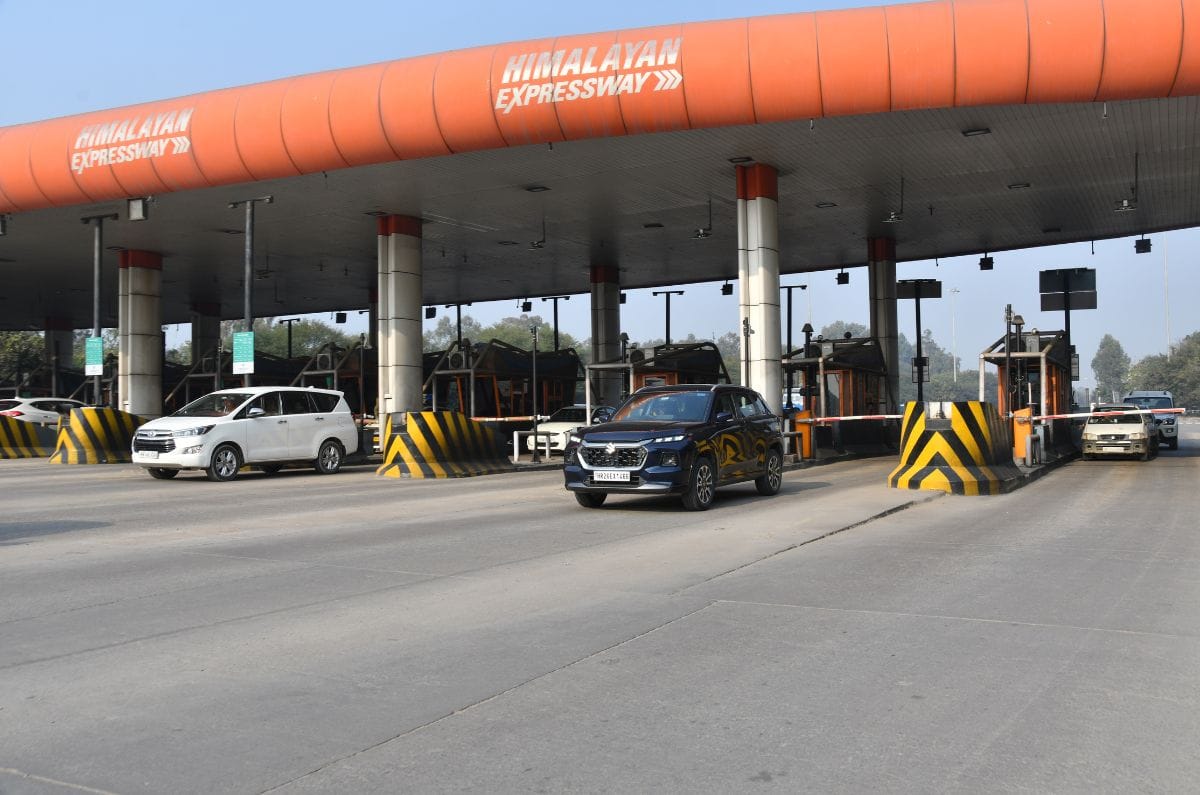
India's Road Ahead: Navigating the Cashless Horizon – Toll Booth Payments Go Digital by 2026
The Digital Mandate: Why Cashless Tolling is the Way Forward
Navigating the New Rules: Consequences of Non-Compliance and Fairer Waivers
The Penalty for Lacking a Valid FASTag
Denial of Entry and E-Notices: The Legal Backing
Ending ID-Based Waivers: A Step Towards Equity
The Zenith of Efficiency: Multi-Lane Free-Flow Tolling
Pros and Cons of the Cashless Toll Revolution
Pros:
Cons (The Negative View PR for Engagement):
Preparing for the Cashless Future
Conclusion: Paving the Way for a Smarter, Faster India