
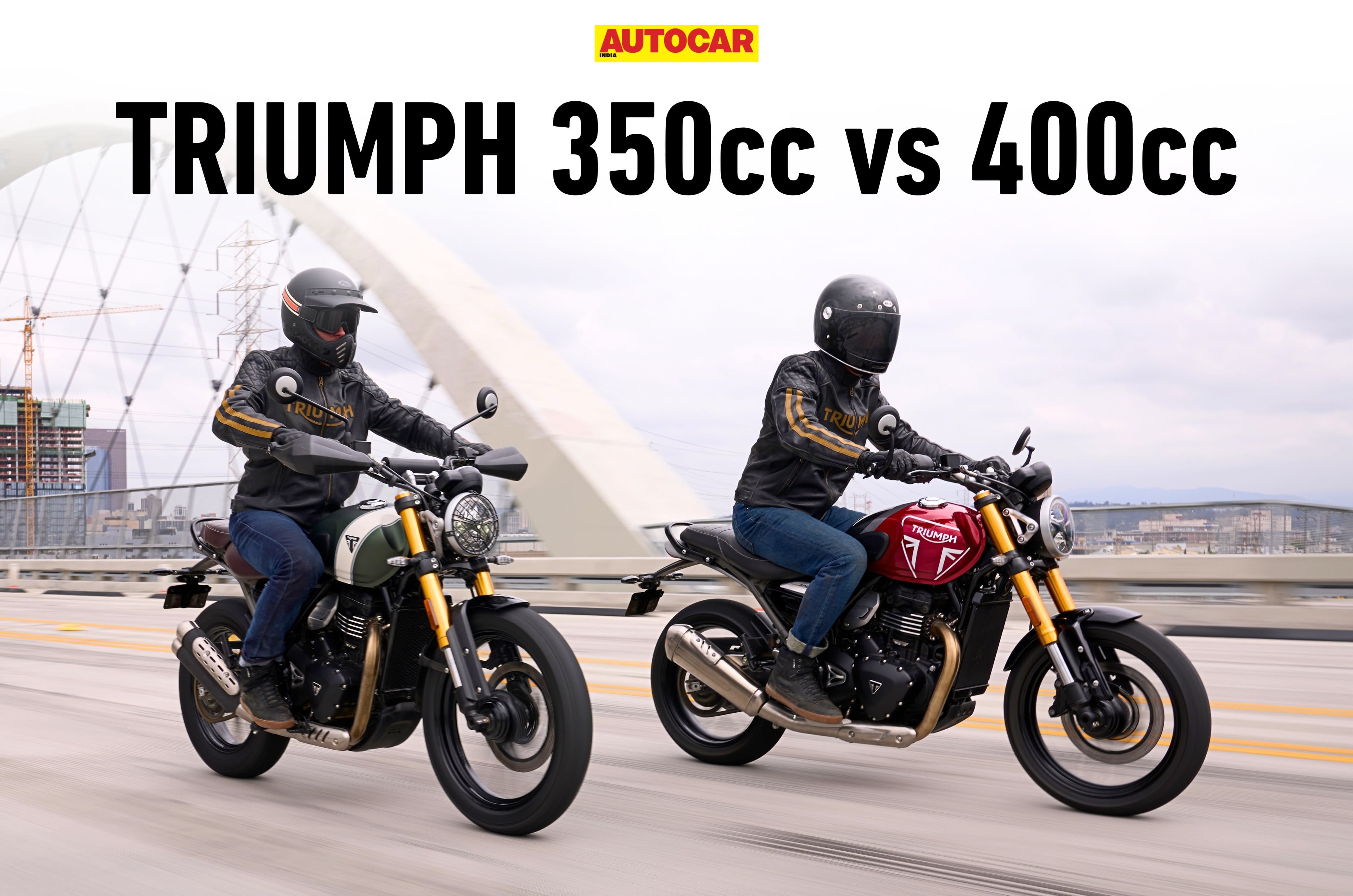
The world of motorcycling is a delicate balance of passion, performance, and practicality. Yet, sometimes, external forces can necessitate a seismic shift in strategy for even the most storied brands. This is precisely the scenario that unfolded for the Bajaj-Triumph partnership in the Indian market, compelling a significant recalibration of their highly anticipated small-capacity lineup. What began as an exciting venture to democratize the iconic British marque, offering accessible entry points with the charismatic 398cc engine, quickly pivoted in response to a pivotal policy change. The Indian government's introduction of GST 2.0 brought with it a revised tax structure, inadvertently creating a crucial 350cc displacement threshold that would redefine market dynamics for manufacturers and consumers alike. This strategic maneuver, visible in the accompanying image showcasing the sleek lines of these modern classics, is a tale of engineering adaptation and market shrewdness. Initially, Triumph's entire range, meticulously crafted to broaden its appeal to a new generation of riders, found itself positioned just above this critical 350cc demarcation. Consequently, these models were subjected to a steeper 40-percent tax bracket, a significant premium over the more favorable 18-percent rate applied to bikes below the threshold. Bajaj Auto, Triumph's formidable partner in India, swiftly absorbed this additional burden, demonstrating a clear commitment to their market strategy and brand positioning. However, this was always a stop-gap measure, a temporary shield against an unfavorable fiscal environment. The long-term vision demanded a more permanent, engineered solution. Thus, the directive was clear: develop a smaller displacement engine that could navigate these new regulatory waters. The result is a newly launched lineup featuring a revised 349cc engine, a fascinating case study in how mechanical adjustments can fundamentally alter a product's market viability. This deep dive will dissect the intricate mechanical and financial implications of this transition, scrutinizing the 'new' 350cc engine against its 'outgoing' 398cc predecessor, purely on paper, but with profound real-world consequences. India's Goods and Services Tax (GST) framework, particularly its evolution through GST 2.0, has profoundly reshaped the automotive landscape. For two-wheelers, the critical differentiator emerged: motorcycles with an engine displacement of 350cc or less would attract an 18% GST, while those exceeding this capacity would face a hefty 28% GST *plus* a 12% cess, totaling a formidable 40%. This wasn't merely a minor adjustment; it was a game-changer, drawing a clear line in the sand for manufacturers aiming for volume sales in the crucial mid-capacity segment. This policy effectively created a highly competitive sub-350cc category, transforming it into the sweet spot for affordability and accessibility. When Triumph initially unveiled its 400cc range – the Speed 400, Scrambler 400 X, Thruxton 400, and Scrambler 400 XC – they were positioned to introduce new customers to the revered British brand, offering premium features and performance at an attractive price point. However, their 398cc engine, just shy of the \"400\" moniker but still above the 350cc threshold, immediately placed them in the higher tax bracket. Bajaj, a company renowned for its astute market strategies and cost-efficiency, understood the gravity of this situation. While they initially absorbed the increased tax burden, recognizing the strategic importance of establishing the Triumph brand in India, it was always a temporary measure. The long-term sustainability and competitiveness of the lineup hinged on aligning with the favorable tax structure. This decision, though challenging from an engineering perspective, was a shrewd business move to ensure the Triumph models could compete fiercely in a market highly sensitive to price. For a deeper understanding of India's automotive GST structure, refer to official government resources or financial news outlets like TaxGuru.in. Engine downsizing is rarely as simple as merely shrinking components. It’s a precise act of engineering, balancing performance characteristics with new targets. In the case of Triumph’s 350cc engine, Bajaj’s engineers opted for a targeted approach: they maintained the bore diameter intact while strategically shortening the stroke length. To put it simply, the piston still travels across the same width within the cylinder, but the distance it moves up and down has been reduced. This fundamental alteration is the key to achieving the lower 349cc displacement from the original 398cc. For enthusiasts, understanding bore and stroke is crucial: a larger bore often allows for larger valves and better high-RPM breathing, while a longer stroke typically enhances low-end torque. By shortening the stroke, Bajaj aimed to reduce displacement while trying to preserve some of the original engine’s character. The consequence of this stroke reduction isn't just about cubic centimeters; it directly impacts how the engine breathes and delivers power. For the Speed and Scrambler models, this change manifests as peak power being achieved 500-1000rpm higher in the rev-range. This suggests the engine might feel slightly less eager in the mid-range and require riders to rev it out more to extract maximum performance. Conversely, the more performance-oriented Thruxton and Tracker models, at 8,750rpm, actually produce their peak power 250rpm *lower* in the rev-band compared to their 400cc predecessors. This nuanced tuning across different models highlights Bajaj's effort to tailor the engine's characteristics, mitigating the perceived impact of downsizing and potentially enhancing rideability for specific model types, such as a slightly earlier power delivery for the café racer-styled Thruxton. It's an almost universal truth in engine downsizing: a reduction in displacement typically leads to a drop in peak power and torque. The new 350cc Triumph lineup is no exception. Across the board, these updated models experience a peak power drop of 2-3hp, depending on the specific variant. While 2-3 horsepower might seem marginal to some, for a segment where every pony counts, especially when paired with an engine striving for a premium feel, it's a noticeable adjustment. For context, the earlier 398cc engine was capable of delivering a robust 40-42hp in its full-fat tune. The new figures now hover between 37hp-40hp, excluding the specially tuned Speed T4. However, it's in the torque figures where the impact of the downsized engine is most pronounced, taking a more significant hit with a loss of over 5Nm compared to the outgoing model. Torque, often considered the more relevant metric for real-world rideability, dictates the engine's pulling power and responsiveness, particularly at lower RPMs and during overtakes. A noticeable drop in torque could translate to a less immediate throttle response, potentially requiring more gear changes in city traffic or when tackling inclines. While the bikes will still be perfectly capable, discerning riders may perceive a slight dulling of the energetic character that defined the 400cc versions. The Speed T4, designed for a different market segment and state of tune, sees its revised power standing at 29hp and 31Nm, marking a proportional dip of 2hp and 5Nm, respectively, confirming that even within the lower output, the torque reduction is significant. The power-to-weight ratio is a critical indicator of a motorcycle's overall performance feel. Since the physical weight of the motorcycles has remained consistent across all models in the updated lineup, and the engine power has decreased, it's an arithmetic certainty that the power-to-weight ratios will also decline. This metric quantifies how much horsepower each kilogram of the bike's mass needs to propel, directly influencing acceleration, top speed, and the bike’s general responsiveness. A higher power-to-weight ratio always translates to better performance. The updated lineup sees a marginal, yet discernible, drop in these crucial figures across the board. For instance, the Speed T4’s figure reduces from 172hp/tonne to 161hp/tonne. The popular Speed 400 sees its ratio drop from 223hp/tonne to 206hp/tonne. The adventure-ready Scrambler 400 X now delivers 200hp/tonne, down from 216hp/tonne, and its more off-road-focused sibling, the Scrambler 400 XC, experiences a fall from 210hp/tonne to 194hp/tonne. Even the sophisticated Thruxton 400 records a comparatively smaller dip, going from 229hp/tonne to 218hp/tonne. While these numbers might seem small in isolation, collectively, they represent a slight diminishment in the raw performance edge. For purists and performance-oriented riders, this marginal reduction might be a point of contention, suggesting a subtle compromise in the exhilarating acceleration and top-end prowess that characterized the original 400cc models. While everyday riding might not highlight these changes dramatically, spirited riding or comparisons with rivals might bring these shifts into sharper focus. Triumph has, effectively, traded a sliver of performance for a significant boost in market accessibility. The entire rationale behind downsizing the 398cc TR-series engine was to strategically reposition it within the lower 18-percent tax bracket. This legislative compliance translates directly into tangible benefits for the consumer: significant price reductions across most of the lineup. The prices have been dropped by up to Rs 11,000, with the exact reduction varying model by model. This makes the bikes considerably more competitive against domestic rivals in the fiercely contested 300-350cc segment. At Rs 1.95 lakh (ex-showroom, Delhi), the Speed T4 steadfastly maintains its position as the most accessible entry point into the Triumph lineup, remarkably retaining its original price despite the engine revision, emphasizing its role as a volume driver. The Scrambler 400 X reaps the most substantial benefit from this recalibration, boasting an impressive price cut of Rs 11,000 compared to its erstwhile model. This makes the rugged Scrambler a particularly enticing proposition, especially for those looking for a versatile machine without breaking the bank. Despite the significant mechanical change and the resulting price adjustments, Bajaj has made a rather interesting, and potentially controversial, decision: they have opted not to tinker with the nomenclature, continuing to use the '400' suffix for all models. This could be a shrewd marketing play, aiming to retain the premium perception and the aspirational '400' badge, even if the actual displacement is closer to 350cc. However, it also opens the door to potential consumer confusion or criticism from purists who value precise specifications. It’s a calculated risk in branding, prioritizing market perception over literal accuracy. For a comprehensive overview of Triumph's current lineup in India, visit the official Triumph India website. All prices are ex-showroom, Delhi, and subject to change based on regional taxes and levies. This strategic pivot by Bajaj-Triumph, driven by external tax regulations, presents a dual-edged sword. While it’s a necessary move for market competitiveness, it's not without its trade-offs. Understanding these helps paint a complete picture of the new lineup’s position in the market. In the real world, how will these paper-based changes translate to the saddle? For most urban riders and those new to the Triumph brand, the differences in power and torque might be barely perceptible in everyday city commuting. The bikes will likely retain their characteristic smoothness and refinement, delivering a comfortable and engaging ride. However, on open highways, particularly during high-speed cruising or aggressive overtakes, the slight reduction in torque and peak power could become more apparent. Riders might find themselves downshifting more frequently to maintain momentum or execute quick maneuvers. This isn't to say the bikes will be underpowered, but rather that their character might have subtly shifted from briskly energetic to comfortably capable. This strategic move by Bajaj-Triumph carries broader implications for the Indian motorcycle market. It underscores the profound influence of government policies on product development and market positioning. By aligning with the favorable tax structure, Triumph has ensured its competitiveness against formidable rivals like Royal Enfield, KTM, and Honda in the burgeoning mid-capacity segment. This could well set a precedent, prompting other manufacturers to reconsider their engine displacements for the Indian market. Ultimately, this repositioning is a testament to Bajaj's pragmatic approach and Triumph's adaptability, securing a robust foothold for the British brand in one of the world's largest two-wheeler markets. The emphasis is now squarely on delivering premium access and aspirational ownership at a price point that makes sense in the current economic landscape. The journey from a 398cc to a 349cc engine for Triumph’s entry-level lineup in India is a compelling narrative of adaptation, compliance, and strategic foresight. What might appear as a mere numbers game on a spec sheet is, in reality, a meticulously calculated maneuver by Bajaj to navigate a complex regulatory environment and unlock significant market potential. While purists might mourn the marginal loss of power and torque, the overriding benefit of lower acquisition costs for consumers, facilitated by the more favorable tax bracket, presents an undeniable value proposition. This evolution isn't just about engines; it's about making the aspirational Triumph brand accessible to a wider audience, solidifying its presence in a crucial global market, and ensuring long-term sustainability. The retention of the '400' suffix, despite the technical downsizing, speaks volumes about the brand's confidence and market positioning strategy. Ultimately, Bajaj-Triumph has made a pragmatic choice, prioritizing market reach and affordability over uncompromised peak performance. The new 350cc range is poised to carve out a formidable niche, proving that sometimes, a strategic step back in displacement can be a giant leap forward for market dominance. The road ahead for these new Triumphs looks bright, paved with competitive pricing and the enduring allure of British motorcycling heritage, now more accessible than ever before.Triumph's Bold Shift: Unpacking the 350cc vs. 400cc Evolution and Its Market Impact
The Regulatory Crucible: Why Downsize Was Inevitable
Engineering Nuances: Decoding the 350cc Transformation
Bore vs. Stroke: The Core Mechanical Shift
Power and Torque: The Performance Equation Reimagined
Power-to-Weight Ratio: A Marginal but Meaningful Shift
The Economic Imperative: Price Revisions and Market Positioning
Unpacking the Price Drops: A Win for the Consumer?
Model
Old Price
New Price
Speed T4
Rs 1.95 lakh
Rs 1.95 lakh
Speed 400
Rs 2.39 lakh
Rs 2.32 lakh
Scrambler 400
Rs 2.70 lakh
Rs 2.59 lakh
Scrambler 400 XC
Rs 2.97 lakh
Rs 2.90 lakh
Thruxton 400
Rs 2.76 lakh
Rs 2.66 lakh
Pros & Cons of Triumph's 350cc Strategy
Riding Impressions and Future Outlook
Conclusion: A Calculated Compromise for Market Dominance