
In the dynamic and fiercely competitive world of two-wheelers, manufacturers often find themselves navigating a complex interplay of market demands, technological advancements, and regulatory shifts. Few decisions are as impactful as an engine redesign, especially when it involves downsizing a well-received platform. The image above, prominently featuring the new Triumph 350cc alongside its 400cc predecessor, encapsulates a significant strategic pivot by the Bajaj-Triumph alliance. This move, driven by a confluence of economic incentives and market positioning, has sparked considerable debate among enthusiasts and industry observers alike. What exactly compelled this British icon, in partnership with its Indian manufacturing powerhouse, to reduce displacement, and what does it mean for performance, pricing, and the very essence of the Triumph riding experience? The automotive landscape in India, a critical market for small-to-mid capacity motorcycles, is heavily influenced by government policies, particularly taxation. Bajaj Auto, Triumph's strategic partner for manufacturing and distribution in this segment, faced a significant challenge with the introduction of GST 2.0. This revised Goods and Services Tax structure introduced a critical demarcation: motorcycles with engine displacements below 350cc were subjected to a more favorable 18-percent tax bracket, while those exceeding this threshold attracted a substantially higher 40-percent tax. For manufacturers like Bajaj-Triumph, whose initial small-capacity lineup was strategically positioned just above the 350cc mark, this presented an immediate dilemma. Triumph's foray into the accessible 400cc segment with models like the Speed 400 and Scrambler 400 X was designed to broaden its appeal, enticing a new generation of riders into the prestigious British marque. These bikes were universally praised for their blend of classic Triumph aesthetics, modern engineering, and engaging performance, all at a compelling price point. However, operating within the higher tax slab meant these advantages were significantly eroded, leading to a higher retail price for the end-consumer. Initially, Bajaj courageously opted to absorb a portion of this increased tax burden, a commendable move to maintain competitive pricing and establish the brand's foothold. Yet, this was always a temporary measure, a bridge to a more sustainable long-term solution. The inevitable strategic response was to re-engineer the engine. The goal was clear: retain as much of the original character and performance as possible while meticulously shaving off the cubic centimeters required to slot neatly below the 350cc threshold. This isn't just about reducing a number; it's about a fundamental re-evaluation of product strategy in a highly price-sensitive market, aimed at maximizing value for the customer and profitability for the manufacturers. The ramifications extend beyond mere pricing, touching upon engineering design, performance dynamics, and brand perception. At the heart of any internal combustion engine lies the bore and stroke – the diameter of the cylinder and the distance the piston travels within it. To achieve the mandated reduction from 398cc to 349cc, Bajaj’s engineers, displaying remarkable ingenuity, opted for a common and effective method: shortening the stroke while keeping the bore diameter constant. This is a crucial detail that speaks volumes about the engineering philosophy behind the revision. This engineering decision is a delicate balancing act, aiming to mitigate the inherent power and torque losses that come with reduced displacement while adapting to the new regulatory environment. It speaks to a pragmatic approach, focusing on minimal disruption to the engine's core architecture while achieving the desired displacement target. Downsizing an engine, while advantageous for taxation, almost inevitably leads to a reduction in its raw output. The new 349cc Triumph models are no exception. The key question for enthusiasts, however, isn't just *if* power and torque have dropped, but *how much* and *what impact* this has on the real-world riding experience. Perception, particularly concerning a brand like Triumph known for its performance pedigree, plays a significant role here. The erstwhile 398cc engine delivered a respectable 40-42hp. The new 349cc iterations now range from 37hp to 40hp (excluding the Speed T4 variant), representing a 2-3hp reduction depending on the specific model. While a 2-3hp drop might seem marginal on paper, its impact can be felt, especially at the upper echelons of the rev range or during spirited overtakes. For a rider accustomed to the 400cc's pull, this might translate to needing to hold gears slightly longer to achieve similar acceleration. However, the more significant impact is seen in torque figures. Torque, often considered the 'grunt' of an engine, dictates the bike's responsiveness and ease of riding, particularly in city traffic or when accelerating from low RPMs. The new 350cc engine sees a reduction of over 5Nm compared to its predecessor. For context, the Speed T4 variant, specifically tuned for a different performance envelope, experiences a drop of 2hp and 5Nm, bringing its figures to 29hp and 31Nm respectively. This considerable dip in torque is likely to be the most noticeable change for riders. It means the bike might require more downshifts to maintain momentum on inclines or pull away swiftly from a standstill. While still ample for most urban and highway riding, the effortless surge of the larger engine will be slightly diminished. When discussing performance, it's crucial to consider the power-to-weight ratio, as this metric truly reflects a motorcycle's acceleration and overall sprightliness. Since the physical weight of the motorcycles remains unchanged despite the engine downsizing, the reduced power output naturally leads to a commensurate drop in power-to-weight ratios across the entire lineup. This is a pure mathematical consequence: less power pushing the same mass. These marginal drops, while not catastrophic, suggest a slightly less urgent character for the updated models. For a seasoned rider, this might be perceptible during aggressive riding or when tackling challenging terrain. However, for the target audience – often new or returning riders seeking an accessible, premium experience – the overall performance remains robust and enjoyable. The excellent chassis, suspension, and braking components, which contribute significantly to the riding experience, remain untouched, ensuring that the fundamental agility and handling prowess are preserved. The challenge for Triumph will be managing the narrative around these performance adjustments, emphasizing the overall package rather than just the raw numbers. The primary driver behind the engine downsizing was, without doubt, the opportunity to benefit from a lower tax bracket. This strategic move was always intended to translate into more competitive pricing, thereby enhancing the value proposition for the consumer and expanding market reach. The revised pricing structure reflects this intent, offering tangible benefits, though not uniformly across the lineup. The strategic shift has indeed led to price reductions of up to Rs 11,000 across the board for most models. This reduction, directly linked to the lower 18-percent GST slab, effectively makes the Triumph range more accessible. For prospective buyers, this translates into a more attractive entry point into the premium segment, potentially swaying decisions away from competitors in the higher tax bracket or encouraging upgrades from lower capacity motorcycles. The Speed T4, positioned as the entry-level offering, notably retains its price point of Rs 1.95 lakh. This suggests that its original pricing was already optimized or that the initial absorption of tax was higher for this particular variant. The Scrambler 400 X reaps the maximum benefit, with an Rs 11,000 price cut, making its adventurous proposition even more compelling. These price adjustments are critical in a market where every rupee counts and can significantly influence purchasing decisions. They position the Triumph models more competitively against rivals, some of whom might still operate within the higher tax slab, indirectly making the 'British' experience more attainable. Perhaps one of the most intriguing aspects of this transition is Bajaj's decision to retain the '400' suffix despite the engine being downsized to 349cc. From a marketing perspective, this could be seen as a move to maintain brand consistency and leverage the established recognition of the '400' series. It allows the brand to continue associating with the initial buzz and positive reception generated by the original models. However, this decision also introduces a potential for consumer confusion and, more critically, could lead to a negative perception from a discerning audience. This nomenclature strategy is a tightrope walk. While it offers continuity, it places a greater onus on transparent communication from dealerships and marketing materials to clearly articulate the reasons behind the change and the revised specifications. The goal is to ensure that buyers understand the value proposition, which now includes a lower tax burden and competitive pricing, rather than feeling shortchanged on displacement. Any significant change in a motorcycle's core specifications will inevitably bring a mix of advantages and disadvantages. For the new 350cc Triumph lineup, these are particularly pronounced, reflecting the strategic trade-offs made to adapt to market dynamics. *All prices are ex-showroom, Delhi. The transition from a 398cc to a 349cc engine for Triumph's entry-level lineup, orchestrated by its strategic partner Bajaj, is a textbook example of a manufacturer adapting to a complex regulatory and market environment. It is a bold, calculated risk – a necessity born from fiscal realities rather than a desire to diminish performance. By shrewdly shortening the engine stroke, engineers have managed to achieve the desired displacement reduction while striving to retain as much of the original, engaging character as possible. While the raw power and torque figures have seen a slight dip, and the power delivery shifts marginally higher in the rev range, the overall riding experience is designed to remain authentic to the Triumph ethos. The most compelling aspect of this evolution lies in the pricing. With significant reductions of up to Rs 11,000, these Triumphs now present an even more attractive proposition, solidifying their position as premium yet accessible motorcycles. This strategic move aims to bring the iconic British brand within reach of a broader demographic, encouraging growth and market penetration in a highly competitive segment. However, the decision to retain the '400' suffix for a 350cc engine is a double-edged sword, demanding clear communication to avoid any perception of ambiguity. It underscores the critical balance between brand continuity and absolute technical transparency. Ultimately, the new 350cc Triumphs, despite their slightly re-calibrated performance, represent a smart business decision. They offer a more budget-friendly gateway into the world of premium motorcycling, ensuring the brand's long-term sustainability and growth in crucial markets. For prospective riders, it means the dream of owning a Triumph just became a little more tangible, without significantly compromising on the style, quality, and spirit that define this legendary marque. The journey of these downsized Triumphs will be closely watched, as they carve out their niche, proving that sometimes, less truly can be more, especially when smartly engineered and strategically priced.Triumph's Strategic Downsizing: Unpacking the New 350cc vs. Outgoing 400cc Engines
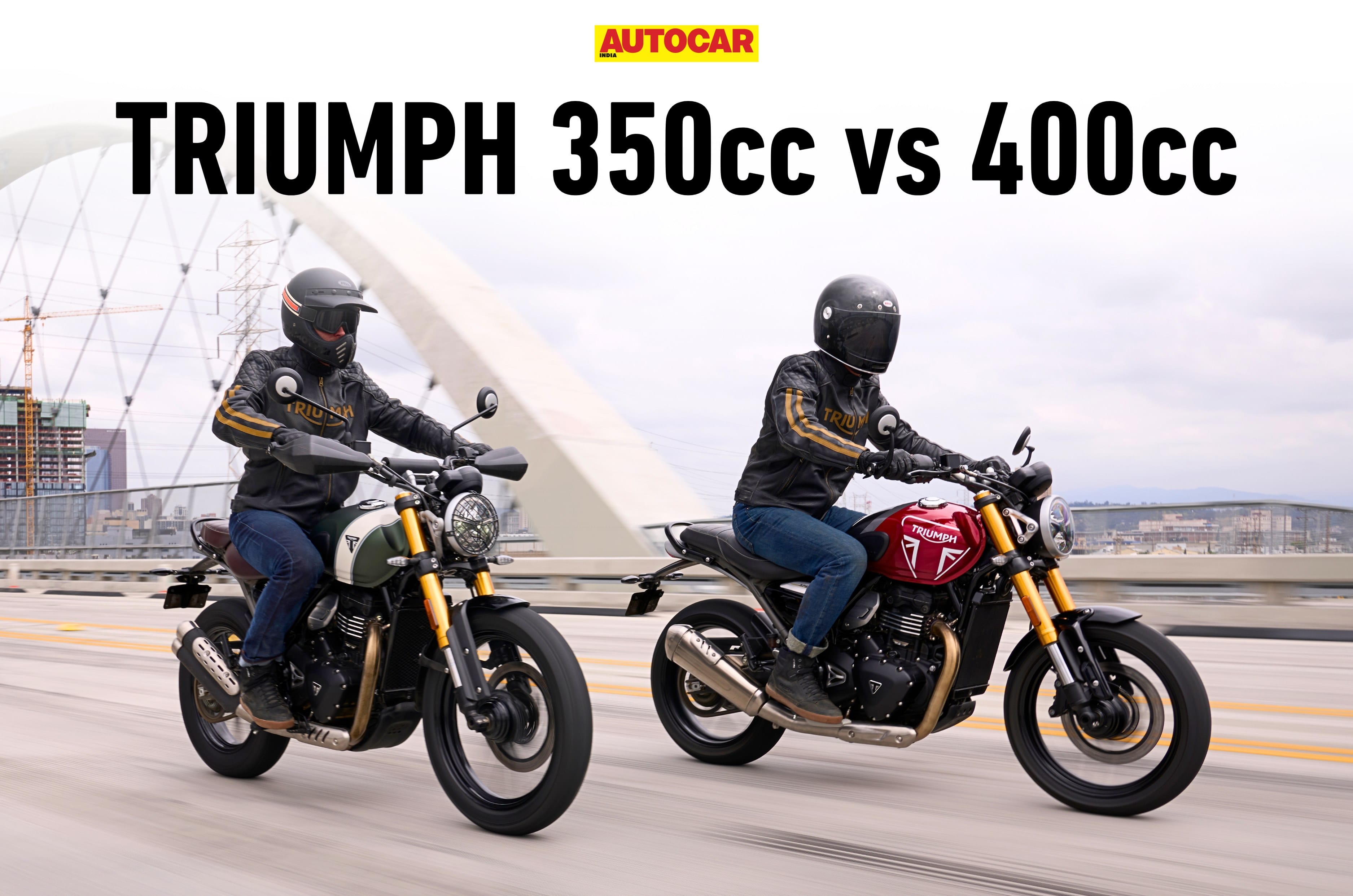
The Regulatory Catalyst: Why Triumph and Bajaj Pivoted
The Bore-Stroke Conundrum: Engineering for Efficiency
Unpacking the Performance Shift: Power, Torque, and Rider Feel
Decoding the Power and Torque Figures
The Power-to-Weight Ratio: A Metric for Agility
The Financial Equation: Pricing, Positioning, and Perception
Price Adjustments: More Than Just Numbers
The '400' Suffix Dilemma: Marketing vs. Mechanical Reality
Triumph's 350cc Evolution: Pros and Cons for the Modern Rider
The Upsides: Efficiency, Accessibility, and Affordability
The Downsides: Performance Trade-offs and Brand Perception
Triumph 350cc vs. 400cc: Price Comparison (Ex-showroom, Delhi)
Model
Old Price
New Price
Price Difference
Speed T4
Rs 1.95 lakh
Rs 1.95 lakh
Rs 0
Speed 400
Rs 2.39 lakh
Rs 2.32 lakh
-Rs 7,000
Scrambler 400
Rs 2.70 lakh
Rs 2.59 lakh
-Rs 11,000
Scrambler 400 XC
Rs 2.97 lakh
Rs 2.90 lakh
-Rs 7,000
Thruxton 400
Rs 2.76 lakh
Rs 2.66 lakh
-Rs 10,000
Conclusion: A Calculated Risk for Triumph's Future