
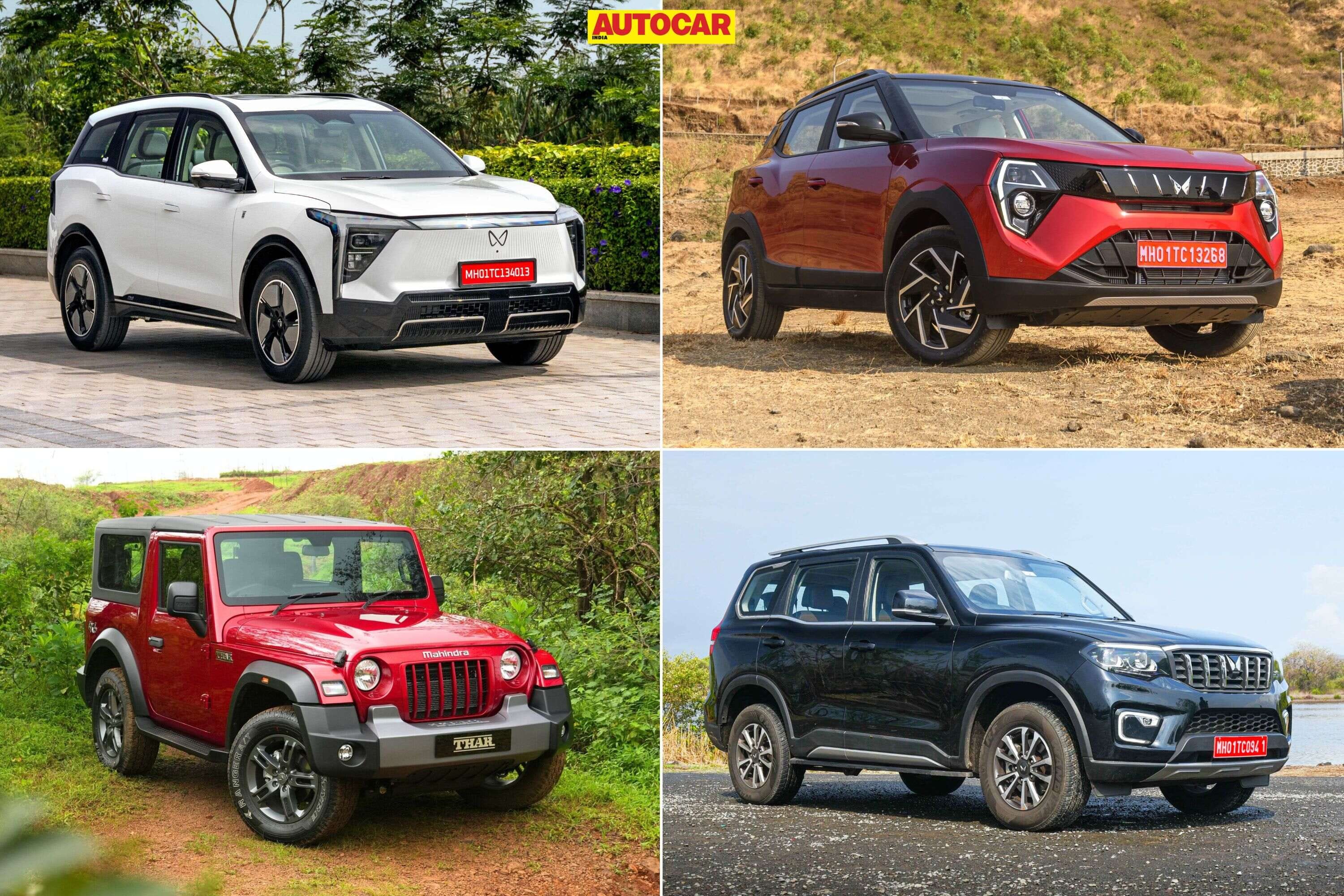
The automotive landscape is perpetually dynamic, a complex interplay of demand, supply, innovation, and, perhaps most critically, cost. In a move that sends ripples through the Indian car market, Mahindra & Mahindra, a titan in the utility vehicle segment, has announced an impending price hike across its extensive portfolio. Starting Monday, April 6, eager buyers and prospective owners will face an upward revision of up to 2.5 percent on nearly all models. However, amidst this fiscal tightening, one recently launched star—the Mahindra XUV 7XO—stands as a beacon of temporary relief, shielded from this immediate price escalation. What drives such decisions, and what does it mean for consumers and the broader industry? Let's delve deep into the mechanics of this announcement.
In a terse yet impactful statement, Mahindra attributed the upcoming price adjustments to \"a combination of cost escalations.\" This seemingly innocuous phrase encapsulates a myriad of challenges currently plaguing the global automotive sector. From the soaring prices of raw materials like steel, aluminum, and rare earth metals crucial for battery production in EVs, to the persistent volatility in global supply chains, manufacturing costs have been on an relentless upward trajectory. Geopolitical tensions, fluctuating exchange rates, and increased logistical expenses further exacerbate the situation, making it increasingly difficult for automakers to absorb these pressures without impacting their bottom line.
For Mahindra, a company renowned for its robust and feature-rich SUVs, maintaining profitability while investing in future technologies—especially in the burgeoning electric vehicle segment—is paramount. A 2.5 percent price hike, while not insignificant for the consumer, is often a calculated measure to offset these accumulated costs, ensuring the financial health required for continued innovation and market competitiveness. This strategy is not unique to Mahindra; it’s a common industry practice where automakers periodically revise prices to align with the economic realities of manufacturing and market dynamics.
\"Every automaker faces the delicate balancing act of absorbing rising costs versus passing them on to consumers. Mahindra's decision reflects the sustained pressure from global economic factors that no major manufacturer can ignore indefinitely.\"
In a clear demonstration of strategic marketing and customer-centricity, Mahindra has granted a temporary reprieve to its recently launched XUV 7XO. This model, a successor to the highly popular XUV700, will retain its inaugural pricing—ranging from Rs 13.66 lakh to Rs 25.07 lakh (ex-showroom, India)—for the first 40,000 bookings. This \"price protection guarantee\" is a clever move designed to incentivize early adoption and reward initial customers, while simultaneously creating urgency and excitement around a pivotal product.
The XUV 7XO, building on the legacy of its predecessor, is expected to be a significant volume driver for Mahindra. By shielding it from the immediate price hike, the company aims to capitalize on its launch momentum, ensure a strong order book, and consolidate its position in the fiercely competitive mid-size SUV segment. This strategy minimizes the negative impact of a price hike on a new model's initial sales performance, allowing it to establish its market presence before aligning with the broader pricing strategy. Once the threshold of 40,000 bookings is met, or after a specific period, the XUV 7XO's pricing will also be adjusted, reflecting the same cost escalations affecting other models.
Mahindra's current lineup boasts an impressive 13 models, catering to a diverse range of preferences and budgets. Of these, 12 models will see an immediate price revision. While the exact per-model increase has not been explicitly detailed by Mahindra, a 2.5% hike can translate to a significant sum, especially on higher-end variants.
Current Mahindra Cars Price List (Ex-showroom, India) *Exclusive of home charger and installation costs.
For popular models like the Mahindra Thar, Scorpio N, and the workhorse Bolero series, this increase will translate to several thousand rupees more for the buyer. For instance, a 2.5% hike on a top-end Scorpio N variant priced at Rs 24.34 lakh would add approximately Rs 60,000 to the ex-showroom cost, a figure that becomes even higher once on-road charges, taxes, and insurance are factored in. This pushes the total ownership cost further up, potentially impacting affordability for a segment of buyers. The electric vehicle lineup, including the XEV 9e, XEV 9S, and BE 6, will also see adjustments, making these cutting-edge models slightly more premium.
Price hikes, while a bitter pill for consumers, are a necessary evil for manufacturers operating in a complex global economy. Let's examine the multifaceted implications of Mahindra's decision.
From a negative PR perspective, while understandable, price hikes always invite scrutiny. Consumers, having to contend with broader inflationary pressures, often view these increases with frustration. This creates a challenging environment for automotive journalists to report on, as the underlying economic complexities are often overshadowed by the immediate financial burden on the buyer. The question then becomes: how much can the market bear before demand significantly softens?
The Indian automotive market is a fascinating blend of aspirations and pragmatism. While demand for SUVs remains robust, driven by evolving lifestyles and road conditions, price remains a critical determinant for a vast majority of buyers. Mahindra's move is likely to spur a rush of bookings before April 6, particularly for models like the Thar and Scorpio N, where waiting periods are already substantial. This immediate surge helps clear inventory at current prices and generates cash flow.
Competitors in the SUV segment, such as Tata Motors, Hyundai, and Maruti Suzuki, are also navigating similar cost pressures. It will be insightful to observe if Mahindra's price adjustment triggers a chain reaction across the industry, leading other manufacturers to follow suit. Such a scenario would normalize the price hike, making Mahindra's move less isolated and its impact on market share less pronounced. However, if competitors absorb costs for longer or implement smaller increases, Mahindra might face a slight disadvantage in the short term.
Looking ahead, the long-term trajectory of car pricing in India will largely depend on global economic stability, commodity prices, and the government's fiscal policies. With the increasing push towards electric mobility, the infrastructure and battery costs will also play a crucial role in shaping future vehicle prices. Mahindra, with its significant investments in EV platforms and new models, is well-positioned to adapt, but these adaptations invariably come with a price tag.
Mahindra's announcement of a price hike of up to 2.5 percent across most of its model range, effective April 6, 2026, is a stark reminder of the persistent economic headwinds facing the automotive industry. Attributed to \"a combination of cost escalations,\" this decision reflects a global trend where manufacturers are compelled to adjust pricing to maintain healthy financials and fund future growth. While the news might be disheartening for prospective buyers, especially those eyeing popular models like the Thar, Scorpio N, or the Bolero, it is a strategic necessity for the automotive giant.
The strategic shielding of the newly launched XUV 7XO for its initial 40,000 bookings, however, demonstrates Mahindra's adept understanding of market psychology and product launch dynamics. This move aims to cement the XUV 7XO's position as a market leader while offering early adopters a tangible benefit. For consumers, the message is clear: if you've been contemplating a Mahindra purchase, the window to secure it at current prices is rapidly closing. The Indian automotive market continues to evolve, and while price adjustments are never popular, they are an integral part of ensuring innovation, quality, and sustainability for brands like Mahindra in the long run. The road ahead, much like the vehicles Mahindra builds, promises to be both challenging and exhilarating.
Mahindra's Price Adjustment Unveiled: Decoding the Impact on Your Future Drive (and One Lucky Exception)
The Unavoidable Reality: Deconstructing Mahindra's Price Hike Rationale
Strategic Shielding: The XUV 7XO's Temporary Price Immunity
2026 Mahindra Model Portfolio and Price Implications
Model
Price Range (Rs, lakh)
XUV 7XO 13.66-25.07 XUV 3XO 7.37-14.55 XUV 3XO EV 13.89-14.96 Thar 9.99-17.19 Thar Roxx 12.39-22.25 Scorpio Classic 13.00-16.90 Scorpio N 13.49-24.34 Bolero 7.99-9.80 Bolero Neo 8.69-10.49 Bolero Neo+ 10.90-12.99 XEV 9e 21.90-30.50* XEV 9S 19.95-29.45* BE 6 18.90-26.90* Navigating the New Landscape: Pros and Cons for Buyers and the Brand
Pros for Mahindra
Cons for Consumers & Market
Beyond the Numbers: Market Dynamics and Consumer Outlook
Conclusion: A Calculated Move in Challenging Times