
The automotive world often witnesses the ebb and flow of iconic models, but few announcements carry the weight of a seismic shift quite like this one. In a move that has sent ripples through the luxury EV market and sparked intense debate across the industry, Tesla has officially ceased custom orders for its pioneering flagship vehicles: the Model S sedan and Model X SUV. These aren't just cars; they are symbols of an electric revolution, trailblazers that defied convention and reshaped consumer perception of electric mobility. As depicted in the accompanying image showcasing these two pivotal models, their discontinuation marks not just the end of a production run, but potentially the dawn of a radically different Tesla, one where automotive might take a back seat to ambitious robotic endeavors. The question on everyone's lips: Is this a strategic masterstroke or a risky gamble for the automotive giant? For over a decade, the Tesla Model S and Model X stood as the undisputed flagships of the electric vehicle movement. The Model S, launched in 2012, was a veritable revelation. It wasn't just a compliance car; it was a luxury performance sedan that happened to be electric. With its stunning acceleration, impressive range for its time, and groundbreaking over-the-air updates, it challenged the dominance of established luxury marques and proved that EVs could be desirable, exhilarating, and practical. It quickly garnered accolades, including MotorTrend's Car of the Year, forever cementing its place in automotive history. Following its sedan sibling, the Model X burst onto the scene in 2015, carving out a niche as the world's first mass-produced all-electric SUV. It continued Tesla's tradition of innovation, most notably with its distinctive Falcon Wing doors, which, while visually striking, often proved to be a polarizing feature from a practical and engineering standpoint. Despite initial production challenges and criticisms regarding its complexity, the Model X offered unparalleled electric range and performance in its segment, coupled with a uniquely spacious and technologically advanced interior. Both models were instrumental in pushing the boundaries of battery technology, charging infrastructure (Supercharger network), and autonomous driving features (Autopilot), laying the groundwork for the broader EV adoption we see today. Tesla CEO Elon Musk's recent tweet confirming the halt of custom orders, stating, \"Custom orders of the Tesla Model S & X have come to an end. All that's left are some in inventory,\" serves as the final curtain call for these automotive titans. This isn't merely a quiet discontinuation; it's a profound statement about Tesla's evolving priorities, a shift that signals a departure from its original premium automotive focus towards what some might see as an even grander, albeit riskier, vision. The underlying reason for this dramatic shift isn't a decline in demand for luxury EVs, nor is it a manufacturing inability. Instead, it stems from a strategic redirection outlined by Elon Musk during a January earnings call. Musk revealed plans to reallocate production capacity at Tesla's venerable Fremont plant in California. The space once dedicated to the intricate assembly of the Model S and Model X is now slated for large-scale manufacturing of the Optimus humanoid robot, with an audacious annual target of one million units. This decision represents a bold, some might say audacious, pivot. It unequivocally signals Tesla's ambition to transcend its identity as merely an automotive manufacturer and solidify its position as a leading artificial intelligence and robotics company. While the vision of a world populated by helpful humanoid robots is compelling, the decision to sacrifice established, revenue-generating automotive production lines for an unproven, nascent technology has raised eyebrows. Critics argue that diverting critical resources and prime manufacturing space from profitable vehicle lines, especially during a period of intensifying competition in the EV space, could be a significant misstep. Is Tesla prematurely abandoning a segment it helped create for a gamble on a futuristic vision that may be years, if not decades, from commercial viability? Furthermore, the discontinuation of the Model S and Model X means Tesla will cede its position in the ultra-luxury EV segment. Competitors like Mercedes-Benz with the EQS, Porsche Taycan, Lucid Air, and upcoming offerings from BMW and Audi are rapidly expanding their high-end electric portfolios. By stepping back, Tesla risks allowing these rivals to capture a significant portion of the lucrative premium market, potentially alienating a segment of its loyal customer base who value the brand's original commitment to top-tier automotive innovation. The message, sent out to existing owners, stated: \"Model S and Model X marked the beginning of the world's transition to electric transportation. [They] also made it possible for Tesla to develop the technology that would move our world toward autonomy. As we make way for this autonomous future, [their] production will be ending. If you'd like to bring home a new Model S or Model X, order yours soon from our limited inventory.\" This sentiment underscores the company's laser focus on autonomy, a future it believes will be heavily influenced by robotics, with its vehicles merely one component of a broader AI ecosystem. With custom orders halted, the remaining Model S and Model X vehicles are limited to existing inventory. This scarcity could create an immediate surge in demand for the final units, potentially leading to quick sales for those still hoping to acquire a brand-new example. For existing owners, the long-term implications are multi-faceted. On one hand, the discontinuation could lead to increased rarity, potentially bolstering resale values for well-maintained models, particularly collector's editions or early production units. On the other hand, a shift in production focus might raise concerns about future parts availability and service prioritization, though Tesla has historically maintained robust support for its older models. This decision also has broader ramifications for the luxury EV market. Tesla's withdrawal leaves a significant void, inviting other manufacturers to fill the premium electric sedan and SUV space with renewed vigor. This could accelerate innovation and competition, ultimately benefiting consumers with more diverse and advanced options. From Tesla's perspective, streamlining its automotive portfolio to focus on the higher-volume Model 3 and Model Y, along with the Cybertruck and the upcoming robotaxi, might allow for greater efficiency and resource allocation towards scaling production and perfecting autonomous technologies. However, the move also presents a public relations challenge. For many, the Model S and X represent the pinnacle of Tesla's automotive engineering. Removing them from the lineup, particularly in favor of a project still largely in its experimental phase, could be perceived negatively by some enthusiasts and investors. It forces a narrative where Tesla is moving away from its foundational product strengths towards a potentially speculative future, risking the perception of the brand as a leader solely in automotive innovation. The discontinuation of the Tesla Model S and Model X marks a truly pivotal moment in automotive and technological history. These vehicles were not just products; they were catalysts that ignited a revolution, proving the viability and desirability of electric transportation. Their departure from custom production lines signifies a Tesla that is no longer content to merely lead the EV charge but aims to redefine what a technology company can be. Elon Musk's audacious bet on Optimus humanoid robots, at the expense of its flagship automotive production, is a testament to his unwavering belief in pushing the boundaries of what's possible. It's a move that embodies both profound ambition and considerable risk, potentially alienating some while exciting others about a future where Tesla's influence extends far beyond our highways. As the last Model S and Model X roll off the assembly line and into history, the automotive world watches with bated breath to see if this bold pivot will indeed usher in a new golden age for Tesla, or if the ghost of its pioneering electric cars will serve as a reminder of the path less taken.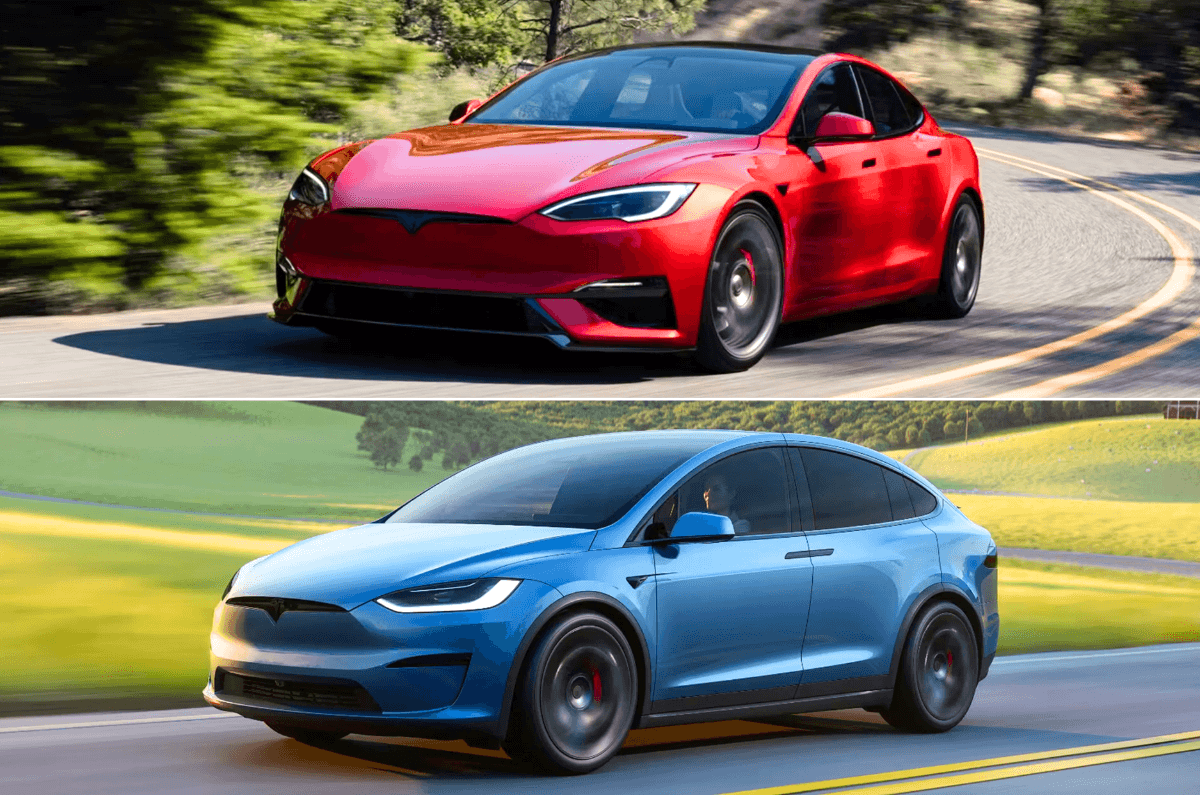
End of an Era: Tesla Model S and Model X Bow Out – A Bold Pivot Towards an Autonomous Future
The Farewell Tour: Remembering the Legacy of the Model S and Model X
The Strategic Pivot: From Premium EVs to the Age of Optimus
The Road Ahead: Implications for Tesla, Luxury EVs, and Owners
Pros & Cons of Tesla's Bold Move:
Conclusion: A New Chapter, A Familiar Ambition