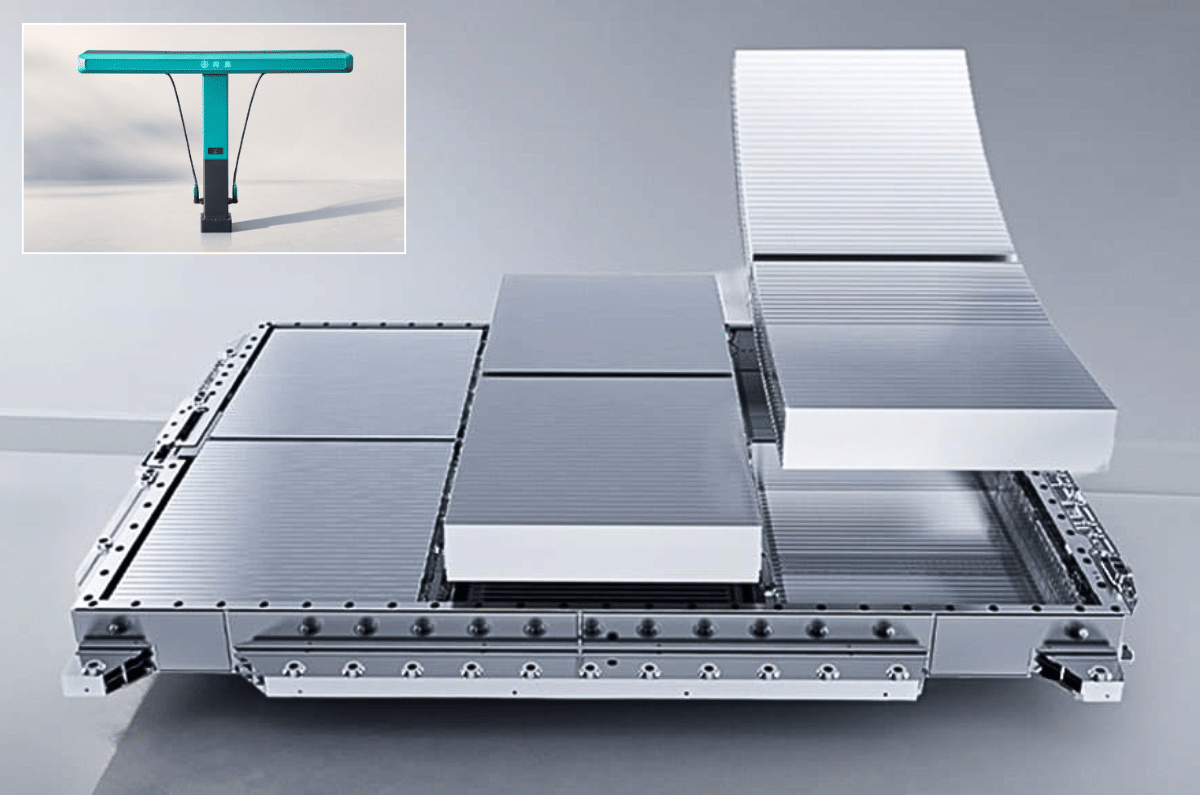
Revolutionizing the Charge: BYD Unveils Second-Gen Blade Battery and Game-Changing 1,500kW Flash Charger
The electric vehicle (EV) revolution is accelerating at an unprecedented pace, but one persistent hurdle has continued to shadow its brilliance: the dreaded long charging time. Imagine a future where replenishing your EV’s battery is as swift and seamless as a traditional fuel stop. This future is not a distant dream, but a tangible reality BYD, the global automotive powerhouse, is bringing to the forefront. In a move poised to redefine the very essence of EV ownership, the Chinese behemoth has pulled back the curtain on its groundbreaking second-generation Blade battery and an astonishing 1,500kW Flash charger. This isn't just an incremental update; it's a quantum leap, promising to silence skeptics and propel EV adoption into an entirely new stratosphere.
The Dawn of a New Era: BYD's Second-Gen Blade Battery Unveiled
Six years ago, BYD introduced its revolutionary Blade battery, a lithium iron phosphate (LFP) marvel celebrated for its exceptional safety, durability, and cost-effectiveness. Now, the company has unleashed its highly anticipated successor: the second-generation Blade battery. This isn't merely an iterative upgrade; it's a testament to relentless innovation and a deep understanding of what the modern EV market demands.
- Improved Energy Density: The new Blade battery boasts a 5 percent improvement in energy density over its first-generation counterpart. While 5 percent might sound modest, in the highly competitive EV space, every percentage point translates to tangible benefits for consumers – primarily, extended driving range without increasing the battery's physical footprint or weight. This means vehicles can either travel further on a single charge or achieve the same range with a lighter, more compact battery pack, optimizing vehicle dynamics and efficiency.
- Unprecedented Charging Speeds: This is where the second-gen Blade battery truly shines. In conjunction with BYD's new Flash charger, it can juice up from 10 to 70 percent in an astonishingly brief 5 minutes. Pushing further, it reaches 97 percent charge in just 9 minutes. To put this into perspective, this means a quick coffee break could easily translate into hundreds of kilometers of added range, fundamentally altering the perception of EV convenience.
- Exceptional Cold-Weather Performance: One of the long-standing Achilles' heels for EVs has been diminished charging efficiency and range in frigid temperatures. BYD directly addresses this with the new Blade battery. Even in extreme conditions as low as -30 degrees Celsius, the carmaker asserts that a 20 to 97 percent charge can be completed in a mere 12 minutes. This breakthrough is critical for global markets with harsh winters, making EVs a viable option for a much broader demographic.
- Advanced Thermal Management: The secret sauce behind these blistering charging speeds and robust cold-weather performance lies in a highly sophisticated thermal management system. The new Blade battery integrates a \"high-speed channel\" designed to minimize internal heat generation during rapid charging cycles and maximize heat dissipation. Efficient thermal management is paramount not just for charging speed but also for the long-term health, safety, and performance of the battery pack. Overheating can lead to degradation and even thermal runaway, so BYD's focus here underscores their commitment to safety and longevity.
- Enhanced Safety Standards: BYD's Blade battery has always been synonymous with safety, famously passing the nail penetration test. The second-generation unit continues this legacy, having undergone and passed a series of safety tests that reportedly exceed China’s stringent national standards. This unwavering commitment to safety instills confidence in consumers and solidifies the battery’s reputation for reliability.
BYD Chairman Wang Chuanfu confirmed that the new Blade-battery-equipped models, including the Denza Z9GT and Yangwang U7 from BYD’s luxury subsidiaries, now boast a range of over 1,000km. This impressive figure further diminishes range anxiety, making long-distance EV travel a practical and stress-free endeavor. More models across BYD's extensive portfolio and its other subsidiaries are also set to incorporate this advanced battery technology, signaling a widespread rollout across their product lines.
Electrifying Speeds: Decoding BYD's 1,500kW Flash Charger
Complementing the formidable second-gen Blade battery is BYD’s equally impressive 1,500kW Flash charging station. To put 1,500 kilowatts into perspective, most public fast chargers today typically offer between 50kW and 350kW. A 1,500kW charger is a monumental leap, representing an almost unfathomable surge in power delivery that truly bridges the gap between EV charging and traditional gasoline refueling times. This is not just fast; this is revolutionary speed.
- Ergonomic Design: Beyond raw power, BYD has paid meticulous attention to user experience. The Flash charging stations feature a unique T-shaped pulley design, a simple yet ingenious solution that allows users to effortlessly lift the heavy charging connector to either side of the vehicle. This design not only enhances convenience but also keeps cables clean and off the ground, preventing wear and tear and improving overall aesthetics and safety.
- Integrated Energy Storage System: A crucial innovation embedded within the Flash charging infrastructure is its integrated energy storage system. Delivering 1,500kW of power to a single vehicle can place immense stress on local power grids, potentially leading to instability or requiring costly grid upgrades. BYD's solution mitigates this by allowing the charging station to draw power from the grid over time and store it in an internal battery pack. When an EV plugs in, the station then discharges this stored energy at ultra-high speeds, reducing the instantaneous load on the grid and ensuring efficient, reliable service. This smart energy management system is vital for the widespread scalability of such high-power charging.
- Ambitious Global Rollout: BYD has an aggressive deployment strategy for its Flash charging network. The company plans to build 20,000 Flash charging stations across China. As of March 5, BYD has already established over 4,000 such stations, demonstrating rapid progress. Furthermore, BYD has declared its intention to begin the global rollout of these advanced charging solutions by the end of 2026, signaling its ambition to set new industry benchmarks worldwide.
![]() Solar charging integrated system for BYD Flash chargers.
Solar charging integrated system for BYD Flash chargers.Beyond the Hype: The Real-World Impact and Industry Implications
The synergy between the second-generation Blade battery and the 1,500kW Flash charger effectively addresses one of the most significant pain points associated with electric vehicles: the anxiety of long charging wait times. By bringing charging times dramatically closer to traditional fuel-filling durations, BYD has made a compelling case for mass EV adoption. This innovation has the potential to:
- Boost EV Adoption: Shorter charging times remove a major barrier for potential EV buyers, especially those reliant on public charging or frequently traveling long distances. This could lead to a significant uptick in EV penetration globally.
- Revolutionize Travel: Long-haul journeys become far more feasible and convenient, allowing EV drivers to undertake trips with the same spontaneity and flexibility as internal combustion engine (ICE) vehicle owners.
- Impact Emerging Markets: In markets like India, where EV penetration currently hovers around 5 percent, such advancements are critical. BYD currently sells popular models like the Atto 3, Seal, Sealion 7, and eMax 7. If introduced here, these innovations would greatly benefit buyers. Furthermore, many Indian EV brands source their battery technology from BYD. A cascading effect of improved range and faster charging could significantly accelerate India’s EV transition, making electric mobility a more attractive and practical choice for the masses.
Challenges and Skepticism: A Necessary Counterpoint
While BYD's announcement is undeniably exciting, it's crucial to approach such monumental claims with a healthy dose of realistic skepticism and acknowledge potential hurdles. The road to widespread implementation is paved with significant challenges:
- Grid Infrastructure Strain: A global network of 1,500kW chargers demands a robust, modernized, and highly distributed electrical grid infrastructure. Many regions, especially rapidly developing ones, might struggle to support such massive power demands without substantial, costly upgrades. The integrated energy storage helps, but the overall strain on generation and transmission remains a concern.
- Long-Term Battery Health: Despite BYD's assurances and advanced thermal management, ultra-fast charging, in general, can be more taxing on battery cells over their lifetime compared to slower charging. While the \"high-speed channel\" is designed to mitigate this, real-world, long-term degradation data will be essential to truly validate its impact on battery longevity. Consumers are rightly concerned about battery replacement costs.
- Deployment Costs and Accessibility: Building 20,000 such sophisticated stations in China, and then a global rollout, represents an enormous capital investment. Will the cost of these premium charging speeds be passed on to consumers, potentially making them less accessible? Furthermore, ensuring equitable distribution beyond major urban centers will be a formidable task.
- Interoperability and Standardization: While BYD develops its ecosystem, the broader EV industry is striving for charging standardization. Will these Flash chargers be exclusively for BYD vehicles, or will they eventually support other brands with compatible battery technology? Fragmentation in charging standards can hinder overall market growth.
- Validation in Diverse Conditions: Laboratory results and controlled tests are one thing; consistent performance across varying climates, altitudes, user habits, and grid fluctuations in the real world is another. Independent validation will be key to solidifying trust.
These aren't insurmountable obstacles, but they represent the practical realities that BYD and the wider industry must navigate to fully realize the potential of such game-changing technologies.
Pros and Cons of BYD's Latest Innovations
Pros
- Rapid Charging Times: Drastically cuts down waiting, making EVs as convenient as ICE vehicles.
- Extended Range: 5% increased energy density translates to more mileage per charge.
- Superior Cold-Weather Performance: Addresses a critical weakness of current EV batteries.
- Enhanced Safety: Continues the Blade battery's legacy of rigorous safety testing and features.
- Advanced Thermal Management: Crucial for battery health and performance during fast charging.
- User-Friendly Charger Design: T-shaped pulley improves accessibility and ease of use.
- Grid Stress Reduction: Integrated energy storage helps stabilize local power grids.
- Catalyst for EV Adoption: Removes key barriers, encouraging more consumers to switch to EVs.
Cons
- Infrastructure Challenges: Widespread deployment requires significant grid upgrades globally.
- Potential for Battery Degradation Concerns: Despite safeguards, ultra-fast charging often raises questions about long-term battery health.
- High Deployment Costs: Building a network of 1,500kW stations is a massive capital undertaking.
- Interoperability Issues: May initially be optimized for BYD vehicles, limiting broader use.
- Real-World Performance Validation: Needs extensive testing across diverse global conditions.
- Competition & Market Acceptance: Other manufacturers are also innovating in charging, creating a competitive landscape.
- Dependency on BYD Ecosystem: Optimal benefits might be tied to BYD's full suite of products and services.
Charting the Future: BYD's Vision and the Global EV Landscape
BYD's latest innovations unequivocally cement its position not just as a leading EV manufacturer, but as a trailblazer in battery and charging technology. By tackling the core anxieties of range and charging time head-on, BYD is not merely improving its product line; it's actively shaping the future trajectory of the entire electric vehicle industry. This move places immense pressure on competitors to innovate rapidly, potentially triggering a new arms race in battery efficiency and charging infrastructure.
For consumers, this heralds a future where choosing an EV no longer entails compromises. The convenience factor, once a significant deterrent for many, is rapidly fading into obsolescence. The commitment to a global rollout of Flash charging stations by late 2026 suggests a clear ambition to dominate not just vehicle sales, but the entire EV ecosystem, including energy management and public charging infrastructure.
As the automotive world pivots towards electrification, BYD’s relentless pursuit of innovation serves as a powerful reminder of the speed at which technology is evolving. The transition to sustainable mobility is not just about producing electric cars; it's about building a comprehensive, user-friendly ecosystem that makes electric living effortless and desirable.
Conclusion: A Charge Towards an Electric Horizon
BYD's unveiling of the second-generation Blade battery and the astounding 1,500kW Flash charger marks a pivotal moment in the history of electric vehicles. This isn't just an announcement; it's a bold declaration of intent, signaling that the era of compromise in EV ownership is rapidly drawing to a close. The ability to charge an EV to near full capacity in mere minutes, coupled with extended range and robust cold-weather performance, fundamentally transforms the ownership proposition.
While challenges in infrastructure, cost, and long-term validation remain, the sheer scale and ambition of BYD's advancements cannot be overstated. These innovations are set to accelerate global EV adoption, dismantle lingering range anxiety, and establish new benchmarks for convenience and efficiency in electric mobility. As we look towards an increasingly electric horizon, BYD is not just driving the change; it’s supercharging it, promising a future where electric vehicles are not just a greener alternative, but the unequivocally superior choice for every driver.