
The electric vehicle (EV) revolution has been a captivating journey, marked by rapid technological advancements and an ever-growing consumer base. Yet, two significant hurdles have consistently tempered widespread adoption: range anxiety and the often-tedious wait times associated with charging. Imagine an electric car that refuels almost as quickly as a conventional gasoline vehicle, or one that can travel over 1,000 kilometers on a single charge. For years, these concepts felt like distant aspirations. Now, Chinese automotive titan BYD (Build Your Dreams) has not just dreamed it, but delivered it. With the global reveal of its second-generation Blade battery and an astonishing 1,500kW Flash charger, BYD isn't just pushing boundaries; it's redefining the very paradigm of electric mobility. This isn't just an incremental update; it's a seismic shift poised to accelerate EV adoption on an unprecedented scale, though not without its own set of challenges and considerations.
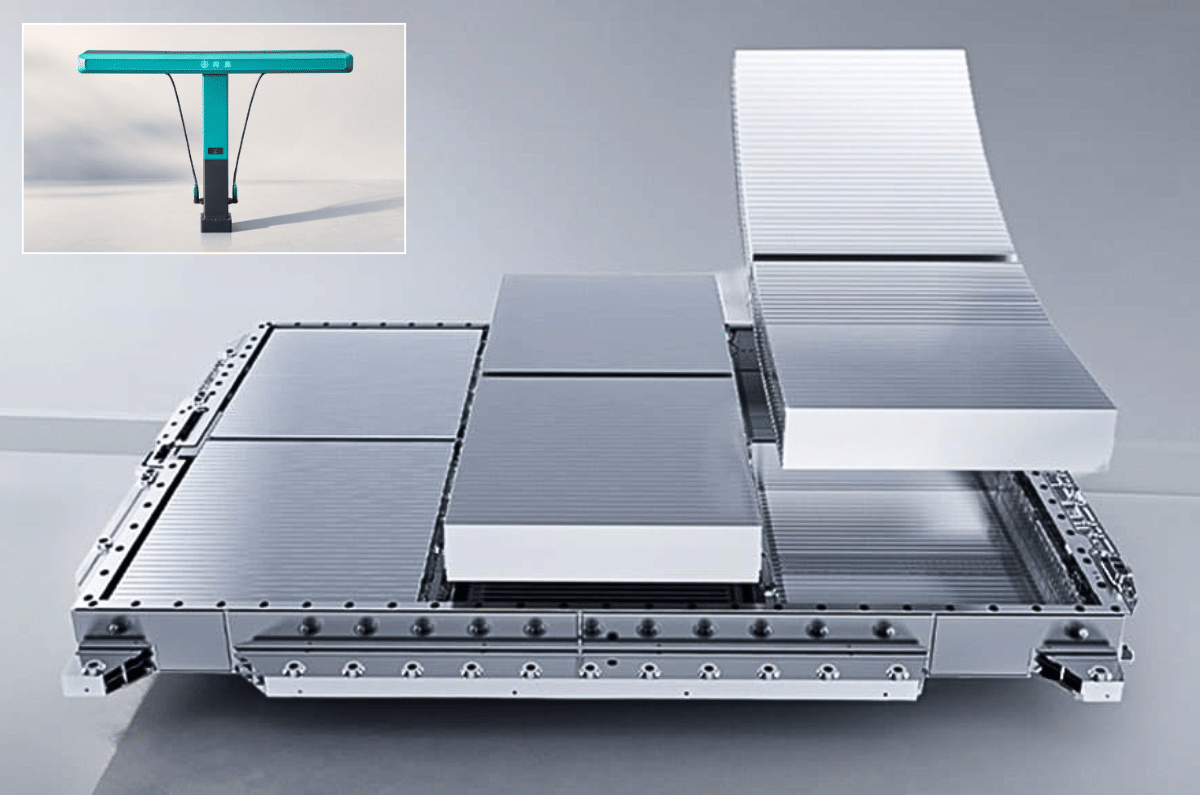
Six years after its groundbreaking debut, the BYD Blade battery, lauded for its safety and efficiency, has received its first major overhaul. This second-generation unit arrives with significant enhancements, particularly in energy density and thermal management, directly addressing crucial aspects of electric vehicle performance and longevity. At its core, the Blade battery utilizes Lithium Iron Phosphate (LFP) chemistry, known for its inherent safety, longer lifespan, and lower cost compared to Nickel Manganese Cobalt (NMC) alternatives. BYD pioneered a revolutionary \"cell-to-pack\" design, arranging elongated LFP cells directly into the battery pack, eliminating the need for traditional modules. This innovative structure enhances volumetric efficiency, allowing more active material to be packed into a smaller space, thereby increasing energy density.
The key improvement in this iteration is a **5 percent increase in energy density** over its predecessor. While 5 percent might sound modest, in the highly competitive and finely tuned world of battery technology, this represents a substantial leap. For consumers, this translates directly into a longer driving range for a given battery size, or alternatively, the ability to achieve the same range with a smaller, lighter battery pack, enhancing vehicle dynamics and potentially reducing overall cost. BYD chairman Wang Chuanfu highlighted this benefit, stating that new models like the Z9GT from its Denza subsidiary and the U7 from the ultra-luxury Yangwang brand, equipped with this new Blade battery, now offer an impressive range of more than 1,000 kilometers. It's crucial to note that such range figures are typically based on China's CLTC (China Light-duty Vehicle Test Cycle) standard, which tends to be more optimistic than the WLTP (Worldwide Harmonised Light Vehicle Test Procedure) or EPA (Environmental Protection Agency) ratings commonly used in other markets. Nevertheless, even with conservative adjustments, this signifies a genuinely long-range capability that alleviates much of the lingering range anxiety.
Beyond raw capacity, the new Blade battery integrates a sophisticated thermal management system, featuring a **\"high-speed channel\"**. This is a critical innovation, particularly for ultra-fast charging. The primary challenge with rapid charging is the generation of internal heat, which can degrade battery components and pose safety risks. The high-speed channel is designed to efficiently dissipate this heat, minimizing its generation and maximizing heat transfer away from the cells. This advanced system not only allows for the incredibly fast charging rates claimed by BYD but also contributes to the overall longevity and safety of the battery.
Safety has always been a cornerstone of the Blade battery's reputation. The original Blade battery famously passed the rigorous nail penetration test – a severe safety evaluation where a nail pierces the battery cell, simulating an internal short circuit. The Blade battery demonstrated remarkable stability, neither catching fire nor exploding, a stark contrast to some other battery chemistries. The second-generation unit continues this legacy, with BYD claiming it has passed a series of safety tests that exceed China’s national standards. This unwavering commitment to safety is paramount for building consumer trust, especially as battery technology becomes more powerful and prevalent.
While an improved battery is vital, its full potential can only be unlocked with equally advanced charging infrastructure. Enter BYD's new 1,500kW Flash charger, a monumental leap forward in charging technology that makes current \"fast chargers\" seem leisurely by comparison. For context, many of today's leading fast chargers typically offer speeds in the range of 150kW to 350kW, with a few pushing towards 400kW-500kW. A 1,500kW (or 1.5MW) charger is an order of magnitude more powerful, promising to fundamentally alter the EV ownership experience.
The performance figures are astounding: the new unit can charge from 10 to 70 percent in an astonishing **just 5 minutes**, reaching 97 percent in a mere 9 minutes. This brings charging times incredibly close to the experience of pumping gasoline, dissolving one of the most significant psychological barriers to EV adoption. Furthermore, BYD has tackled the persistent challenge of cold weather charging. Even in temperatures as low as -30 degrees Celsius, notorious for severely impacting charging efficiency and speed, the carmaker claims a 20 to 97 percent charge can be achieved in just 12 minutes. This breakthrough performance in extreme cold is particularly significant for markets with harsh winters, broadening the appeal and practicality of EVs considerably.
Beyond raw power, BYD has focused on user experience and infrastructure integration. The Flash charging stations feature a clever T-shaped pulley design, allowing users to lift the heavy connector effortlessly to either side of the vehicle. This ergonomic design also keeps cables clean and off the ground, enhancing convenience and safety. Crucially, these charging stations are not just brute force chargers; they incorporate an integrated energy storage system. This sophisticated feature helps to mitigate stress on the local power grid by drawing power at off-peak times or from renewable sources (like integrated solar, as shown in previous BYD charger concepts), storing it, and then deploying it rapidly when a vehicle needs a charge. This smart energy management ensures that even ultra-high charging speeds don't overwhelm existing electrical infrastructure, a significant concern for widespread deployment of such powerful chargers.
BYD's rollout strategy for these Flash chargers is ambitious. The company plans to build 20,000 Flash charging stations across China, with a global rollout set to begin by the end of 2026. As of March 5, BYD has already established over 4,000 stations, demonstrating rapid deployment capabilities. This aggressive expansion, coupled with the integrated energy storage, paints a picture of a company committed not just to individual vehicle technology but to building a comprehensive, sustainable EV ecosystem.
The advancements brought by BYD's second-gen Blade battery and Flash charger represent a monumental leap that addresses some of the most critical pain points for electric vehicle adoption globally. By effectively eliminating range anxiety and dramatically reducing charging times, BYD has brought the EV experience closer to – and in some aspects, potentially surpassing – the convenience of traditional internal combustion engine vehicles. This could undoubtedly provide a much-needed boost to EV penetration in markets around the world.
For markets like India, where EV penetration currently stands at about 5 percent, these advancements hold immense promise but also highlight significant local challenges. BYD already sells popular models like the Atto 3, Seal, and has introduced the Sealion 7 and eMax 7. Many Indian EV brands also source batteries from BYD. If the second-generation Blade battery and Flash charging technology were to be introduced there, Indian buyers would undoubtedly benefit from improved range and significantly faster charging times. However, the existing charging infrastructure in India is still nascent compared to China or parts of Europe/North America, and the widespread deployment of 1,500kW stations would require a monumental effort, significant investment, and overcoming hurdles related to land availability and grid stability. The higher voltage architecture required for such speeds also necessitates upgrades across the entire EV ecosystem, from vehicle design to grid connections.
While the technological prowess is undeniable, the \"negative view PR\" perspective encourages us to consider the practicalities. The promise of 1000km range and 5-minute charges is compelling, but for it to truly revolutionize the market, these technologies must move beyond flagship models and dense urban centers. The challenge lies in making this accessible and affordable for the mass market globally, ensuring that the necessary infrastructure can keep pace, and that the long-term impact on battery health under such demanding conditions lives up to the initial hype. There's also the question of industry standardization; if every OEM develops its proprietary ultra-fast charging system, it could lead to fragmentation and inconvenience for consumers.
BYD's unveiling of its second-generation Blade battery and 1,500kW Flash charger marks a pivotal moment in the electric vehicle industry. These innovations are not just incremental improvements; they are foundational shifts that directly address the most persistent barriers to mass EV adoption. By offering ranges competitive with, or even exceeding, gasoline vehicles, and charging times that are virtually on par with traditional refueling, BYD has demonstrated a powerful vision for an electric future.
However, the path to a fully supercharged future is still fraught with complexities. The successful global rollout of this technology hinges not only on BYD's continued innovation but also on massive infrastructure development, regulatory harmonization, and market acceptance. While the immediate impact might be confined to BYD’s premium offerings and home market, the technological precedent has been set. The gauntlet has been thrown down, challenging the entire automotive industry to accelerate their efforts in battery chemistry, thermal management, and charging infrastructure. BYD is not just building cars; it's building a future where electric mobility is not just an alternative, but the unequivocally superior choice, poised to leave the era of range anxiety and charging woes firmly in the rearview mirror. The race to electrify just got a whole lot faster.
BYD Unveils Game-Changing Second-Gen Blade Battery and Blazing 1,500kW Flash Charger: The Future of EVs Just Accelerated
The Evolution of Power: Deep Dive into BYD's Second-Gen Blade Battery
Revolutionizing Refueling: The Power of the 1,500kW Flash Charger
The Road Ahead: Impact, Challenges, and a Glimpse into the Future
Pros & Cons: A Balanced Perspective
Conclusion: A Future Supercharged