
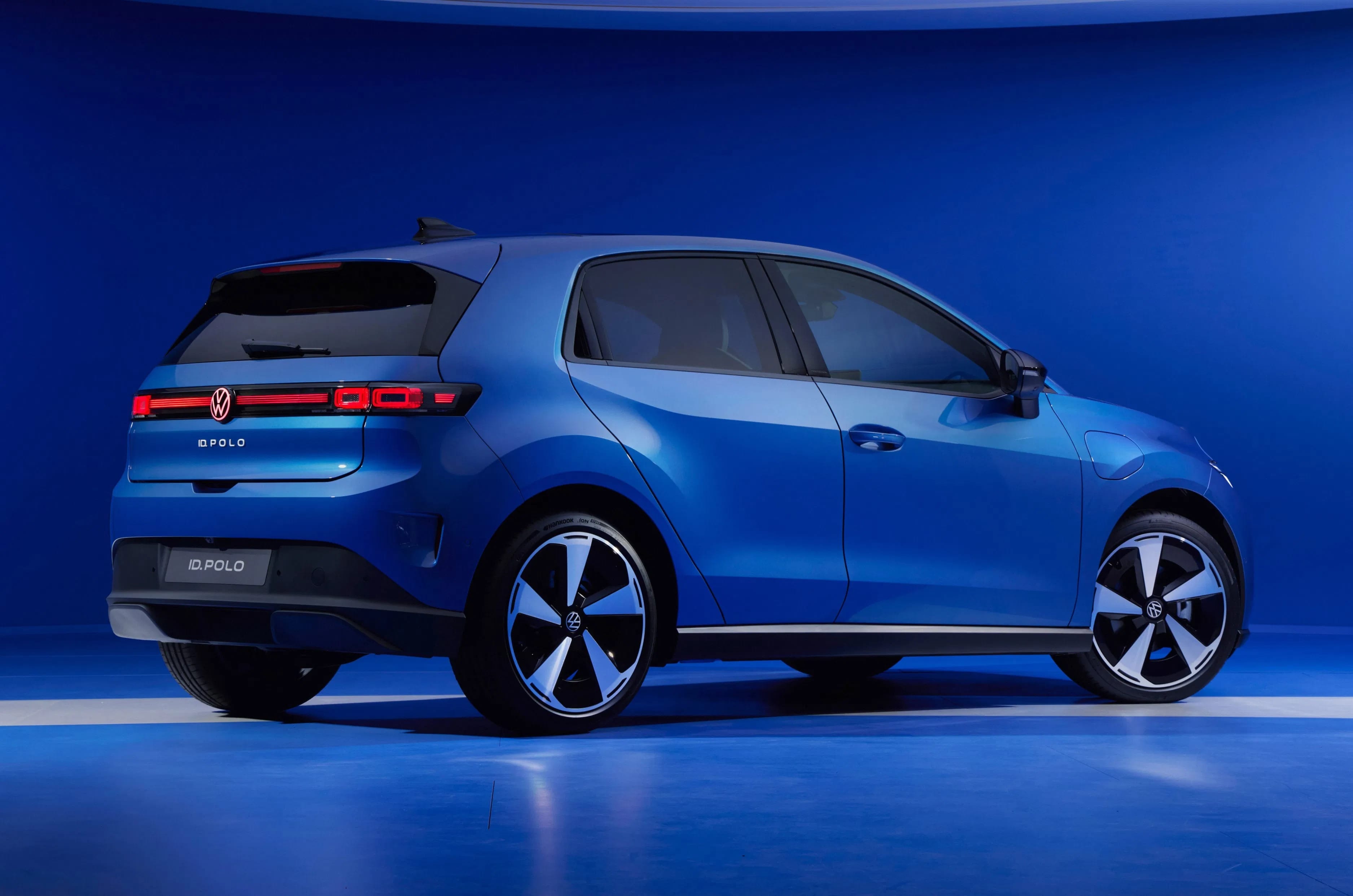
For decades, the mention of \"GTI\" has sent a shiver of excitement down the spines of automotive enthusiasts. It represents an unparalleled blend of everyday practicality and thrilling performance, a democratized sportiness that Volkswagen perfected. Now, as the industry charges headlong into an electrified future, VW is redefining this iconic badge with the ID. Polo, their new entry-level electric hatchback. But the story doesn't end with a standard GTI. Whispers from within Wolfsburg suggest something far more potent is on the horizon: an ID. Polo GTI Clubsport. This isn't just about speed; it's about preserving the very essence of driving engagement in an electric era, challenging preconceptions, and, quite frankly, making a statement. Let’s dive into what this potential electrified pocket rocket could mean for performance, perception, and Volkswagen’s future. The Volkswagen Polo GTI has always been the Golf GTI's feistier, more compact sibling – a spirited, affordable entry into the world of hot hatches. Its transition to an all-electric platform, as the ID. Polo, marks a pivotal moment for the brand. While the standard ID. Polo promises efficiency and urban agility, the confirmed ID. Polo GTI aims to infuse that electric practicality with a genuine dose of driving thrill, expected to deliver around 226hp – a respectable figure for a car of its size. However, it's the potential for a ‘Clubsport’ variant that truly ignites the imagination. Following reports from Autocar UK, insiders at Volkswagen are seriously considering a more powerful, track-focused version. This isn't merely a software tweak; we're talking about a significant power bump from the GTI's anticipated 226hp to a blistering 286hp. Such an increase would place it firmly in the upper echelons of hot hatch performance, challenging even some larger, more established models. The ‘Clubsport’ moniker itself carries significant weight within Volkswagen's performance portfolio. It harks back to previous Golf GTI Clubsport models, which were always more than just power upgrades. They represented a holistic approach to performance, featuring enhanced chassis tuning, aerodynamic improvements, and a more aggressive stance, all designed to shave seconds off lap times and amplify driving pleasure. For the ID. Polo, this badge would signal a truly dedicated performance machine, one that isn't afraid to push the boundaries of what an electric hot hatch can be. The exciting details surrounding the ID. Polo GTI Clubsport were illuminated by Florian Umbach, Volkswagen’s Head of Driving Dynamics. When quizzed about the Clubsport, Umbach's response to Autocar UK was unequivocal: “We’re working on something. There is certainly more peak power that we can find from the motor and battery hardware that we have, and more torque that the front axle could handle.” This statement confirms that VW engineers are not just speculating; they are actively developing the powertrain to extract every ounce of performance possible from the ID. Polo’s architecture. The mention of \"more torque that the front axle could handle\" directly points to the necessity of the mechanical limited-slip differential. Without it, a front-wheel-drive car with nearly 300hp would struggle with traction, particularly when unleashing the instantaneous torque inherent to electric motors. The LSD would be key to translating that immense power into usable forward motion and precise cornering, minimizing wheelspin and torque steer, and offering a far more engaging and predictable driving experience. Perhaps the most intriguing and potentially controversial aspect Umbach touched upon was the inclusion of simulated gearshifts. He explained that Volkswagen is working on a “similar kind of paddleshift power delivery that the electric Hyundai N cars have.” This isn't about mechanical gears, which EVs don't typically need; it's about software-controlled power delivery that mimics the surge and fall of traditional internal combustion engine (ICE) gear changes, coupled with a corresponding audio soundtrack. Umbach confirmed: “This is simply a software thing. It’s all about motor control and an audio soundtrack to match.” This approach, pioneered by Hyundai’s N sub-brand with features like N e-Shift and N Active Sound+, aims to bridge the experiential gap between traditional hot hatches and their electric successors. While some purists might scoff at simulated sounds and shifts, the goal is clear: to restore the sensory feedback and driver engagement that many find lacking in the linear, silent acceleration of conventional EVs. By replicating the emotional connection of rowing through gears and hearing an engine note, Volkswagen hopes to make the electric driving experience just as visceral and thrilling as its ICE predecessors. The ID. Polo's ability to imitate the Mk1 Golf GTI’s analogue dials in its digital instrument cluster further underscores VW's commitment to blending nostalgic charm with cutting-edge technology. Beyond the powertrain and digital wizardry, a Clubsport model would naturally entail a more concentrated chassis setup. Expect a lower ride height, stiffer suspension components, and potentially a wider track to enhance grip and stability. Aerodynamic upgrades, unique wheel designs, and more aggressive body styling would complete the visual transformation, signaling its enhanced performance credentials to onlookers and providing functional benefits at higher speeds. Despite the tantalizing prospect of an ID. Polo GTI Clubsport, Umbach’s statement comes with a significant caveat: “These are the kinds of things that the executive board will only let us explore if the GTI is a commercial success, of course. If people respond to this car as it is, we can really take it to the next level.” This highlights a crucial challenge facing Volkswagen and, indeed, the entire automotive industry: translating performance EV concepts into profitable realities. The market for electric vehicles is maturing, but the niche for performance-oriented electric hot hatches is still nascent and faces considerable headwinds. The broader EV market is currently experiencing a deceleration in growth, marked by consumer hesitation due to high upfront costs, perceived range anxiety, and lingering concerns about charging infrastructure. For a specialized product like a Clubsport variant, which will undoubtedly command a significant price premium over the standard ID. Polo GTI, the target audience shrinks considerably. VW needs to convince buyers that an electric hot hatch, especially one with simulated experiences, is a worthy successor to the beloved ICE GTI. The concept of \"simulated\" driving engagement is a double-edged sword that could attract significant negative sentiment from purists. While some will embrace the technological ingenuity, others might dismiss it as inauthentic or a superficial attempt to mask the inherent differences of electric powertrains. The emotional connection to a combustion engine's roar and the mechanical feel of a gear change are deeply ingrained in car culture. Volkswagen faces the challenge of convincing enthusiasts that an artificial soundtrack and power delivery can evoke the same raw passion. Furthermore, EVs inherently carry a weight penalty due to their heavy battery packs. While instant torque can mask some of this, traditional hot hatches are lauded for their nimble, lightweight agility. Can a 286hp ID. Polo GTI Clubsport truly capture the lightweight flickability of its ancestors, or will the added mass make it feel less responsive despite its power? This is a critical question for handling and overall driving dynamics, and one that VW's engineers must address head-on. Lastly, the competition in the nascent electric hot hatch segment, though small, is fierce. Hyundai's N division is already making significant strides with models like the Ioniq 5 N, setting a high bar for performance EVs that prioritize driver involvement. Other brands like Alpine (with their A290) and even sibling brand Cupra (with its Born VZ) are also carving out their own niches. Volkswagen's ID. Polo GTI Clubsport will need to not only be good but truly exceptional to stand out and justify its existence in a market still finding its footing. To provide a balanced perspective, let’s consider the potential advantages and disadvantages of Volkswagen’s aggressive foray into the electric hot hatch territory with the ID. Polo GTI Clubsport. The prospective Volkswagen ID. Polo GTI Clubsport represents more than just another variant in the brand's expanding ID. lineup. It signifies a bold and necessary stride towards defining what an electric performance car can be, marrying the undeniable advantages of instant electric torque with a concerted effort to preserve the visceral, engaging driving experience that hot hatch enthusiasts crave. From the promising 286hp output and the critical mechanical limited-slip differential to the innovative (and sure to be debated) simulated gearshifts and audio tracks, Volkswagen is clearly invested in making the ID. Polo GTI Clubsport a genuine driver's car. However, its journey to production is contingent on the commercial success of the standard ID. Polo GTI, navigating a complex EV market, and overcoming the skepticism of performance purists. Volkswagen must strike a delicate balance between leveraging cutting-edge technology and honoring the rich heritage of the GTI badge. If they succeed, the ID. Polo GTI Clubsport could emerge as a groundbreaking vehicle, not only offering thrilling performance but also serving as a blueprint for how electric vehicles can deliver genuine driving engagement in the silent, swift new world of automotive electrification. The future of the hot hatch is being written, and Volkswagen, with its Clubsport ambition, intends to lead the narrative.Volkswagen’s Electric Dynamo: Unpacking the Potentially Blistering ID. Polo GTI Clubsport
The Electrified Evolution: From GTI Legend to Clubsport Ambition
Under the Electrified Hood: Power, Engagement, and Pushing Boundaries
The Business of Enthusiasm: Commercial Success and Market Challenges
Navigating the Negative View PR: Skepticism and the Purist's Dilemma
Pros & Cons of the ID. Polo GTI Clubsport
Pros:
Cons:
Conclusion: The Future of Electrified Driving Engagement