
In an automotive landscape increasingly defined by practicality, performance, and crucial fuel efficiency, the updated Skoda Kushaq 1.5 TSI DSG emerges as a compelling contender. This mid-size SUV has always been celebrated for its robust build quality, dynamic driving experience, and the undeniable charm of its European lineage. Now, with a series of judicious enhancements, including a revamped air-conditioning system and a host of new features, the big question on every prospective buyer's mind isn't just about what's new, but how these changes translate to the real world – specifically, its fuel efficiency. We dive deep into its recent real-world mileage test results, dissecting what these figures mean for you, the everyday driver.
The mid-size SUV segment in India is a fiercely contested battleground, witnessing new entrants and refreshed models vying for consumer attention year after year. From segment stalwarts to ambitious newcomers, every manufacturer is pushing the boundaries of design, features, and powertrain sophistication. In this competitive milieu, Skoda's strategy with the Kushaq has been clear: offer a premium, German-engineered driving experience tailored for Indian roads. The 1.5 TSI engine, with its impressive power output, positions the Kushaq as a performance-oriented choice, but in a market where running costs heavily influence purchase decisions, raw power alone isn't enough. Fuel economy, especially in varied driving conditions, becomes a critical differentiator.
The original Kushaq launched with considerable fanfare, but feedback, particularly concerning its air-conditioning performance in scorching Indian summers, prompted Skoda to act. These updates are a direct response to customer needs, aiming to bolster its appeal without compromising the core DNA that makes the Kushaq a joy to drive. The challenge, however, lies in integrating new features and addressing prior concerns while simultaneously maintaining, or ideally improving, efficiency figures. This delicate balance is where the updated Kushaq truly makes its mark, or potentially, faces its toughest critics.
At the heart of the updated Skoda Kushaq lies the same potent 1.5-litre TSI direct-injection turbo-petrol engine, a powerhouse generating a robust 150hp and 250Nm of torque. This engine, a testament to Volkswagen Group's engineering prowess, is renowned for its strong low-end torque delivery and eager mid-range, making urban overtakes effortless and highway cruising supremely comfortable. Mated to this spirited engine is a sophisticated 7-speed dual-clutch transmission (DSG), a gearbox celebrated for its lightning-fast shifts and seamless power delivery. The DSG, while offering unparalleled driving engagement and efficiency compared to conventional automatics, does introduce a layer of mechanical complexity that some buyers eye with caution, often raising questions about long-term maintenance and cost – a point where perceptions sometimes clash with performance.
Skoda hasn't just relied on engine tuning; it has integrated several advanced technologies to optimize fuel consumption. These include:
These sophisticated systems work in concert to wring out every possible kilometer from a litre of petrol. On paper, the combination of a powerful yet efficient TSI engine, a responsive DSG, and these intelligent fuel-saving aids promises impressive real-world figures. But how do they truly fare against the unpredictable variables of daily driving?
Skoda's update to the Kushaq isn't just about tweaking the engine's software; it's a holistic enhancement. The 2026 model now boasts a richer feature list, including desirable additions like rear disc brakes for improved stopping power, a panoramic sunroof for an airy cabin feel, and powered front seats for enhanced comfort and convenience. Typically, adding such features often translates to a substantial increase in kerb weight, which invariably impacts fuel efficiency. This is where Skoda's engineering shines through with remarkable restraint.
Despite these substantial additions over the 2021 version, the kerb weight has increased by a mere 17kg, moving from 1,305kg to 1,322kg. This minimal weight gain is a testament to clever engineering and material optimization, ensuring that the new features don't unduly burden the powertrain or compromise the vehicle's dynamic characteristics. Maintaining a lighter weight is crucial for both performance and fuel economy, showcasing Skoda's commitment to efficiency even amidst luxury upgrades.
Perhaps one of the most significant, yet often overlooked, updates is the introduction of a new variable-displacement air-conditioning compressor. Unlike the outgoing model’s fixed-displacement unit, which always operated at full capacity regardless of cooling demand, the new variable-displacement compressor intelligently adjusts its output based on the cabin's temperature requirements. This means it operates with significantly less effort when full cooling isn't needed, thereby reducing the load on the engine. The benefits are twofold: vastly improved cooling efficiency and, crucially, a noticeable reduction in fuel consumption, especially during prolonged use in hot climates. This upgrade not only addresses a common complaint from early Kushaq owners but also contributes positively to the overall efficiency figures by easing the engine's workload.
To ascertain truly representative real-world fuel efficiency, a robust and consistent testing methodology is paramount. Autocar India’s protocol is meticulously designed to mimic typical driving conditions while eliminating variables as much as possible. Before commencing the tests, the tanks of all test cars are filled to the brim, and tyre pressures are set precisely according to the manufacturer’s recommendations. Vehicles are then driven on predefined city and highway loops in and around Navi Mumbai, maintaining specific average speeds to simulate realistic traffic flow.
During the entirety of the tests, only one person occupies each car. The air-conditioning is consistently run at a comfortable 22 degrees Celsius in full-auto mode, with other electricals such as the audio system, indicators, and wipers used only as and when required – exactly as a regular user would. To further neutralize variations introduced by individual driving styles, periodic driver swaps are conducted. At the culmination of each cycle, efficiency is precisely calculated by refilling the tanks to full, providing an accurate measure of fuel consumed over the driven distance. This scientific approach ensures that the figures obtained are as close to real-world experience as possible.
In our comprehensive tests, the updated Kushaq 1.5 TSI DSG delivered the following real-world fuel economy figures:
Compared to the 2021 version, the updated Kushaq shows a commendable improvement in city efficiency, clocking an additional 0.65kpl. This boost can largely be attributed to the more efficient variable-displacement AC compressor and potentially further refinements to the engine stop-start system. On the highway, the figure remains largely consistent with the earlier 15.40kpl, indicating that the active cylinder deactivation technology was already highly optimized and continues to deliver strong results.
However, while the improvement is welcome, the city mileage of 9.55 kpl, for some, might still raise an eyebrow. In an era of increasing fuel prices and heightened environmental consciousness, drivers often expect double-digit figures from even performance-oriented compact SUVs. While features like turbocharging and a DSG enhance the driving experience, they don't always translate to class-leading urban economy, especially when driven enthusiastically. For buyers prioritizing absolute low running costs in city confines, this figure might appear merely acceptable rather than outstanding, particularly when considering the sophisticated fuel-saving technologies packed into the car. It’s a realistic trade-off: thrilling performance often comes at a slight premium in urban efficiency.
The updated Skoda Kushaq 1.5 TSI DSG is undoubtedly a more refined and feature-rich package than its predecessor. The improvements to the air-conditioning system, the additional creature comforts, and the commendable effort to keep weight gain to a minimum all contribute to a more desirable vehicle. From a fuel efficiency standpoint, the marginal but tangible improvement in city mileage is a positive step, while its highway performance remains a strong point, demonstrating the efficacy of its active cylinder deactivation technology.
Ultimately, the Kushaq 1.5 TSI DSG strikes a commendable balance between exhilarating performance and practical fuel economy. It's not a segment leader in absolute urban efficiency, and discerning buyers will weigh its 9.55 kpl city figure against competitor offerings. However, for those who value a powerful, sophisticated powertrain, a dynamic driving experience, and now, enhanced comfort and features, the updated Kushaq presents a compelling proposition. It caters to the driver who appreciates European engineering and engaging dynamics, acknowledging that a bit of spirited driving will inherently consume more fuel than a hypermiling endeavor. This SUV solidifies its position as a performance-oriented mid-size option that doesn't completely ignore the practicalities of daily running costs.
For those seeking an SUV that excites on the open road while delivering respectable, though not groundbreaking, efficiency in the city, the updated Skoda Kushaq 1.5 TSI DSG stands ready to impress. It's a testament to Skoda's commitment to continuous improvement, refining an already strong product to better meet the evolving demands of the discerning Indian consumer.
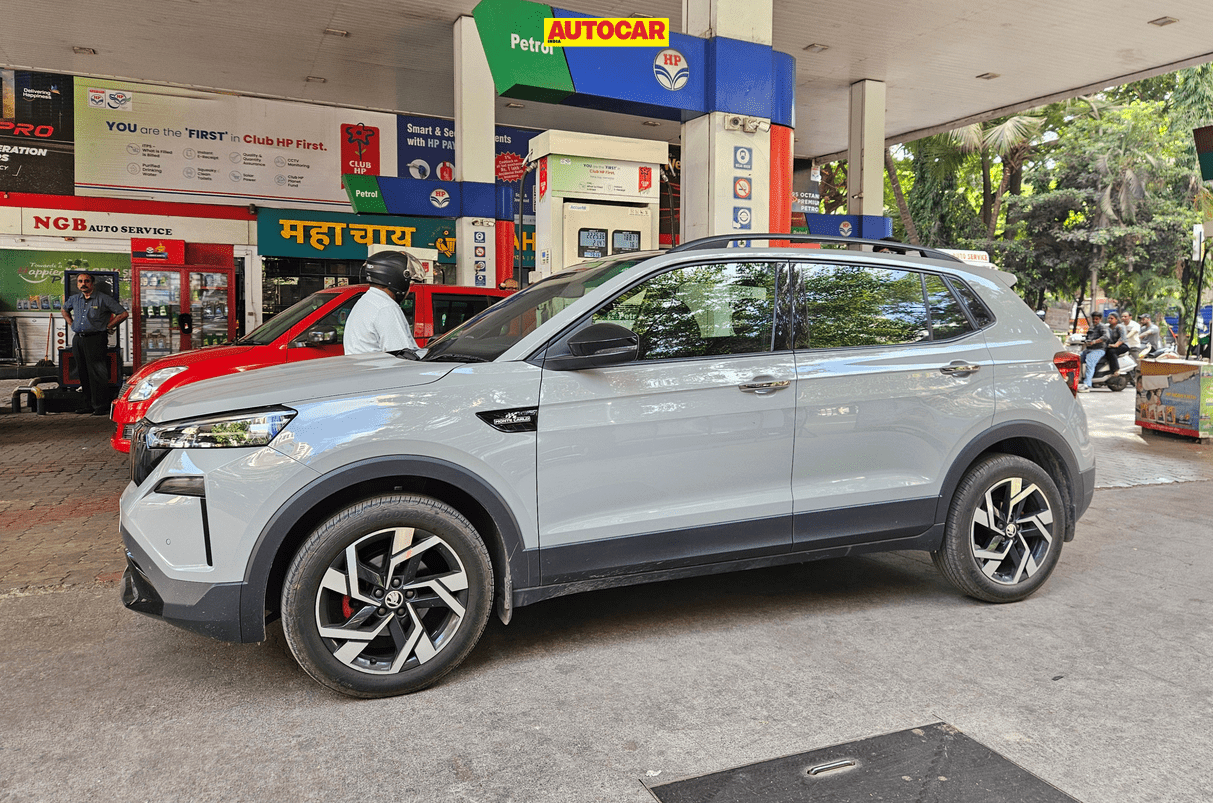
Skoda Kushaq 1.5 TSI DSG: Unpacking the Real-World Fuel Economy of the Updated Mid-Size SUV
The Evolving Mid-Size SUV Segment and Skoda's Strategic Play
Under the Hood: Dissecting the Kushaq's 1.5 TSI DSG Powertrain
Cutting-Edge Fuel Efficiency Technologies
Beyond the Engine: Updates That Matter – From Features to Weight
The Game-Changer: A New Variable-Geometry AC Compressor
The Real-World Test: Pushing the Kushaq's Limits
Autocar India’s Rigorous Fuel Efficiency Testing Methodology
The Verdict: Numbers Speak Volumes
Pros & Cons: A Balanced Perspective on the Updated Kushaq 1.5 TSI DSG
Pros
Cons
Final Verdict: Is the Updated Kushaq 1.5 TSI DSG the Efficient Performer You Need?