
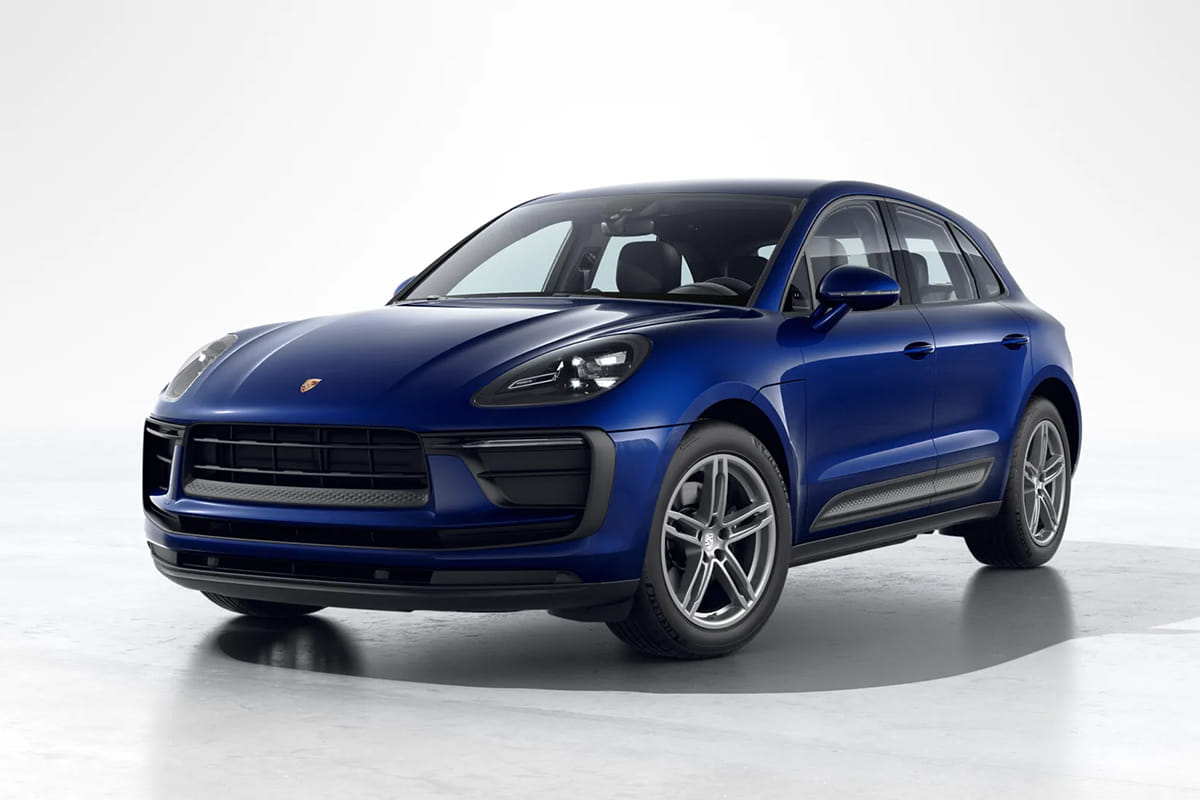
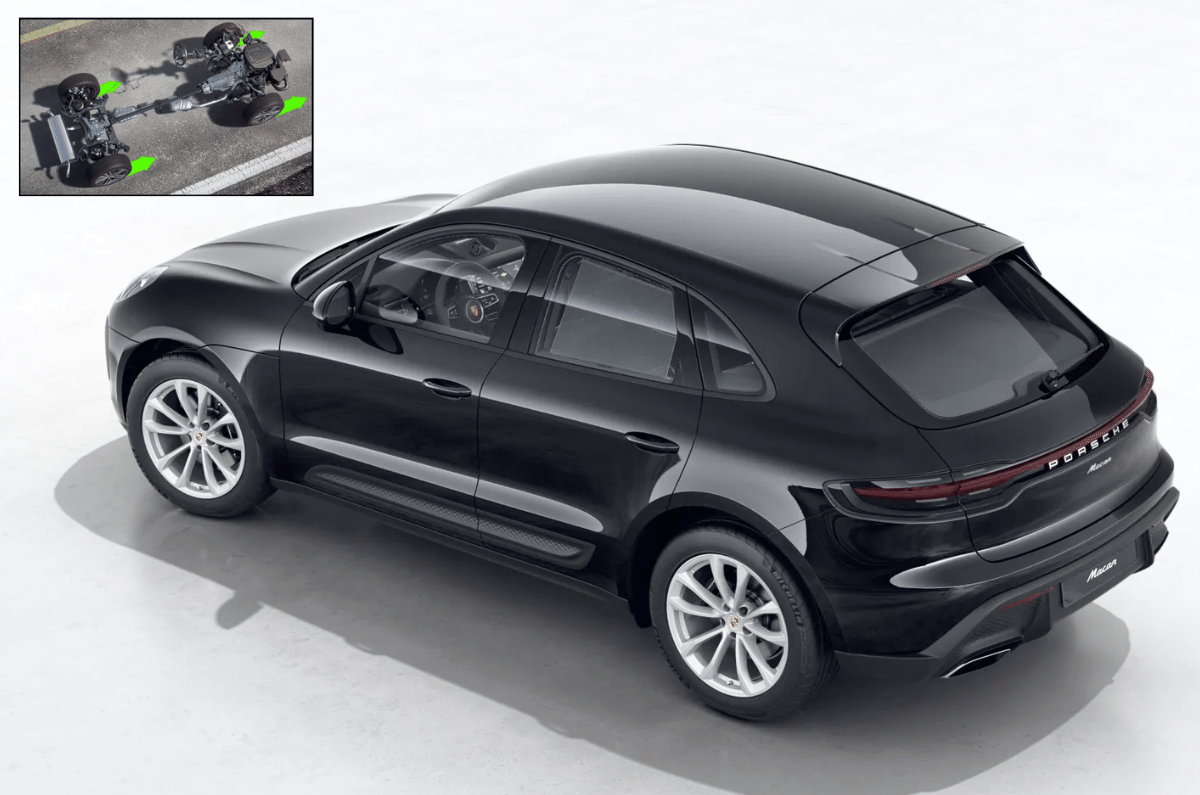
Above: The current generation Porsche Macan in a striking Gentian Blue Metallic, a model whose combustion engine production is now confirmed to run until mid-2026. In the fast-evolving landscape of automotive electrification, few brands navigate the transition with as much scrutiny and anticipation as Porsche. The iconic Stuttgart marque, renowned for its motorsport heritage and precision engineering, finds itself at a pivotal crossroads with its best-selling SUV, the Macan. While the fully electric Macan is poised to redefine its segment, a surprising announcement has captivated enthusiasts and analysts alike: the combustion-powered Macan will continue production until at least mid-2026, with sales potentially stretching into 2027 in some regions. This decision, confirmed by Porsche finance chief Jochen Breckner, signals a nuanced strategy for bridging the gap between its celebrated ICE past and its all-electric future. Yet, beneath the surface of this extended farewell lies an even more intriguing, and potentially contentious, development: a combustion-engined \"spiritual successor\" to the Macan, codenamed M1, is set to debut in 2028, promising a paradigm shift in Porsche's engineering philosophy. The Macan, since its launch in 2014, has been nothing short of a runaway success for Porsche. Positioned as a more accessible entry into the Porsche SUV stable compared to its larger sibling, the Cayenne, it quickly captured the hearts of a new generation of luxury SUV buyers. Its blend of sports car dynamics, premium comfort, and everyday practicality made it an irresistible proposition. Even a decade after its initial release and following significant facelifts in 2019 and 2021, the Macan continues to defy expectations. In Q1 2026, it sold an impressive 10,130 units, outperforming the previous year's figures by 760 units in the same period. This robust demand is undoubtedly a key factor in Porsche’s decision to prolong its production life. For many consumers, the allure of a traditional combustion engine remains strong, particularly in segments where driving engagement is paramount. Porsche understands this sentiment, and extending the availability of the ICE Macan serves multiple strategic purposes. It allows the brand to capitalize on continued demand in markets where EV adoption is slower or charging infrastructure is less developed. Furthermore, it provides a crucial buffer period for customers to transition to electric vehicles, offering a familiar option while the electric variant matures and gains wider acceptance. This dual-pronged approach showcases Porsche's adaptability and commitment to catering to diverse global market preferences, even as it firmly steers towards an electrified future with the all-new Macan Electric. The real headline-grabber, however, is the upcoming \"M1\" SUV. Slated for a 2028 debut, this vehicle is not merely another facelift but a spiritual successor to the current ICE Macan, designed to coexist with the fully electric version. What makes the M1 particularly intriguing – and for some, potentially concerning – is its foundational architecture. As confirmed by Autocar UK, the M1 will largely be underpinned by the Premium Platform Combustion (PPC) architecture, sharing substantial commonality with the next-generation Audi Q5. This strategic platform sharing is a significant departure from Porsche's historical approach to engineering and development. Above: An illustrative render or diagram, likely showcasing the underlying platform architecture, which hints at the shared components with the Audi Q5. This visual reinforces the discussion around the PPC platform. Perhaps the most striking consequence of this shared architecture is the M1’s adoption of Audi's efficiency-focused Quattro Ultra drive system. This means that unlike virtually every Porsche engineered since the company's inception in 1931, the M1 Macan will primarily send drive to its front axle. The rear wheels will engage only when sensors detect a loss of traction, a stark contrast to Porsche's long-standing tradition of rear-biased power delivery, central to its renowned driving dynamics. This is a cost-driven decision, avoiding the extensive modifications Porsche undertook with the first-generation Macan's Modular Longitudinal Matrix (MLB) platform to achieve its signature rear-biased performance feel. Former CEO Oliver Blume acknowledged that the M1 will be \"differentiated from the [electric] Macan,\" but the question remains: how much differentiation can truly be achieved when the fundamental mechanical layout is so heavily influenced by cost synergies? While Porsche finance chief Jochen Breckner assured that the brand \"never use[s] it one-to-one without any changes,\" and \"invest[s] into the platforms\" to make a Porsche a Porsche, the front-biased setup is a significant philosophical hurdle for purists. The rapid three-year development cycle, compared to the typical five, further emphasizes the cost and speed objectives behind this strategy. Engine options are also expected to mirror Audi’s offerings, at least initially. Reports suggest the M1 could borrow the Q5’s 2-litre, four-cylinder turbo-petrol engine, producing 204hp and 340Nm of torque. While this unit delivers respectable performance (0-100kph in 7.2 seconds in the Q5), it’s a far cry from the potent powerplants typically associated with Porsche. Higher-powered engines and adaptive chassis tuning are reportedly under consideration for potential S, GTS, and Turbo variants, but the foundational characteristics will inevitably be shaped by the shared architecture. The challenge for Porsche will be to infuse its distinctive driving feel into a platform that, at its core, prioritizes efficiency and cost-effectiveness over pure, unadulterated performance. Porsche's multifaceted approach to the Macan's future presents a complex balance of strategic advantages and potential pitfalls. This innovative, albeit controversial, strategy aims to secure the brand's position in a rapidly changing market. Porsche's Macan strategy is a masterclass in risk management and market adaptation. It's a calculated gamble to keep the brand's most popular model relevant and profitable across diverse market segments and technological transitions. The continued production of the current ICE Macan acknowledges the enduring appeal of traditional combustion engines and provides a stable revenue stream. The introduction of the fully electric Macan propels the brand into the future, signaling its commitment to electrification and high-performance EVs. However, the M1 spiritual successor represents the tightrope walk. While leveraging Volkswagen Group synergies for cost and speed is a sound business decision, the engineering compromises—particularly the front-biased all-wheel-drive system—will inevitably raise questions among the faithful. Can Porsche truly imbue a primarily front-driven architecture with the rear-biased, engaging dynamics that define its heritage? The challenge for Porsche's engineers will be immense: to take a shared platform and transform it into a vehicle that unmistakably carries the Porsche crest, both in spirit and performance, without alienating its loyal fanbase or diluting its hard-earned reputation for uncompromising engineering excellence. The coming years will be crucial for the Macan's legacy. As the last ICE models roll off the line, and the M1 and Macan Electric share the showroom floor, the automotive world will be watching to see if Porsche can successfully navigate this complex transition, proving that innovation and tradition can, indeed, coexist, even if it means bending some long-held rules. For more insights into Porsche's future and global automotive trends, visit Porsche Newsroom and stay tuned to leading automotive publications. The narrative surrounding the Porsche Macan is no longer a simple tale of evolution but a complex saga of parallel paths. From its extended ICE run to the radical, platform-sharing M1 successor and the groundbreaking all-electric variant, Porsche is pushing the boundaries of what its customers can expect from the revered Macan nameplate. While the strategy offers undeniable commercial advantages, like broader market appeal and significant cost savings through Group synergies, it also introduces a tension between maintaining brand identity and embracing pragmatic engineering solutions. The success of this bold strategy hinges on Porsche's ability to \"Porsche-ify\" the M1 Macan, instilling its signature driving dynamics and premium feel despite the front-biased architecture and shared components. This will be the ultimate test of its engineering prowess and brand strength. As the final ICE Macans grace showrooms and the M1 prepares for its debut alongside its electric sibling, the question remains: will this multi-pronged approach be remembered as a stroke of genius that secured Porsche's future, or as a moment where the pursuit of market share subtly nudged aside the brand's defining characteristics? Only time, and the discerning judgment of its customers, will tell if this balancing act truly yields a win-win scenario, or if some compromises prove too great for the purists to bear.The Macan’s Last Roar: Porsche Extends ICE Production While Future Looms with Controversial Changes
The Enduring Appeal of the ICE Macan: A Testament to Demand
The 2028 'M1' Macan: A Controversial Shift in Porsche's DNA?
Pros and Cons of Porsche's Macan Strategy
The Pros:
The Cons:
The Road Ahead: Porsche's Balancing Act
Conclusion: A Future of Choice, or Compromise?