
In the rapidly evolving landscape of high-performance electric vehicles, the Porsche Taycan Turbo stands as a testament to engineering brilliance, yet it finds itself in an unexpected predicament. After an extended tenure with this electrifying machine, a profound sense of melancholy for Porsche settles in. Why? Because while the Stuttgart marque has arguably crafted one of the most compelling high-performance EVs on the planet, global market reception, particularly for the Taycan, has been surprisingly tepid. With slowing sales and a notable dip in resale values, it begs the question: is the market truly appreciating the nuanced genius of this electric powerhouse, or is it simply ahead of its time?
The core of the Taycan's appeal lies in a philosophy often overlooked by its peers: it is, unequivocally, a Porsche first, and an EV second. This isn't just a marketing slogan; it's a fundamental design principle that permeates every aspect of its being, setting it apart from the generally one-dimensional brutal acceleration offered by many contemporary electric cars. While instant torque can be exhilarating, it often lacks the intricate character and feedback traditionally associated with true performance vehicles. The Taycan, however, breaks this mold, delivering a driving experience rich in detail and engagement that eventually hooks even the most discerning enthusiast.
The secret to the Taycan Turbo's brilliance is rooted in meticulous calibration and an unwavering focus on driver feel. Yes, its acceleration is truly astonishing, capable of rivaling even the most exotic supercars. Yet, where many high-performance EVs deliver this power in a singular, flat surge, the Taycan takes a different approach. The shove isn't a solid, linear push; it's an upward-sloping crescendo, mimicking the escalating power delivery of a traditional internal combustion engine (ICE) winding to maximum RPMs. This sensation is further enhanced by its innovative two-speed transmission, which provides that distinct, satisfying feeling of a shift into a higher gear – a deliberate effort to retain a semblance of the mechanical engagement often lost in single-gear EVs. This painstaking attention to making the Taycan feel as \"ICE-like\" as possible forms the very essence of its unique character and separates it from the pack.
Braking, an often-overlooked aspect in the EV world, is another area where the Taycan excels. The pedal feel is wonderfully natural and progressive, devoid of the intrusive, aggressive regeneration that can plague other electric vehicles. Porsche has clearly prioritized driving feel over maximum energy recuperation, offering primarily two main recuperation modes – on and off – along with an intuitive Auto function. This approach ensures consistent, confidence-inspiring deceleration that feels utterly organic.
The steering system is equally commendable: wonderfully fluent, exceptionally accurate, and brimming with the kind of tactile feedback that encourages you to seek out the longest, most winding route home. It's a genuine connection to the road that reminds you why Porsche is legendary for its sports car pedigree. And what about sound? In Sport and Sport Plus modes, the Taycan produces a deeper, more resonant electric warble. Crucially, Porsche has resisted the temptation to layer on gimmicky, artificial engine noises, instead opting for a convincingly electric yet engaging soundtrack. This commitment to genuineness – refusing to pretend to be something it's not – is what truly endears the Taycan to those who spend time with it.
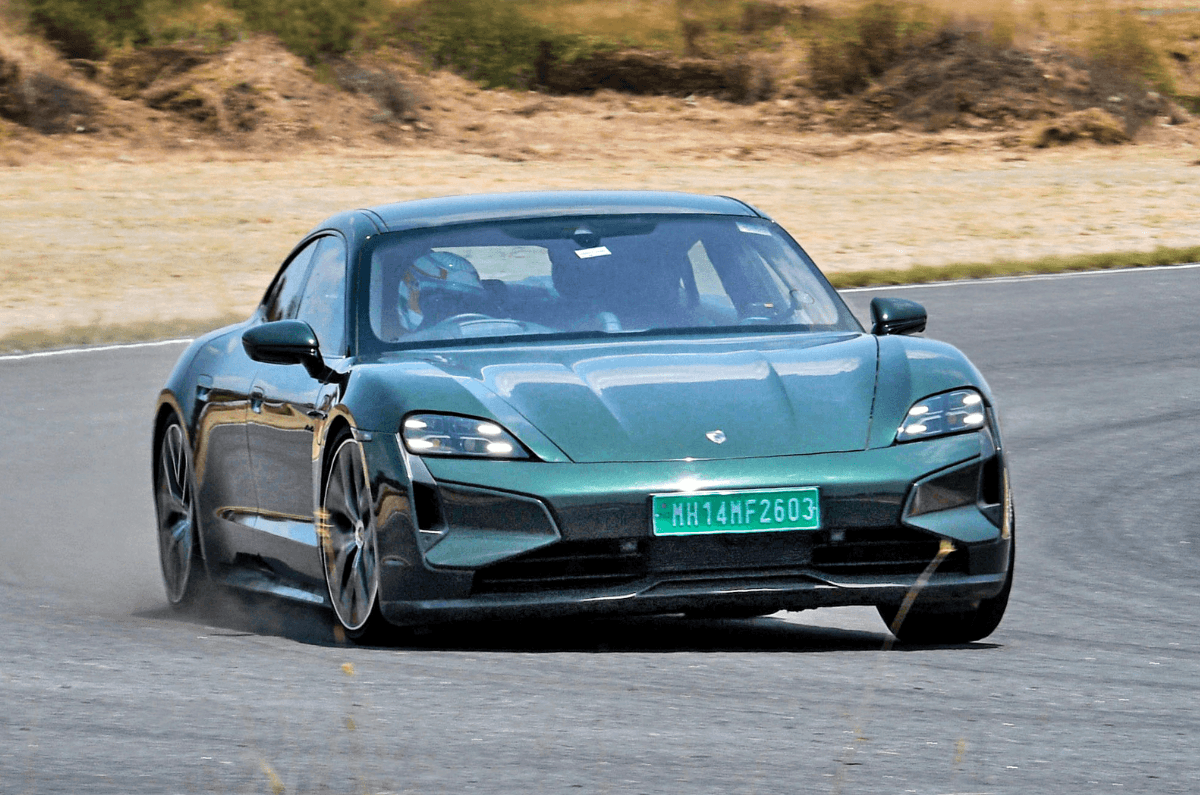
For a car that tips the scales at approximately 2.3 tonnes, the Taycan's ride and handling capabilities are nothing short of incredible. It defies its weight, flicking through corners with an agility that would make a 911 proud – a true marvel of modern chassis engineering. What's even more surprising is the ride quality; it's shockingly pliant, often more plush and composed than many vehicles marketed explicitly as luxury cars. This duality of comfort and outright dynamic capability is a rare achievement, making it a genuinely versatile grand tourer.
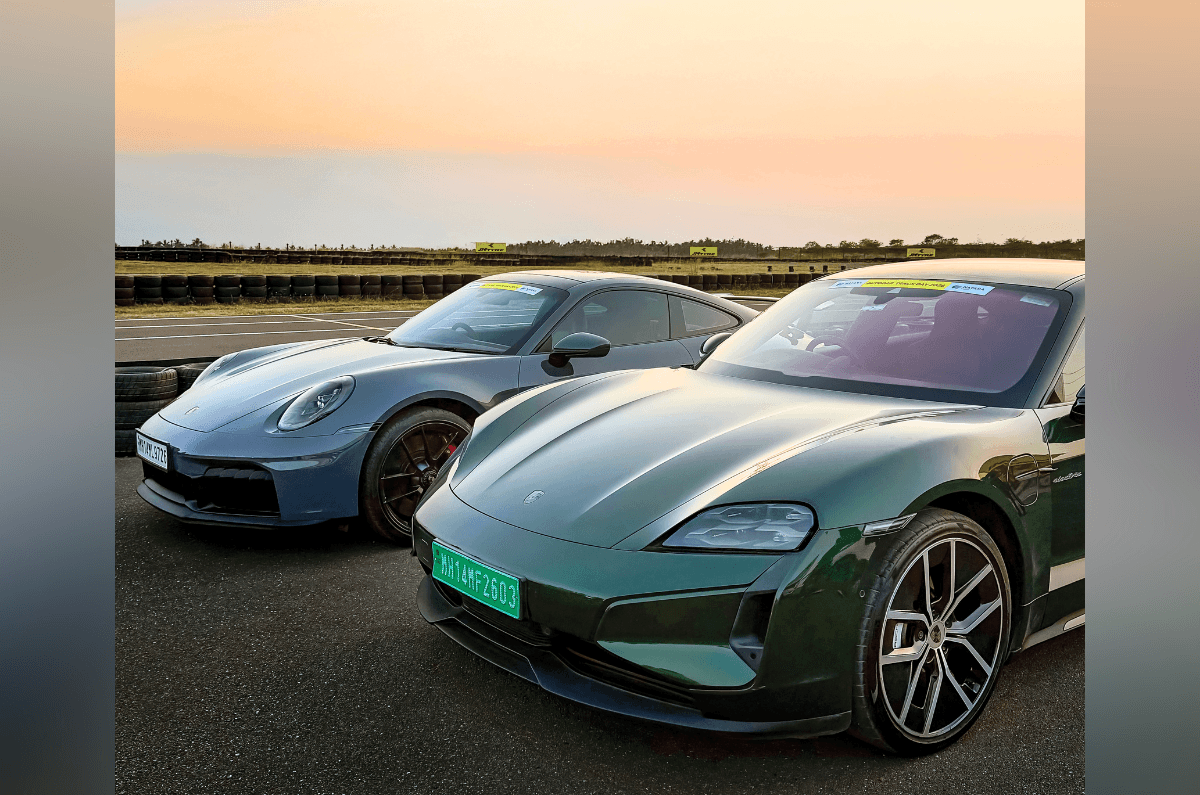
Its performance credentials were starkly evident at our annual Track Day, where this very Taycan came embarrassingly close to the lap time of a 911 Carrera GTS. Crucially, it achieved this feat with significantly less drama, showcasing a level of composure and accessible speed that few cars, electric or otherwise, can match. Perhaps this very characteristic – its efficiency, its lack of raucous noise and theatricality – contributes to its struggle to step out of the shadow cast by its iconic, louder, ICE brethren. The sheer competence might, ironically, be perceived as a lack of \"soul\" by some traditionalists.
Over its long-term tenure, our Taycan Turbo endured a relentlessly busy schedule, pressed into a myriad of duties. It proved conclusively that a high-performance EV with a robust range can complete a challenging journey like Mumbai to Goa in roughly the same timeframe as an ICE Panamera. The secret to this newfound long-distance prowess lies in the updated model's advanced battery and powertrain package, which delivers not only increased power but also extended range and significantly faster charging capabilities.
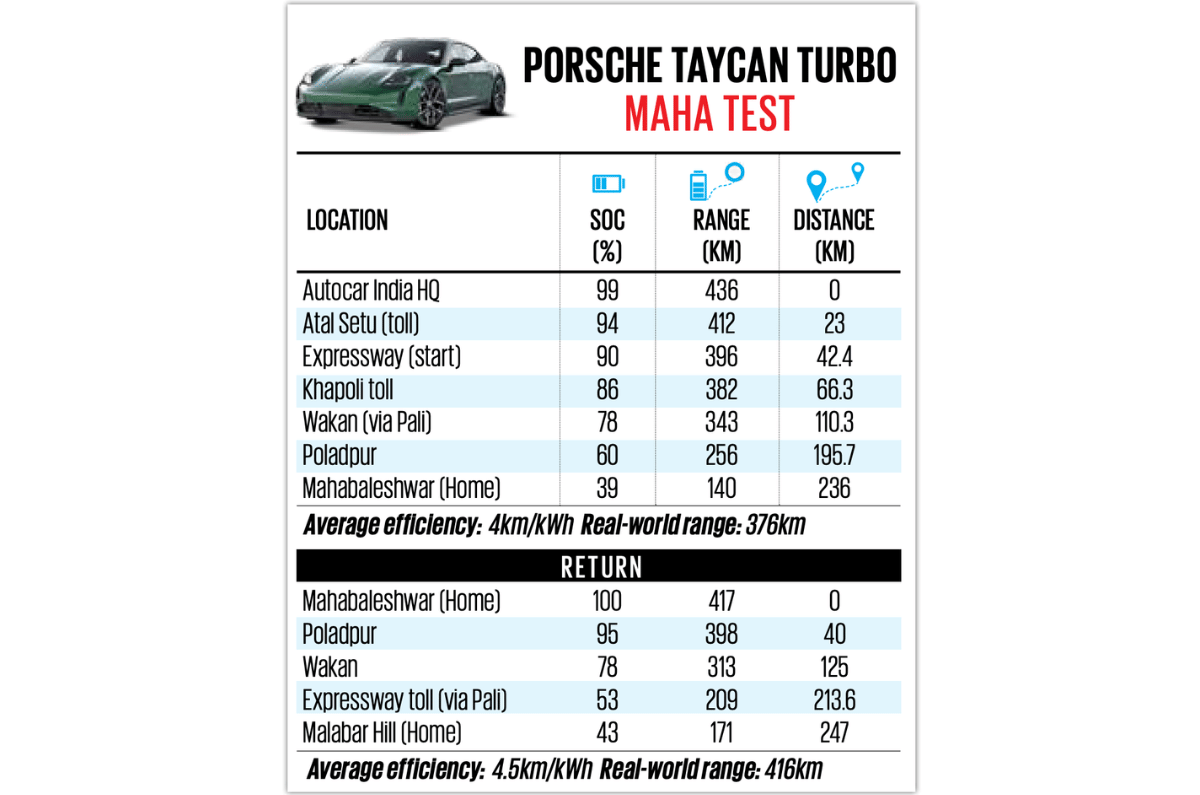
Our real-world experience confirmed its phenomenal range. A particularly demanding test drive to Mahabaleshwar, involving sustained uphill driving, saw the Taycan arrive with a comfortable 39 percent charge remaining – well outside any range-anxiety zone. On such extended drives, the subtle niceties truly come to the fore: a perfectly calibrated driving position, excellent outward visibility, and a digital instrument cluster that is a masterclass in clarity. Crisp, legible, and refreshingly simple to use, it stands out as one of the best digital displays in the automotive industry.
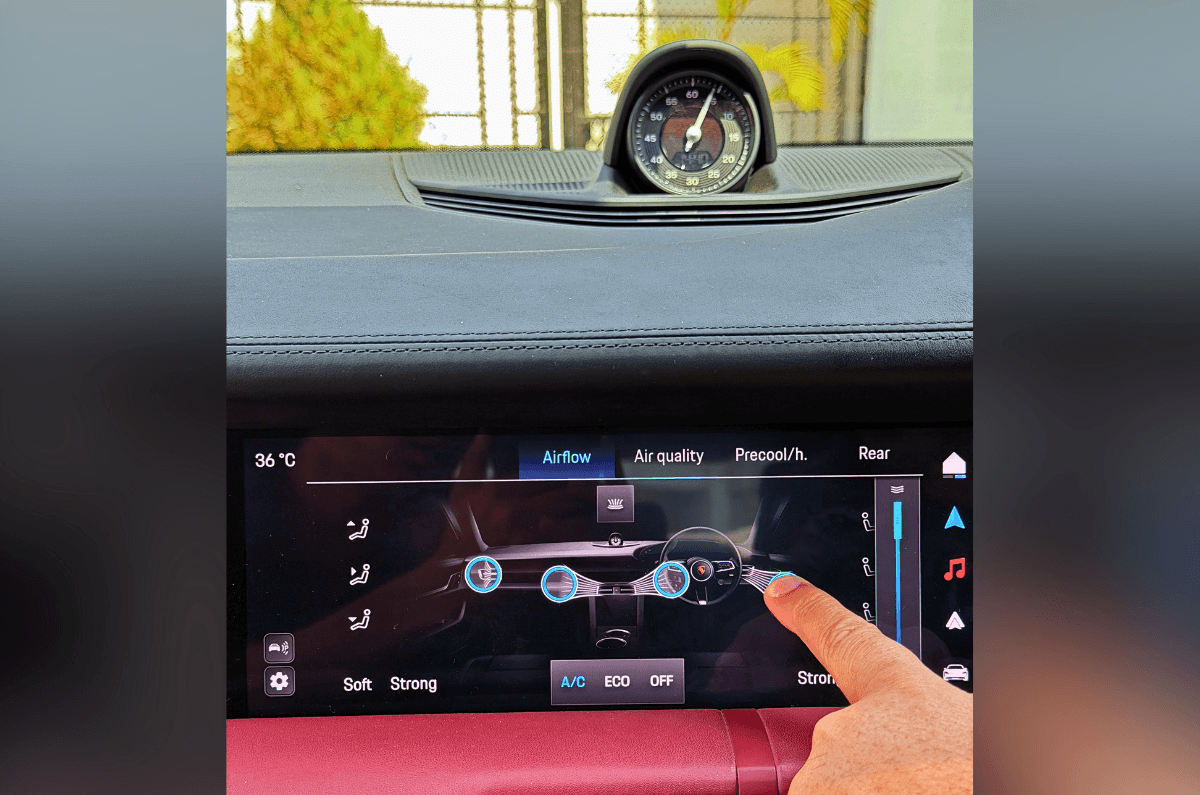
Despite its overwhelming strengths, the Taycan Turbo isn't without its quibbles, some of which, while minor, contribute to its challenging market perception. A common criticism, increasingly prevalent in modern luxury cars, is the proliferation of touch panels at the expense of physical buttons. The Taycan falls prey to this trend, particularly with its air-conditioning controls, which are frustratingly buried within the touchscreen interface. Adjusting vent direction on the move becomes a needless faff, demanding precious visual attention away from the road.
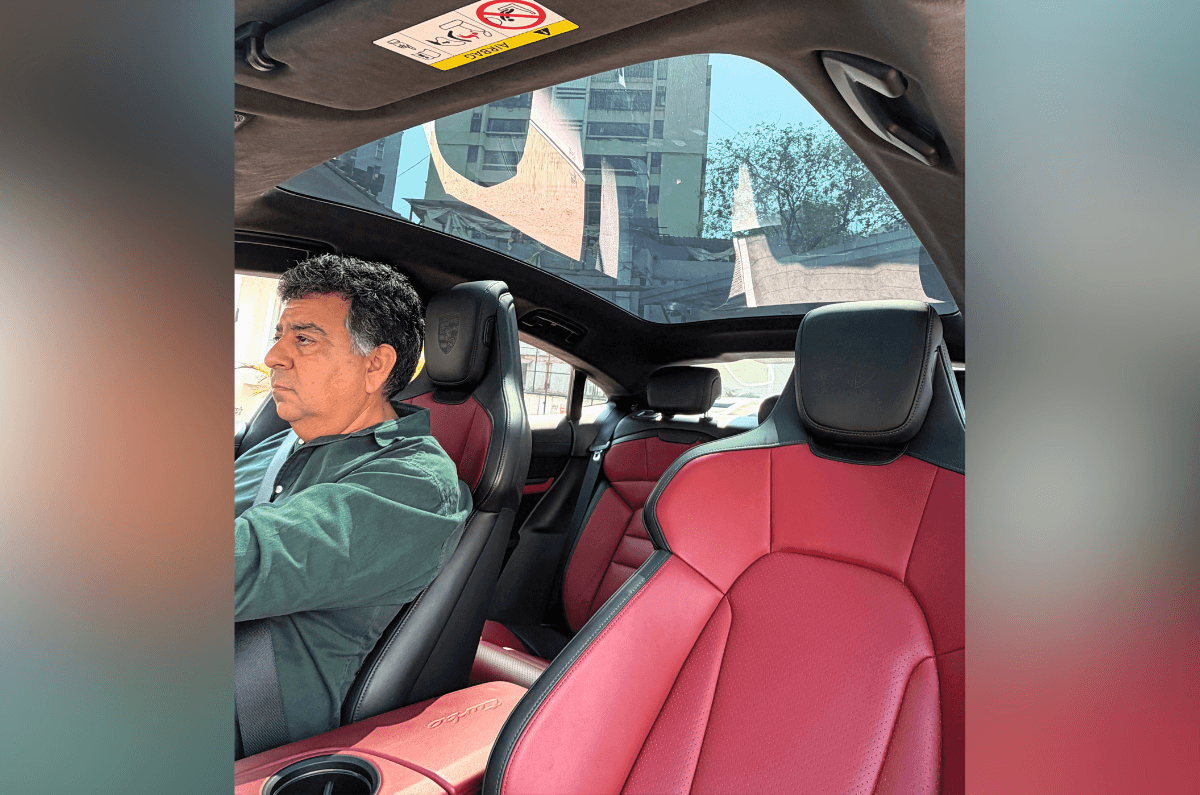
Another notable omission, especially for markets with intense sun, is the fixed panoramic roof lacking any form of retractable shade. During a particularly warm Holi break in Mahabaleshwar, marking the onset of summer, the Taycan's glass roof effectively transformed the cabin into a \"pizza oven\" under the afternoon sun. While the climate control system is robust, it can only fight against such solar load to a certain extent, diminishing cabin comfort and impacting energy efficiency.
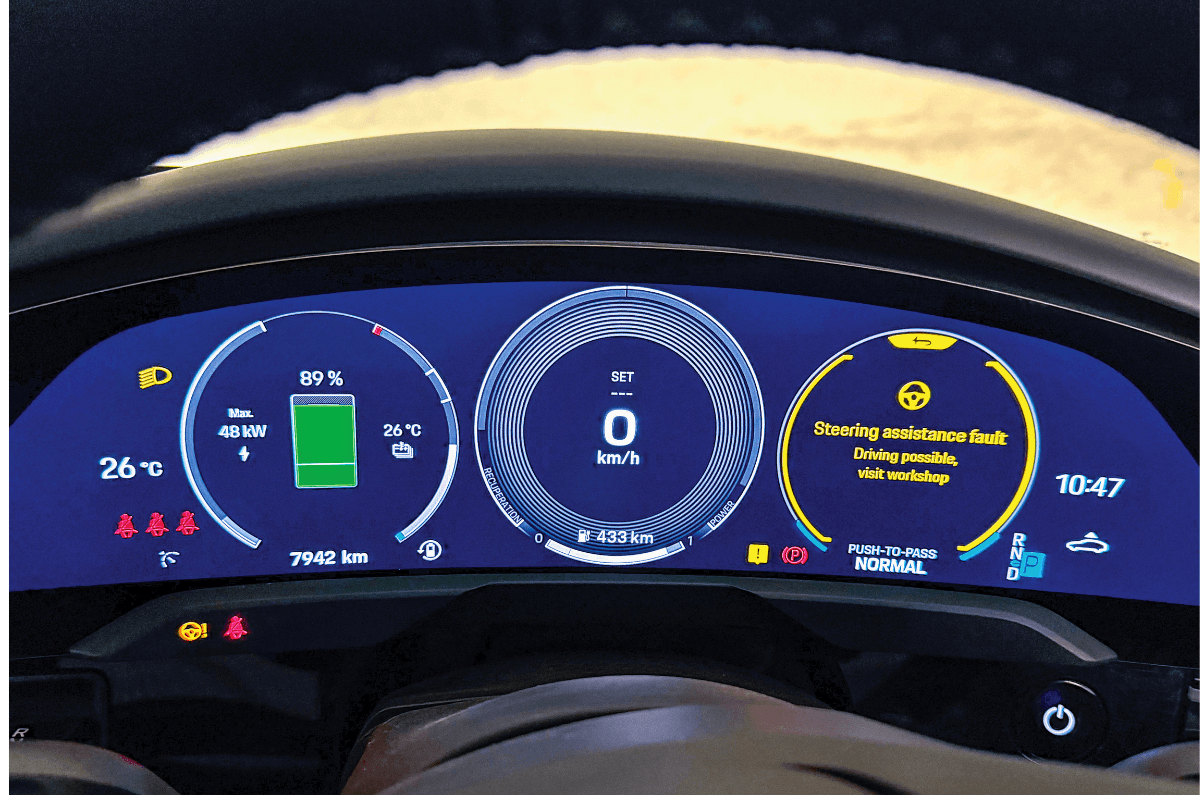
Furthermore, an initial \"steering assistance fault\" error, though quickly rectified by Porsche, served as a blot on an otherwise sterling reliability record. For a premium vehicle in this segment, such an early fault, regardless of its swift resolution, can raise concerns among potential buyers, particularly those new to electric technology. This kind of negative PR, however minor, can impact consumer confidence and contribute to the broader narrative of early EV adoption challenges.
These seemingly small inconveniences, combined with a higher price point and the general public's evolving understanding of EV benefits, likely contribute to the Taycan's struggle. The market is still heavily swayed by brand heritage and the visceral theatre of ICE sports cars, making it difficult for an innovative, yet quieter, electric counterpart to fully capture the imagination and market share it arguably deserves. The data below offers a snapshot of its impressive efficiency and performance during its long-term test.
As the long-term stewardship of the Porsche Taycan Turbo draws to a close, the sense of genuine loss is palpable. It has been an unequivocally amazing companion – astonishingly versatile, shatteringly quick, and perhaps most importantly, quintessentially Porsche. This isn't merely an electric car; it's a profound statement from a brand that refuses to compromise its heritage, even as it embraces the electric future.
The Taycan Turbo represents the pinnacle of high-performance EV engineering, a vehicle that seamlessly blends electrification with the tactile, engaging driving experience that Porsche is renowned for. Its current struggle in the market, marked by subdued sales and falling values, speaks less to its inherent quality and more to the broader challenges of ushering in a new era of automotive performance. It is a car that asks its audience to look beyond traditional metrics, to appreciate a different kind of theatre, and to embrace a future where silence can be just as thrilling as a roaring engine. The Taycan Turbo is not just good; it's groundbreaking, and it will be genuinely missed. It truly is a masterpiece, perhaps just a little ahead of its time.
The Unsung Hero: Why the Porsche Taycan Turbo is a Performance EV Masterpiece Facing an Uphill Battle
The Unmistakable Porsche DNA: Bridging ICE and EV Performance
Beyond the Spec Sheet: Living with the Taycan Turbo
The Paradox of Perfection: Why the Taycan Turbo Faces Market Resistance
Porsche Taycan Turbo: Pros & Cons
Pros
Cons
Porsche Taycan Turbo Test Data
Price (ex-showroom)
Rs 2.7 crore (ex-showroom, India)
Odometer
10,234km
Economy
4.5km/kWh
Maintenance cost
None
Faults
Steering assistance fault
Previous report
February 2026
Conclusion: A Porsche for the Future, Today