
In the fast-evolving landscape of electric vehicles (EVs), the narrative often swings wildly between unbridled optimism and profound skepticism. It's a sentiment I understand intimately, particularly now, as the industry faces a curious dichotomy. On one hand, we're witnessing a period where certain EV offerings, like the Ola Roadster X+, have proven to be significant disappointments, casting a shadow on local manufacturing capabilities. Simultaneously, global automotive giants such as Porsche and Honda have notably scaled back or even scrapped massive electric vehicle investments, citing weak customer uptake and incurring losses stretching into the tens, if not hundreds, of billions of dollars. This period of recalibration has fostered a sense of caution, prompting many to question the immediate viability and universal appeal of the electric future.
Yet, amidst this turbulence, a powerful undercurrent of innovation is gathering momentum, fueling an unparalleled sense of excitement in the most critical and, arguably, most problematic area of electric mobility: batteries. My own optimism, ignited over the past three months, stems from a series of truly groundbreaking developments that promise to redefine what’s possible. These advancements aren't just incremental improvements; they represent potential paradigm shifts that could finally address the core limitations holding back widespread EV adoption. The vehicle pictured above, the Verge TS Pro, is at the heart of one of these intriguing developments, hinting at a future that might arrive sooner than we think – or is it all just an elaborate illusion?
The journey towards an all-electric future has proven to be far from a smooth, linear progression. While the initial fervor saw unprecedented investments and ambitious targets, the reality check has been stark for many. The recent road test of the Ola Roadster X+, for instance, serves as a stark reminder that not all EV dreams translate into consumer satisfaction. Its performance, described as the \"worst locally manufactured motorcycle,\" underscores the critical importance of engineering prowess, quality control, and a deep understanding of rider expectations—areas where some new entrants are clearly struggling. Such experiences can erode public trust and dampen enthusiasm, even for the most ardent EV proponents.
Beyond localized issues, the global four-wheeler segment presents an even more telling narrative. Established automotive powerhouses like Porsche and Honda, alongside new ventures like Sony Honda Mobility, have faced significant headwinds. The decision to pull back on substantial EV investments, as seen with Sony Honda Mobility scrapping the Afeela EV plans, is not taken lightly. These retractions, often resulting from weaker-than-anticipated customer uptake and the colossal financial burdens of developing new EV platforms, highlight fundamental challenges. Consumers are still weighing the higher upfront costs, range anxiety, charging infrastructure limitations, and residual value concerns against the environmental benefits and perceived technological superiority. The cumulative losses reported across the industry are a grim indicator that the transition to EVs is a marathon, not a sprint, and it's fraught with economic perils that demand realistic expectations and viable solutions. This turbulent backdrop makes any genuine breakthrough in core EV technology, especially batteries, all the more critical and eagerly anticipated.
Despite the challenges, the heart of the EV revolution beats stronger than ever within the labs and factories of battery innovators. Over the past few months, my optimism has been profoundly influenced by the exciting advancements emerging from Chinese battery giants. Companies like BYD and CATL are not merely refining existing technologies; they are pushing the boundaries with new chemistries and designs that promise to address many of the current limitations.
BYD, a name synonymous with electric mobility, has significantly advanced its acclaimed Blade cell battery technology. Their latest iteration boasts an impressive 30 percent jump in energy density. For the uninitiated, energy density is crucial; it dictates how much power a battery can store relative to its size and weight. A higher energy density translates directly into increased range for the vehicle, or a smaller, lighter battery pack for the same range. This leap alone is a substantial improvement, making EVs more practical and competitive.
Even more remarkable is the Blade cell's ability to support a 10C charge rate. To put this into perspective, 'C' is a measure of the charge or discharge rate relative to the battery's total capacity. A 1C rate would charge a battery in one hour. A 10C rate means the battery can theoretically be charged from empty to full in a mere six minutes (1/10th of an hour). This isn't just fast; it's transformative. Imagine topping up your EV during a quick coffee break, almost mirroring the time it takes to refuel a gasoline car. Such rapid charging capability significantly mitigates range anxiety and dramatically improves the user experience, especially for those reliant on public charging infrastructure.
Meanwhile, CATL, the world's largest EV battery manufacturer, is on the cusp of mass production for sodium-ion batteries. This is a crucial development, as sodium is far more abundant and less expensive than lithium. The reliance on lithium has raised concerns about supply chain stability, geopolitical implications, and environmental impact from mining. Sodium-ion offers a compelling alternative, potentially driving down EV costs and making them accessible to a wider demographic. While current sodium-ion technology typically offers a lower energy density compared to its lithium-ion counterparts, its advantages in cost, safety (less prone to thermal runaway), and operation in extreme temperatures are significant. CATL's commitment to bringing these to production vehicles \"very soon\" signals a tangible step towards a more sustainable and economically viable battery ecosystem.
It's important to note that both BYD's Blade cell and CATL's sodium-ion batteries, with their substantial size and the need for sophisticated liquid-cooling hardware to manage high-speed charging safely, are primarily designed for larger vehicles like cars. However, their advancements set the stage for a broader revolution, demonstrating the immense potential simmering beneath the surface of the EV market. Yet, what has truly captivated my imagination since the beginning of the year is a story unfolding on a much smaller scale, involving a seemingly audacious claim and a solid-state battery that defies convention.
The annual Consumer Electronics Show (CES) is a hotbed for ambitious claims, but even by CES standards, the debut of Donut Lab in January 2026 was extraordinary. A relatively unknown startup from Finland burst onto the scene with assertions about a revolutionary solid-state battery that immediately sent shockwaves through the industry. The claims were nothing short of sensational: a battery that uses no lithium, is purportedly easy to manufacture, and would be installed in a production electric motorcycle, the Verge TS Pro, by as early as April 2026.
Let's dissect Donut Lab's astounding claims, each of which, individually, would be considered a major breakthrough, but collectively, bordered on the miraculous:
Predictably, the announcement was met with a tsunami of skepticism from battery scientists, engineers, and automotive journalists alike. The collective wisdom suggested that combining all these attributes simultaneously, especially without lithium, defied known battery chemistries and physics. Such a perfect storm of advantages seemed, quite frankly, too good to be true.
Yet, Donut Lab has cleverly chipped away at this skepticism with a highly effective, viral marketing campaign. Over the subsequent weeks, the company released a series of videos, each purporting to show a certified independent lab rigorously testing individual performance claims. This drip-feed of information has kept the narrative alive and captured immense public attention, transforming what could have been dismissed as a scam into an intriguing, ongoing saga.
As of this writing, some crucial questions undeniably remain unanswered, particularly concerning the actual chemical composition, the definitive energy density, and the long-term cycle life. The lack of detailed scientific papers or peer-reviewed data remains a significant red flag. Furthermore, Donut Lab's most recent communications have been frustratingly low on valuable technical information, fueling renewed suspicion.
However, the independent tests, limited as they are, have offered some intriguing glimpses. We now have indications that:
The Donut Lab saga has entertained and intrigued me more than any prestige television series. Yet, the initial euphoria is gradually yielding to a stronger undercurrent of skepticism and frustration. The absence of comprehensive, verifiable data, coupled with the secretive nature of the \"secret sauce,\" raises valid concerns. Is this the real deal, a glimpse into the future, or an elaborate fundraising scam leveraging sensational claims to attract capital? The previous few weeks haven't been kind to the company's public image, with many in the scientific community remaining unconvinced until empirical evidence fully supports their claims.
To fully appreciate the potential impact of Donut Lab, it’s essential to understand the general advantages and challenges of solid-state batteries (SSBs), and then juxtapose them with Donut Lab's specific assertions and verified (or unverified) progress.
**Pros (Based on Claims & Limited Verification):**
**Cons (Based on Lack of Evidence & Growing Doubts):**
The critical \"April 2026\" deadline for the first Verge TS Pro motorcycles equipped with this battery is now upon us. Any significant delay will undoubtedly cast a long shadow on Donut Lab's credibility. Once this bike, like the one illustrated at the beginning, is supposedly delivered, the real test begins. Independent evaluations by unbiased third parties will be paramount to verifying these extraordinary claims. Only then can the truth about this Finnish enigma be unequivocally established.
As someone who navigates the urban sprawl daily, inhaling two hours' worth of exhaust fumes on my motorcycle commute, the allure of electric vehicles, particularly for city use, is undeniable. I genuinely enjoy riding a well-engineered EV – the instant torque, the silent acceleration, and the sheer simplicity of electric powertrains are compelling. However, the current reality often involves compromises: higher purchase prices, longer charging times, and the lingering specter of range anxiety. This is precisely why technologies like the one Donut Lab claims to possess, or the verified advancements from BYD and CATL, represent a genuine game-changer.
Imagine an EV with a battery that charges in five minutes, offers extended range, lasts for a hundred thousand cycles, and is inherently safer and more affordable. Such a product would fundamentally transform the electric vehicle proposition. It would shift EVs from being perceived as \"compromised, expensive, and (in some ways) inferior products\" to simply becoming the obvious, superior choice for anyone with the ability to charge at home, or even with access to rapidly expanding public charging networks. This wouldn't just be about convenience; it would be about democratizing electric mobility, making it accessible and practical for the masses. The environmental benefits, particularly in densely populated urban areas, would be profound, contributing to cleaner air and quieter streets. This isn't just about an isolated technological leap; it's about the potential for a societal shift towards a more sustainable and efficient transportation paradigm.
The EV industry stands at a pivotal juncture, navigating economic headwinds and consumer apprehension while simultaneously witnessing astonishing leaps in battery technology. The dual narrative of established manufacturers pulling back on investments and audacious startups promising revolutionary breakthroughs paints a complex picture. While BYD's Blade cell and CATL's sodium-ion batteries offer tangible, verifiable progress that will incrementally improve the EV experience, the Donut Lab saga represents a more dramatic, high-stakes gamble.
The stakes are incredibly high. If Donut Lab's claims prove to be genuine and fully verifiable, it would represent nothing short of a scientific and engineering marvel, accelerating the global transition to electric vehicles by decades. It would fundamentally alter our understanding of battery chemistry and manufacturing, making EVs universally appealing and undeniably superior. However, if these claims ultimately unravel as mere hype or, worse, an elaborate deception, it risks eroding trust in the very innovation that is supposed to drive our sustainable future.
As we watch the deadline for the Verge TS Pro's delivery approach, the automotive world holds its breath. The future of electric mobility hinges not just on the promise of innovation, but on its transparent, verifiable, and ultimately, deliverable reality. Whether Donut Lab lights up the path forward or casts a long shadow of disappointment remains to be seen, but one thing is certain: the quest for the ultimate EV battery continues, driven by both immense hope and rigorous skepticism.
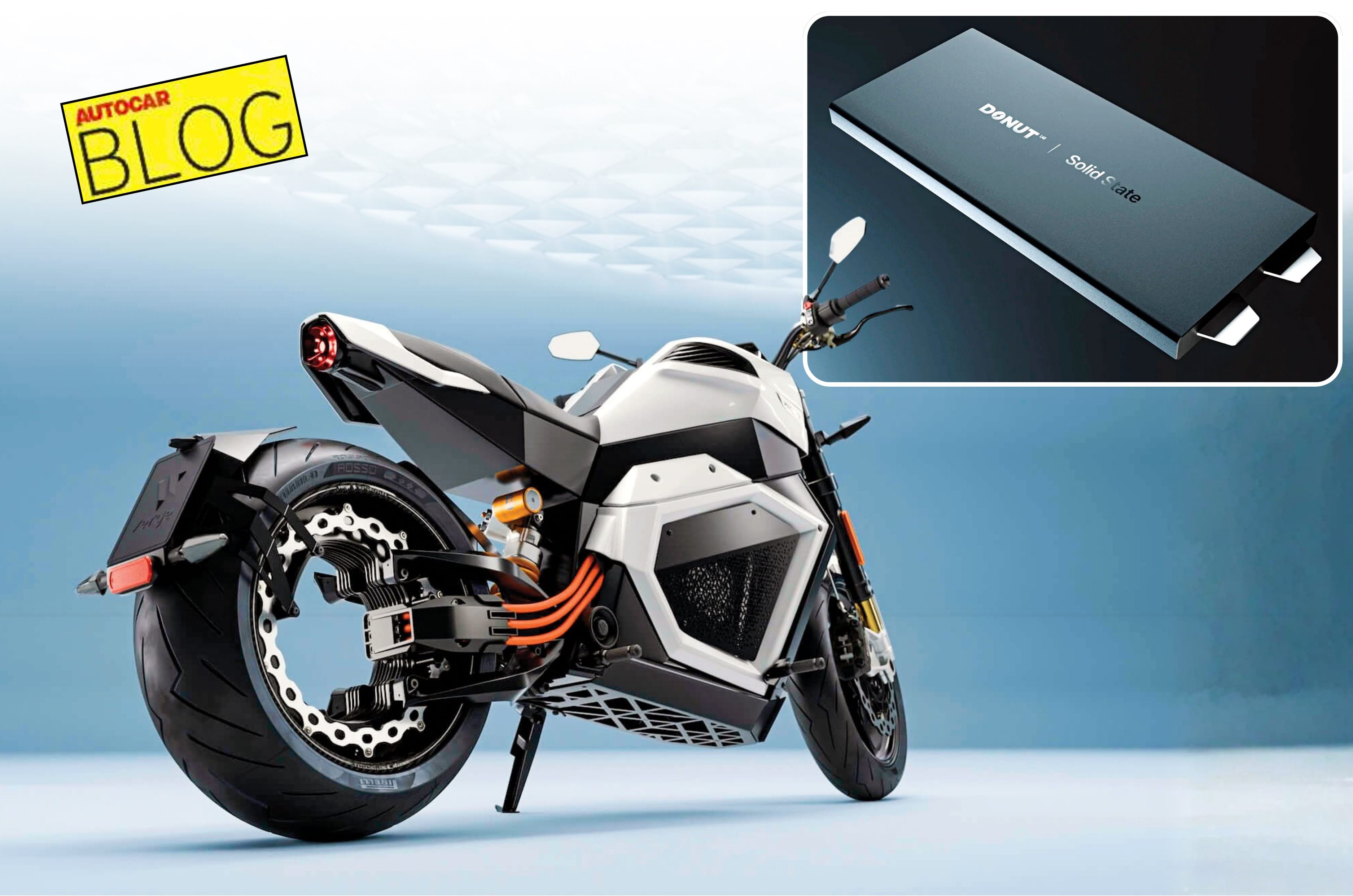
The EV Battery Revolution: Is Donut Lab's Solid-State Claim a Game-Changer or a Gimmick?
The Shifting Tides of EV Adoption: A Reality Check and Growing Pains
Beyond Lithium: A New Era of Battery Innovation Dawns
BYD's Blade Cell: Sharpening Performance
CATL's Sodium-Ion Batteries: A Sustainable Alternative
Donut Lab and the Solid-State Saga: Hope, Hype, or Hoax?
Chipping Away at Doubt: The Viral Marketing Gambit
Pros & Cons of Solid-State Battery Technology (and Donut Lab's Claims)
Pros of Solid-State Batteries (General)
Cons of Solid-State Batteries (General)
Donut Lab Specific: Claims vs. Reality (So Far)
The Promise of Transformation: Why This Matters for the EV Future
Conclusion: A Future Charged by Innovation or Clouded by Deception?