
The automotive landscape in India is a battlefield of innovation and fierce competition, especially within the burgeoning SUV segment. As consumers increasingly gravitate towards utility vehicles, manufacturers are redoubling their efforts to capture this lucrative market. Amidst this intense rivalry, Hyundai Motor India, a formidable player known for its strategic foresight and product prowess, has announced a significant offensive. In a move poised to reshape its portfolio and challenge established segment leaders, the Korean giant has confirmed the launch of two entirely new SUV nameplates in the FY25-26 period. This isn't just a simple expansion; it's a meticulously crafted dual-pronged strategy targeting both the highly competitive mid-size Internal Combustion Engine (ICE) SUV space and the rapidly evolving compact Electric Vehicle (EV) SUV segment. For automotive enthusiasts and market observers, this announcement marks a pivotal moment, signaling Hyundai's unwavering ambition to cement its dominance in a market that never stands still.
Speaking on this pivotal development, Tarun Garg, CEO of Hyundai India, expressed palpable excitement, stating, “We feel very excited to inform you that during this financial year, we shall be introducing two completely new nameplates which have been keenly awaited by all of you. Both these launches are expected to meaningfully boost our volumes and act as powerful catalysts for our next phase of growth.” This sentiment underscores not just a product launch, but a strategic imperative to reclaim and expand market share in segments where rivals like Tata and Mahindra have gained considerable ground.
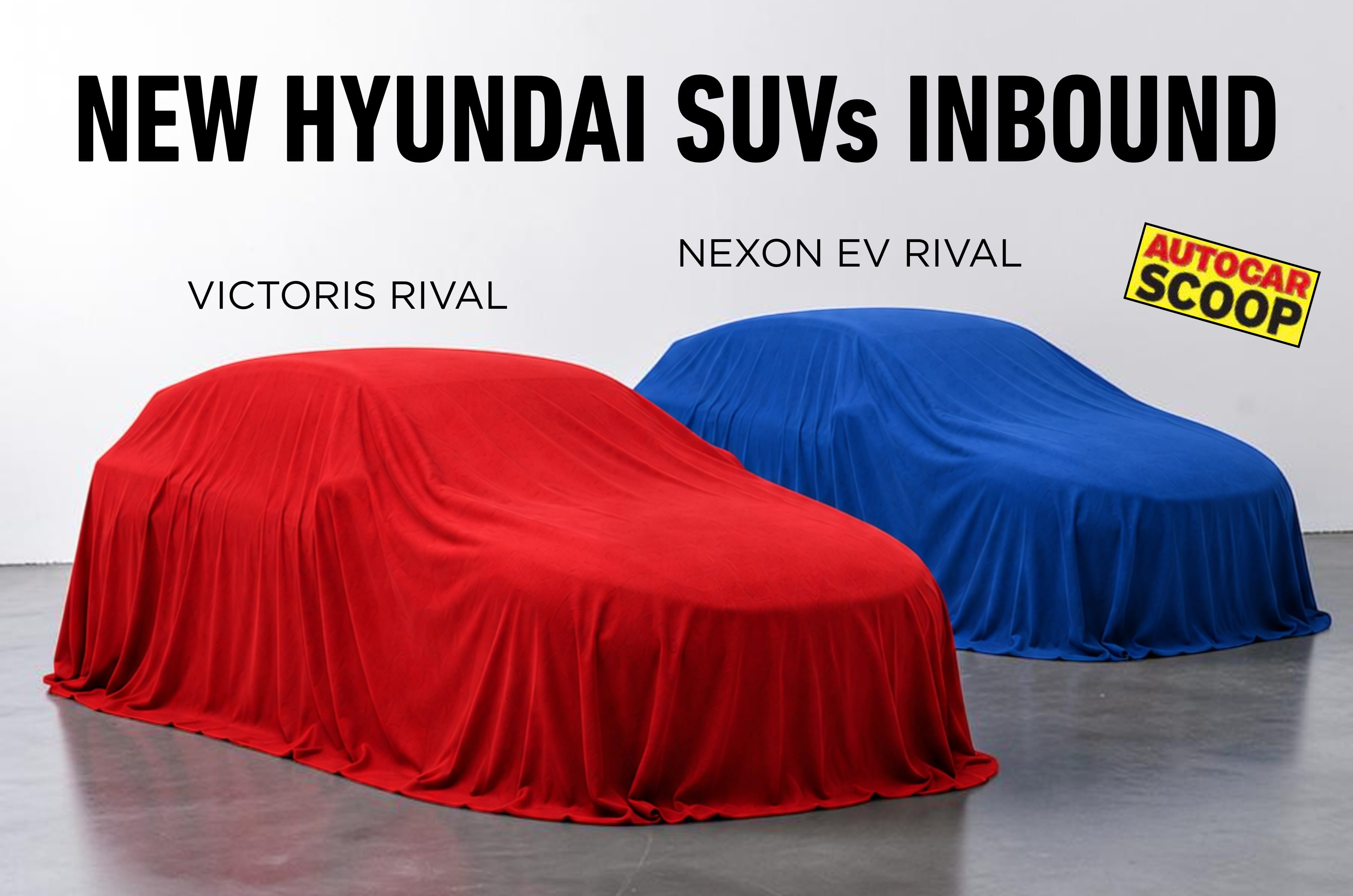
Hyundai's two-pronged approach is a masterclass in market segmentation and strategic positioning. One new model is set to bolster its presence in the highly contested mid-SUV segment, while the other marks a significant entry into the localized dedicated EV compact SUV space. This dual-track strategy is designed to cover a broader spectrum of consumer needs and preferences, from those seeking efficient, traditional powertrains to early adopters of electric mobility.
This strategy is not without its risks. The Indian market is notoriously price-sensitive, and launching multiple SUVs in overlapping price brackets can sometimes lead to internal cannibalization. Moreover, the mid-size SUV segment is a hotbed of competition, with established models from Maruti Suzuki, Tata, Mahindra, and Kia already vying for consumer attention. The EV segment, while growing, faces its own set of challenges, including charging infrastructure, upfront costs, and range anxiety. However, Hyundai's extensive R&D capabilities and deep understanding of the Indian consumer might just be the trump card needed to navigate these complexities.
The mid-size SUV, internally codenamed 'Bc4i', is generating significant buzz. Sources familiar with Hyundai's plans indicate that this new contender will leverage the architecture of the Hyundai Bayon, a popular crossover in European markets. While earlier reports hinted at a direct rival to models like the Maruti Fronx, it's now understood that Hyundai is positioning this new SUV to directly compete within the broader mid-size SUV segment, possibly slotting in a unique space between the Venue and the Creta. Measuring approximately 4.18 meters in length, it will offer a distinct dimension and design philosophy, avoiding direct competition with the Creta but potentially providing a more accessible entry point into Hyundai’s SUV family.
A key differentiator for the 'Bc4i' is its expected powertrain lineup. While a naturally aspirated petrol engine is a given, Hyundai is reportedly preparing a CNG powertrain with a dual-cylinder setup. This move is particularly significant, as it could mark Hyundai's first CNG-powered SUV exceeding 4 meters. The focus on CNG is a shrewd strategic play, aligning with the exponential growth witnessed in the CNG segment in India over recent years. With rising fuel prices, consumers are increasingly prioritizing fuel efficiency and lower running costs over outright performance – a niche that CNG vehicles brilliantly fill. This not only broadens the SUV's appeal but also positions it as an economical choice for daily commuting, a crucial factor in the Indian market.
Beyond the powertrain, Hyundai is expected to arm the 'Bc4i' with its customary strengths: a tech-laden interior and an array of advanced driver assistance features. This has consistently been Hyundai's forte, providing a premium feel and superior connectivity options that resonate well with modern Indian buyers. However, the challenge for Hyundai will be to carve out a compelling identity for this new SUV in a segment already saturated with offerings. Will it simply be \"another Hyundai SUV\" or will it bring a genuinely unique value proposition that allows it to stand shoulder-to-shoulder with or even outperform segment stalwarts? The risk of cannibalizing sales from its own popular models like the Venue or even entry-level Creta variants is a tightrope walk Hyundai must manage carefully.
Hyundai's commitment to electric mobility in India is evident with the confirmed arrival of a localized electric compact SUV, internally codenamed 'HE1i'. Back in October 2025, Jose Munoz, President and CEO of Hyundai, affirmed that this EV would be “designed, engineered and built in India for Indian customers.” This emphasis on localization is critical for cost efficiency, adapting to local conditions, and building consumer trust.
While initial speculations placed this EV as a rival to the Tata Punch EV, current intelligence suggests a more ambitious target: the formidable Tata Nexon EV, which currently dominates the compact EV SUV segment. The 'HE1i' will reportedly sit on the E-GMP (K) platform, a modular electric global platform that also underpins the upcoming Hyundai Inster sold in international markets. This platform sharing promises a sophisticated electric architecture, potentially offering superior range, performance, and charging capabilities.
Manufacturing will take place at Hyundai’s Sriperumbudur factory in Tamil Nadu, with localized batteries supplied by Exide, further enhancing its \"Made in India\" credentials and potentially keeping costs competitive. Hyundai has also confirmed the availability of both standard range and long-range versions, catering to a wider spectrum of buyer needs and budgets. For context, the Euro-spec Inster boasts a 42kWh (Standard Range) and 49kWh (Long Range) option, offering respective WLTP ranges of approximately 300km and 355km. Such figures, if replicated in the Indian model, would place it squarely in contention with the Nexon EV's offerings.
However, Hyundai faces a significant uphill battle in the EV space. Tata Motors has had a considerable head start, establishing a strong brand presence and a relatively widespread charging network. Consumer skepticism regarding EV infrastructure, range anxiety, and the higher upfront cost compared to ICE counterparts are persistent challenges. Hyundai’s success will hinge not just on the product itself, but on a comprehensive ecosystem of charging solutions, after-sales service, and compelling financial schemes to ease the transition for potential buyers. Entering a segment dominated by a well-entrenched competitor requires more than just a good product; it demands a revolutionary approach to customer experience.
Hyundai's rationale behind this dual launch is clear: to cast a wider net in the incredibly diverse Indian market. Industry executives often observe carmakers intentionally introducing multiple SUVs in overlapping price brackets, differing in design, body styles, and fuel options. This strategy aims to appeal to a broader demographic, ensuring that no potential customer is left unaddressed. For Hyundai, specifically, this move is crucial to fortify its lineup around the successful, yet increasingly challenged, Creta in the mid-size SUV segment, and to establish an early, strong foothold in the mass-market EV space.
Hyundai's strategy reflects a calculated effort to regain lost ground and capitalize on emerging market trends. By offering a diverse range of SUVs, the company aims to not only boost volumes but also to reinforce its image as an innovator and a customer-centric brand. The coming years will reveal whether this bold double offensive can truly solidify Hyundai's position as a dominant force across India's dynamic automotive landscape.
With inputs from Glenn Noronha.
Hyundai India’s announcement of two brand-new SUV nameplates for FY25-26 marks a decisive declaration of intent. By targeting the bustling mid-size ICE segment with a Bayon-based, CNG-ready model and launching a localized compact EV to challenge the Nexon EV, Hyundai is deploying a comprehensive strategy designed to navigate the complexities and capitalize on the opportunities within the Indian automotive market. This is more than just adding new vehicles to the lineup; it's a strategic chess move to diversify its offerings, strengthen its competitive stance against aggressive rivals like Tata and Mahindra, and future-proof its portfolio in an era of rapid transition towards sustainable mobility.
The road ahead is undoubtedly challenging. The mid-size SUV segment demands innovation and compelling value, while the EV market requires significant investment in infrastructure and consumer education. However, Hyundai’s proven track record of understanding the Indian consumer, coupled with its global expertise in technology and manufacturing, positions it uniquely for success. As these new models hit the showrooms, they will not only inject fresh excitement into their respective segments but also serve as a crucial barometer for Hyundai's ambitious vision for enduring leadership in one of the world's most dynamic automotive markets. The industry watches with bated breath to see if Hyundai's dual-pronged attack will indeed reshape the competitive landscape and drive its next phase of significant growth.
Hyundai's Dual-Threat Unveiled: A Bold Play for India's SUV & EV Crown
Hyundai's Aggressive Gambit: Decoding the Dual SUV Strategy
The ICE Front: Hyundai's Mid-Size SUV Offensive – Bayon-Based and CNG-Ready
Electrifying the Compact Segment: Hyundai's Localized EV – Challenging the Nexon EV Throne
The Road Ahead: Potential Impact and Strategic Playbook
Pros & Cons of Hyundai's Dual SUV Strategy:
Conclusion: Hyundai's Bid for Enduring Leadership