
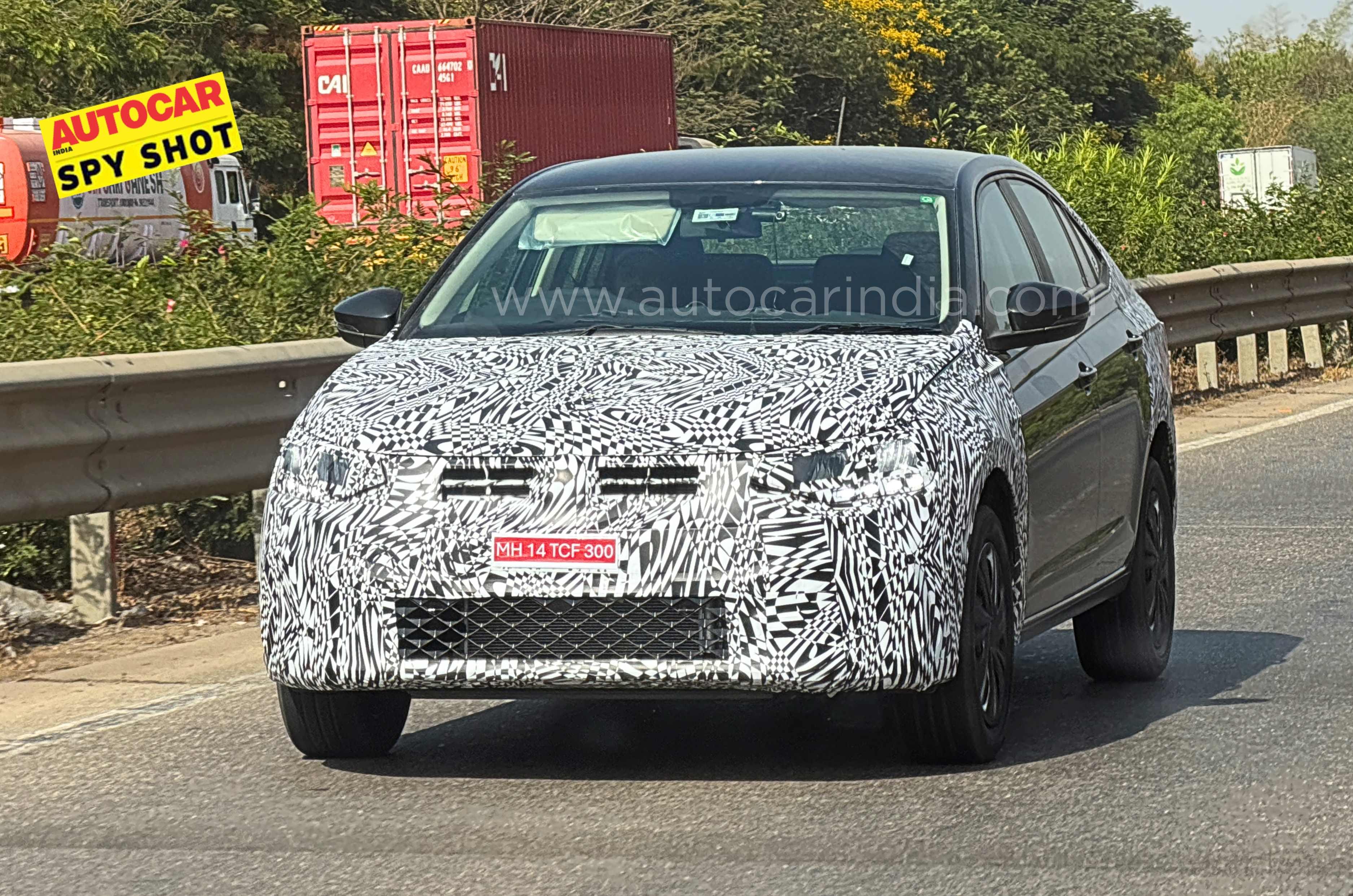
The automotive landscape in India is a perpetually evolving spectacle, with manufacturers consistently pushing boundaries to captivate discerning buyers. In the hotly contested mid-size sedan segment, one name has carved out a formidable reputation for its blend of European sophistication, engaging driving dynamics, and robust build quality: the Volkswagen Virtus. Since its grand debut in 2022, the Virtus has not only revitalized Volkswagen's presence in this crucial segment but has also set new benchmarks for what a premium sedan should offer. Now, as the industry buzz intensifies, an exhilarating development has sent ripples through the automotive community: the Volkswagen Virtus facelift has been spied testing on Indian roads for the very first time. This sighting, captured vividly in the image above showing a camouflaged mule, confirms that Volkswagen is gearing up to introduce its first significant mid-cycle update to this best-selling model. Prepare yourselves, enthusiasts and prospective buyers, as we delve deep into what this refreshed Virtus could bring, promising not just minor cosmetic tweaks but a comprehensive enhancement package designed to maintain its competitive edge and further cement its position as a segment leader.
The recent spy shots, prominently featuring the test mule depicted above with its strategic camouflage, offer our first tantalizing glimpse into the refreshed 2025 Volkswagen Virtus. While the heavy wraps obscure definitive details, automotive sleuths and design aficionados can already discern a direction. The camouflage typically serves to hide key design alterations, suggesting that while the fundamental silhouette and elegant proportions of the Virtus will remain largely intact – a wise decision given its already appealing design – there will be targeted modifications to keep its appearance fresh and contemporary.
Expect the most noticeable changes to grace the front fascia. Volkswagen's design philosophy often involves subtle yet impactful evolutions rather than radical overhauls. We anticipate a redesigned front bumper, potentially featuring revised air intakes and fog lamp housings, giving the Virtus a slightly more aggressive or sophisticated stance. The signature Volkswagen grille might see minor tweaks to its chrome elements or a new internal mesh pattern, aligning it with the brand's latest global design language seen in models like the new Tiguan. Headlights, while likely retaining their LED DRL signature, could be reprofiled for a sharper, more modern look, perhaps incorporating matrix LED technology in higher trims for enhanced illumination and safety. This attention to detail ensures the Virtus continues to exude that unmistakable European premium feel.
Moving to the rear profile, the updates are expected to be equally subtle yet effective. A restyled rear bumper, possibly with integrated diffusers or new reflector placements, could enhance its sportiness. The LED tail lamp clusters, a distinctive element of the current Virtus, might receive refreshed internal graphics, giving the facelifted model a unique light signature after dark. New alloy wheel designs are almost a certainty, offering a fresh aesthetic and possibly improving aerodynamic efficiency. While not explicitly visible in the spy shots, new exterior paint options, potentially including bolder metallic shades or a dual-tone scheme, could also be introduced to widen its appeal and allow for greater personalization. These visual enhancements are crucial for keeping the Virtus looking relevant and premium in a segment where first impressions matter immensely.
While visual upgrades are important, the true essence of a mid-cycle refresh lies in its ability to enhance the ownership experience through new features and mechanical improvements. The Volkswagen Virtus facelift is tipped to deliver significantly on both fronts, addressing evolving consumer demands and raising the bar for in-car technology and powertrain sophistication.
The current Virtus already boasts a well-appointed cabin, but the facelift is expected to elevate the experience further. Here are some anticipated feature additions and enhancements:
Perhaps the most significant mechanical update rumored for the Virtus facelift is the likely introduction of an 8-speed automatic gearbox for the 1.0-litre TSI engine. This is a crucial development for several reasons:
The continued presence of the potent 1.5-litre TSI EVO engine with Active Cylinder Technology (ACT) and the 7-speed DSG is expected, offering enthusiasts that segment-leading performance. Volkswagen's commitment to offering diverse and advanced powertrain options ensures the Virtus caters to a wide spectrum of driving preferences.
The mid-size sedan segment in India, though challenged by the SUV craze, remains fiercely competitive and holds significant prestige. The Volkswagen Virtus currently locks horns with formidable rivals such as the Honda City, Hyundai Verna, Skoda Slavia (its platform sibling), and the Maruti Ciaz. Each contender brings its own strengths to the table, from Honda's renowned reliability and hybrid tech to Hyundai's feature-laden cabins and futuristic design.
Volkswagen's strategy with the Virtus facelift appears to be a calculated move to reinforce its existing strengths while addressing areas of potential improvement. The Virtus has always been celebrated for its superior build quality (thanks to the MQB A0-IN platform), robust safety ratings, and exhilarating driving dynamics. By introducing advanced features like ADAS and an improved automatic gearbox, VW aims to match or even surpass what rivals offer, particularly in the technology and convenience departments. The 8-speed automatic for the 1.0L TSI, in particular, could be a key differentiator, offering a blend of refinement and efficiency that few others can match in this displacement category.
Furthermore, Volkswagen's commitment to the sedan segment, even as others pivot heavily towards SUVs, sends a strong message to traditional sedan buyers who appreciate timeless design, comfort, and driving pleasure. The facelift ensures that the Virtus remains a fresh and compelling option, continuing to offer a compelling European alternative in a market often dominated by Japanese and Korean players.
While the Virtus is a stellar product, no car is perfect, and acknowledging potential areas for improvement can deepen reader engagement. Some criticisms, often debated in enthusiast circles, include:
Addressing these points, or at least showing a strong intent to, could turn potential skeptics into loyal customers. The success of the facelift will heavily depend on how well Volkswagen balances premium aspirations with practical, value-driven features and ownership experience.
Based on the spy shots and current market trends, here's an anticipated look at the pros and cons of the upcoming Virtus facelift:
The sighting of the Volkswagen Virtus facelift test mule marks the beginning of an exciting new chapter for Volkswagen in India. The current Virtus has already established itself as a beacon of European engineering and driving pleasure in the mid-size sedan segment. With the anticipated mid-cycle update, Volkswagen is poised not just to refresh its aesthetics but to significantly enhance its technological prowess, safety features, and overall driving experience. The rumored 8-speed automatic gearbox for the 1.0-litre TSI and the potential introduction of advanced ADAS systems are game-changers, setting new standards for the segment.
As the launch draws nearer in the coming months, the automotive world will be watching closely to see how Volkswagen fine-tunes this already impressive package. The 2025 Volkswagen Virtus facelift promises to be more than just a cosmetic upgrade; it's a strategic move to reinforce its position, broaden its appeal, and continue offering Indian consumers a truly sophisticated and engaging driving proposition. For those seeking a blend of premium European design, dynamic performance, and cutting-edge technology, the wait for the refreshed Virtus will undoubtedly be worth it. Stay tuned for more official announcements and detailed reviews as Volkswagen prepares to unleash its updated mid-size marvel on Indian roads.
Volkswagen Virtus Facelift Spied: Unpacking the Future of India's Dynamic Mid-Size Sedan
The Spy Shots: Unveiling Subtle Yet Significant Changes
Beyond Aesthetics: Enhanced Features and a Game-Changing Gearbox
Interior Refinements and Technology Upgrades
The Game-Changing 8-Speed Automatic Gearbox
The Competitive Landscape and Volkswagen's Strategy
The \"Negative View PR\" Angle: Where Could VW Still Improve?
Volkswagen Virtus Facelift: Pros and Cons (Anticipated)
Anticipated Pros:
Anticipated Cons:
Conclusion: The Road Ahead for the Refreshed Virtus