
In the ever-evolving landscape of the Indian motorcycle market, Royal Enfield has consistently proven its prowess in captivating riders with a blend of heritage and contemporary engineering. Their recent unveiling of the Guerrilla 450 Apex, a sportier, more aggressive iteration of the popular Guerrilla 450, has ignited discussions among enthusiasts and critics alike. Is this merely a cosmetic facelift, or does the \"Apex\" truly signify a new peak in Royal Enfield's urban scrambler philosophy? This in-depth analysis delves into the nuances, dissecting every aspect from mechanical tweaks to ergonomic considerations, while also casting a critical eye on the brand's strategic intent behind such a closely related offering. Prepare to uncover whether the Apex genuinely carves out a distinct niche or merely dances on the edges of its sibling's shadow.
At the heart of both the Guerrilla 450 and its Apex variant lies the same formidable 452cc, liquid-cooled, single-cylinder engine – a modern marvel for Royal Enfield, known internally as the 'Sherpa 450'. This powerplant is a significant departure from RE's traditional air-cooled, long-stroke units, signaling a bold step towards contemporary performance. It generates an impressive 40hp at 8,000 rpm and 40Nm of torque at 6,500 rpm, paired with a smooth six-speed gearbox. These figures place both Guerrillas in a highly competitive segment, offering brisk acceleration and comfortable highway cruising capabilities. The liquid-cooling system ensures consistent performance even in challenging conditions, a crucial upgrade for sustained high-speed riding or navigating dense urban traffic.
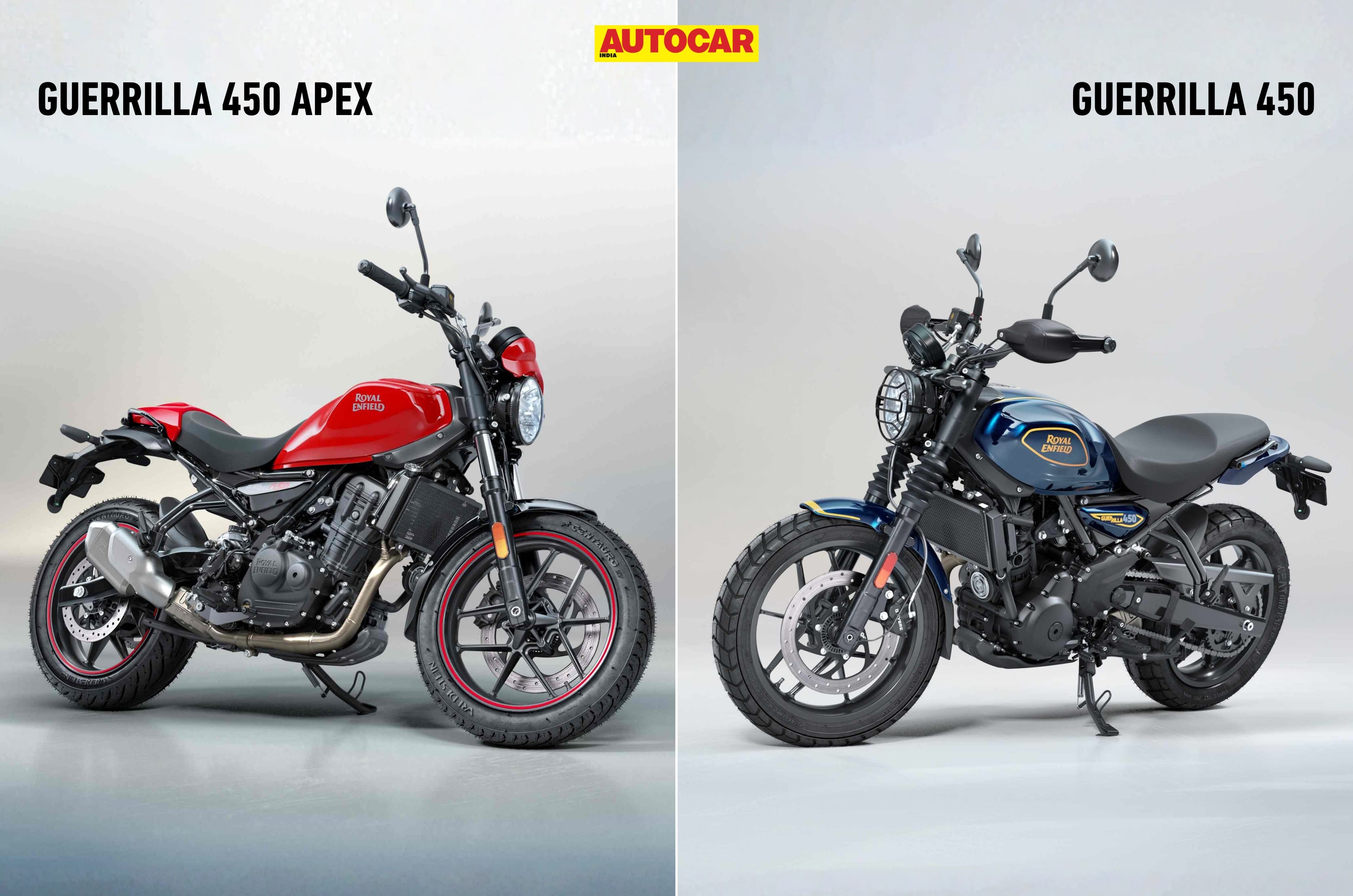
However, the most significant mechanical divergence, despite both models rolling on identical 17-inch alloy wheels, lies in their rubber. The Guerrilla 450 Apex comes shod with more road-oriented Vredestein Centauro ST tires. This choice immediately indicates a shift in intent. Vredestein, a premium tire manufacturer, is renowned for its high-performance road tires that offer superior grip, precise handling, and excellent cornering stability on tarmac. In contrast, the standard Guerrilla 450 employs CEAT Gripp XL tires, which, while capable, lean towards a more all-rounder, slightly off-road-capable profile, typical of a scrambler.
This tire selection for the Apex is not merely an aesthetic choice; it fundamentally alters the bike's dynamic character. Riders of the Apex can expect sharper turn-in, greater confidence in lean angles, and perhaps a slightly firmer, more direct feel from the road surface. While the standard Guerrilla offers a commendable balance, the Apex's Vredesteins will undoubtedly appeal to those who prioritize spirited road riding over occasional light trail excursions. This specialization, however, also introduces a potential drawback: the Apex's versatility might be slightly diminished on uneven or unpaved surfaces, where the Gripp XL's blockier tread pattern would offer better traction.
Intriguingly, both variants retain the identical suspension and braking setups. This means riders will find the same robust telescopic forks (likely upside-down units given the modern platform) at the front and a monoshock at the rear, providing a comfortable yet composed ride. Braking duties are handled by single disc brakes at both ends, supported by dual-channel ABS for enhanced safety. While effective, one might question if a truly \"Apex\" model, pushing for sportier dynamics, could have benefited from even minor tweaks to suspension tuning or a more aggressive braking pad compound to complement the sharper tires. This decision to keep these components unchanged suggests that Royal Enfield views the core chassis and stopping power as already sufficient for the intended performance envelope of the Apex.
Where the Guerrilla 450 Apex truly begins to carve out its distinct identity is in its aesthetic and ergonomic modifications. Royal Enfield has deliberately crafted a visual language that screams \"sportier\" and \"more committed.\" The most noticeable styling tweak is the addition of a small headlight cowl, reminiscent of the Scram 411. This seemingly minor element not only adds a dash of aggressive styling but also contributes to a more cohesive front-end design, streamlining the look of the round LED headlight. It subtly alters the bike's profile, pushing it further into the neo-retro roadster category rather than a pure scrambler.
Another significant visual differentiator is the removable rear seat cowl. This accessory instantly transforms the Guerrilla Apex into a single-seater, imparting a racy, café racer-esque silhouette. For riders who rarely carry a pillion and appreciate a cleaner, more focused look, this feature is a definite highlight. However, its \"removable\" nature also means potential fiddliness or storage concerns for the cowl when carrying a passenger. It highlights a clear design choice: prioritizing individualistic style over everyday practicality, which might deter some potential buyers looking for a more versatile two-up machine.
The most impactful ergonomic change comes from the revised handlebar. The Apex features an aluminum handlebar that is a substantial 56mm lower and 57mm forward compared to the standard Guerrilla. This repositioning fundamentally alters the riding triangle, shifting the rider's posture from the standard model's neutral and upright stance to a noticeably more committed, forward-leaning position. This change is designed to enhance the feeling of control and connection with the front end, particularly during aggressive cornering or high-speed maneuvers.
For sportier riders, this committed posture can translate to a more engaging and confidence-inspiring ride. However, it's not without its trade-offs. A more forward-leaning position can place additional strain on the wrists, shoulders, and lower back, potentially reducing comfort on longer journeys or during extended city commutes. This ergonomic shift clearly defines the Apex's target audience: those who prioritize dynamic performance and aggressive styling over the relaxed, go-anywhere comfort that Royal Enfield is often associated with. It's a calculated move to appeal to a younger, more performance-oriented demographic, but it risks alienating riders who value the classic Royal Enfield touring comfort.
Royal Enfield has priced the Guerrilla Apex competitively, with introductory ex-showroom (Chennai) prices starting from Rs 2.49 lakh and reaching Rs 2.56 lakh, depending on the chosen colour option. The Apex is offered in three distinct colour schemes: Red, Black, and Green, all designed to emphasize its sportier appeal.
In comparison, the standard Guerrilla 450 has a wider pricing spectrum, ranging from Rs 2.49 lakh to Rs 2.72 lakh, accommodating five colour options: Twilight Blue, Shadow Ash, Peix Bronze, Smoke Silver, and Brava Blue. Notably, the newly introduced Twilight Blue colour sits at the entry point of the standard Guerrilla's price range and comes standard with a headlight grill and handguards, offering added value for money. This pricing strategy positions the Apex as a distinct, yet similarly priced, alternative, rather than a premium upgrade. The slight overlap and the specific features tied to the lowest-priced standard model suggest a carefully calibrated market segmentation strategy.
In terms of features, both Guerrilla models are remarkably consistent, sharing the same advanced technology. The standout feature is the updated 4-inch TFT Tripper Dash. This full-colour display offers comprehensive information and, crucially, supports Google Maps mirroring. This innovative functionality allows riders to display turn-by-turn navigation directly on the bike's console without needing their phone screen to remain on, preserving battery life – a thoughtful upgrade, especially for Android users. This integration of modern connectivity solidifies Royal Enfield's commitment to offering contemporary amenities alongside its classic appeal.
Another shared convenience feature is the mode retention function. This intelligent system allows the motorcycle to remember the rider's selected ride mode even after the ignition cycle, eliminating the need to reselect preferences every time the bike is started. While seemingly minor, such details enhance the overall user experience, demonstrating Royal Enfield's attention to rider convenience and modern motorcycle ergonomics. These shared features underscore that the primary differentiation between the Apex and standard Guerrilla lies in their specific mechanical setup for handling and their aesthetic/ergonomic profiles, rather than a disparity in core technological offerings.
Deciding between the Guerrilla 450 Apex and the standard Guerrilla 450 requires a close examination of individual riding preferences and priorities. While both share a powerful engine and advanced features, their specific design choices cater to slightly different segments of the market. Here’s a breakdown to help prospective buyers navigate their decision:
Royal Enfield's decision to launch the Guerrilla 450 Apex with what appears to be relatively minor mechanical and cosmetic changes, yet presenting it as a distinct model, invites a closer look at their brand strategy. On one hand, it allows them to cater to a broader spectrum of riders without investing in an entirely new platform. The \"Apex\" badge clearly targets enthusiasts craving a sportier, more aggressive aesthetic and dynamic, ensuring RE remains relevant to younger, performance-conscious buyers who might otherwise look towards competitors. It's a clever way to extract more value from a successful platform, offering choices within a specific segment.
However, this approach also carries inherent risks, particularly from a public relations standpoint and market perception. Is the differentiation substantial enough to justify a separate model name, or does it risk being perceived as a 'parts-bin special' or merely a trim level that could have been offered as an accessory pack? Some might argue that the term \"Apex\" implies a peak of performance or innovation, which, with largely identical mechanicals (barring tires), might feel slightly exaggerated. This could lead to a 'negative view PR' angle where critics question the authenticity of the \"Apex\" designation, suggesting it's more of a marketing exercise to generate buzz rather than a truly revolutionary product.
Furthermore, the overlapping price points and the subtle nature of the differences might lead to confusion among potential buyers. Royal Enfield needs to clearly articulate the distinct advantages of each model to prevent sales cannibalization and ensure customers don't feel they're paying for a badge rather than genuine functional improvements tailored to their needs. While offering choice is generally positive, too much similarity can dilute the distinct identity of each product. The success of the Apex will ultimately hinge on whether riders genuinely perceive the value in its sportier stance and tire choice, and if Royal Enfield can effectively communicate this unique selling proposition in a crowded market.
The Royal Enfield Guerrilla 450 Apex is more than just a new paint job; it's a statement. While mechanically rooted in the successful Guerrilla 450 platform, its carefully chosen road-focused tires, aggressive ergonomics, and distinctive styling cues collectively craft a motorcycle aimed squarely at the urban enthusiast who prioritizes spirited tarmac performance and a visually assertive presence. It represents Royal Enfield's strategic move to broaden the appeal of its modern 450cc platform, catering to a segment of riders who desire a more committed, sportier experience without necessarily delving into full-blown sportbikes.
For those who revel in carving corners, appreciate a forward-leaning stance, and primarily stick to paved roads, the Apex offers a compelling package. Its Vredestein tires promise enhanced grip and feedback, making every ride more engaging. The unique headlight cowl and removable seat cowl also lend it an aesthetic edge, differentiating it from its more versatile sibling. Conversely, the standard Guerrilla 450 remains the ideal choice for riders seeking a balanced approach – a comfortable, upright posture, slightly more forgiving tires for varied terrains, and a broader array of color options, making it the more pragmatic all-rounder.
Ultimately, Royal Enfield's introduction of the Guerrilla 450 Apex is a calculated evolution. It leverages a proven, potent platform to create a subtly specialized offering. While some might argue the differentiation is incremental, it demonstrates the brand's agility in responding to diverse rider demands. The choice between the Apex and the standard Guerrilla 450 boils down to personal preference: do you lean towards the sharp, focused aggression of the Apex, or the versatile, balanced appeal of the standard? Both, however, promise the exhilarating performance of the new Sherpa 450 engine, cementing Royal Enfield's position as a dominant force in the middleweight motorcycle segment. The Apex, then, isn't just another variant; it's a testament to Royal Enfield's ambition to cater to every facet of the modern rider's desire, one finely tuned nuance at a time.
Royal Enfield Guerrilla 450 Apex vs. Standard 450: Unmasking the Subtle Aggression and Strategic Plays
Under the Skin: Mechanical Divergence or Shared Core?
The Apex: A Pivot to Road-Focused Tyres for Sharper Dynamics
Form and Function: Styling and Ergonomic Evolution
Aggressive Stance Meets Urban Flair: The Apex Aesthetic
Pricing, Features, and the Value Proposition
Tech-Forward Dash and Strategic Colour Palettes
Guerrilla 450 Apex vs. Standard 450: The Pros and Cons Debate
Guerrilla 450 Apex: The Sharp Shooter
Standard Guerrilla 450: The Balanced Brawler
The Royal Enfield Strategy: A Double-Edged Sword?
Conclusion: A Calculated Move in Royal Enfield's Evolution