
```html
The roar of a legend, the whisper of anticipation – the automotive world stands on the cusp of a new chapter for one of its most revered icons. After nearly two decades of dominating tracks and thrilling enthusiasts, the R35 generation of the Nissan GT-R has finally bowed out, leaving an immense legacy and an even greater void. But fear not, performance aficionados! Nissan isn't retiring Godzilla; it's meticulously crafting its evolution. The highly anticipated R36 GT-R is not just coming; it's set to redefine what a supercar can be in an increasingly electrified era, promising a thrilling blend of raw power and cutting-edge sustainability. The question isn't if, but how this beast will be tamed and unleashed.
The iconic Nissan GT-R, a legacy that continues to inspire the future R36.
The discontinuation of the legendary GT-R R35 in 2025 marked the conclusion of an extraordinary chapter in automotive history. For 18 glorious years, the R35 stood as a defiant, value-packed supercar slayer, challenging established European marques with its brutal performance and accessible pricing. Its \"Godzilla\" moniker was well-earned, a testament to its raw power and unwavering ability to punch far above its weight class. However, as the automotive landscape rapidly evolves, driven by increasingly stringent global emissions regulations and a burgeoning demand for electrified powertrains, even legends must adapt.
Nissan, ever the innovator, is already deep into the development of the next-generation GT-R, codenamed R36. This isn't merely an update; it's an \"all-new car,\" built from the ground up on a completely fresh platform and featuring a \"largely reworked powertrain.\" This significant shift was recently confirmed by Ponz Pandikuthira, Senior Vice President and Chief Planning Officer for Nissan North America, in an interview with The Drive. Pandikuthira stated with conviction, \"I’d say by 2028 you’ll see some concrete announcements, and hopefully before the decade turns you’ll see an R36 GT-R.\" This timeline sets the stage for an exciting reveal, promising that the R36 will emerge before 2030, ready to conquer the next decade of performance motoring.
The key takeaways from Nissan's latest insights highlight a strategic and necessary evolution for the GT-R:
Perhaps the most critical and intriguing aspect of the R36's development lies in its powertrain. While the automotive industry has witnessed a dramatic surge towards full electrification, Nissan appears to be taking a more nuanced and performance-focused route for its halo car. A hybrid setup is the overwhelming expectation, a strategic choice that acknowledges the need for emissions compatibility without sacrificing the visceral engagement that defines the GT-R experience. Ponz Pandikuthira affirmed this direction: \"The next generation GT-R will need some level of electrification. So, does it need to be a full EV? Probably not, but it does need to have some level of electrification to future-proof emissions compatibility.\"
The backbone of this hybrid system is expected to remain the legendary VR38 twin-turbo V6 engine. This engine, known for its robustness and tuning potential, has been central to the R35's performance prowess. However, merely slapping an electric motor onto the existing setup won't suffice for a truly next-generation vehicle. Nissan's planning officer emphasized that while the block itself is excellent, the internal combustion components will undergo significant re-engineering: \"If there was a hybrid powertrain, the block of that VR38 engine is so great. Why would you throw that away? But maybe the way combustion needs to work will be very different. Maybe the heads are different, maybe the pistons are different, so we may have to change the top end.\"
This suggests a sophisticated hybridization strategy. It could involve direct injection advancements, variable compression technologies, or even entirely new cylinder head designs to optimize efficiency and emissions while maintaining or enhancing power output. Integrating electric motors could mean a parallel hybrid system (where electric and combustion power work together), a series hybrid (where the engine acts as a generator), or a combination thereof, possibly driving different axles for advanced torque vectoring. The goal will be to leverage the immediate torque delivery of electric motors to eliminate turbo lag, provide seamless power delivery, and potentially achieve staggering acceleration figures that even the R35 would envy. It’s a delicate balancing act – maintaining the raw, mechanical feel that GT-R purists adore, while embracing the undeniable benefits of electrification.
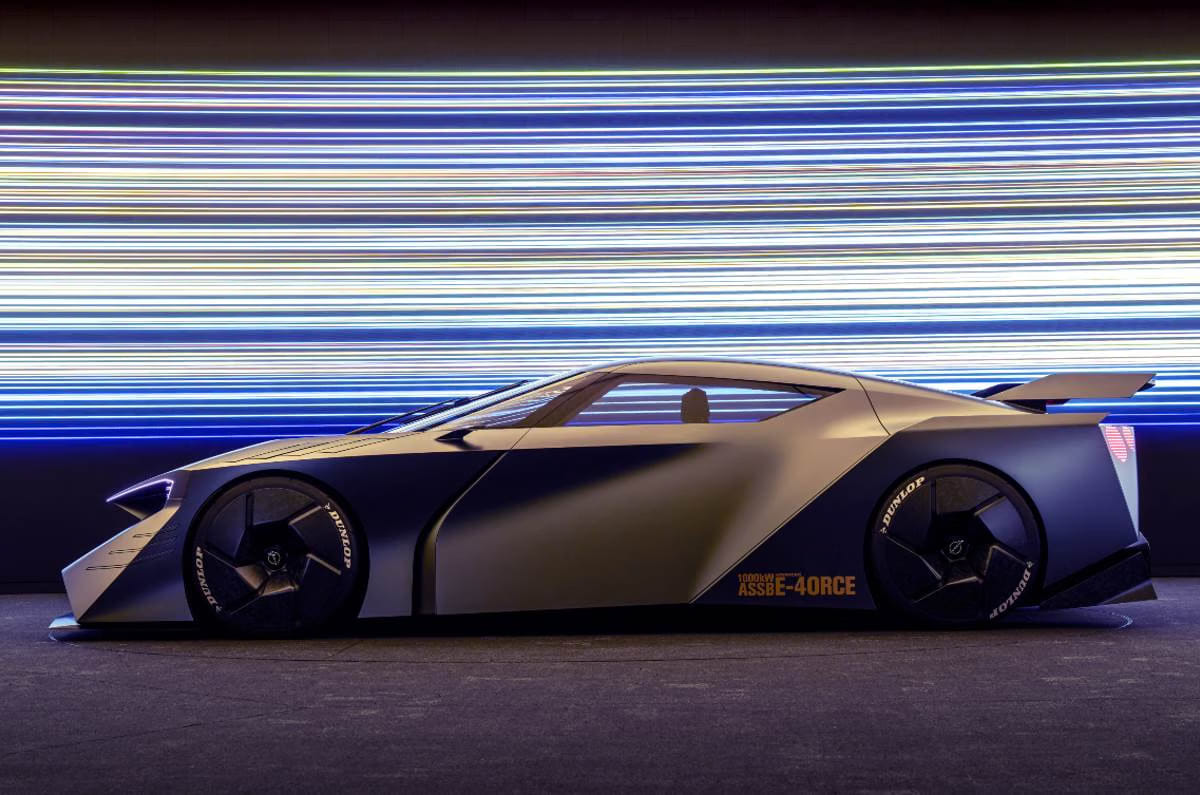
The path to the R36 hasn't been without its twists and turns. Nissan had previously offered a tantalizing glimpse into a potential all-electric future for the GT-R with the stunning 2023 Hyper Force concept. This futuristic, angular concept, with its 1,360hp electric powertrain, seemed to herald a dramatic, fully electric leap for Godzilla. However, the automotive landscape is a dynamic one, and what seems certain one year can shift significantly the next.
The reality of EV adoption has proven to be slower and more complex than initially projected by many manufacturers. Challenges such as charging infrastructure, battery cost, range anxiety, and the sheer weight of large battery packs continue to be significant hurdles for widespread consumer acceptance, especially in the high-performance segment where weight is critical. Consequently, several automakers, initially bullish on full EVs, are now revisiting and emphasizing hybrid technologies as a more immediate and practical bridge to a carbon-neutral future. Nissan's apparent pivot from a full-electric Hyper Force successor to a hybrid R36 aligns perfectly with this evolving industry trend.
This shift, while pragmatic, will undoubtedly generate considerable discussion among GT-R loyalists. For some, the idea of any form of electrification might feel like a dilution of the pure, brutal combustion experience that defined the R35. The added weight of batteries and electric motors, however small, can be a concern for track-focused purists. There will be questions about whether a hybrid Godzilla can truly retain the unfiltered, raw feel that made its predecessors so iconic. Nissan faces the challenging task of convincing these enthusiasts that hybridization will *enhance*, rather than detract from, the GT-R's legendary performance characteristics, promising a more refined yet equally ferocious machine. The perception, for some, could be that Nissan is compromising rather than innovating. It’s a tightrope walk between appeasing the performance purists and adhering to future regulations.
The R36's mission extends beyond just electrifying its powertrain. It is destined to be a truly global model, which necessitates strict adherence to increasingly rigorous international regulations. Foremost among these are the impending Euro 7 emissions norms, which will dramatically tighten limits on pollutants from internal combustion engines. Ponz Pandikuthira explicitly noted that the current R35 GT-R's powertrain simply wouldn't meet future emissions requirements in many key markets, underscoring the absolute necessity of electrification for the next-generation model's survival and widespread availability.
This global compliance drive is why the R36 demands an \"all-new chassis.\" A new platform provides the foundational flexibility to integrate complex hybrid components – batteries, inverters, electric motors – while maintaining optimal weight distribution, structural rigidity, and crash safety standards. It also allows Nissan's engineers to leverage advancements in materials science, aerodynamics, and connectivity to build a car that is not only faster and more efficient but also safer and more technologically advanced. The R35, despite its endless updates, was constrained by its aging architecture. The R36's clean-sheet design liberates engineers to push boundaries in every dimension, from active aero to advanced driver-assistance systems (ADAS) that could make Godzilla surprisingly civil when not on the track.
The decision to go hybrid for the R36 GT-R is a complex one, laden with both immense opportunities and significant challenges. Here’s a balanced look at what this strategic direction could mean for the next chapter of Godzilla:
The development of the R36 GT-R is arguably one of the most scrutinized projects in the automotive world. Nissan faces immense pressure not just to build a fast car, but to craft a worthy successor to an icon. The performance bar has been set incredibly high by the R35, which consistently outperformed vehicles twice its price. The R36 must not only match but significantly exceed those benchmarks in an era where electrified rivals like the Ferrari 296 GTB and Mercedes-AMG GT 63 S E Performance are already pushing the boundaries of hybrid performance.
Balancing the demands of a global market, the expectations of a passionate fan base, and the rapid pace of technological innovation is a monumental task. The R36 will need to offer an unparalleled driving experience that justifies its inevitable higher price point while retaining that quintessential \"GT-R\" character – a car that feels accessible yet capable of delivering supercar-levels of thrill. It’s a challenge of heritage versus progress, tradition versus transformation. The world watches with bated breath to see how Nissan will navigate these waters and deliver a Godzilla fit for the 21st century.
The Nissan GT-R R36 is poised to be more than just a new model; it's a statement. It represents Nissan's unwavering commitment to performance, even as the industry pivots towards a greener future. By embracing a hybrid powertrain and an all-new platform, the R36 aims to be a potent blend of tradition and cutting-edge technology, ensuring that Godzilla not only survives but thrives in the electrified era. The whispers from Nissan's headquarters confirm that this isn't just a fantasy; it's a meticulously planned reality, set to debut before the end of the decade. As the world eagerly awaits its formal unveiling, one thing is certain: the spirit of the GT-R – its relentless pursuit of speed, its technical brilliance, and its ability to humble far more expensive machinery – will live on, electrified and more formidable than ever before. The legend is evolving, and its next chapter promises to be nothing short of spectacular.
The R36 Rises: Nissan's Next-Generation GT-R Roars into a Hybrid Future
The End of an Era, The Dawn of Electrification: R35's Farewell and the R36's Imperative
Heart of the Beast: The VR38 Reimagined for a Hybrid Future
From Hyper Force Dreams to Hybrid Reality: Navigating the Future of Performance
A Global Icon, Re-Engineered for Compliance and Performance
Pros & Cons: Weighing the Hybrid GT-R's Future
Pros of a Hybrid R36:
Cons of a Hybrid R36:
The Unseen Challenges and Immense Expectations
Conclusion: The Future is Electrified, The Legend Endures