
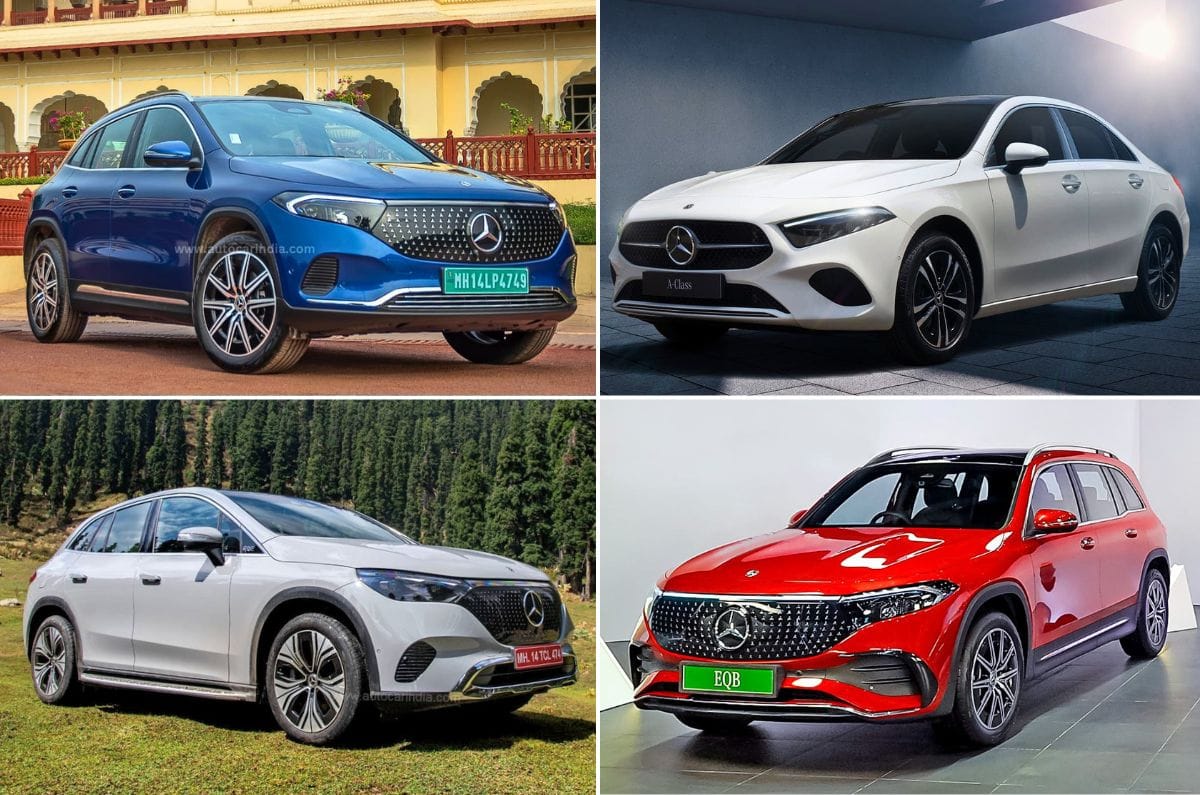
In a move that sends significant ripples across the Indian luxury automotive landscape, Mercedes-Benz India has officially delisted several key models from its portfolio. The A-Class Limousine, the all-electric EQA, and the EQB are no longer available on the brand's local website, signaling a dramatic shift in strategy. This comes hot on the heels of the highly anticipated CLA EV launch, confirming earlier reports of a concerted effort by the German marque to pivot towards higher-end offerings. Adding to this strategic consolidation, the luxury car giant has also quietly removed its electric EQE SUV from the local lineup. An official statement from Mercedes-Benz underscores the completeness of this transition: “We have completely sold out the existing stock of these models in India. Customers looking for the latest generation BEV, can explore the new CLA, which is the most ‘intelligent Mercedes-Benz ever’ and has created new benchmark in the luxury BEVs, debuting on 24th April.” This declaration effectively closes a chapter for several models that served as crucial entry points into the prestigious Mercedes-Benz ownership experience. Mercedes-Benz's decision to streamline its entry-level offerings and focus on higher-margin vehicles is not a knee-jerk reaction but rather a calculated evolution of its global strategy, tailored for the dynamic Indian market. The company has made it clear: the future lies in prioritizing value over sheer volume. This direction stems from a discernible trend in 2023, where Mercedes-Benz India observed a significant 23 percent drop in sales within its entry-level segment. This decline, while perhaps alarming on the surface, appears to have solidified the brand's resolve to step back from the increasingly crowded and competitive lower luxury segments. In an earlier interview with Autocar India, Santosh Iyer, MD and CEO of Mercedes-Benz India, articulated this philosophy with refreshing candor: “Can we match our rivals selling at a lower price? Maybe not. But we would want to play on our strengths, and we’ll surely prioritise value over volume.” This statement encapsulates the core of the new strategy. In a market where numerous players vie for every sale, engaging in a relentless price war can erode brand equity and significantly compress profit margins. For a brand synonymous with luxury, prestige, and engineering excellence, diluting its perceived value to compete solely on price is a perilous path. This isn't merely a defensive maneuver; it’s an offensive play designed to reinforce Mercedes-Benz's position at the pinnacle of automotive luxury. By concentrating on more exclusive, technologically advanced, and higher-priced models, the brand aims to cater to a more discerning clientele who value superlative quality, innovative features, and an unparalleled ownership experience above all else. This approach also allows Mercedes-Benz to allocate resources more effectively towards developing groundbreaking technologies, especially in the burgeoning electric vehicle space, and delivering bespoke services that truly differentiate it from competitors. The market shift reflects a broader global trend among luxury marques to enhance exclusivity and maintain strong profit margins by focusing on their most premium offerings, rather than chasing volume at all costs. For prospective Mercedes-Benz owners in India, the path to the three-pointed star is about to become considerably steeper. The A-Class Limousine, with its compelling ex-showroom price range of Rs 44.46 lakh to Rs 45.92 lakh, served as the most financially accessible gateway to the brand. Its discontinuation means that the dream of owning a new Mercedes-Benz will now entail a larger initial investment. This strategic recalibration effectively redefines what \"entry-level\" means for the brand in India. Stepping into the role of the most affordable Mercedes on sale is now the GLA SUV. While a highly capable and desirable compact SUV, its ex-showroom price, ranging from Rs 51.80 lakh to Rs 55 lakh, represents a significant jump of nearly Rs 7-10 lakh compared to the outgoing A-Class. This premium for entry reflects Mercedes-Benz's ambition to elevate its brand perception and ensure that even its most \"accessible\" models carry a substantial luxury proposition. The upcoming CLA EV is poised to play a pivotal role in this new strategy, consolidating Mercedes-Benz's entire entry-level electric vehicle portfolio into a singular, highly advanced model. Positioned as \"the most intelligent Mercedes-Benz ever,\" the CLA EV is expected to set new benchmarks in the luxury BEV segment. However, this intelligence and innovation come at a price. The carmaker has indicated a ‘tentative’ ex-showroom price of Rs 55 lakh to Rs 59 lakh for the CLA EV. This places it firmly above the discontinued EQA and EQB, firmly establishing a higher baseline for electric luxury from Mercedes-Benz. The shift indicates a clear intent to focus on products that offer a greater blend of cutting-edge technology, sophisticated design, and, critically, higher profitability. While this approach is sound from a business perspective, it undeniably creates a higher barrier for younger, aspirational buyers looking to enter the luxury market. Mercedes-Benz seems confident that the superior product experience and reinforced brand prestige will justify the increased cost of entry. As Mercedes-Benz ushers in a new era, it’s worth taking a moment to reflect on the models that paved the way and are now making their exit. Each played a significant role in expanding the brand's reach and establishing its presence across various luxury sub-segments. Launched in India in March 2021, the A-Class Limousine quickly became the most affordable Mercedes-Benz model on offer. Its elegant design, premium interiors, and the allure of the three-pointed star at a relatively accessible price point made it a popular choice for first-time luxury car buyers. It received a facelift in 2023, showcasing Mercedes' commitment to keeping it fresh. Despite its relatively short five-year run, it successfully introduced many to the Mercedes-Benz ecosystem, proving that luxury could be attainable. Its departure signifies the end of a very particular, value-oriented chapter for the brand in India. The EQB holds the unique distinction of being Mercedes-Benz's first three-row electric vehicle in India. Introduced in 2022 and facelifted in 2024, it offered the practicality of seven seats combined with the environmental consciousness of an EV. With a last recorded price range of Rs 70.9 lakh to Rs 77.5 lakh, it aimed to capture the burgeoning segment of luxury EV buyers seeking versatility. Its tenure of just over three years, while not extensive, demonstrated Mercedes-Benz's early efforts to diversify its EV portfolio. Perhaps its niche positioning or the rapid evolution of the EV market contributed to its relatively swift exit. The EQE SUV arrived in September 2023 as the electric sibling to the popular GLE, priced at a substantial Rs 1.39 crore. Positioned firmly in the premium large SUV EV segment, it promised advanced technology, luxurious comfort, and impressive range. However, its market presence was surprisingly brief, spanning less than two and a half years. This rapid discontinuation raises questions about its market acceptance or perhaps a recalibration of Mercedes-Benz's strategy for higher-end EVs in India, perhaps in anticipation of more advanced or differently positioned models. The EQA, launched as an EV counterpart to the GLA, was Mercedes-Benz’s most affordable electric vehicle with a starting price of Rs 66 lakh. Despite its compelling price point for an electric luxury SUV, it had the shortest run of all, spending less than two years in the market. This rapid exit is particularly noteworthy. It could indicate that while an affordable EV was a good idea, the market for it might not have matured sufficiently, or perhaps internal product strategy shifts prioritized the upcoming CLA EV as a more streamlined entry point for electric mobility. The common thread among these discontinuations is the focus on consolidating and elevating the brand's image. While these models served their purpose, their removal suggests a future where every Mercedes-Benz, electric or ICE, will occupy a more definitively premium space, setting higher expectations for luxury, technology, and price. While some models depart, the Mercedes-Benz pipeline isn't entirely devoid of new additions. The ICE-powered GLB, which saw its first-generation discontinued in April 2025, is set to make a return in its second-generation guise. Globally introduced last year with both ICE and EV versions, India will exclusively receive the ICE-powered GLB as a full CBU import. This suggests a continued, albeit selective, commitment to the conventional internal combustion engine segment, likely for models that fill a specific premium niche without diluting the new \"entry-level\" EV strategy. A firm launch timeline for the second-gen GLB in India, however, remains unconfirmed. The broader implications for the Indian luxury automotive market are significant. Mercedes-Benz's pivot signals a potential shift among other luxury players as well. Will competitors like BMW and Audi follow suit, or will they seize the opportunity to fill the void left in the sub-Rs 50 lakh luxury segment? This strategic move by Mercedes-Benz might inadvertently create a space for other premium brands or even higher-end mainstream manufacturers to expand their offerings. It also underscores the growing maturity of the Indian luxury consumer, who is increasingly willing to pay a premium for truly differentiated products and experiences. Mercedes-Benz's long-term vision for India appears to be one of refined exclusivity. By shedding models that might have been perceived as 'volume drivers' or faced intense competition, the brand aims to solidify its image as a purveyor of ultimate luxury, advanced technology, and unwavering quality. This strategy, while bold, carries its own set of risks and rewards, fundamentally reshaping how Indian consumers interact with and aspire to the Mercedes-Benz brand. Mercedes-Benz's decision to discontinue several entry-level and mid-range models in India, while bold, comes with a distinct set of advantages and potential drawbacks. As a move designed to reposition the brand, it warrants a balanced perspective. Ultimately, this strategic shift is a high-stakes gamble. While it promises to solidify Mercedes-Benz's luxury credentials and profitability, it simultaneously demands a careful navigation of market dynamics and consumer perceptions to ensure long-term success. Mercedes-Benz's bold decision to discontinue the A-Class Limousine, EQA, EQB, and EQE SUV marks a definitive turning point in its India strategy. This is more than just a product refresh; it’s a fundamental recalibration, a clear signal that the brand is committed to an intensified focus on the higher echelons of the luxury market, prioritizing 'value over volume'. While this move streamlines the portfolio and promises enhanced profitability, it also undeniably raises the bar for entry into the esteemed Mercedes-Benz family, with the GLA SUV and the intelligent CLA EV now serving as the new, pricier gateways. The luxury automotive landscape in India is maturing, and Mercedes-Benz, ever the pioneer, is adapting to these evolving dynamics. By concentrating on premium offerings, advanced technology, and a more exclusive brand experience, Mercedes-Benz aims to solidify its position as the undisputed leader in true luxury. This strategic pivot might alienate some aspirational buyers who previously found an entry point, but it also promises a more refined, technologically advanced, and exclusive ownership journey for those who choose to invest. The road ahead for Mercedes-Benz India will be defined by an unwavering commitment to unparalleled luxury and innovation, setting new benchmarks and further cementing its iconic status in the hearts and garages of India's most discerning clientele. All prices are ex-showroom, India.Mercedes-Benz Realigns India Strategy: The Bold Exit of A-Class, EQA, EQB, and EQE SUV Signals a New Era of Exclusivity
The Strategic Pivot: Mercedes-Benz Doubles Down on Premiumization
The New Entry Point: Higher Price Tags and the Dawn of the CLA EV
A Fond Farewell: Remembering the Discontinued Lineup
The A-Class Limousine: An Entry Point to Elegance
EQB: The First Three-Row Electric Adventure
EQE SUV: The Electric Counterpart to the GLE
EQA: Mercedes’ Most Affordable EV with a Short Tenure
The Road Ahead: Future Models and Market Implications
Pros and Cons of Mercedes-Benz's Bold Strategy
The Upsides: Reinforcing Exclusivity and Profitability
The Downsides: Alienating Aspirations and Market Risks
Conclusion: A New Chapter of Refined Luxury in India