
The automotive landscape is constantly evolving, driven by technological advancements, changing consumer preferences, and increasingly stringent environmental regulations. Few brands navigate these shifts with the strategic prowess of Toyota, a company synonymous with reliability and forward-thinking innovation. For years, the Innova Crysta has been an undisputed king in the Indian MPV segment, a vehicle revered by both private owners and, more crucially, by fleet operators for its robustness and unparalleled dependability. However, the winds of change are blowing, and a significant shift is on the horizon. Toyota is poised to discontinue the venerable Innova Crysta by early 2027, replacing it with a lower-spec, hybrid version of its newer, more technologically advanced sibling, the Innova Hycross. This isn't merely a model update; it's a profound strategic realignment, aimed at addressing upcoming CAFE 3 emission norms while simultaneously catering to the specific, cost-sensitive demands of the fleet market. But what does \"decontented\" truly mean in this context, and can a hybrid variant truly fill the shoes of the legendary diesel Crysta? The Innova Crysta's impending departure marks the end of an era. Since its launch, and through its various iterations, the Innova has carved out an almost mythical status in the Indian automotive market. Its body-on-frame construction, coupled with robust diesel powertrains, cemented its reputation as an unyielding workhorse. For fleet operators, this translated into minimal downtime, predictable maintenance, and an exceptional resale value – critical factors that influence procurement decisions more than mere sticker price. The simultaneous sale of the Crysta and Hycross since late 2022 was always a transitional phase, recognizing the enduring appeal of the former while gradually introducing the market to the latter's more modern platform and powertrains. The primary driver behind the Crysta's discontinuation is the tightening noose of emission regulations, specifically the upcoming CAFE 3 (Corporate Average Fuel Economy) norms. These norms mandate higher fuel efficiency and lower emissions across a manufacturer's entire fleet average. Diesel engines, while powerful and fuel-efficient in their own right, pose significant challenges in meeting these increasingly stringent benchmarks without substantial, costly technological interventions. Toyota, renowned for its foresight, is clearly pivoting towards hybrid technology as its mainstream solution for the future, leveraging its global leadership in this segment. This creates a \"void\" not just in Toyota's lineup but in the wider commercial vehicle segment. The Crysta's unique blend of ruggedness, passenger comfort, and operating economics made it indispensable for hotels, taxi services, and corporate fleets. Replacing such a benchmark vehicle requires more than just slotting in a new model; it demands a tailored solution that understands the nuances of the commercial segment. Enter the decontented Innova Hycross hybrid. The concept of \"decontenting\" often conjures images of stripped-down, bare-bones vehicles. While that might be partially true, Toyota's approach with the lower-spec Innova Hycross hybrid will be a strategic exercise in value engineering. The goal is to retain the core advantages of the Hycross – its monocoque platform offering superior ride comfort and handling, and its efficient hybrid powertrain – while shedding features that add to the cost but are less critical for fleet operations. What might be on the chopping block? We can anticipate a focus on utility over luxury. This could mean: The motive is clear: achieve a significantly more affordable price point for the hybrid variant. The challenge, however, is to do this without compromising Toyota's famed reliability or diluting the Hycross's inherent advantages. The monocoque chassis, a departure from the Crysta's body-on-frame, offers improved ride quality and NVH (Noise, Vibration, and Harshness) levels, which are benefits that even fleet passengers would appreciate. The hybrid powertrain is the other non-negotiable, acting as the technological bridge to future emission norms and promising unparalleled fuel efficiency. For fleet operators, vehicle acquisition is a complex equation involving multiple variables beyond just the ex-showroom price. While the Crysta offered a \"punchy yet frugal diesel engine,\" its core appeal lay in its exceptional Total Cost of Ownership (TCO). This includes initial purchase price, fuel efficiency, maintenance costs, and crucially, strong resale value. The Innova Hycross, while a superior product in many ways, hasn't fully captured the fleet market for a very specific reason: the inherent dilemma between its upfront pricing and its long-term running costs. Currently, the Innova Hycross is available with two powertrain options: a 173hp 2.0-litre petrol engine mated to a CVT automatic, and a more potent 184hp 2.0-litre petrol-hybrid setup paired with an e-CVT. The pure-petrol variant, while cheaper to buy initially, delivers a real-world fuel economy of approximately 9.7kpl, as observed in Autocar India's tests. For a vehicle intended to clock hundreds of kilometers daily, this figure is simply unsustainable and severely impacts operating margins. The hybrid variant, on the other hand, is a champion of efficiency, delivering an impressive real-world mileage of 14.6kpl (per Autocar India's review). This is a game-changer for fuel costs, directly addressing a fleet operator's biggest recurring expense. However, this efficiency comes at a significant premium. The base Innova Hycross hybrid VX 7-seater is priced at Rs 26.3 lakh (ex-showroom, India) – a substantial Rs 8 lakh more than the entry-level petrol variant. This price differential widens to nearly Rs 11 lakh for the top-spec models. Such a high initial outlay, even with promises of lower running costs, presents a significant barrier for many fleet businesses operating on tight budgets and demanding quick ROI. Toyota's strategy with the decontented hybrid aims to bridge this gap. By significantly reducing the Hycross hybrid's starting price, they can make the superior fuel efficiency of the hybrid accessible to fleet operators without the prohibitive initial investment. This would potentially make the hybrid variant's TCO more competitive against rivals, even if it doesn't quite match the raw acquisition cost of the outgoing Crysta diesel. This strategic pivot by Toyota is not without its advantages and potential pitfalls. Analyzing these helps understand the full spectrum of its market impact. Toyota's success will hinge on how effectively it communicates the value proposition of this new variant, balancing cost savings with continued reliability and performance. Toyota's decision to replace the Crysta with a decontented Innova Hycross hybrid is a calculated gamble, albeit one backed by decades of market leadership and technical expertise. It signifies a clear direction towards electrification and sustainability, even in the workhorse segments of the automotive market. The move is not just about meeting regulations but about proactively shaping the future of mobility for commercial applications. The success of this new strategy will depend on several factors: the extent of decontenting and the resulting price point, Toyota's ability to educate the market on the long-term benefits of hybrid technology, and maintaining the brand's reputation for indestructible reliability. If executed correctly, this decontented Hycross hybrid could redefine the commercial MPV segment, offering a compelling blend of low running costs, improved comfort, and Toyota's legendary peace of mind. It's a testament to Toyota's commitment to adapting to changing times while staying true to its core values of quality, durability, and reliability. The automotive world watches with keen interest as Toyota prepares to usher in this new era for its iconic MPV line, demonstrating that even legendary vehicles must evolve to stay relevant in an ever-changing industry. The legacy of the Innova Crysta may be drawing to a close, but the spirit of innovation and dedication to customer needs will undoubtedly continue with the Hycross, albeit in a subtly different, yet equally impactful, avatar.Toyota's Strategic Shift: A Deeper Look into the Decontented Innova Hycross Hybrid Replacing the Iconic Crysta
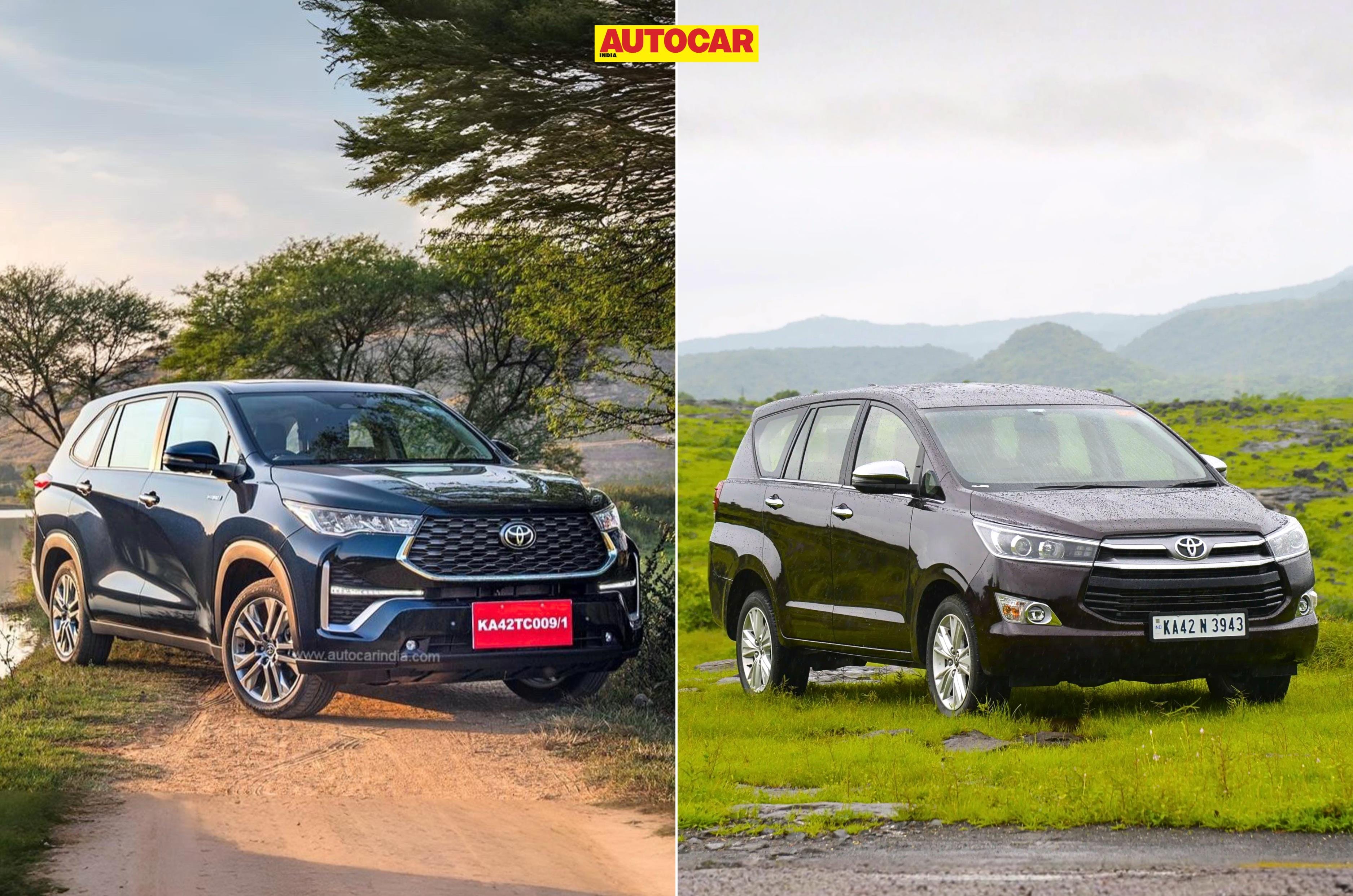
The Impending Void and Toyota's Calculated Response
Decontenting the Hycross Hybrid: What to Expect and Why
Addressing the Fleet Operator's Dilemma: Price vs. Running Costs
Pros & Cons: A Critical Perspective on Toyota's Bold Move
Pros:
Cons (The \"Negative View PR\" Angle):
The Road Ahead: Redefining the MPV Segment