
Every year, the arid, rugged landscapes of Moab, Utah, become a proving ground and a visionary canvas for the iconic Jeep brand. The annual Easter Jeep Safari is not just an event; it's a pilgrimage for off-road enthusiasts and a spectacular showcase of Jeep's unwavering commitment to innovation, heritage, and extreme capability. For its monumental 60th edition, Jeep, in an exhilarating collaboration with Jeep Performance Parts (JPP) by Mopar, didn't just bring concepts; they unleashed a formidable fleet touted as their \"biggest and boldest\" to date. From nostalgic homages to futuristic trail-blazers, this year's lineup promises to redefine expectations and ignite the imaginations of Jeep loyalists worldwide. But beneath the polished chrome and aggressive tires, do these concepts truly represent a leap forward, or are they simply a tantalizing glimpse into a future that may never fully arrive? The 2024 Easter Jeep Safari concepts lined up, ready to conquer Moab's demanding terrain. The Easter Jeep Safari has evolved significantly since its humble beginnings in 1967. What started as a one-day trip has transformed into a nine-day extravaganza, drawing thousands of participants and serving as Jeep's premier platform for revealing its wildest custom creations. These aren't just show cars; they are working prototypes, often equipped with production-intent components and aftermarket accessories from JPP by Mopar, pushing the boundaries of what's possible in the off-road realm. This annual ritual allows Jeep to not only celebrate its rich history but also to test new ideas, gauge public reaction, and inspire future product development. For 2024, the \"biggest and boldest\" declaration isn't just hyperbole. It signifies a collection of six distinct vehicles, each meticulously crafted by Jeep and JPP designers to embody specific off-road philosophies or to pay tribute to iconic models of the past. This blend of reverence for heritage and relentless pursuit of innovation is a delicate balance, one that Jeep has largely mastered over the decades. The concepts serve multiple purposes: they showcase the versatility of the Jeep platform, highlight the extensive customization options available through Mopar, and, perhaps most importantly, keep the brand's fervent fan base engaged and excited about the future. However, the sheer extravagance of these concepts sometimes leads to a cynical perspective. Are these truly indicators of future production vehicles, or merely aspirational marketing tools designed to maintain brand buzz without tangible commitments? While they undoubtedly generate enthusiasm, the vast majority of these radical designs remain just that – concepts. This can lead to a degree of frustration among enthusiasts who long for some of these extreme capabilities or unique aesthetic cues to trickle down into showroom models. Let's break down each of the six extraordinary concepts that graced the trails of Moab this year, exploring their unique modifications, design inspirations, and the potential impact they might have on the future of off-roading. Paying profound homage to the original 1984 Jeep Cherokee (XJ), the XJ Pioneer concept is a masterclass in blending classic ruggedness with modern off-roading prowess. The XJ Cherokee redefined the SUV segment with its unibody construction and impressive capabilities, and this concept seeks to recapture that spirit while elevating it for contemporary challenges. Equipped with enhanced ground clearance, robust skid plates, and custom suspension, the XJ Pioneer is built for serious trail duty. Its design likely incorporates period-correct styling cues, perhaps with a contemporary twist on lighting and interior elements, appealing directly to the nostalgia of long-time Jeep enthusiasts who remember the XJ's utilitarian charm and legendary durability. This concept is less about radical new technology and more about perfecting a proven formula, showcasing that sometimes, the best way forward is to look back. The Gladiator Red Rock concept stands out with its noble purpose: a dedicated vehicle for trail maintenance and clean-up. This isn't just about conquering obstacles; it's about preserving the natural beauty of the trails we love. Based on the versatile Jeep Gladiator, the Red Rock edition is likely outfitted with specialized equipment such as storage solutions for tools, recovery gear, and perhaps even a small crane or winch system to remove fallen trees or debris. Its robust bed is probably customized with tie-downs and compartments, emphasizing utility and practicality over sheer speed or luxury. This concept beautifully illustrates Jeep's commitment to the off-road community and environmental stewardship, suggesting a potential role for the Gladiator beyond adventure – as a workhorse for conservation. It’s a refreshing take that moves beyond individual thrill-seeking to communal responsibility. For the burgeoning overlanding community, the Wrangler Anvil 715 concept is a dream realized. This concept takes inspiration from the iconic Kaiser M715 military truck, known for its ruggedness and no-nonsense utility. Built on a Wrangler platform, the Anvil 715 concept features extensive modifications for long-duration expeditions, including increased cargo capacity, improved fuel range (perhaps auxiliary tanks), and sophisticated navigation systems. Its design would likely echo the M715's distinctive flat fenders and aggressive stance, but with modern conveniences and extreme off-road suspension. This vehicle is designed not just to traverse difficult terrain but to support occupants for days or weeks in remote locations, making it a truly self-sufficient mobile basecamp. While visually stunning, some purists might argue that such an extreme build detracts from the Wrangler's core simplicity, leaning too heavily into specialized niche markets. The Grand Wagoneer Commander concept tackles a challenging proposition: seamlessly integrating the unparalleled luxury of the Grand Wagoneer with serious off-road functionality. This concept targets a unique demographic – those who demand opulent comfort and advanced technology without sacrificing the ability to venture far off the beaten path. Expect elevated ground clearance, fortified underpinnings, specialized tires, and possibly an enhanced four-wheel-drive system tailored for severe conditions. The interior, however, would retain the Grand Wagoneer’s signature premium materials, state-of-the-art infotainment, and expansive passenger space. This concept challenges the perception that luxury SUVs are merely pavement princesses, proving that sophistication and rugged capability can indeed coexist. Critics, however, might point out the inherent contradiction: how many Grand Wagoneer owners genuinely subject their vehicles to extreme rock crawling? True to its name, the Wrangler Buzzcut is a stripped-down, two-seater Wrangler designed for \"extreme\" capabilities and expanded storage. This concept is likely built for maximum agility and raw performance on the toughest trails. By removing the rear seats and potentially simplifying the cabin, weight is reduced, and space is created for essential gear, spare tires, or recovery equipment. Its aggressive stance, high-articulation suspension, massive tires, and reinforced chassis are all geared towards conquering the most formidable obstacles Moab can offer. The Buzzcut embodies the pure, unadulterated spirit of off-roading, focusing on function over form and delivering an exhilarating, unfiltered driving experience. It’s a concept for the purist, perhaps even an answer to calls for a more focused, purpose-built trail machine, but its limited practicality makes it a niche offering. The Wrangler Laredo concept builds upon a Willys Jeep base, celebrating the foundational roots of the brand while incorporating modern enhancements. The \"Laredo\" name historically denoted a more upscale trim level, suggesting this concept might marry the classic, no-frills aesthetic of the original Willys with subtle upgrades in comfort, technology, and performance. Think of it as a respectful modernization, retaining the iconic flat-fender look and robust simplicity of the original military vehicle, but with updated powertrain options, improved suspension for a smoother ride, and perhaps a nod to vintage interior styling cues with contemporary materials. This concept speaks to those who appreciate the Willys' historical significance and desire a vehicle that channels that spirit without sacrificing current-day reliability and a modicum of comfort. It’s a less extreme concept, perhaps hinting at future production limited editions that tap into Jeep’s rich legacy. Jeep's Easter Safari concepts are undeniably captivating, stirring passion and conversation among enthusiasts. But like any visionary endeavor, they come with their own set of advantages and inherent challenges. The 60th Easter Jeep Safari in Moab delivered on its promise of showcasing the \"biggest and boldest\" concept lineup yet. From the nostalgic grit of the XJ Pioneer to the opulent ruggedness of the Grand Wagoneer Commander, and the pure trail weapon that is the Wrangler Buzzcut, each concept told a unique story of capability, design, and passion. Jeep and JPP by Mopar continue to prove that even after decades, the spirit of adventure and customization remains at the core of their brand ethos. While some might view these concepts with a critical eye, questioning their practicality or eventual production feasibility, their undeniable impact lies in their ability to inspire. They are a declaration that Jeep is not content to rest on its laurels; it continually seeks to redefine what's possible in the world of off-roading. They serve as a powerful beacon for innovation, a testament to the brand's heritage, and a tantalizing glimpse into the imaginative future of four-wheel-drive exploration. Whether these specific concepts ever grace our driveways or not, they unequivocally demonstrate that the soul of Jeep remains vibrant, daring, and eternally prepared for the next great adventure. The trails of Moab may recede, but the ideas sparked by these magnificent machines will undoubtedly echo through the automotive landscape for years to come.Unleashing the Beasts: A Deep Dive into Jeep's \"Biggest and Boldest\" Easter Safari Concepts
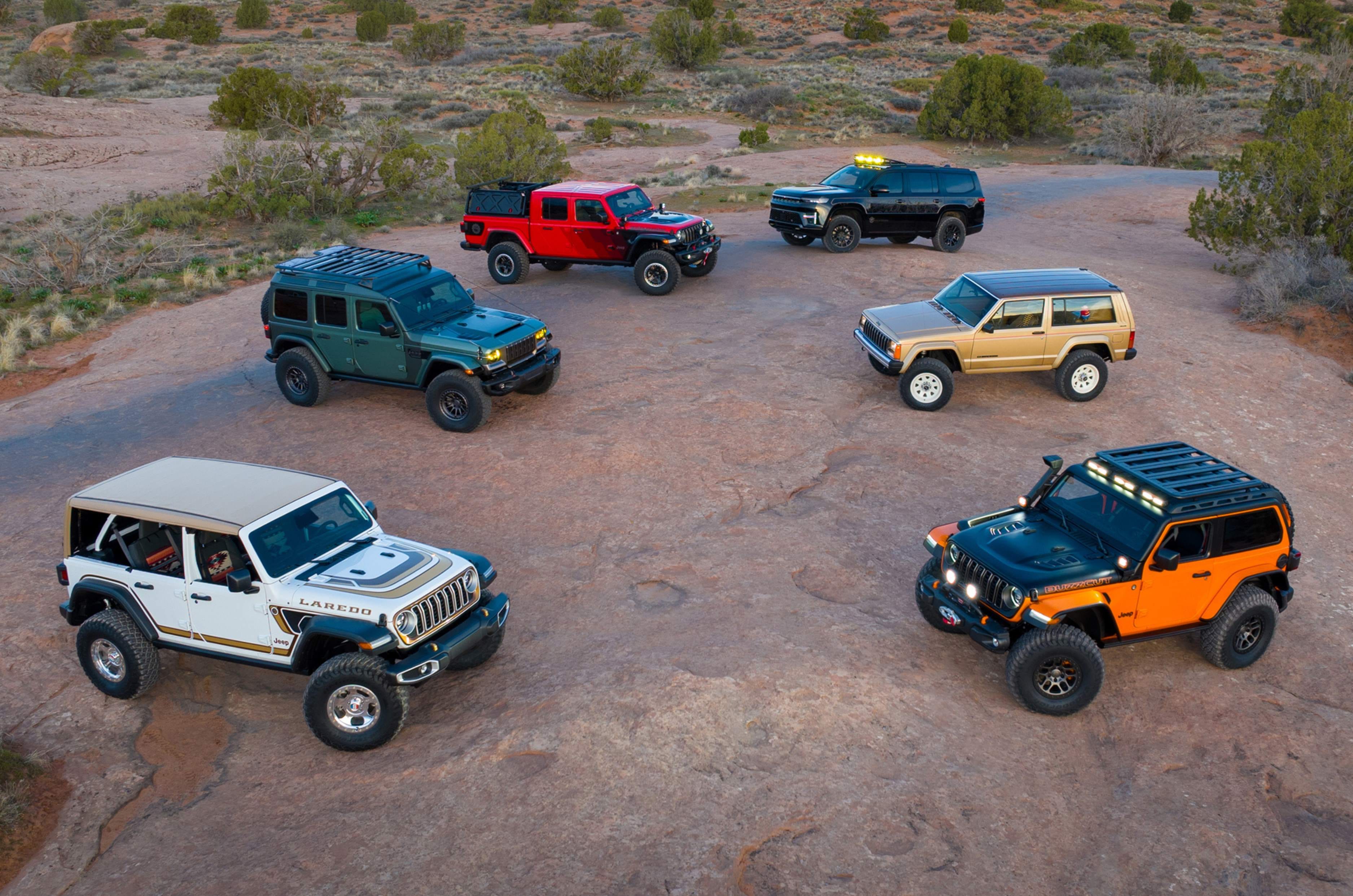
The Enduring Legacy: Where Heritage Meets Cutting-Edge Innovation
Unveiling the 2024 Concept Fleet: A Deep Dive into Purpose and Passion
The Art of the Concept: Pros, Cons, and the Road Ahead
Pros of Jeep's Concept Vehicle Strategy:
Cons and Critical Perspectives (The \"Negative View PR\"):
The Future Is Forged in Moab: A Strong Conclusion