
The rumble of high-performance engines and the silent glide of electric powertrains continue to define India’s burgeoning luxury automotive market. As we meticulously dissect the sales figures for Fiscal Year 2026 (January 2026 - March 2026), it's clear that while the established titans largely maintained their ground, subtle yet significant shifts are reshaping the competitive landscape. This period reveals a market in fascinating flux, where brand loyalty contends with innovation, and electrification is no longer a distant dream but a tangible growth catalyst. The image above, depicting key data points and the overall market performance, serves as a visual anchor to the dynamic narratives unfolding within the Indian luxury car segment. The pecking order in the luxury car sales charts remained largely consistent in FY2026 compared to the previous fiscal year, showcasing the enduring strength of market leaders. Mercedes-Benz, synonymous with automotive luxury and engineering prowess, steadfastly held onto its pole position. Its performance indicated a slight but steady year-on-year (YoY) sales growth, reinforcing its dominant presence. Trailing closely was its German rival, BMW, which demonstrated an impressive surge, hinting at an invigorated strategy paying dividends. Following these two giants was Jaguar Land Rover (JLR), a brand navigating its unique challenges and opportunities in this highly contested segment. To truly grasp the intricate dynamics of India's luxury car market, a closer look at the raw data is essential. The following table, compiled from credible sources including OEMs and the Federation of Automotive Dealers Association (FADA), paints a detailed picture of brand performance, market share shifts, and the underlying growth trajectories. This table immediately highlights the disparity in performance across the luxury segment. While some brands celebrate robust growth, others grapple with significant declines, underscoring the fierce competition and the evolving preferences of the Indian luxury car buyer. The small market share percentages indicate that while the segment is growing, it remains a niche compared to the broader automotive landscape, yet its influence on trends and aspirational values is undeniable. Mercedes-Benz, often considered the benchmark for luxury in India, successfully defended its years-long top spot in the FY2026 luxury car sales rankings. With an impressive 19,363 units sold, the Stuttgart-based marque showcased its consistent appeal and strategic market penetration. This figure represents a mild but steady 2.3 percent year-on-year (YoY) increase, a testament to its strong brand equity and diverse product portfolio. However, an intriguing detail emerges: despite the sales growth, Mercedes-Benz’s market share experienced a slight dip, moving from 0.43 percent in FY2025 to 0.39 percent in FY2026. This indicates that while the brand grew, the overall luxury market expanded at a slightly faster pace, or that competitors gained more substantial ground. The narrative behind Mercedes-Benz's FY2026 success is largely fueled by its high-end vehicle sales. This premium segment registered a robust 16 percent YoY growth, demonstrating a strong demand for its flagship models and top-tier offerings. This performance underscores a vital trend: affluent Indian buyers are increasingly gravitating towards more exclusive and feature-rich luxury vehicles. Models like the S-Class, the AMG line-up, and high-end SUVs continue to be aspirational purchases. Conversely, the brand's entry-level models experienced an 18 percent YoY decline. This could point to increased competition in the entry-luxury space from rival brands or even from well-equipped premium non-luxury offerings, forcing Mercedes to re-evaluate its strategy for this crucial volume segment. The iconic E-Class LWB, a tailor-made offering for the Indian market, remained an unshakeable pillar of its sales, holding its title as the bestselling luxury car in India for FY2026 – a clear indication that a focus on comfort, space, and local preferences continues to resonate deeply with discerning buyers. In stark contrast to Mercedes-Benz's steady climb, BMW India unleashed a powerful performance in FY2026, recording the highest year-on-year (YoY) increase among all luxury carmakers at an impressive 14.47 percent. With 17,301 units sold, BMW not only significantly boosted its sales volume but also marginally expanded its market share, signaling a strong and effective strategic offensive. This surge positions BMW as a formidable challenger, rapidly closing the gap with the market leader and injecting fresh dynamism into the premium segment. A significant portion of BMW's robust performance can be directly attributed to its aggressive and highly successful electric vehicle (EV) sales. BMW's EV numbers exploded, jumping an astounding 124 percent YoY. This monumental growth propelled the brand's luxury EV market share from a respectable 47 percent in FY2025 to an overwhelming 65 percent in FY2026. This makes BMW the undisputed leader in India's nascent yet rapidly expanding luxury EV sector. The success of models like the iX1 LWB and the new 5 Series LWB, both of which garnered some of the highest demand among BMW customers, showcases a shrewd understanding of Indian consumer preferences for spacious, comfortable, and technologically advanced vehicles, now coupled with the allure of electric mobility. BMW's dual-pronged strategy of offering both compelling ICE and EV options, particularly in the long-wheelbase format, appears to be a masterstroke, attracting a broader spectrum of luxury buyers. Jaguar Land Rover (JLR) carved out a respectable performance in FY2026, pushing 5,698 units and exceeding its FY2025 sales numbers by 6.5 percent. This growth, while not as explosive as BMW's, signifies a steady and positive trajectory for the British marquee. However, the internal dynamics within JLR reveal a crucial imbalance: Land Rover is overwhelmingly carrying the brand's sales. Its robust SUV portfolio, comprising iconic models like the Range Rover, Range Rover Sport, Defender, and Discovery, continues to resonate strongly with Indian luxury buyers who value aspirational design, unparalleled off-road capability, and commanding road presence. In stark contrast, Jaguar's contribution remains minimal, with only the F-Pace SUV maintaining a presence in the Indian market. This limited product offering significantly curtails Jaguar's ability to compete effectively against the broader and more frequently updated portfolios of its German rivals. Despite JLR's overall sales increase, its market share dipped slightly in FY2026, suggesting that its growth was outpaced by the segment's expansion. The road ahead for Jaguar appears challenging, especially with the news that the much-anticipated Type 00 EV is unlikely to join its India portfolio in 2026. This means Land Rover is almost certainly expected to shoulder the sales burden throughout most of FY2027 as well. However, the impending India-UK Free Trade Agreement (FTA) could be a game-changer, potentially slashing import duties on CBU (Completely Built Unit) vehicles and making Land Rover's high-end models significantly more competitive and accessible. This could provide a much-needed boost and re-energize JLR's position in the premium segment, creating an interesting dynamic to watch. Volvo, the Swedish purveyor of safety and understated luxury, experienced a minor setback in FY2026, with sales dipping 1.1 percent to 1,647 units. This slight decline occurred despite a flurry of new product launches in 2025, including the facelifted XC90 and XC60 SUVs, as well as the eagerly anticipated EX30 electric SUV. Out of its total sales, EVs accounted for 382 units, which surprisingly represented a 5 percent YoY decline in its electric portfolio. This suggests that while Volvo is committed to electrification, its EV offerings might be facing stiffer competition or a slower adoption rate than initially projected, or perhaps the market is still catching up to its electric vision. The brand will need to strategically refine its EV positioning and pricing to capitalize on its pioneering efforts in sustainable luxury. Porsche, the iconic German sports car manufacturer, delivered a strong performance with just shy of 700 units sold in FY2026, totaling 697 vehicles. While a direct year-on-year comparison remains elusive due to the absence of India-specific sales numbers for FY2025, this figure undoubtedly signifies a healthy demand for its high-performance vehicles and luxury SUVs. Porsche's electric vehicle strategy also showed positive traction, with EV sales rising by 2 percent and contributing a respectable 8 percent to the carmaker’s total volumes. This indicates a growing acceptance of electric performance in the ultra-luxury segment, with models like the Taycan finding favour among discerning enthusiasts who seek both exhilarating dynamics and environmental consciousness. Porsche's unwavering focus on driver engagement and brand exclusivity continues to carve out a profitable niche. The performance of Audi in FY2026 presents a significant point of concern within the luxury automotive landscape. Taking the FADA numbers into account, Audi’s sales plummeted by nearly 40 percent, settling at a mere 248 units. This dramatic decline suggests a period of considerable challenge for the Ingolstadt-based manufacturer, indicating that its current product strategy or market positioning may not be resonating effectively with the evolving demands of Indian luxury consumers. To put this into perspective, with only 17 EVs sold in FY2026, Audi clocked just two more units than ultra-luxury behemoth Rolls-Royce – a staggering statistic considering the vast chasm between their average price points and expected volume. This performance raises critical questions about Audi's future growth strategy, its electric portfolio's competitiveness, and its overall ability to reclaim its once-prominent position in the fiercely competitive Indian luxury market. A substantial overhaul in strategy, product pipeline, or brand messaging might be imperative for a meaningful resurgence. The fiscal year 2026 offered a fascinating snapshot of the Indian luxury automotive sector, characterized by both encouraging advancements and notable challenges. Understanding these dynamics is crucial for grasping the market's trajectory. The FY2026 luxury car sales report for India is more than just a collection of numbers; it's a narrative of ambition, adaptation, and the relentless pursuit of automotive excellence. While Mercedes-Benz continues to exemplify consistency, its slight market share erosion and entry-level segment struggles suggest that even the titans are not immune to market shifts. BMW’s phenomenal rise, particularly in the EV sector, serves as a powerful testament to the rewards of aggressive innovation and a keen understanding of evolving consumer demands. Their long-wheelbase strategy, combined with an electrifying portfolio, has positioned them as a serious contender for the top spot. JLR, carried predominantly by the aspirational appeal of Land Rover, holds potential for resurgence, especially with the prospect of the India-UK FTA. However, Jaguar's minimal contribution remains a strategic vulnerability. Volvo, with its commitment to safety and sustainability, faces the challenge of translating its EV vision into consistent sales growth. Porsche continues to command its niche with unwavering appeal, while Audi faces an urgent need for recalibration and a renewed offensive to reverse its significant decline. As India's luxury car market matures, several key themes will dominate its future: the accelerating adoption of electric vehicles, the sustained demand for bespoke and long-wheelbase offerings, and the critical importance of a dynamic and updated product pipeline. Brands that can innovate rapidly, understand localized preferences, and effectively communicate their value proposition – whether it's through cutting-edge technology, unparalleled comfort, or uncompromising performance – will be the ones that thrive. FY2026 has set the stage for an even more exciting and competitive FY2027, where every percentage point, every new launch, and every strategic decision will play a pivotal role in redefining the luxury automotive hierarchy in India. The race for premium market dominance is far from over; it's merely entering a thrilling new phase. All prices mentioned are ex-showroom, India, unless otherwise specified.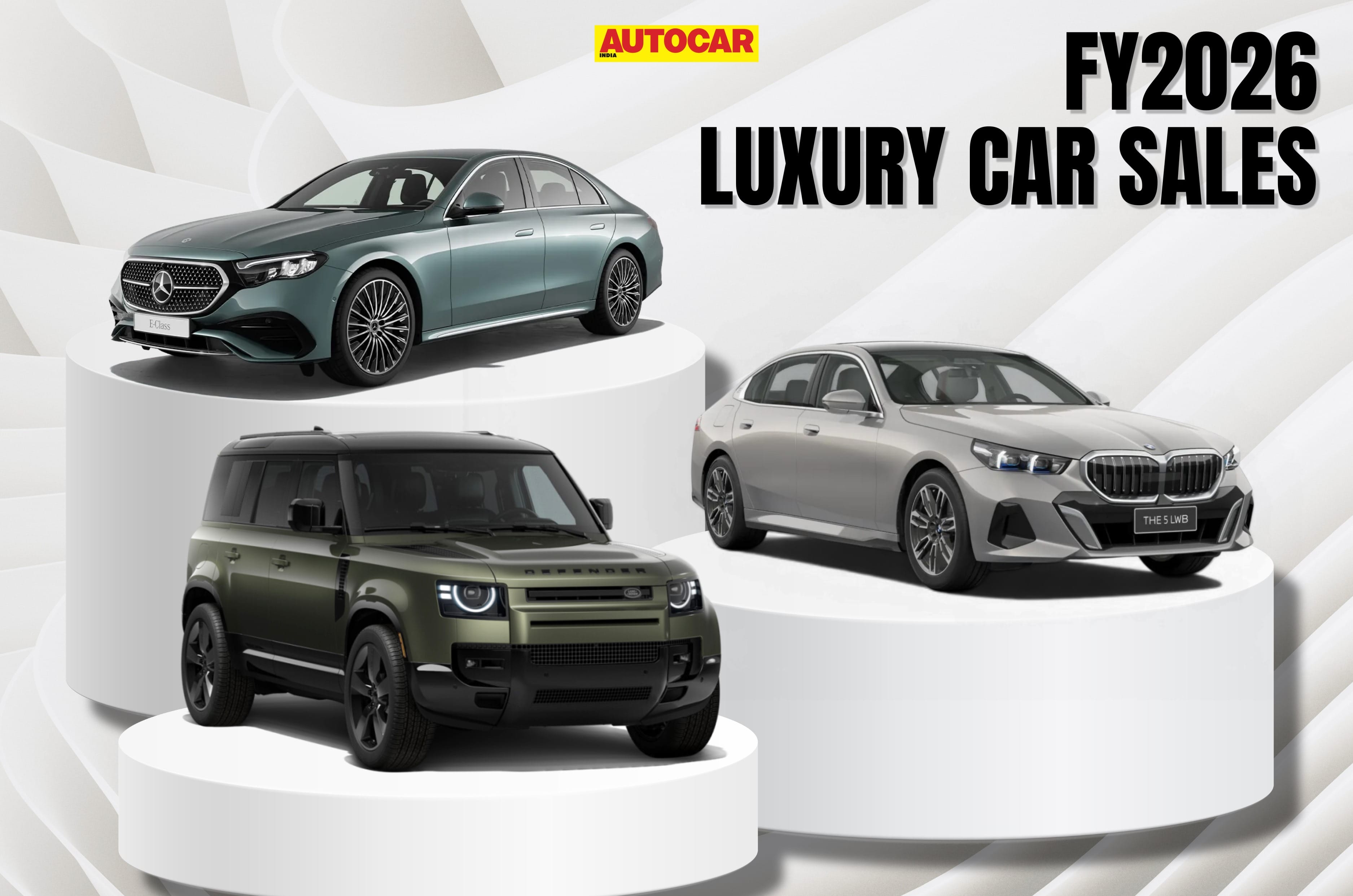
India's Luxury Car Arena FY2026: Mercedes-Benz Holds Fort Amidst Shifting Tides and Electrifying Growth
FY2026 Luxury Car Sales: A Deep Dive into the Numbers
Brand
FY26 Sales
FY25 Sales
YoY Change
FY26 Market Share
FY25 Market Share
Mercedes-Benz
19,363
18,928
2.3 percent
0.39 percent
0.43 percent
BMW
17,301
15,114
14.47 percent
0.37 percent
0.36 percent
JLR
5,698
5,350
6.5 percent
0.12 percent
0.13 percent
Volvo
1,647
1,665
-1.1 percent
-
0.04 percent
Porsche
697
-
-
-
-
Audi
248
412
-39.8 percent
0.01 percent
0.01 percent
*Sourced from OEMs and Federation of Automotive Dealers Association (FADA)
The Unyielding Reign of Mercedes-Benz India: 19,363 Units Sold
BMW India's Electrifying Ascent: 17,301 Units and Market Momentum
JLR India's Steady Pace: The Land Rover Advantage and Future Prospects (5,698 Units)
The Supporting Cast: Volvo, Porsche, and Audi in the Luxury Play
Volvo India: Navigating the EV Transition (1,647 Units)
Porsche India: Precision Performance in a Niche (697 Units)
Audi India: A Challenging Chapter (248 Units)
Pros & Cons of the FY2026 Luxury Car Market in India
Pros:
Cons:
The Road Ahead: Navigating India's Evolving Luxury Landscape