
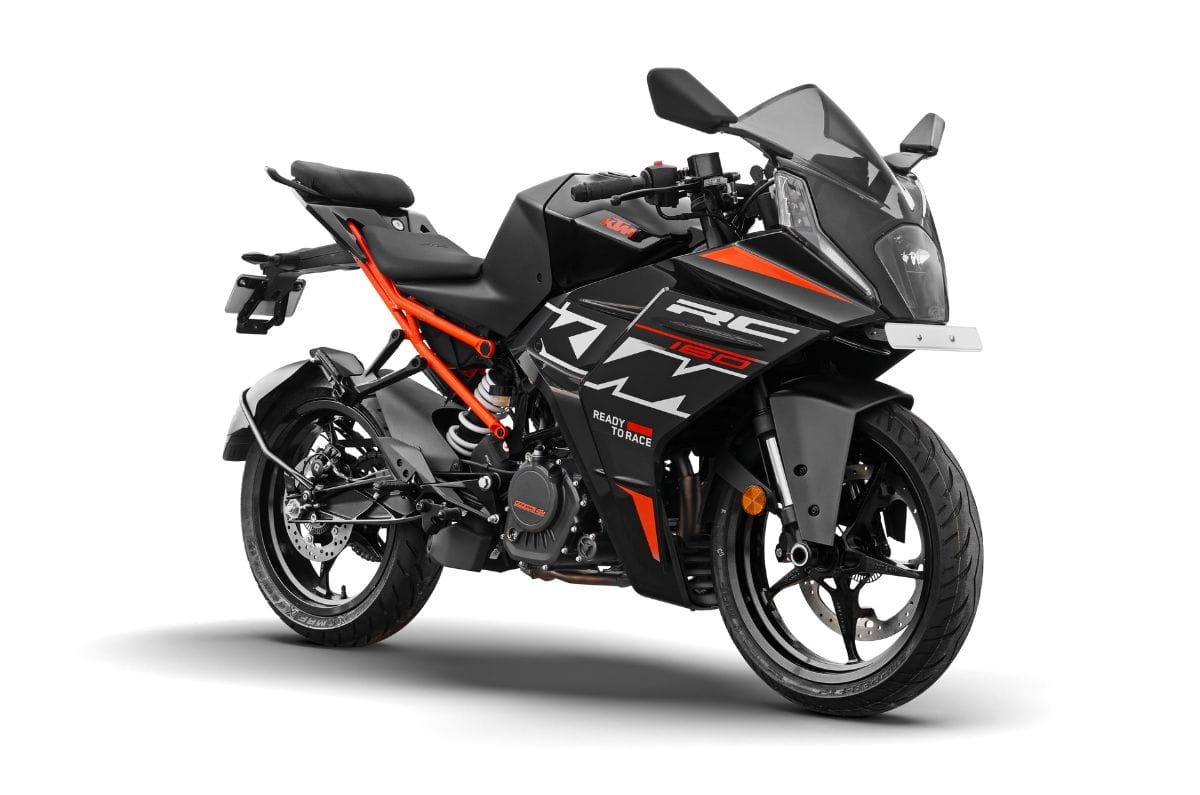
The roar of a new contender echoes through the streets, signaling a fresh battle in the fiercely competitive entry-level sportbike segment. KTM, a brand synonymous with 'Ready to Race,' has unleashed its latest creation: the RC 160. Positioned as an accessible gateway into the thrilling world of track-focused motorcycles, this machine arrives with the weighty legacy of its predecessor, the RC 125, which faced a rather unceremonious exit from the Indian market due to lukewarm sales and a perceived premium price tag for its displacement. The question on every enthusiast's mind, and indeed, every potential buyer's budget, is whether the RC 160 manages to strike the elusive balance between exhilarating performance, aspirational design, and compelling value. As this striking KTM RC 160 front three-quarter studio shot, gleaming in its signature orange livery, suggests, it certainly looks the part. But does its substance match its style? Let's dive deep into what this new KTM brings to the table and if it truly has what it takes to dominate its class.
At the heart of the KTM RC 160 lies a newly engineered 164.2cc, single-cylinder, air-cooled engine. While the 'air-cooled' designation might raise an eyebrow for some expecting KTM's typical liquid-cooled, high-revving prowess, it's a strategic move likely aimed at cost control and simplifying maintenance, thereby keeping the overall ownership proposition attractive for the entry-level segment. This robust power plant is tuned to deliver a commendable 19hp at a spirited 9,500rpm and a peak torque of 15.5Nm at 7,500rpm. These figures position the RC 160 firmly in contention with its primary rival, the Yamaha R15, which boasts slightly different power delivery characteristics.
The engine is paired with a slick-shifting six-speed gearbox, a crucial component for a sportbike designed to extract maximum performance across various riding conditions, from city commutes to spirited highway runs. Adding a layer of sophistication and safety often found in higher displacement motorcycles, the RC 160 proudly features a slipper clutch as standard. This ingenious mechanism prevents rear wheel lock-up during aggressive downshifts, offering riders greater confidence and control, especially when pushing limits on twisty roads or a track day. While the power figures aren't groundbreaking, they are more than adequate for the bike's intended purpose, promising an engaging ride that's both accessible for new riders and exciting enough for those transitioning from smaller displacements. The air-cooling might temper extreme performance expectations, but for daily usability and spirited bursts, it remains a capable performer, balancing power with efficiency.
Beyond raw power, a motorcycle's real-world usability and handling prowess are significantly influenced by its physical attributes. The KTM RC 160 offers a substantial fuel tank capacity of 13.75 litres, which should translate to a decent riding range, reducing the frequency of fuel stops – a practical consideration for daily commuters and weekend tourers alike. Its kerb weight stands at 155kg. While not the lightest in its class, this weight contributes to a planted feel on the road, offering stability without feeling overly cumbersome in traffic. The weight distribution, a key element in KTM's design philosophy, is likely optimized to enhance agility and responsiveness.
One of the most critical factors for rider comfort and confidence, especially for a sportbike, is the seat height. The RC 160 features a seat height of 830mm. This might be a point of contention for shorter riders, as it leans towards the taller side, a characteristic often found in bikes designed for aggressive, track-focused ergonomics. However, this height also typically provides a commanding riding position and allows for generous ground clearance, enhancing its sporty demeanor. A look at the bike, like the detailed product shot available from various angles, confirms its aggressive, forward-leaning stance, suggesting it's built for performance rather than upright touring comfort. This visual, often featured in promotional material and product reviews, truly highlights the bike's dynamic posture.
KTM has ensured the RC 160 doesn't fall behind in the features department, equipping it with a suite of modern technologies designed to enhance the riding experience, safety, and connectivity. The centerpiece of its instrumentation is a fully digital LCD display. This clear and concise unit provides all essential riding information at a glance, from speed and RPM to fuel levels and gear position. Crucially, it also offers Bluetooth-enabled turn-by-turn navigation. This integration with smartphones means riders can get directions directly on their dash, eliminating the need to mount a phone and improving focus on the road – a significant convenience for urban exploration and longer journeys.
Visibility and aesthetics receive a significant upgrade with an all-LED lighting setup. This includes the headlamp, tail lamp, and turn indicators, providing superior illumination, longer lifespan, and a contemporary, sharp look that aligns with KTM's aggressive design language. Safety, as always, is paramount, and the RC 160 introduces a unique and exciting feature for its class: a Supermoto ABS mode. This allows riders to switch off the Anti-lock Braking System at the rear wheel, enabling more experienced riders to lock the rear wheel for controlled slides – a technique favored in supermoto racing and by those seeking a more engaging, albeit less forgiving, braking experience. This mode, however, requires careful consideration and should only be engaged in controlled environments by proficient riders. It reflects KTM's 'Ready to Race' ethos, even in an entry-level machine.
KTM has always been celebrated for its distinctive and aggressive styling, and the RC 160 is no exception. It continues the brand's sharp, angular design language, drawing inspiration from its larger, more powerful RC siblings. The bike is offered in a choice of three vibrant and dynamic colour schemes:
These colour options, often showcased in detailed product galleries, give riders the opportunity to personalize their choice while maintaining the unmistakable KTM aesthetic. The design isn't just for show; it's aerodynamically sculpted to enhance performance and stability at higher speeds, making the RC 160 a visual treat that also performs. The sleek lines and integrated fairing give it a premium feel, standing out in its segment. A vibrant image of the bike in one of these striking colours, often seen in advertisements, clearly shows how the design is meticulously crafted to convey speed and agility.
A sportbike's true character is often defined by its underpinnings. The KTM RC 160 inherits a robust and performance-oriented chassis setup. It employs a 43mm WP Apex USD (Upside-Down) fork at the front, a premium component usually reserved for higher-end motorcycles. These USD forks offer superior rigidity and better damping characteristics compared to conventional telescopic forks, translating into precise front-end feel, enhanced stability during braking, and improved handling through corners. At the rear, a WP Apex monoshock handles suspension duties, ensuring consistent performance and adjustability (though specific adjustability for this model isn't detailed, WP components often offer some degree of preload adjustment). This sophisticated suspension duo, tuned by WP, a brand renowned for its expertise in off-road and street performance, promises a taut yet compliant ride.
Braking performance is equally critical for a sportbike. The RC 160 is equipped with a substantial 320mm disc at the front, paired with a capable 220mm disc at the rear. This disc setup, combined with the standard dual-channel ABS (with the aforementioned Supermoto mode), provides strong, progressive stopping power, inspiring confidence in various riding scenarios. The larger front disc is particularly effective in shedding speed rapidly, a crucial safety feature for both track and street. The inclusion of such high-quality components underscores KTM's commitment to delivering a true sportbike experience, even in its entry-level offering. These premium components, visible in a detailed chassis shot, highlight the engineering depth of the RC 160.
The KTM RC 160 is available in a single variant and is priced at Rs 1.85 lakh (ex-showroom). This pricing strategy places it squarely in a competitive bracket. To put it into perspective, it is Rs 8,000 more expensive than the top-spec variant of the 160 Duke, KTM's own street naked offering in a similar displacement class. More critically, it positions the RC 160 against formidable rivals like the Yamaha R15, which has long held the crown in the sub-200cc sportbike segment with its refined liquid-cooled engine and proven track record.
The RC 125's eventual discontinuation was largely attributed to its premium price tag that many felt wasn't justified by its relatively modest 125cc performance. KTM seems to have learned from this, offering a larger, more powerful engine in the RC 160 while still maintaining a premium over its naked counterpart. However, the move to an air-cooled engine, while cost-effective, might be seen by purists as a step down from KTM's usual liquid-cooled high-performance DNA, particularly when its key competitor, the R15, offers liquid cooling. This could be a point of contention for potential buyers who associate KTM with uncompromising engineering. The price point demands a serious evaluation of its overall value proposition, weighing the premium components and features against the air-cooled engine and fierce competition.
No motorcycle is perfect, and the KTM RC 160, despite its strengths, comes with its own set of trade-offs. Here’s a balanced look at what it offers and where it might fall short:
The KTM RC 160 arrives as a strong contender in the entry-level sportbike segment, armed with a host of premium features and that unmistakable KTM DNA. It’s an aesthetically pleasing machine with a capable engine, sophisticated suspension, and advanced safety features like Supermoto ABS. For riders seeking a sharp-handling, feature-rich motorcycle that embodies the sportbike spirit, the RC 160 presents a compelling package. It truly looks like a smaller version of its more powerful siblings, a fact visually reinforced by the detailed imagery provided for review.
However, its success will hinge on whether riders are willing to overlook the air-cooled engine and its relatively premium price tag compared to its fierce competition, particularly the segment-leading Yamaha R15. The ghost of the RC 125's market struggles looms large, reminding KTM of the delicate balance between performance, features, and pricing in this fiercely contested category. While the RC 160 undoubtedly offers a thrilling ride and a solid foundation for aspiring racers and enthusiasts, it needs to carve out a distinct identity beyond just brand appeal. Whether it becomes the new apex predator or merely another strong contender will be decided by the discerning buyer, who must weigh its \"Ready to Race\" spirit against its practical compromises. It’s a bold move from KTM India, and only time will tell if the RC 160 can successfully navigate the complexities of this segment and truly ignite the passion of a new generation of riders. The battle for entry-level sportbike supremacy just got a lot more interesting.
KTM RC 160 Unveiled: Is This the Apex Predator of Entry-Level Sportbikes or Just Another Contender?
Engineered for Excitement: Powering the RC 160 Experience
Dimensions, Dynamics, and Rider Ergonomics: The RC 160's Physical Presence
Cutting-Edge Features and Rider Aids: Modern Tech for the Modern Rider
Colour Palette and Design Philosophy: Visual Appeal of the RC 160
Chassis, Suspension, and Braking: The Foundation of Performance
Pricing and Market Position: A Value Proposition?
KTM RC 160: Pros and Cons - The Unvarnished Truth
Pros:
Cons:
Conclusion: Is the RC 160 Ready to Dominate?