
The Indian automotive market is a coliseum of fierce competition, particularly within the burgeoning compact SUV segment. From urban commuters seeking style and practicality to families demanding space and safety, this category has become the undisputed darling of car buyers. Amidst this intense battle for market share, a new challenger is poised to enter the fray: the Renault Bridger. As suggested by early glimpses and strategic whispers across the industry, including the intriguing image that has surfaced, this new compact SUV isn't just another addition to Renault's stable; it represents a critical strategic pivot, a bold attempt to 'bridge' the gap between its current offerings and the surging demands of the Indian consumer. But can it truly carve out its own niche in a segment already saturated with formidable rivals? Let's delve deep into what makes the Bridger a vehicle to watch. Renault, a brand with a significant legacy and a roller-coaster journey in India, has learned valuable lessons. While models like the Kwid brought volume and the Triber showcased ingenious packaging, the Kiger compact SUV has been its most recent strong performer, holding its own against tough competition. However, the Indian market's insatiable appetite for SUVs continues to evolve, with consumers often migrating to slightly larger, more feature-rich, and perceived-premium offerings once they've experienced the entry-level options. This creates a challenging paradox for manufacturers: how to retain customers within the brand ecosystem while also attracting new ones from rival camps. This is precisely where the Renault Bridger steps in. The vehicle appears positioned to fill a crucial void. While the Kiger competes in the sub-4-meter compact SUV space, there's a significant segment just above it, dominated by best-sellers like the Hyundai Creta and Kia Seltos, which Renault currently lacks a direct competitor for. By introducing the Bridger, Renault aims to offer a product that addresses the aspirations of buyers looking for more space, a more commanding road presence, and an elevated feature set without necessarily stepping into the premium segment's exorbitant price brackets. It's about providing a logical upgrade path for Kiger and Triber owners, while also wooing customers away from established rivals. Globally, Renault is undergoing its \"Renaulution\" plan, a comprehensive strategy to shift focus towards value, technology, and electric vehicles. For emerging markets like India, this often translates to highly localized products that are cost-effective to produce yet rich in features and design appeal. The Bridger is expected to be a prime example of this philosophy, leveraging the CMF-B or a highly adapted CMF-A+ platform to achieve economies of scale while delivering a robust and modern package. This strategic move is not just about launching a new model; it's about reasserting Renault's commitment to the Indian market and fortifying its long-term growth trajectory in one of the world's most dynamic automotive landscapes. Without a strong contender in this highly profitable segment, Renault risks being left behind as competitors continually innovate and expand their portfolios. Drawing inspiration from the image that has captured initial attention, the Renault Bridger is expected to showcase a design language that is both contemporary and distinctly Renault. The brand's recent global designs, seen in models like the Arkana or the updated Duster, lean towards muscular yet elegant lines, and it’s likely the Bridger will adopt similar traits to resonate with discerning Indian buyers. We anticipate a robust front fascia with striking LED DRL signatures, possibly a split headlamp design, and a prominent grille that asserts its presence. The interior is where Renault will have to play its cards right to impress. Indian consumers are increasingly demanding a feature-rich, comfortable, and connected cabin experience. We can anticipate: Renault's powertrain strategy for India typically revolves around robust and fuel-efficient petrol engines. Given the current market trends, a diesel option is highly unlikely. We expect the Bridger to share some of its engine technology with existing Renault-Nissan alliance products: Safety is non-negotiable for Indian families. The Bridger will likely come equipped with a strong safety suite: The compact SUV segment in India is a battlefield. The Renault Bridger will not be cruising into an empty lane; it will be entering a heavily contested arena dominated by seasoned gladiators. Competitors include the Hyundai Creta, Kia Seltos, Maruti Grand Vitara, Toyota Urban Cruiser Hyryder, Skoda Kushaq, and Volkswagen Taigun – each a formidable opponent with its own strengths in terms of brand loyalty, features, and powertrain options. One of the biggest challenges for Renault will be its pricing strategy. The segment is price-sensitive, yet consumers are willing to pay a premium for perceived value, features, and brand prestige. Renault will need to strike a delicate balance: offer a compelling package without undercutting its own profitability or alienating potential buyers with an overly ambitious price tag. Aggressive introductory pricing, perhaps with tempting finance schemes, could be key to initial traction. Another hurdle is brand perception and after-sales service. While Renault has made strides, it still lags behind Maruti Suzuki and Hyundai in terms of sheer service network density and perceived reliability in the eyes of many Indian consumers. A less robust service network, or concerns about parts availability and cost, can be a major deterrent. Renault must significantly invest in strengthening its service infrastructure, enhancing customer experience, and rebuilding trust to truly compete on an even footing. This is where some of the \"negative view PR\" could stem from – buyers might express reservations about long-term ownership costs or resale value compared to segment leaders who have decades of established trust. The question of differentiation is also critical. Will the Bridger be \"just another SUV\" in a market already bursting with choices? To stand out, it needs a unique selling proposition. This could be in the form of a segment-first feature, unparalleled driving dynamics, class-leading space, or a bold design that truly turns heads. Without a clear differentiator, the Bridger risks getting lost in the noise, struggling to pull buyers away from fiercely loyal customer bases of brands like Hyundai and Maruti who enjoy massive market shares and widespread service reach. Furthermore, the initial excitement generated by its design and feature list must be sustained. Any misstep in launch timing, feature omission due to cost-cutting, or perceived quality issues could quickly dampen enthusiasm and lead to negative word-of-mouth, which spreads rapidly in the digital age. Renault needs to ensure that the Bridger's real-world performance, fit and finish, and overall ownership experience live up to the promise hinted at by its striking looks and anticipated specifications. However, opportunities abound. Renault has a track record of delivering value-for-money products. If the Bridger can combine striking European design, a spacious and feature-rich interior, reliable powertrains, and competitive pricing, it could tap into the segment of buyers who are looking for something fresh and distinct from the dominant players. The increasing trend of global brands localizing their offerings also works in Renault's favor, allowing them to tailor the Bridger specifically for Indian tastes and road conditions. The Renault Bridger is more than just a new model; it's a statement of intent from the French automaker, a critical piece in its strategy to cement a stronger, more sustainable foothold in the Indian automotive market. With the sub-4m compact SUV space becoming increasingly commoditized and the mid-size SUV segment booming, the Bridger aims to strike at the heart of the fastest-growing and most profitable segment. Success for the Bridger hinges on several factors: a compelling design, a comprehensive feature list, robust and efficient powertrains, a competitive price point, and perhaps most crucially, a renewed focus on customer experience and after-sales support. While the road ahead is undoubtedly challenging, paved with fierce competition and discerning customers, the potential rewards are immense. If Renault can successfully \"bridge\" the gaps in its portfolio and address the evolving demands of Indian buyers with a truly segment-defining product, the Bridger could indeed mark the dawn of a brighter, more dominant era for the brand in India. All eyes will now be on Renault as it prepares to officially unveil this ambitious new contender, hoping it lives up to its promise and truly stands out in a sea of sameness.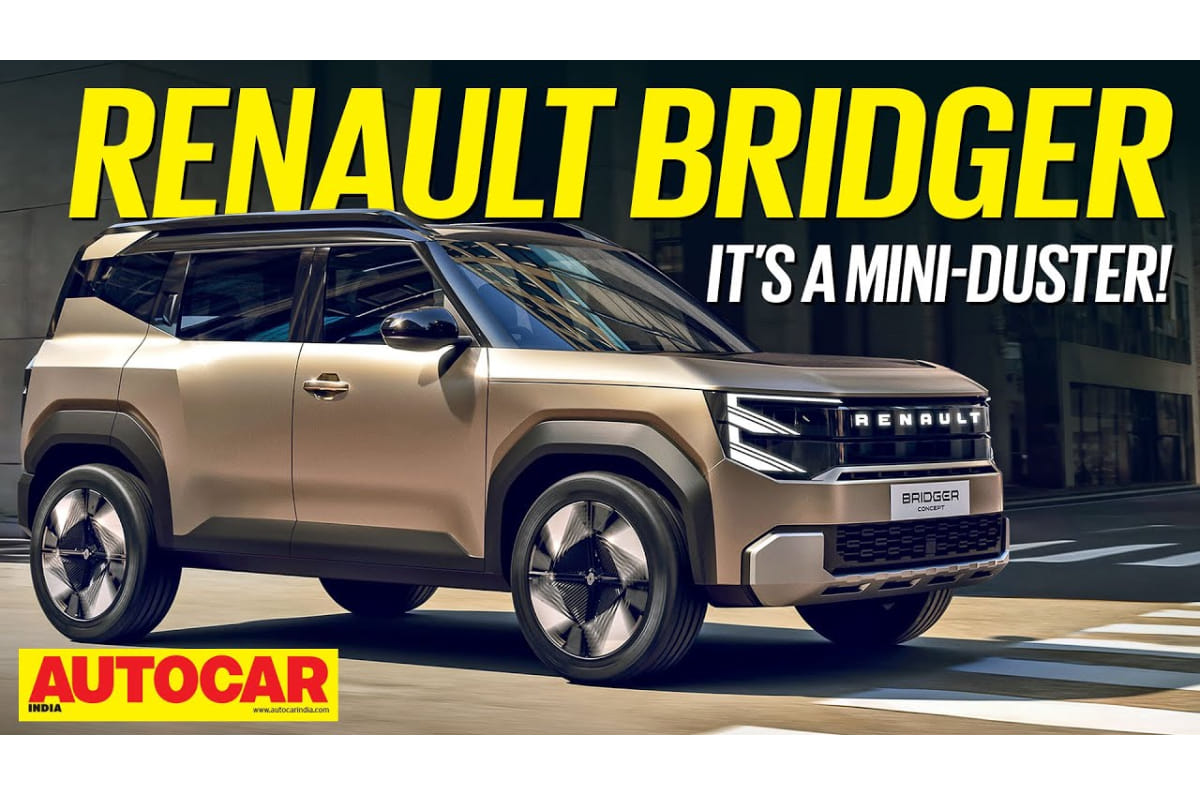
Bridging the Gap: Renault's Ambitious New Compact SUV Set to Redefine India's Automotive Landscape
The Strategic Imperative: Why Renault Needs the Bridger Now More Than Ever
Design Philosophy and Anticipated Features: What to Expect from the Bridger
Exterior Aesthetics and Dimensions:
Interior Comfort, Technology, and Connectivity:
Powertrain Options and Performance:
Safety Standards:
Navigating the Competitive Arena: Challenges and Opportunities
Pros & Cons: A Balanced Perspective on the Renault Bridger
Pros:
Cons:
Conclusion: A Bridge to a Brighter Future?