
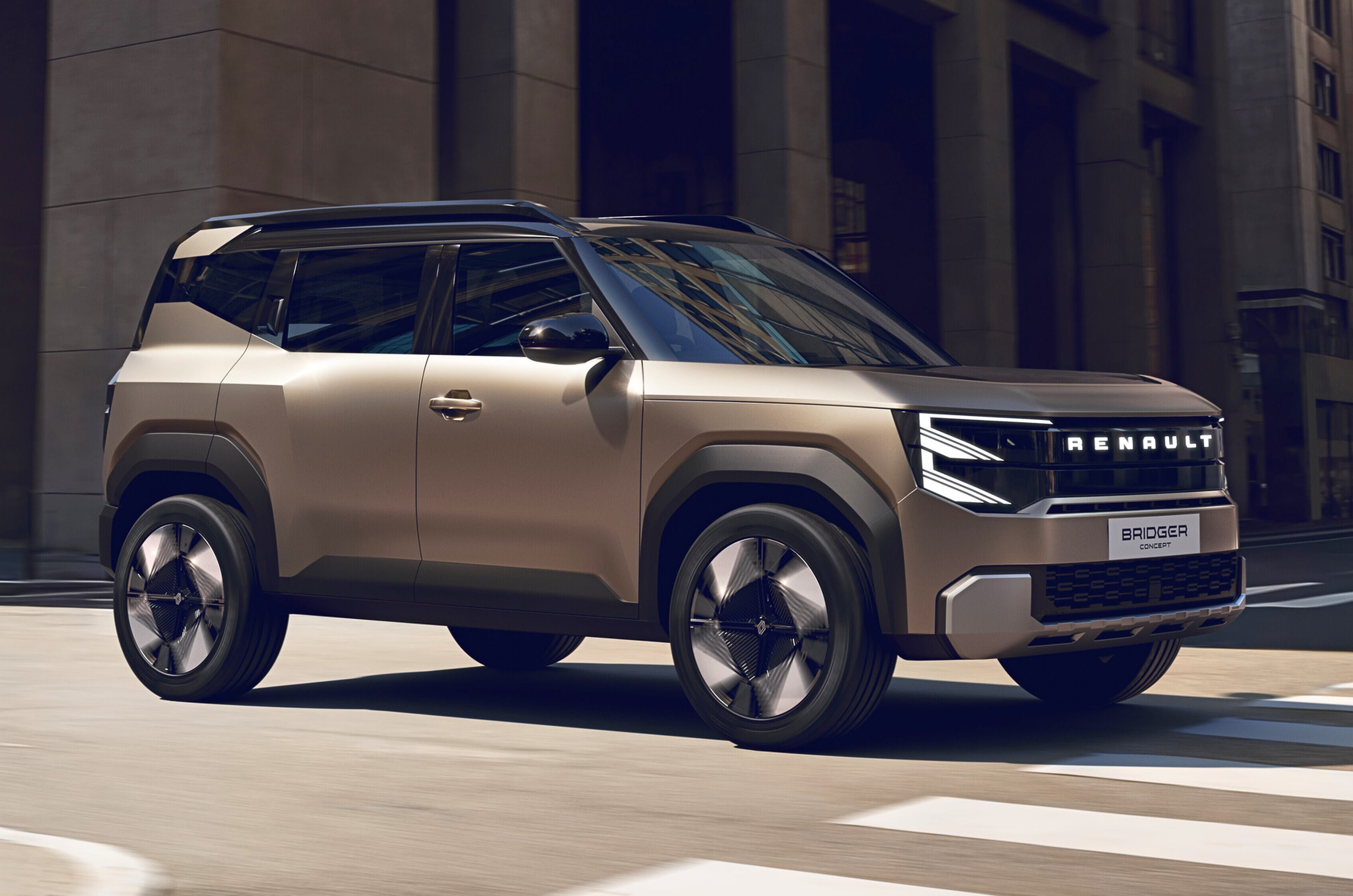
The Indian automotive landscape is an arena of relentless innovation and fierce competition, especially within the highly coveted compact SUV segment. Consumers are increasingly seeking vehicles that perfectly balance urban agility with a commanding road presence, practicality with modern aesthetics, and affordability with advanced technology. It's into this vibrant, challenging environment that Renault India is preparing to launch its latest strategic offensive: the Bridger concept, a preview of a new sub-4-meter compact SUV poised to redefine expectations. As automotive enthusiasts and industry observers, we're presented with a fascinating glimpse into Renault's future vision for one of the world's most dynamic car markets. This isn't just another car; it's a statement, a bridge to a more robust future for the French automaker in India. Immediately striking in the provided image of the Renault Bridger Concept is its robust, almost unapologetically boxy silhouette. In an era where many compact SUVs are adopting curvier, crossover-like forms, the Bridger stands out with a rugged aesthetic that harks back to traditional SUV design. The squared wheel arches, a design cue often associated with genuine off-road capability, lend it a substantial and planted stance, hinting at durability and adventure. LED lighting elements, both in the headlamps and the distinctive illuminated grille, inject a dose of modernity and futuristic appeal, ensuring it doesn't look archaic despite its retro-inspired proportions. Perhaps the most prominent visual statement of its rugged intent is the tailgate-mounted spare wheel, an element that instantly evokes images of serious all-terrain vehicles and adds a significant dose of character. This bold design language, clearly captured in the concept image, speaks volumes about Renault's ambition to create a vehicle that not only looks capable but also promises an engaging and practical user experience. India's automotive sector is characterized by its insatiable demand for SUVs, particularly those that measure under four meters. This sub-segment benefits from significant tax advantages, allowing manufacturers to offer compelling value propositions to price-sensitive buyers. For Renault, whose current lineup in India includes the popular sub-4m Kiger and the larger, more established Duster (which, in its new avatar, will likely sit in a different segment), there's a critical gap. The Bridger is designed to precisely fill this void, strategically positioning itself between the Kiger and the new Duster. This placement is crucial, as it allows Renault to cater to a broader spectrum of compact SUV buyers, potentially capturing those who find the Kiger a tad too small or less rugged, but who don't necessarily need or want the Duster's larger footprint and likely higher price point. The foundation of the Bridger’s existence is the new R-GMP platform. This platform is not merely a chassis; it's a strategic enabler. It signifies Renault's commitment to developing architecture that is highly modular and adaptable, capable of accommodating multiple powertrain options – petrol, hybrid, and even full electric (EV) – from its inception. This multi-energy approach is vital for future-proofing vehicles in a market that is rapidly transitioning towards diverse propulsion technologies. A common platform across different powertrains not only streamlines manufacturing processes and reduces development costs but also allows for greater flexibility in responding to evolving market demands and regulatory changes. This strategic foresight allows Renault to offer a compelling package that remains relevant for years to come, appealing to a wide array of discerning Indian customers. The Bridger Concept’s design is a bold departure from some of Renault’s more fluid recent creations. Its boxy design and squared wheel arches project an image of strength and utility, a visual language that resonates deeply with Indian consumers who often equate ruggedness with durability and capability. The LED lighting signature, likely to be a distinguishing feature on the production model, will ensure a modern identity on the road, while the illuminated grille adds a premium touch, a feature increasingly seen in higher segments. The tailgate-mounted spare wheel, as highlighted earlier, is a direct nod to classic off-roaders, differentiating it from most contemporary compact SUVs that tuck their spare wheels underneath or within the boot floor. Beyond the assertive exterior, Renault is making ambitious claims regarding the Bridger’s interior packaging. The promise of class-leading rear knee room is particularly noteworthy for the Indian market, where rear-seat comfort is a significant buying factor. Achieving this in a sub-four-meter footprint is a testament to clever engineering and efficient space utilization inherent in the R-GMP platform. Furthermore, a claimed 400-litre boot capacity is highly impressive for this segment. To put this in perspective, many current segment leaders like the Maruti Suzuki Brezza or Tata Nexon offer similar or slightly less boot space, making the Bridger’s claim a potential competitive advantage. Such practical considerations are paramount for family buyers and those who frequently travel with luggage, making the Bridger a potentially compelling option in a crowded marketplace. The confirmation of petrol, hybrid, and EV powertrain options for the production version of the Bridger is perhaps its most forward-looking aspect. For the petrol variant, it's reasonable to expect Renault to leverage its existing, well-regarded 1.0-liter naturally aspirated and 1.0-liter turbocharged engines, which currently power the Kiger and Triber. These engines have proven their mettle in terms of fuel efficiency and performance suited for Indian driving conditions. The introduction of a hybrid option is a crucial move, allowing the Bridger to compete directly with upcoming mild and strong hybrid offerings from rivals, providing improved fuel economy without the range anxiety associated with pure EVs. The EV variant, while likely to be the last to arrive, showcases Renault's long-term vision. As charging infrastructure slowly but steadily improves across India, and consumer acceptance of EVs grows, a dedicated compact EV SUV will be a strong contender. The success of the EV variant will hinge on competitive range, charging times, and crucially, an accessible price point that doesn't alienate the target audience. However, launching an EV in 2027 means facing an already well-established EV market with several players like the Tata Nexon EV and MG ZS EV, potentially leading to significant challenges in carving out a unique niche. Speaking of challenges, the announced launch timeline of by the end of 2027 presents a double-edged sword for Renault. While it allows ample time for development and refinement, the Indian compact SUV segment is arguably the most dynamic and competitive globally. By 2027, the market will have evolved considerably, potentially introducing newer, more advanced rivals, or existing players will have rolled out significant updates. This late entry could force the Bridger to hit the market with exceptionally compelling features and aggressive pricing to overcome the lead established by its competitors. There's a risk that what seems cutting-edge now might feel merely contemporary in three years. Renault will need to ensure the production version retains enough of the concept's charm and delivers on its promises of space and versatility, while also offering a premium ownership experience to entice buyers away from well-entrenched brands. The Renault Bridger concept presents a fascinating blueprint for the automaker's future in India. With its rugged yet modern design, spacious interior promises, and versatile multi-powertrain strategy, it has all the ingredients to be a significant contender in the fiercely competitive compact SUV segment. The strategic positioning between the Kiger and the upcoming Duster is astute, aiming to capture a wider audience base. However, the journey to market by the end of 2027 is fraught with challenges. The Indian automotive landscape changes at a blistering pace, and three years is a long time for rivals to innovate further. Renault will need to ensure that the production-spec Bridger not only retains the concept's compelling attributes but also offers a package that is ahead of its time, not merely in line with it. Pricing, after-sales service, and the ability to effectively communicate its unique value proposition will be critical to its success. If Renault can navigate these complexities and deliver on its promises, the Bridger could indeed be a pivotal model, cementing its position in a market where SUVs reign supreme. It's a bold gamble, but one that Renault seems determined to take. We eagerly await further developments, watching to see if the Bridger truly builds a solid bridge for Renault towards sustained growth and leadership in the Indian compact SUV segment.Renault Bridger Concept: Bridging the Gap – A Deep Dive into India's Next Compact SUV Game-Changer
The Strategic Imperative: Why the Bridger Matters for Renault India
Design Philosophy and Practicality: A Closer Look at the Bridger Concept
Powering the Future: Powertrain Options and Market Impact
Pros & Cons of the Renault Bridger Concept
Pros:
Cons:
Conclusion: A Bridge to a Brighter Future, or a Rocky Road Ahead?