
As seasoned observers of the automotive industry, we've all become accustomed to the symphony of superlatives that accompanies every new vehicle launch. Phrases like ‘Inspired by 1.4 billion dreams’ or ‘A billion hearts unite’ echo through press releases and marketing campaigns with startling regularity. While the sentiment might be well-intended, purporting to tap into the collective aspirations of an entire nation, the reality often borders on the farcical. This pervasive use of hyperbole, designed to elevate a product to iconic status even before its wheels hit the tarmac, frequently misses the mark, leaving discerning enthusiasts and potential buyers alike feeling a profound sense of disconnect. Is it time for a paradigm shift in how the automotive industry introduces its latest innovations?
In the quest to generate maximum buzz, many automotive brands, particularly in burgeoning markets, seem to have adopted a 'more is more' philosophy. Events are drawn out over weeks, sometimes months, featuring a predictable sequence of teasers, first looks, track drives, road tests, and eventually, the grand price reveal. While this multi-stage approach aims to maximize brand visibility and consumer engagement, it often leads to oversaturation and, crucially, a dilution of impact. The relentless stream of information, often couched in mind-numbing hyperbole, can leave audiences fatigued rather than excited. Every new model, every new brand name, is instantly branded \"iconic,\" its design \"revolutionary,\" and its performance \"unprecedented.\"
This strategy often backfires. A significant portion of the population is simply too preoccupied with daily life to be aware of, let alone care deeply about, every new product launch. For those who *are* paying attention, the constant barrage of superlatives can breed cynicism. When every customer is described as \"sophisticated, classy, intelligent, self-motivated – God's perfect creation,\" regardless of the actual product or its target demographic, the message loses all authenticity. It’s an exercise in flattery that rings hollow, failing to establish genuine connection or differentiate the brand in a crowded marketplace. The goal of PR, after all, is not just to generate noise, but to cultivate a meaningful narrative. When that narrative becomes generic and exaggerated, it does more harm than good, diminishing trust and rendering future communications less effective.
The danger here is not just lost sales, but a broader erosion of brand equity. Consumers, especially those in the premium segment, are increasingly discerning. They seek authenticity, substance, and a clear understanding of a product's value proposition. When marketing materials veer into the realm of the unbelievable, it not only trivializes the product but also suggests a lack of confidence from the manufacturer in the product's inherent merits. This creates a negative perception, a subtle yet powerful signal that the brand might be trying too hard to compensate for perceived shortcomings with exaggerated claims.
Contrast this with a recent experience: the launch of the updated Mercedes-Benz S-Class in Stuttgart, Germany. This event served as a powerful reminder that true luxury and sophistication do not require shouting from the rooftops. Instead, they demand an elegant, understated confidence that allows the product and its heritage to speak for themselves. This was not merely a car launch; it was a carefully curated experience, perfectly matched to the venerable character of the S-Class itself.
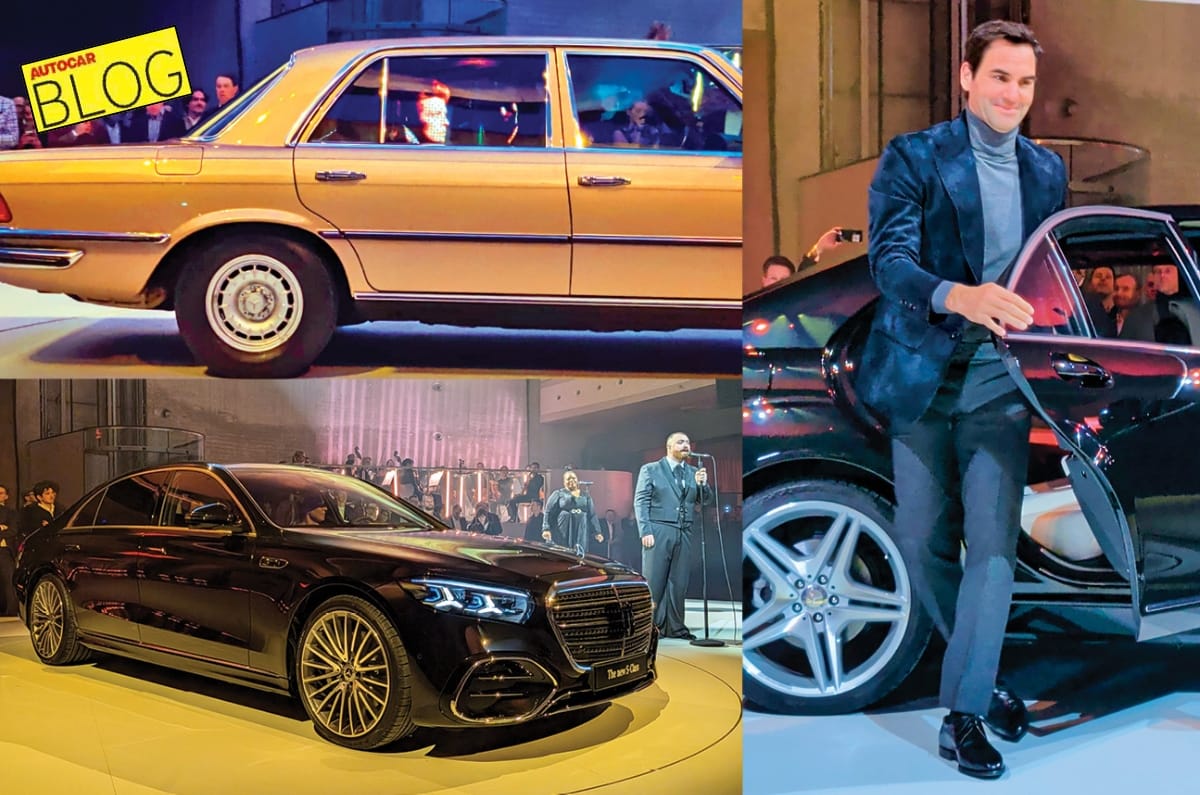
Firstly, and refreshingly, it was an unveil and price announcement delivered together – a stark deviation from the drawn-out saga common elsewhere. This instantly conveyed a sense of conviction and respect for the attendees' time. The venue, the Mercedes-Benz Museum, was itself a testament to the brand's profound history, grounding the new model in a rich lineage of innovation and excellence. The event began not with an hour-long, bullet-point-laden presentation, but with a brief, impactful address by the CEO, followed by a captivating parade of previous S-Class generations.
What truly elevated this segment was the subtle integration of its heritage. Holographic projections of some of its most illustrious customers – icons like John Lennon and Muhammad Ali – were seamlessly placed within these classic vehicles. There was no lengthy speech about the S-Class's \"rich heritage\" or the \"calibre of its customers\"; the visual storytelling spoke volumes. It effortlessly communicated the aspirational quality and enduring appeal of the S-Class without resorting to overt declaration. This is the essence of sophisticated marketing: showing, not just telling.
The presentation of the brand ambassador further exemplified this masterclass in understatement. Instead of a pre-recorded video message or a formal speech about alignment of values, tennis legend Roger Federer simply rolled into the parade in his own S-Class, replacing a hologram. It was a genuine, organic moment that resonated far more powerfully than any pre-scripted endorsement ever could. The entire spectacle unfolded to the ethereal strains of live music by a chamber orchestra, followed by a performance from Sam Smith later that night. The ambiance was one of refined elegance and understated luxury, entirely congruent with the vehicle being launched.
This approach was impactful precisely because it avoided hyperbole. It was concise, relevant, and intrinsically tied to the brand's core character. The event *did* all the talking, allowing the audience to experience the S-Class's essence rather than being told about it. This is how an icon, steeped in history and defined by quiet excellence, truly deserves to be launched – with grace, substance, and an unwavering respect for its audience's intelligence. It’s a testament to the power of crafting an immersive, authentic experience that leaves a lasting impression, rather than a fleeting moment of manufactured excitement.
The contrast between these two approaches offers invaluable lessons for automotive marketers worldwide. It's not about abandoning excitement, but about channeling it through authenticity and strategic alignment with brand identity.
The goal should always be to foster a deeper, more meaningful connection with consumers. In an age where information is abundant and attention spans are fleeting, authenticity, relevance, and a genuine respect for the audience's intelligence are the most valuable currencies in automotive marketing.
The automotive industry stands at a pivotal juncture, constantly seeking innovative ways to capture the imagination of a diverse and evolving consumer base. While the allure of 'a billion dreams' might seem like a shortcut to widespread appeal, the reality is that such broad-stroke hyperbole often falls short, particularly for brands that aspire to be perceived as premium or sophisticated. The Mercedes-Benz S-Class launch, with its blend of reverence for heritage, understated elegance, and focus on experiential richness, serves as a powerful blueprint. It demonstrates that genuine impact comes not from the loudest proclamation, but from the most authentic presentation.
In an increasingly crowded and noisy world, automotive brands have an opportunity to differentiate themselves by embracing a strategy that prioritizes substance over superficiality. By trusting the intrinsic value of their products, understanding the nuances of their target audience, and crafting experiences that resonate with genuine character, they can build lasting relationships and true brand loyalty. The future of automotive marketing lies not in bombarding consumers with over-the-top claims, but in inviting them into a story that is honest, compelling, and profoundly authentic. Perhaps it's time for more automakers to take a leaf out of Mercedes-Benz's book and let their icons truly speak for themselves.
Beyond the Buzz: Why Authentic Automotive Launches Resonate More Than Hyperbole
The Echo Chamber of Empty Promises: Why Generic Hype Falls Flat
A Masterclass in Understatement: The Mercedes-Benz S-Class Launch
Rewriting the Launch Playbook: Key Lessons for the Automotive Industry
Pros & Cons of Different Launch Strategies
Actionable Takeaways for Future Automotive Launches
Conclusion: The Enduring Appeal of Authenticity