
The gears of commercial mobility are shifting, not just incrementally, but with an exhilarating electric jolt. As the automotive world races towards a sustainable future, Mercedes-Benz, a name synonymous with automotive innovation and luxury, has once again positioned itself at the vanguard. With the recent unveiling of the all-electric VLE, the German automaker isn't just introducing a new van; it's redefining expectations for commercial vehicles, blending the sophistication of its renowned E-Class sedan with the practical demands of modern electric transport. The striking visual reveal, encapsulated in the accompanying image, confirms a palpable leap forward, promising a future where utility doesn't compromise on refinement. Mercedes-Benz has long championed a holistic approach to sustainable mobility, extending its electrification efforts far beyond its passenger car division into the crucial realm of commercial vehicles. The VLE emerges not from a blank slate, but as the polished production iteration of the much-anticipated Vision V concept. This concept served as a beacon, outlining Mercedes-Benz's ambition to integrate advanced electric drivetrain technology with intelligent connectivity and ergonomic design within a commercial framework. The transition from concept to the tangible VLE underscores a commitment to translating futuristic ideas into practical, market-ready solutions. At its core, the VLE is expected to leverage Mercedes-Benz's modular and scalable electric vehicle architecture, likely drawing heavily from the principles of its dedicated VAN.EA platform. This strategic move allows for efficient production, shared components, and a degree of future-proofing against evolving technological standards. The VAN.EA platform is designed to be highly versatile, supporting a range of vehicle sizes and configurations, from compact urban delivery vans to larger, more specialized commercial applications. By building the VLE on such a robust foundation, Mercedes-Benz ensures not only performance and reliability but also the potential for continuous upgrades and adaptability. The journey from Vision V to VLE has been one of meticulous engineering and design refinement. While concept vehicles often present audacious, boundary-pushing aesthetics, the production version typically tempers these with practical considerations for manufacturing, aerodynamics, and user experience. The VLE, however, appears to have retained much of the Vision V's distinctive character, particularly its sleek lines and integrated lighting elements, signalling a departure from the often utilitarian designs of traditional vans. This design philosophy is critical for fleet operators seeking not just functionality, but also a vehicle that projects a modern and responsible brand image. Perhaps the most intriguing aspect of the VLE's positioning is its description as the \"van equivalent of the E-Class sedan.\" This isn't merely marketing rhetoric; it implies a significant elevation in comfort, technology, and driving dynamics compared to many existing commercial vans. The E-Class is celebrated for its refined interior, advanced driver-assistance systems, sophisticated infotainment, and a serene driving experience. Translating these attributes into a commercial vehicle could revolutionize daily operations for countless businesses. The target audience for the VLE is broad but discerning. It appeals to logistics companies seeking to electrify their last-mile delivery fleets in urban centers, where emissions regulations are becoming increasingly stringent. It also caters to businesses that prioritize brand image and employee well-being, such as premium shuttle services, mobile artisan workshops, or high-end catering companies. The promise of reduced operating costs – lower fuel expenses, fewer moving parts requiring maintenance – combined with tax incentives for EVs in many regions, makes a compelling financial case for fleet electrification. While specific technical specifications for the VLE are yet to be fully detailed, we can infer much from Mercedes-Benz's existing electric vehicle portfolio and industry trends. The VLE will undoubtedly feature a robust electric drivetrain designed for efficiency and durability under commercial loads. Expect multiple battery capacity options to cater to varying range requirements, allowing operators to choose a configuration that best suits their daily routes without overpaying for unnecessary capacity. Charging infrastructure is a critical component of any successful EV deployment. The VLE will almost certainly support both AC charging for overnight depot charging and high-speed DC fast charging, enabling quick top-ups during operational hours. Compatibility with common charging standards (e.g., CCS) will be vital for seamless integration into existing public and private charging networks. Mercedes-Benz may also offer its own suite of charging solutions, including wallboxes for depots and intelligent software to optimize charging schedules and manage energy consumption across an entire fleet. The performance characteristics will likely focus on instant torque, crucial for navigating urban environments with frequent stop-starts, and sufficient power for hauling goods. While raw horsepower might not be the primary metric, consistent, reliable power delivery across varying loads will be paramount. Expect sophisticated battery thermal management systems to ensure optimal performance and longevity, even in demanding operating conditions. Furthermore, advanced regenerative braking will play a significant role in maximizing range, recapturing energy during deceleration to replenish the battery. The electric van segment is rapidly expanding, attracting fierce competition from established players and innovative newcomers alike. The Mercedes-Benz VLE enters a market where it will contend with formidable rivals such as the Ford E-Transit, a robust and practical option, the quirky yet functional VW ID. Buzz Cargo, and a growing array of electric offerings from Stellantis brands. Each competitor brings its own strengths, whether it's vast dealer networks, competitive pricing, or specialized body options. The VLE's unique selling proposition will be its blend of Mercedes-Benz prestige, E-Class-level refinement, and advanced technology – features that might justify a higher price point for businesses prioritizing driver comfort, safety, and brand perception. Crucially, the VLE's positioning is also defined by what lies above it: the more opulent and range-topping VLS, which is likely to debut later this year. The VLS, presumably based on a more premium iteration of the VAN.EA platform, is expected to push the boundaries of luxury and capability in the electric van space. This tiered strategy allows Mercedes-Benz to capture different segments of the commercial EV market. The VLE will serve as the sophisticated, highly capable workhorse, perfectly suited for a wide array of urban and regional logistics. The VLS, on the other hand, will likely target executive shuttles, high-end mobile offices, or discerning private users who demand the ultimate in electric luxury and advanced features, including potentially longer ranges and even more sophisticated autonomous driving capabilities. The strategic rollout of these electric vans signifies a profound shift in Mercedes-Benz's overarching commercial vehicle strategy. It underscores a complete commitment to electric mobility, moving beyond experimental models to create a comprehensive and scalable electric ecosystem. This transition isn't without its challenges; the automotive industry as a whole is grappling with the complexities of supply chains for critical minerals, the immense capital investment required for EV production, and the evolving demands of a global charging infrastructure. Despite these hurdles, Mercedes-Benz appears determined to lead, pushing the boundaries of what commercial vehicles can achieve. The Mercedes-Benz VLE is more than just another electric van; it is a statement of intent, a commitment to a future where commercial utility harmonizes with luxury, efficiency, and environmental responsibility. By drawing parallels with the esteemed E-Class sedan and translating the innovative spirit of the Vision V concept into a production reality, Mercedes-Benz is setting a new benchmark for what businesses can expect from their fleet vehicles. While the journey to full electrification of commercial transport is still ongoing, and challenges such as initial cost, range optimization, and infrastructure build-out remain pertinent concerns, the VLE represents a compelling and sophisticated step forward. It promises to deliver a driving experience that is not only efficient and sustainable but also remarkably comfortable and technologically advanced, paving the way for a quieter, cleaner, and more intelligent era of commercial mobility. As the VLE takes its place on the roads, it will undoubtedly accelerate the transition towards a greener, more connected future for businesses worldwide.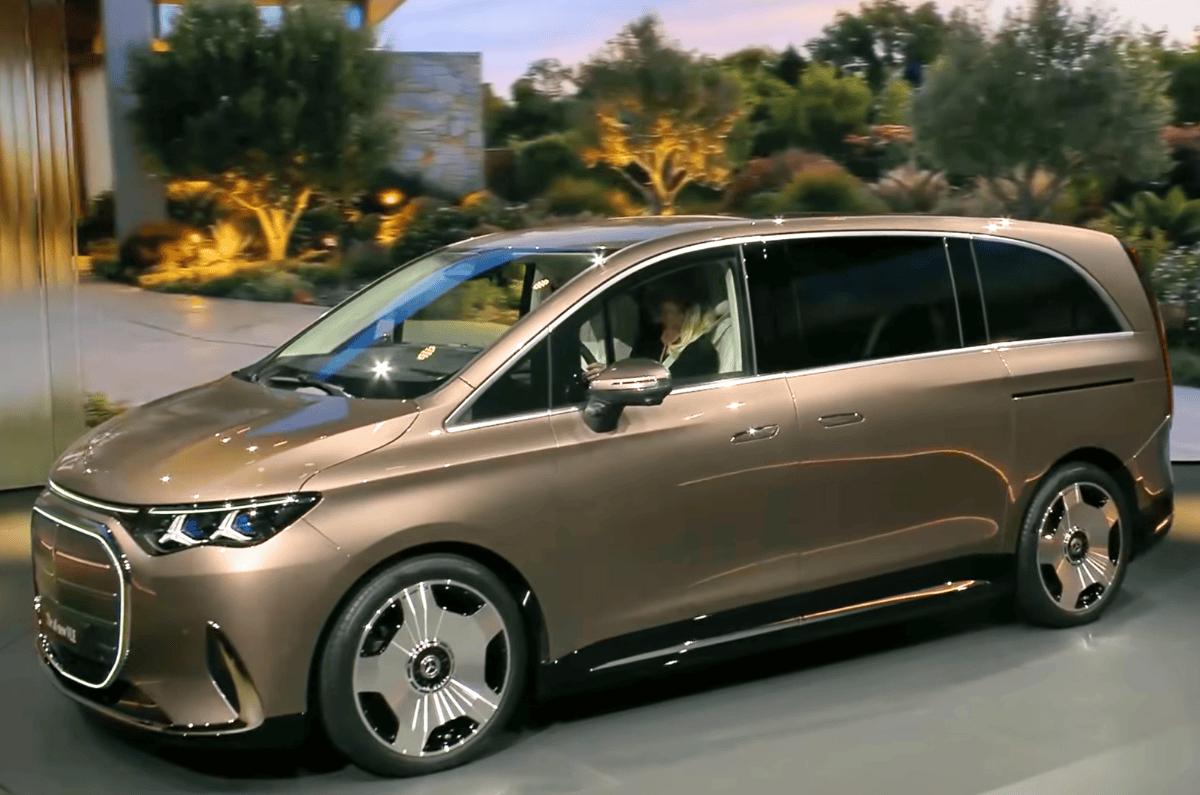
Mercedes-Benz VLE: Driving into the Future with E-Class Elegance and Electric Efficiency
The Genesis of Electrification: From Vision V Concept to Production Reality
More Than Just a Van: Embracing E-Class Pedigree and Practical Innovation
Powering the Future: Unpacking the VLE's Electric Drivetrain and Charging Ecosystem
Pros & Cons of the Mercedes-Benz VLE
Pros:
Cons:
The Road Ahead: Positioning Against Competitors and the Shadow of the VLS
Conclusion: A New Benchmark for Electric Commercial Transport