Clash of the Electrics: Mahindra BE 6 vs Hyundai Creta Electric – A Deep Dive into Real-World Performance and Value
The automotive landscape is rapidly electrifying, and in the bustling midsize SUV segment, two compelling contenders are vying for supremacy: the Mahindra BE 6 and the Hyundai Creta Electric. On one side, we have Mahindra's audacious and futuristic BE 6, a pure-electric vehicle born from a dedicated EV platform, promising radical design and blistering performance. On the other, Hyundai offers the Creta Electric, an evolution of its wildly popular ICE-powered sibling, tailored for the discerning family buyer with a focus on practicality and accessibility. This isn't just a battle of specifications; it's a real-world showdown to determine which electric SUV truly delivers on its promises. We’ve pitted their long-range variants against each other, subjecting them to rigorous testing to uncover their true capabilities. Get ready to peel back the layers and discover where each vehicle truly shines, and perhaps, where it falters.
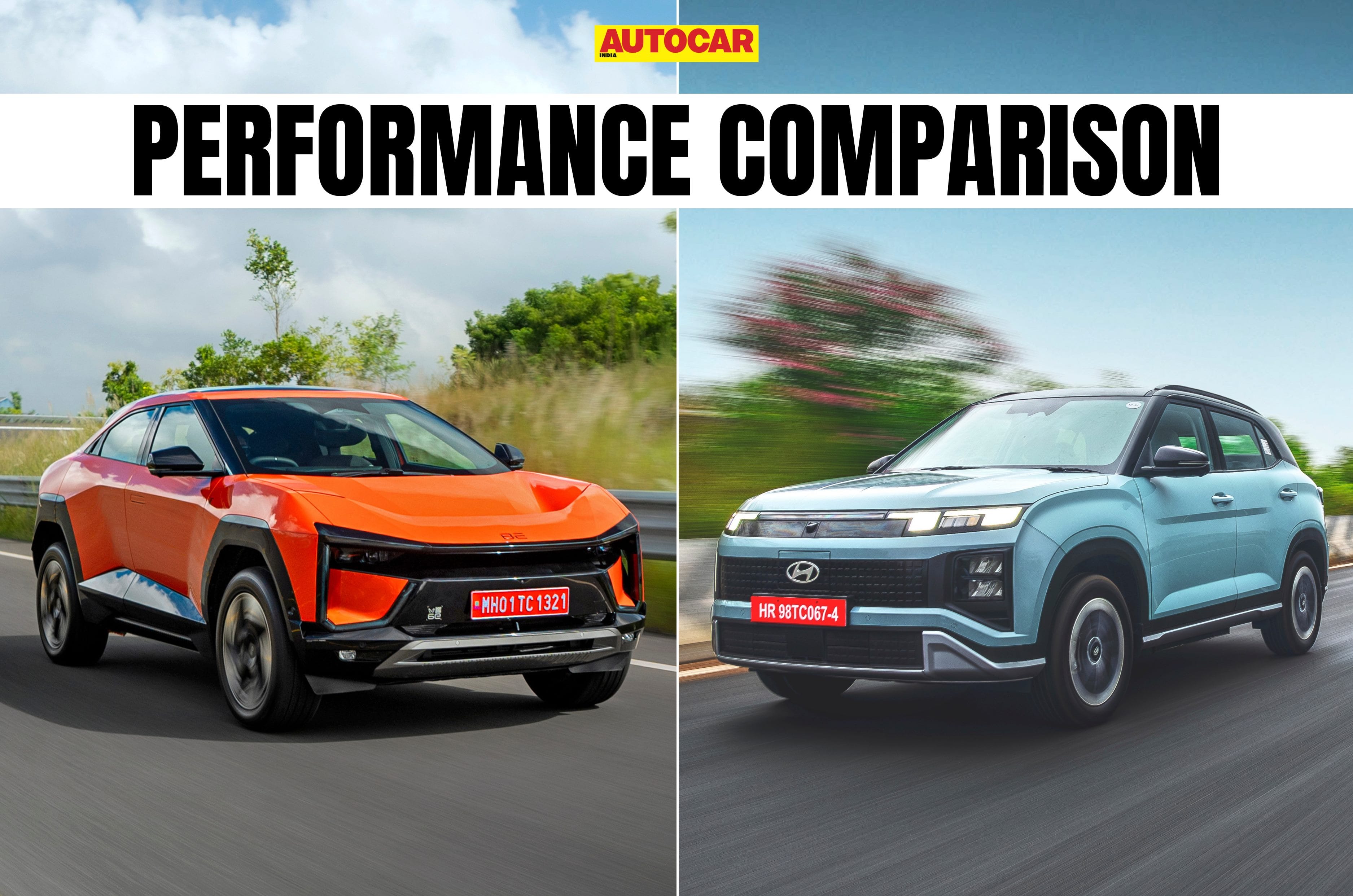
Above: Mahindra BE 6 vs Hyundai Creta Electric: A visual representation of their design philosophies.
The Electric Powerhouses: Deep Dive into Specifications and Design Philosophy
At the heart of any electric vehicle lies its powertrain, and here, the Mahindra BE 6 and Hyundai Creta Electric adopt notably different strategies. The BE 6, an offspring of Mahindra's 'Born Electric' vision, leverages a dedicated EV platform. This architecture inherently allows for optimized battery packaging, weight distribution, and interior space, unburdened by the compromises often associated with adapting an internal combustion engine (ICE) platform. Its design is unashamedly bold, futuristic, and aimed at buyers seeking a statement. Under the hood—or rather, beneath the floor—it boasts a substantial 79kWh battery pack, powering a single, potent rear-mounted electric motor. This RWD setup often translates to a more engaging driving experience and better traction under hard acceleration.
In contrast, the Creta Electric is an electric iteration of Hyundai's massively successful ICE Creta. This approach offers familiarity and potentially a quicker route to market, but it often means working within the constraints of a chassis originally designed for a different powertrain. Its aesthetic, while refreshed, retains the recognizable Creta silhouette, appealing to those who prefer a less radical departure from convention. It draws power from a smaller 51.4kWh battery and features a front-mounted motor driving the front wheels, a more conventional layout for mass-market vehicles. This configuration, while effective, might inherently limit the dynamic potential compared to a dedicated RWD EV platform.
BE 6's Commanding Power Advantage, but at a Cost
Delving into the raw figures, the BE 6 truly flexes its muscles. It churns out a formidable 286 horsepower and 380 Nm of torque, eclipsing the Creta Electric’s 171 hp and 255 Nm by a significant margin. On paper, this power differential suggests a clear winner in performance. However, electric vehicles are not just about raw output; weight plays a crucial role. The BE 6, with its larger battery and robust platform, tips the scales at 2,115 kg, a substantial 538 kg heavier than the Creta Electric's 1,577 kg. This difference in mass significantly impacts the power-to-weight and torque-to-weight ratios, which are often better indicators of real-world responsiveness. While the BE 6 still maintains a lead (135.22 hp/tonne vs 107 hp/tonne), the gap narrows considerably when weight is factored in. The theoretical advantage of its RWD configuration also comes with the practical challenge of managing such immense power effectively without overwhelming the tyres, leading to sophisticated traction control systems that can, paradoxically, temper outright acceleration for the sake of drivability and safety.
|
Mahindra BE 6 vs Hyundai Creta Electric: Key Specifications
|
Specifications |
Mahindra BE 6 |
Hyundai Creta Electric |
Battery capacity (kWh) |
79 |
51.4 |
Electric motor setup |
Single, rear-mounted |
Single, front-mounted |
Power (hp) |
286 |
171 |
Torque (Nm) |
380 |
255 |
| Kerb weight (kg) |
2,115 |
1,577 |
| Power-to-weight (hp/tonne) |
135.22 |
107 |
| Torque-to-weight (Nm/tonne) |
179.67 |
158.9 |
Gearbox |
Single-speed automatic |
Single-speed automatic |
Claimed 0-100kph time (seconds) |
6.7 |
7.9 |
ARAI range (km) |
683 |
510 |
Real-World Thrills: Acceleration and Rolling Performance Unpacked
The true measure of a vehicle's spirit isn't always found in spec sheets but on the tarmac. While Mahindra claims an impressive 6.7-second 0-100kph sprint for the BE 6, our independent real-world testing (conducted under Autocar India's stringent standards) recorded a still-swift 7.14 seconds. What's truly intriguing, however, is the Creta Electric's performance. Despite its significantly lower power output and more modest battery, it managed a respectable 8.04 seconds for the same sprint. This mere 0.9-second difference in real-world conditions is a testament to clever engineering and calibration.
Why the Gap Narrows: The Art of Powertrain Calibration
The perceived disparity between the BE 6's raw power and its real-world acceleration can be attributed to several factors. Firstly, the BE 6's powertrain calibration prioritizes smoothness and passenger comfort over neck-snapping launches. Its sophisticated traction control system, a necessity with 380 Nm of instant torque going to the rear wheels, modulates power delivery to prevent wheelspin and ensure a refined, progressive acceleration curve. While this makes for a more comfortable ride, it means the car doesn't dump all its available torque in an uncontrolled burst, which can impact outright drag-strip figures. Secondly, the BE 6's substantial kerb weight of over two tonnes, while contributing to a solid road presence, requires more energy to get moving and to sustain acceleration, somewhat negating its power advantage.
Conversely, the lighter Creta Electric, with its FWD setup, benefits from less mass to propel. Its power delivery, while less aggressive overall, might be more directly accessible in initial phases, allowing it to keep pace with the BE 6 surprisingly well, especially in city driving scenarios. Our tests show that the Creta Electric was practically neck-and-neck with the BE 6 up to 60kph, a crucial speed range for urban commuting and quick overtakes. This performance parity at lower speeds demonstrates that a well-optimized, lighter package can sometimes challenge more powerful, heavier rivals in everyday driving conditions.
|
Mahindra BE 6 vs Hyundai Creta Electric: Real-World Acceleration (seconds)
|
0-100kph |
Mahindra BE 6 |
Hyundai Creta Electric |
0-20kph |
1.37 |
1.36 |
0-40kph |
2.69 |
2.69 |
0-60kph |
4.00 |
4.03 |
0-80kph |
5.38 |
5.73 |
0-100kph |
7.14 |
8.04 |
0-120kph |
9.48 |
11.03 |
Above: Acceleration curve comparison, highlighting their initial performance differences.
Moving beyond standing starts, rolling acceleration tests simulate real-world scenarios like overtaking on highways. Here, the BE 6's superior power-to-weight ratio eventually allows it to stretch its legs, maintaining a marginal lead. It completed the 20-80kph kickdown in 4.03 seconds, a noticeable 0.52 seconds faster than the Creta Electric's 4.55 seconds. Similarly, for the 40-100kph sprint, the BE 6 clocked 4.46 seconds, outperforming the Creta Electric by 0.77 seconds. While these differences are consistent with the power advantage, they are not as dramatic as the raw horsepower figures might suggest, reinforcing the idea that for many everyday driving situations, the Creta Electric offers surprisingly competitive, if not class-leading, performance.
|
Mahindra BE 6 vs Hyundai Creta Electric: Rolling Acceleration (seconds)
|
Rolling acceleration tests |
Mahindra BE 6 |
Hyundai Creta Electric |
20-80kph (in kickdown) |
4.03 |
4.55 |
40-100kph (in kickdown) |
4.46 |
5.23 |
Above: Rolling acceleration (20-80kph kickdown) comparison.
Above: Rolling acceleration (40-100kph kickdown) comparison.
Stopping Power and Energy Recuperation: The Braking Story
Performance isn't just about how fast you can go; it's equally about how quickly and safely you can stop. Here, the heavier BE 6 impressively manages to out-brake the lighter Creta Electric in terms of distance. From 80-0kph, the BE 6 stopped in a commendable 26.81 meters, slightly shorter than the Creta Electric's 28.05 meters. This indicates superior braking hardware or tire grip on the Mahindra. However, an interesting anomaly emerges: the Creta Electric manages to achieve this stop in a shorter time (2.52 seconds) compared to the BE 6 (2.71 seconds). This could be due to differences in ABS calibration, brake pedal feel, or the initial bite of the brakes, where the Creta might offer a more immediate, albeit slightly longer, deceleration profile.
Beyond traditional friction braking, electric vehicles shine with regenerative braking. Both SUVs offer multiple levels of regeneration, allowing drivers to recuperate energy and extend range. The BE 6 demonstrates stronger regenerative capabilities, especially at its highest setting (L3 regen), stopping from 80-20kph in 122.11 meters, significantly shorter than the Creta Electric’s 138.7 meters. This more aggressive regen not only enhances energy efficiency but also contributes to a more engaging, one-pedal-driving-like experience, if preferred by the driver.
|
Mahindra BE 6 vs Hyundai Creta Electric: Braking Tests
|
| |
Mahindra BE 6 |
Hyundai Creta Electric |
80-0kph distance (m) |
26.81 |
28.05 |
80-0kph time (seconds) |
2.71 |
2.52 |
80-20kph L1 regen distance (m) |
299.47 |
318.83 |
80-20kph L2 regen distance (m) |
190.02 |
190.43 |
80-20kph L3 regen distance (m) |
122.11 |
138.7 |
Value Proposition and Market Positioning: Where Do They Stand?
While performance figures are exhilarating, the ultimate decision often boils down to value. Here, the Hyundai Creta Electric holds a significant advantage. With a price range of Rs 19.99 to 23.66 lakh (ex-showroom, India), its long-range versions are considerably more accessible than the Mahindra BE 6, which starts at Rs 23.50 lakh and goes up to Rs 26.90 lakh. The Creta Electric's top-end long-range variant, fully loaded, costs just Rs 16,000 more than the entry-level BE 6 with the larger battery pack. This substantial price difference of up to Rs 3.51 lakh cannot be ignored, especially in a price-sensitive market.
This pricing strategy positions the Creta Electric as a highly attractive option for the mainstream family buyer looking to transition to an EV without breaking the bank. It offers a familiar package, strong features, and competitive real-world performance at a price point that makes it a compelling value proposition. The BE 6, on the other hand, targets a more niche audience – early adopters who prioritize cutting-edge design, a dedicated EV platform, higher raw power, and the latest technology, and are willing to pay a premium for it. The question for potential BE 6 buyers becomes: is the additional investment justified by the marginal performance gains and the futuristic appeal, especially when a more affordable rival offers such close real-world acceleration?
|
Mahindra BE 6 vs Hyundai Creta Electric: Prices (Ex-showroom, India)
|
| |
Mahindra BE 6 |
Hyundai Creta Electric |
Price range (Rs lakh) |
23.50 to 26.90 |
19.99 to 23.66 |
Pros and Cons: A Balanced Perspective
Mahindra BE 6
- Pros:
- Higher Power & Torque: Superior raw output delivers impressive highway performance.
- Larger Battery & Range: 79kWh pack offers a robust ARAI-certified range of 683km, reducing range anxiety.
- Dedicated EV Platform: Offers inherent advantages in packaging, handling, and future-proofing.
- Distinctive, Radical Styling: Stands out with a bold, futuristic design for those seeking individuality.
- Stronger Braking Distance: Shorter 80-0kph stopping distance points to effective braking hardware.
- Advanced Regenerative Braking: More aggressive regen settings for better energy recovery.
- Cons:
- Significantly Heavier: Its 2,115kg kerb weight impacts agility and efficiency, despite the power.
- Higher Price Point: Commands a substantial premium, making it less accessible for many buyers.
- Performance Temperance: Powertrain calibration, while smooth, holds back some of its raw power in aggressive launches, leading to less dominant real-world acceleration than expected.
- Less Established Brand in EV SUVs: While Mahindra has EV experience, the 'BE' lineup is new to the market, requiring trust building.
Hyundai Creta Electric
- Pros:
- More Affordable: Offers significant cost savings, making EV ownership more attainable.
- Lighter Kerb Weight: Improved agility and potentially better efficiency in certain driving conditions.
- Surprisingly Competitive Acceleration: Keeps pace with the BE 6 in initial sprints and offers strong city performance.
- Familiar Design & Practicality: Leverages the well-loved Creta platform, offering known comfort and features for families.
- Shorter Braking Time: Achieves 80-0kph slightly faster, indicating immediate stopping response.
- Proven Reliability: Benefits from Hyundai's strong track record and service network.
- Cons:
- Smaller Battery & Shorter Range: 51.4kWh pack provides a lower ARAI range of 510km, potentially limiting longer trips.
- Adapted ICE Platform: May involve compromises in optimal EV architecture, potentially affecting space utilization or thermal management compared to a dedicated platform.
- Less Raw Power/Torque: While competitive, its outright performance is lower than the BE 6.
- Less Distinctive Styling: Retains a traditional SUV look, lacking the futuristic appeal of the BE 6.
Autocar India’s Testing Standards: Our Commitment to Accuracy
To ensure the integrity and comparability of our results, all performance tests are conducted under meticulously controlled conditions. Before each test, we verify and adjust tire pressures to the manufacturer’s recommended specifications and confirm that the vehicle’s battery is at 100 percent charge. Our tests are carried out in a controlled environment, typically with two occupants onboard, mimicking realistic driving scenarios. Data acquisition is performed using highly accurate, GPS-based timing equipment, providing precise and reliable metrics for acceleration, braking, and other performance parameters. Our methodology aims to deliver consumer-relevant, consistent, and unbiased performance data, allowing our readers to make informed decisions.
All prices are ex-showroom, India.
Conclusion: Defining Your Electric SUV Journey
The face-off between the Mahindra BE 6 and the Hyundai Creta Electric reveals two distinct philosophies in the evolving electric SUV segment. The BE 6 is an ambitious statement, a testament to Mahindra's future-forward vision with its dedicated EV platform, higher power output, and impressive range. It’s for the buyer who wants to embrace the electric future with a bold, distinctive, and technologically advanced machine, and who doesn't mind paying a premium for that cutting-edge experience. Its superior braking distance and robust regenerative capabilities further underscore its advanced engineering, even if its sheer power isn't always unleashed in startling 0-100kph bursts due to its focus on refined delivery.
However, the Hyundai Creta Electric emerges as a formidable challenger, proving that an adapted ICE platform can still deliver a highly compelling EV experience. Its incredible value proposition, coupled with surprisingly competitive real-world acceleration and a more familiar, family-friendly package, makes it an exceptionally strong contender. For many Indian families looking for a practical, well-equipped, and efficient electric SUV for daily commutes and occasional long-distance travel, the Creta Electric offers a near-perfect blend of performance and affordability. It forces us to question if the extra outlay for the BE 6's larger battery and raw power translates into a proportionally superior everyday driving experience, especially when the Creta performs so admirably for its price.
Ultimately, the choice hinges on individual priorities. Do you crave the avant-garde design, the dedicated EV architecture, and the peace of mind of a longer range, even if it comes at a higher cost and slightly tempered real-world sprints? Or do you value accessible pricing, a proven platform, and highly competitive performance that doesn't demand significant compromises? Both the Mahindra BE 6 and Hyundai Creta Electric are impressive in their own right, but their compelling differences ensure that the electric SUV segment remains exciting, offering diverse options for every kind of discerning buyer.
