
```html
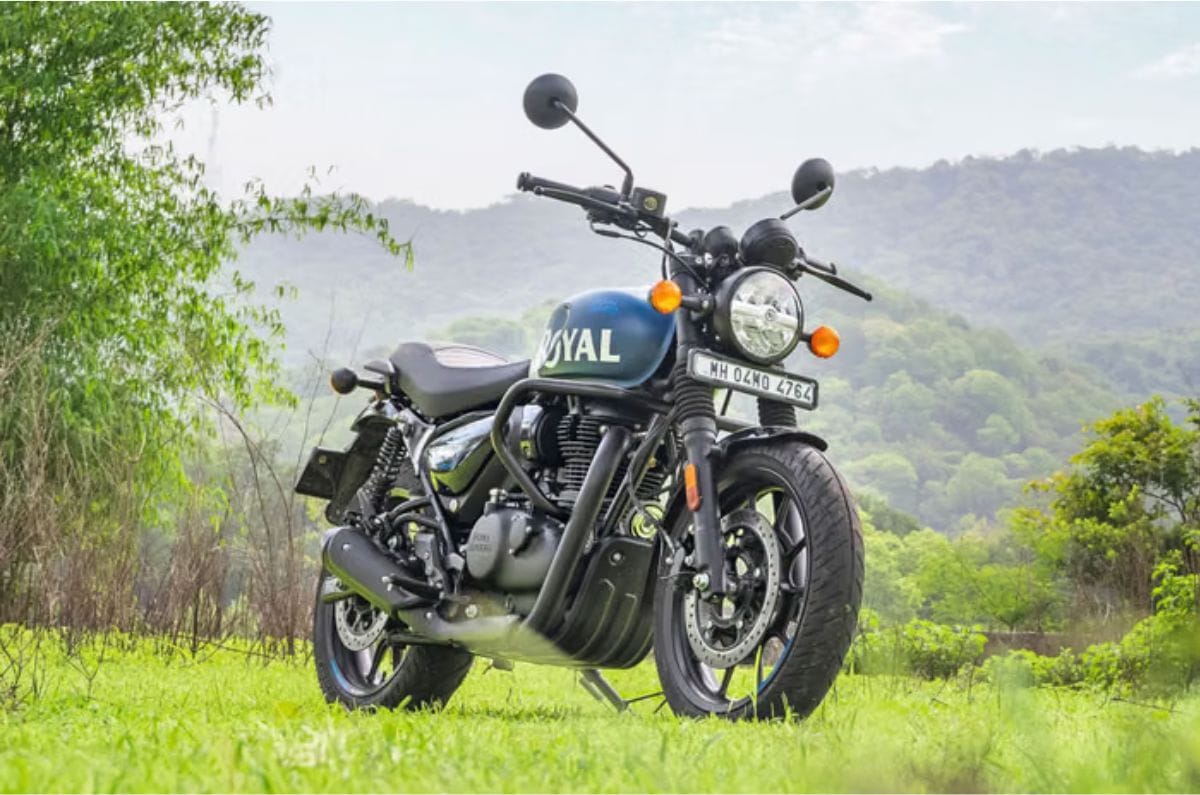
In an era where motorcycles are increasingly becoming extensions of personal style and urban identity, the Royal Enfield Hunter 350 has carved a distinctive niche. Launched with a clear mandate to appeal to a younger, more dynamic demographic, it stands as the most accessible and, dare we say, the most playfully rebellious model in Royal Enfield's illustrious lineup. But beneath its modern-retro veneer and attractive price tag, what truly lies? Is it merely an entry point, or does it offer a genuinely compelling proposition for seasoned riders and newcomers alike? As professional automotive journalists and ardent enthusiasts, we delve deep into the heart of the Hunter 350, dissecting its every facet to provide you with an exhaustive, no-holds-barred perspective. Prepare to uncover the secrets of this urban charmer, understand its strengths, acknowledge its compromises, and ultimately, decide if it’s the two-wheeled companion you've been searching for.
At the core of the Royal Enfield Hunter 350 lies the venerable J-series engine, a 349cc, single-cylinder, long-stroke motor that has become synonymous with Royal Enfield's modern era of refinement. This very powerplant also propels its siblings, the Classic 350 and Bullet 350, testament to its versatility and robustness. Generating a peak power of 20.2hp at 6,100rpm and a healthy 27Nm of torque at 4,000rpm, the engine is designed not for outright speed, but for accessible, tractable power delivery.
What truly sets the J-series apart from Royal Enfield's older UCE (Unit Construction Engine) units is its remarkable refinement. Vibration levels, a common complaint with previous generations, have been significantly reduced, making for a much smoother and more enjoyable riding experience, especially during prolonged city commutes or relaxed highway cruises. The engine is mated to a slick five-speed gearbox, which feels precise and effortless to operate. A notable inclusion for a bike in this segment is the slipper clutch. This clever bit of engineering reduces wheel hop during aggressive downshifts, enhances overall safety by preventing rear-wheel lock-up, and lightens clutch lever action – a boon in stop-and-go traffic. While 20hp might not sound like much on paper, the torque-rich delivery means the Hunter 350 pulls cleanly from low RPMs, making it incredibly forgiving and easy to ride for beginners, yet satisfying for experienced riders navigating urban landscapes. Its relaxed demeanor encourages a less frantic pace, allowing riders to soak in the journey, much in line with Royal Enfield's 'pure motorcycling' philosophy.
The Royal Enfield Hunter 350 is meticulously designed to be approachable and nimble, key attributes for its intended urban battlefield. Its fuel tank capacity of 13 litres strikes a fine balance between adequate range and a compact profile, contributing to the bike’s overall agility. More significantly, its kerb weight of 181kg makes it the lightest Royal Enfield 350cc offering. This weight reduction, coupled with a shorter wheelbase and steeper rake angle compared to its siblings, translates directly into a motorcycle that feels remarkably flickable and easy to maneuver through dense traffic. For reference, the Classic 350 tips the scales at 195kg, making the Hunter 350’s 14kg reduction truly impactful.
Accessibility is a cornerstone of the Hunter 350's appeal, especially for new riders or those with a shorter stature. The seat height stands at an accessible 790mm, allowing most riders to comfortably flat-foot the bike at a standstill, instilling confidence. This, combined with a relatively compact rider triangle, makes it an excellent choice for daily commuting.
The chassis, shared with the J-series platform, is a double-downtube frame, known for its stability. Suspension duties are handled by conventional telescopic forks at the front and twin shock absorbers at the rear. While generally well-tuned for urban conditions, offering a plush ride over most undulations, some riders might find the rear suspension a tad soft when tackling larger potholes or with a pillion. Braking is managed by disc brakes at both ends, complemented by dual-channel ABS (Anti-lock Braking System). This is a critical safety feature, preventing wheel lock-up under hard braking and significantly enhancing rider confidence, especially on slippery surfaces. The availability of both spoked wheels with tubed tyres (on the base variant) and alloy wheels with tubeless tyres (on higher variants) offers choice, with tubeless tyres providing added convenience against punctures.
The Hunter 350, true to its 'retro roadster' tag, embraces simplicity while incorporating essential modern conveniences. It features a semi-digital instrument cluster, which provides vital information like speedometer, odometer, trip meters, and fuel level. However, a glaring omission for enthusiasts is the lack of a tachometer, which can be a minor inconvenience for those who prefer to keep a keen eye on engine RPMs. On higher-end variants, Royal Enfield offers its intuitive Tripper navigation pod as an accessory or integrated feature. This Bluetooth-enabled unit offers turn-by-turn directions, proving incredibly useful for navigating unfamiliar cityscapes without constantly consulting a smartphone. The aforementioned dual-channel ABS and slipper clutch further bolster its feature list, prioritizing safety and rideability.
However, for all its charm, the Hunter 350 does miss out on a few contemporary features that are slowly becoming standard in the segment. Rider aids like traction control are absent, which while not strictly necessary for a 20hp bike, could offer an extra layer of reassurance on tricky surfaces. Full LED lighting, a USB charging port, or even a gear position indicator are other elements that would have enhanced its modern appeal and daily usability. This deliberate omission reflects Royal Enfield's strategy to keep the Hunter 350's pricing aggressive and its character unpretentious, but it’s a point worth considering for buyers accustomed to more tech-laden offerings.
The Hunter 350 is offered in an exciting palette of seven distinct colour schemes, catering to diverse tastes and allowing for personalization. These include Graphite Grey, Tokyo Black, London Red, Rebel Blue, Dapper Grey, Rio White, and Factory Black. The colour choice often dictates the variant, with the base Factory Black variant distinguished by its spoked wheels and tubed tyres, while the Dapper and Rebel series feature stylish alloy wheels with tubeless tyres, offering a more contemporary look and practical advantage.
Speaking of variants, the Hunter 350’s price point is one of its most compelling attributes. Depending on the colour and variant chosen, it is priced between Rs 1,37,640 and Rs 1,66,883 (ex-showroom Delhi). This aggressive pricing positions the Hunter 350 as a highly competitive option, directly challenging rivals like the TVS Ronin, Honda CB350RS, and the Yezdi Roadster. Its affordability makes it an attractive entry point for first-time premium motorcycle buyers or those looking for a stylish, reliable, and characterful second bike.
To give you a balanced perspective, here’s a quick rundown of the Hunter 350’s key advantages and disadvantages:
The Hunter 350 primarily targets the urban commuter who desires a stylish, easy-to-manage motorcycle for daily rides. Its light weight, accessible seat height, and nimble handling make it a fantastic choice for first-time motorcycle buyers stepping into the premium segment. It's also an excellent option for experienced riders looking for a fun, retro-styled second bike for city jaunts or weekend cafe runs. Riders who appreciate Royal Enfield's heritage but prefer a more modern, spirited ride than the Classic or Bullet will find the Hunter 350 particularly appealing. It’s a bike that doesn't intimidate, but rather invites you to ride, making every journey an enjoyable experience.
For more detailed specifications and to compare the models, you can visit the official Royal Enfield Hunter 350 page. Also, for insights into its competitors, check out the TVS Ronin or the Honda CB350RS.
The Royal Enfield Hunter 350 is more than just another addition to the company's lineup; it’s a strategic pivot, a bold statement aimed at capturing a new generation of riders while still upholding the brand's core values. It successfully blends Royal Enfield’s iconic heritage with a modern, dynamic persona, offering an irresistible package of affordability, approachability, and engaging performance. While it might not boast the most cutting-edge features or blistering performance, its strengths lie in its delightful rideability, refined engine, and undeniable style. For those seeking a characterful, easy-to-live-with motorcycle that exudes charm and confidently navigates the urban sprawl, the Hunter 350 emerges as a compelling contender. It stands as a testament to Royal Enfield's evolving vision, proving that sometimes, the simplest recipe, executed with finesse, can indeed be the most potent. The Hunter 350 isn't just a motorcycle; it's an invitation to rediscover the joy of pure motorcycling, one urban adventure at a time.
The Urban Rebel: Dissecting the Royal Enfield Hunter 350 – Your Ultimate Buying Guide
Powering the Urban Beat: Engine, Performance, and the J-Series Legacy
Ergonomics, Dynamics, and Road Presence: Beyond the Numbers
Features, Variants, and the Value Proposition: A Closer Look
Royal Enfield Hunter 350: Pros and Cons
The Royal Enfield Hunter 350: Who is it For?
Conclusion: The Hunter 350's Roaring Success in the Urban Jungle