
The automotive world is abuzz, gears are grinding, and keyboards are clattering as the highly anticipated 2026 World Car Awards journey hurtles towards its grand finale. With the prestigious ceremony slated for April 1st, 2026, at the iconic New York International Auto Show, the global panel of automotive journalists has meticulously, some might say controversially, narrowed down the field to the top three contenders for the coveted World Car of the Year title. As the names drop – the BMW iX3, Hyundai Palisade, and Nissan Leaf – the industry finds itself dissecting not just the merits of these vehicles, but also the evolving criteria and perhaps even the future trajectory of automotive excellence as perceived by a global jury. Is this a forward-thinking selection, a nod to legacy, or a surprising misstep in an era of rapid transformation? Let's delve deeper. The selection process for the World Car Awards is undeniably rigorous, involving a distinguished panel of automotive journalists from 33 countries. Among these respected voices is Autocar India’s own Hormazd Sorabjee, whose expertise contributes to the collective judgment. This global representation aims to ensure a broad perspective, reflecting diverse market demands, regional preferences, and technological adoption rates. However, with any such influential panel, the final choices inevitably invite scrutiny and spark vigorous debate, especially when the nominees span such a wide spectrum of automotive philosophy and market positioning. The critical question often asked is: do these finalists truly represent the pinnacle of innovation, design, and market relevance for the coming year, or are they a reflection of more conservative, perhaps even commercially driven, consensus? Let’s peel back the layers on each of the three finalists and examine why they might have secured their coveted spots, while also considering the counter-arguments and the potential for public contention. The BMW iX3 enters the arena as a strong representative of the premium electric SUV segment. Leveraging the established and highly successful X3 platform, the iX3 offers BMW's signature driving dynamics, refined interior, and strong brand cachet, all wrapped in an electric powertrain. Its appeal lies in its familiarity and pragmatic approach to electrification, providing a sophisticated transition for traditional BMW owners into the EV world without radically altering their driving experience. It’s a compelling package that combines luxury, practicality, and zero-emissions mobility. The Hyundai Palisade stands as a testament to the Korean automaker's meteoric rise in the global market. This large, three-row SUV delivers exceptional value, a spacious and well-appointed cabin, and a comprehensive suite of safety and technology features. It caters directly to the burgeoning global demand for family-oriented vehicles that offer comfort, utility, and a commanding presence. Its inclusion reflects the continued dominance of the SUV segment and the recognition of brands that successfully democratize premium features and designs. Perhaps the most surprising entry on the list for many, the Nissan Leaf is a true pioneer in the electric vehicle revolution. As one of the first mass-market EVs, it paved the way for countless others. Its nomination in 2026, however, begs the question: is this a nod to its historical significance, or a genuine assessment of its current competitiveness against a rapidly evolving field of electric vehicles? While the Leaf offers accessible electric mobility and a proven track record, its technology, range, and charging capabilities have arguably been surpassed by a new generation of EVs from competitors, and indeed, from Nissan's own stable. While the World Car of the Year title garners the most headlines, the World Car Awards program encompasses a total of six distinct categories, each celebrating excellence in specific automotive niches. These categories ensure that a broader spectrum of vehicles, from high-performance machines to urban commuters, receives recognition. Each of these categories also features its own set of three finalists, underscoring the depth and breadth of the automotive industry's innovation and design prowess. The existence of these specialized awards implicitly acknowledges that a single \"Car of the Year\" might struggle to represent the entirety of automotive excellence in a fragmented and rapidly evolving market. A vehicle that excels in urban environments might not necessarily be a performance king, just as a luxury cruiser might not be the most practical EV. This holistic approach ensures that innovation across all segments is duly noted and celebrated. The selection of the BMW iX3, Hyundai Palisade, and Nissan Leaf as the top three finalists for the 2026 World Car of the Year has, predictably, sparked considerable discussion and a fair share of skepticism within enthusiast circles and even professional automotive media. While the jury's decision is final and based on their collective expert opinion, it’s imperative to analyze what this trio signifies about the state of the industry and the criteria by which excellence is being judged. The most glaring aspect for many is the inclusion of the Nissan Leaf. While its historical significance as an EV pioneer is undeniable, its current iteration, while improved, often struggles to compete against the onslaught of newer, longer-range, faster-charging, and more aesthetically modern electric vehicles. Does its presence suggest a compensatory award for legacy, or is there a genuine, if less obvious, argument for its continued relevance in the global market, perhaps in developing regions where accessibility and proven technology outweigh cutting-edge advancements? Conversely, the BMW iX3 is a solid, premium electric SUV, but it's built on an adapted ICE platform rather than a dedicated EV architecture, which can sometimes limit efficiency and packaging innovations seen in competitors. While a testament to BMW's engineering prowess in adapting existing structures, some might argue that true innovation for 2026 should lean towards purpose-built EVs that fully embrace the opportunities of electric powertrains. The Hyundai Palisade, while an excellent and highly competitive SUV, is fundamentally a combustion-engine vehicle in an era increasingly defined by electrification. Its nomination reinforces the ongoing strength of traditional segments but might be seen by some as a less forward-looking choice for an award aiming to crown the \"best\" of the year. This mixed bag of finalists leads to a crucial question: What does the jury prioritize? Is it raw innovation, market impact, consumer relevance, historical significance, or a blend that perhaps leans too heavily on diverse representation rather than singular, undeniable excellence? The absence of some truly groundbreaking new EVs, or perhaps vehicles pushing the boundaries of autonomous technology or sustainable manufacturing, will undoubtedly fuel discussions about whether the World Car Awards truly reflects the bleeding edge of automotive development or a more generalized, perhaps even conservative, interpretation of what constitutes a \"world car.\" Let's summarize the overall sentiment surrounding this year's top three: As the automotive world counts down the days to April 1, 2026, the anticipation for the final announcement at the New York International Auto Show will only intensify. The World Car Awards ceremony is more than just a presentation of trophies; it's a global platform that influences consumer perception, validates manufacturer efforts, and sparks conversations about the future of mobility. Whether the eventual winner is the pragmatic BMW iX3, the family-focused Hyundai Palisade, or the legacy-driven Nissan Leaf, the choice will undoubtedly send a clear message about what constitutes automotive excellence in the mid-2020s. The debate will continue, the arguments will be refined, but one thing is certain: all eyes will be on New York. The journey to crown the World Car of the Year is always a fascinating one, reflecting the complexities and rapid evolution of the industry. These finalists represent a snapshot of that dynamic landscape, offering a blend of proven quality, market relevance, and varying degrees of innovation. While some may criticize the choices, there’s no denying the robust discussion they provoke, which is, in itself, a testament to the passion and critical thinking that defines the automotive community. So, mark your calendars, because April 1st isn't just April Fool's Day; it's the day the world discovers its next automotive champion.2026 World Car Awards Finalists Unveiled: A Contender Line-Up That Raises Eyebrows and Ignites Debate
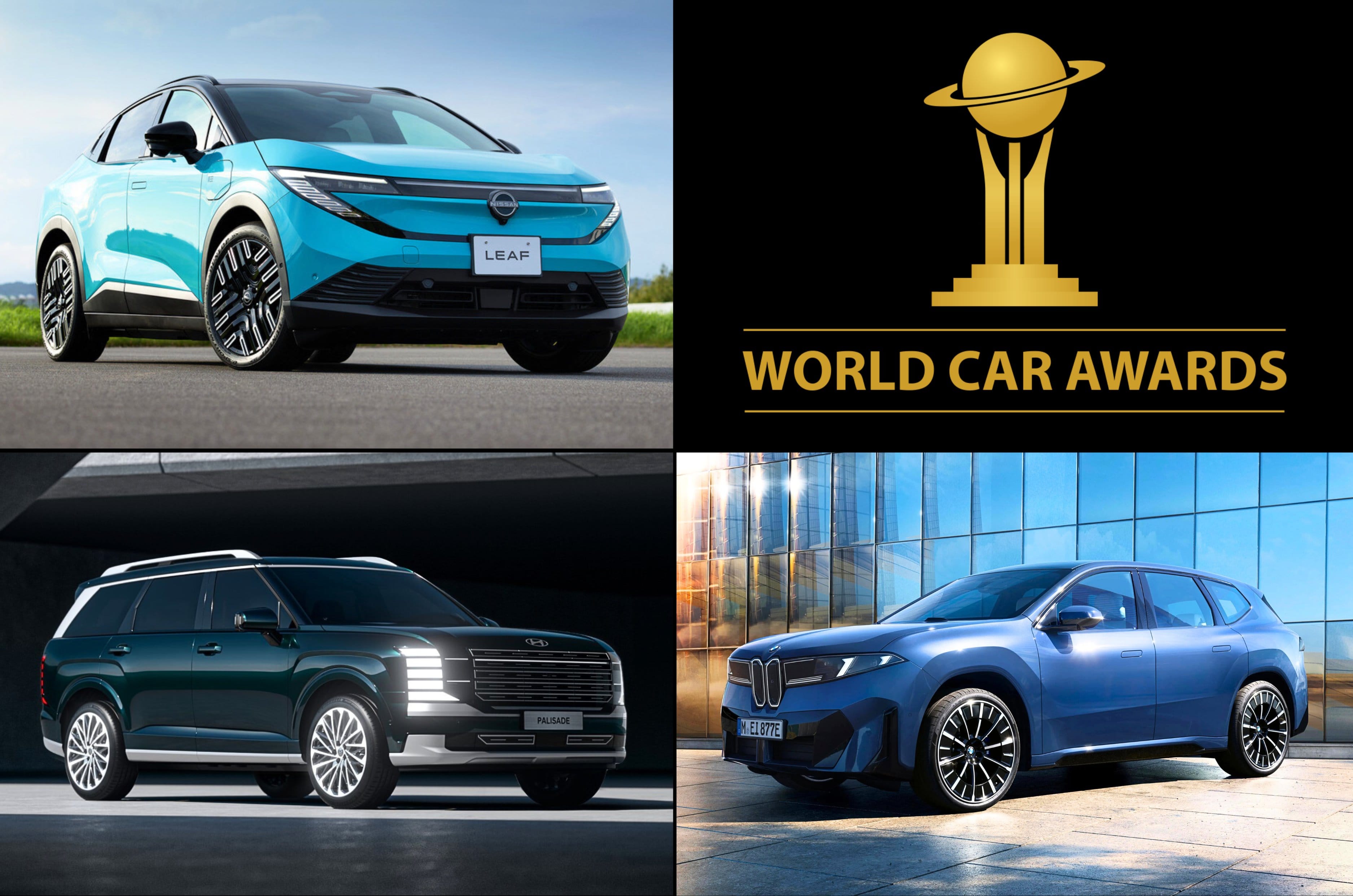
The Contenders Under the Microscope: A Mixed Bag of Legacy, Luxury, and Utility
BMW iX3: The Premium Electric SUV Contender
Hyundai Palisade: The Family-Friendly Global Player
Nissan Leaf: The Enduring Electric Pioneer
Beyond the Main Title: A Glimpse at the Wider World Car Awards Categories
The Jury’s Verdict: Are We Seeing the Future, or Echoes of the Past? (A Critical View)
Pros and Cons of the 2026 WCOTY Finalists Selection
Pros of the Selection:
Cons of the Selection:
What Happens Next? The Road to New York