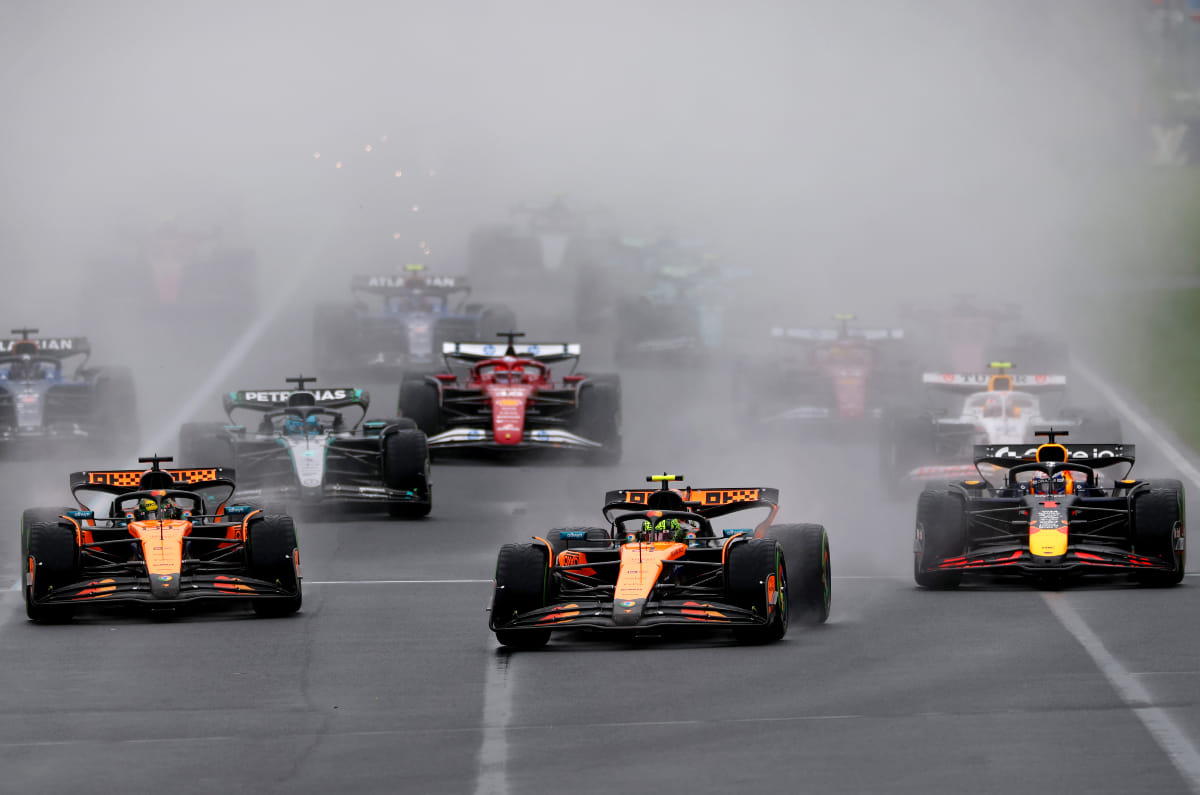
2026 F1 & F2 Australian GP: A New Era Dawns – Are These Radical Regulations a Masterstroke or a Misfire?
The roar of engines, the scent of burning rubber, the unparalleled spectacle of Formula 1 – it’s a symphony that stirs the soul of motorsport enthusiasts worldwide. But for 2026, the season opener at the iconic Albert Park Circuit in Melbourne, Australia, is poised to be more than just another Grand Prix. It's the grand unveiling of a radically reimagined sport, a quantum leap into a new era of Formula 1 and its feeder series, Formula 2. With sweeping regulation changes promising to redefine everything from car design to race strategy, fans are on tenterhooks. Are these groundbreaking shifts a stroke of genius destined to usher in an age of electrifying competition, or a misguided experiment that risks diluting the very essence of racing? The controversy and anticipation are palpable, making this weekend, March 6-8, a must-watch event for anyone invested in the future of motorsport.
The Dawn of a New Formula 1: Unpacking the Revolutionary 2026 Regulations
The 2026 Formula 1 season marks a seismic shift in the sport’s technical landscape. These are not mere tweaks; they are foundational changes designed to level the playing field, enhance sustainability, and potentially redefine the racing spectacle. The heart of this revolution lies in the new power units, which move to an almost even 50:50 split between internal combustion and electrical power. This radical redistribution of energy will demand an unprecedented level of strategic management from drivers, turning every lap into a calculated balance of recovery and deployment.
Adding to the technical intricacy is the introduction of active aerodynamics. Unlike previous static designs, the front and rear wings will now be dynamic, changing their angle on the fly based on the car's position on track. This promises greater efficiency on straights for higher top speeds and increased downforce in corners for better grip. However, the complexity inherent in managing these variables, combined with the new Overtake Mode (replacing the much-debated DRS with a targeted electrical power boost), raises questions about the pure driving challenge. Will drivers be battling rivals or primarily battling their car's intricate systems?
The grid itself is undergoing a transformation. The sport welcomes new blood with the ambitious entry of Cadillac as the 11th team, signaling a renewed interest from major automotive manufacturers. Alongside this, Audi has completed its takeover of the Sauber team, injecting fresh capital and engineering prowess into the sport. These new entrants are seen by many as a vital shot in the arm for F1’s global appeal and competitiveness. On the driver front, the spotlight falls on Arvid Linblad, the sole rookie joining Racing Bulls, bringing fresh talent into the high-octane world of Formula 1.
While these changes promise innovation and a more sustainable future for the pinnacle of motorsport, there's a palpable fear among purists and even some within the paddock. Critics openly question whether the increased complexity might dilute the raw racing spectacle, transforming it into an engineering lottery rather than a true driver's contest. Will the \"active aero\" genuinely enhance wheel-to-wheel battles, or will it create an unpredictable, perhaps even dangerous, dynamic where cars become overly sensitive to turbulent air? The debate rages fiercely, and the Australian Grand Prix will provide the first real answers, setting the tone for what could be the most controversial or most captivating era in F1 history.
Mastering the Melbourne Challenge: 2026 F1 Australian GP Schedule & Key Rule Changes in Detail
The Albert Park Circuit, with its blend of high-speed sections and challenging chicanes, serves as the ultimate proving ground for these revolutionary machines. This year, the focus isn't just on driver skill but on how teams and drivers adapt to the profound technical overhaul.
The New Power Unit Paradigm: Hybrid Harmony or Headache?
The core of the 2026 revolution lies beneath the engine cover. The new power units feature an almost even 50:50 split between internal combustion and electrical power. This isn't just an upgrade; it’s a fundamental redefinition. Crucially, the MGU-H (Motor Generator Unit – Heat), a complex and costly component often criticized for its obscurity and difficulty for new manufacturers to master, is gone. Its absence, however, reintroduces a classic challenge: turbo lag. To mitigate this, the FIA has implemented a crucial five-second pre-start warning, allowing drivers to spool up their turbos before the starting lights go out. This seemingly minor tweak could lead to more dramatic, skill-dependent race starts, where precision timing replaces electronic perfection.
The increased reliance on battery power means energy management becomes paramount. Drivers will be constantly juggling energy recovery during braking and deployment during acceleration, turning every lap into a strategic chessboard. This could open avenues for cunning tactics and close racing, but it also carries the risk of frustratingly conservative stints where drivers ‘lift and coast’ excessively to conserve precious electrical energy, potentially slowing the overall pace and spectacle.
The \"Overtake Mode\" & Active Aerodynamics: Artificial Aid or True Innovation?
Gone is the controversial Drag Reduction System (DRS), which many felt made overtakes too easy and artificial. In its place, F1 introduces a new \"Overtake Mode,\" offering a burst of extra electrical power. The catch? A driver must be within one second of the car ahead at a designated detection point. This aims to provide a more dynamic and less predictable overtaking tool. However, skeptics worry it might simply replace one artificial aid with another, failing to address the fundamental issues of car design that hinder organic, high-skill overtaking.
Adding another layer of complexity is active aerodynamics. Both the front and rear wings will now be adjustable on the fly, changing their angle depending on the car's position on track. This promises greater efficiency on straights and increased downforce in corners, theoretically leading to faster lap times and closer racing. However, it also means drivers will be managing more variables than ever before. Will this technology truly improve the racing spectacle by enabling closer battles, or will it lead to more virtual engineering battles on the telemetry screens than actual wheel-to-wheel action on the track?
The Australian GP: The Ultimate Litmus Test
Albert Park, a semi-street circuit known for its challenging high-speed sections and tight corners, will be the proving ground for these radical changes. The weather forecast, predicting dry conditions, suggests a true test of pace and strategy, free from the variables of last year's rain-soaked event. This race isn't just about winning points; it's about teams understanding their new machinery and establishing a pecking order that many predict will be drastically different from previous seasons. The outcome here will provide the first concrete clues as to whether the ambitious vision of the 2026 regulations will translate into compelling motorsport.
Where to Tune In & Schedule for Indian Fans (IST):
For Indian motorsport enthusiasts eager to catch every moment of this groundbreaking weekend, live streaming will be available on FanCode and the official F1 TV app. Make sure you set your alarms – the action starts early!
2026 F1 Australian GP timings IST
Date
Day
Session
Time
March 6
Friday
FP1
7am
March 6
Friday
FP2
10:30am
March 7
Saturday
FP3
7am
March 7
Saturday
Qualifying
10:30am
March 8
Sunday
Race
9:30am
The Future Stars Ascend: 2026 F2 Australian GP and India's Own Kush Maini
While all eyes may be on the radical changes in Formula 1, the tenth season of the F2 championship kicks off concurrently, offering its own brand of fierce competition and serving as the crucial proving ground for the next generation of F1 superstars. The Australian GP is not just a curtain-raiser for F1; it’s where future legends begin their ascent.
Among the hungry young talents battling for glory, India’s own Kush Maini embarks on his fourth season in F2, making a significant move to the prestigious ART Grand Prix team. This is a pivotal year for Maini, who also continues his vital role as the Alpine F1 team’s reserve and test driver, as well as Mahindra Racing’s Formula E reserve driver. His diverse portfolio speaks volumes of his talent and dedication, and Indian fans will undoubtedly be cheering him on as he vies for championship contention. The F2 grid is notoriously competitive, and Maini's experience combined with ART's winning pedigree makes for an exciting prospect.
However, the world of F2, while thrilling, is not without its shadows. Questions always linger about the true financial barriers to entry, with many exceptionally talented drivers struggling to secure coveted seats despite their on-track prowess. Is the \"talent pool\" truly meritocratic, or is it increasingly influenced by the depth of a driver's sponsorship wallet? This perennial challenge highlights the often-brutal financial realities underpinning motorsport's path to the top, making every success story like Maini’s a testament to immense dedication and critical backing.
F2 Australian GP: Where to Watch & Schedule for Indian Fans (IST):
Just like its elder sibling series, all F2 Australian GP sessions will be streamed live for Indian audiences on FanCode and the F1 TV app. Don't miss the chance to witness the stars of tomorrow battling it out today.
2026 F2 Australian GP timings IST
Date
Day
Session
Time
March 6
Friday
Practice
4:30am
March 6
Friday
Qualifying
9:25am
March 7
Saturday
Sprint Race
8:40am
March 8
Sunday
Feature Race
5:55am
The High-Stakes Game of 2026 F1 Regulations: Pros & Cons
The radical nature of the 2026 regulations invites a balanced perspective. While promising a bold new future, they also carry inherent risks. Here’s a closer look at the potential advantages and disadvantages.
Pros:
**Increased Manufacturer Appeal:** With a simplified power unit structure (removing the MGU-H) and a greater emphasis on electrical power, manufacturers like Audi and potentially Cadillac find the series more accessible and relevant to their road car development goals. This ensures the sport's long-term commercial viability and fosters healthy competition among automotive giants.
**Sustainability Focus:** The mandated shift towards more sustainable fuel blends and the significant increase in electric power align F1 with global environmental objectives. This appeals to a broader, more conscious audience and solidifies its image as a pioneer in automotive technology, driving innovation that could trickle down to everyday vehicles.
**Strategic Depth:** The new energy recovery and deployment balance, combined with the Overtake Mode, promises to add intricate layers of strategic complexity. This could reward clever thinking and dynamic decision-making from both drivers and strategists, potentially leading to less predictable races and more varied outcomes on tracks previously dominated by single strategies.
**Active Aerodynamics Potential:** Theoretically, active aero could allow for closer racing by actively reducing drag on straights for easier overtaking, while simultaneously maintaining crucial downforce in corners. This adaptive technology could create a more level playing field across diverse circuit layouts, fostering more dynamic and engaging battles.
Cons:
**Risk of 'Engineering Race':** The sheer complexity of new hybrid systems, active aerodynamics, and intricate energy management could lead to a frantic 'engineering arms race.' Despite cost caps, this might inadvertently widen the performance gap between well-funded factory teams and smaller privateer outfits, undermining the goal of closer competition.
**Dilution of Driving Purity:** Some purists argue that the increasing reliance on electrical boost and active aero, rather than pure mechanical grip, raw horsepower, and unadulterated driver skill, detracts from the essence of Formula 1. The constant monitoring and management of energy and aero settings might shift focus from battling rivals to battling the car's complex systems, making drivers feel more like pilots of highly sophisticated computers.
**Unpredictable Race Dynamics:** While the Overtake Mode is designed to aid racing, its effectiveness is yet unproven. There's a concern it might be either too powerful, leading to artificial and unearned overtakes, or too restrictive, failing to deliver genuinely dynamic action. Similarly, active aero might introduce unforeseen instability, making cars overly sensitive to turbulence and prone to unpredictable behavior, especially in close-quarters racing.
**Steep Learning Curve for Teams & Fans:** The radical nature of the changes will impose a steep learning curve on teams, potentially leading to reliability issues and unexpected performance swings in the initial races. For fans, understanding the new rules and how they impact race strategy might initially be confusing, risking a dip in engagement if the action isn't immediately compelling or easily comprehensible.
Conclusion: The Grand Experiment Begins
The 2026 Formula 1 and F2 Australian Grand Prix is more than just a season opener; it's a grand experiment unfolding on the world stage. With radical new regulations impacting everything from engine architecture to aerodynamic philosophy, and exciting new teams entering the fray, the weekend at Albert Park promises unparalleled intrigue. The shift towards greater electrical power and active aerodynamics represents a bold step into the future, aiming for sustainability and technological relevance, while also attempting to rejuvenate the on-track spectacle.
However, the daring nature of these changes leaves lingering questions. Will the intricate dance of energy management and active aero truly lead to more thrilling, unpredictable races, or will it create an overly complex environment that frustrates drivers and bewilders fans? Will the new entrants like Cadillac and Audi shake up the established hierarchy, or will the familiar titans of the sport quickly adapt and reassert their dominance? The stakes are incredibly high, both for the teams and for the sport's identity.
As the lights go out in Melbourne, every single lap will be scrutinized, every overtake celebrated, and every strategic decision dissected. Only time, and the fierce competition on track, will tell if Formula 1 has truly found its next gear, propelling itself into a brilliant new era, or if it has driven itself into a controversial corner. One thing is certain: the 2026 Australian Grand Prix will be unforgettable, irrespective of the outcome, defining the narrative for years to come. Buckle up; the future of motorsport is here, and it’s going to be a wild ride.