Toyota's Bidkin Bonanza: A Game-Changing Plant for India's Automotive Future and Global Ambitions
The gears of progress in the Indian automotive industry are grinding forward with renewed vigor, driven by strategic investments from global titans. In a significant announcement that reverberated across the automotive landscape, Toyota Kirloskar Motor (TKM), a name synonymous with reliability and quality, has unveiled ambitious plans for a brand-new manufacturing facility. This isn't just another plant; it represents a profound commitment to the Indian market, a bold step towards expanding Toyota's production footprint, and a clear signal of the brand's long-term vision for India as a pivotal global manufacturing hub. What does this monumental investment mean for consumers, the economy, and the future trajectory of India's automotive sector? Let's delve into the details.
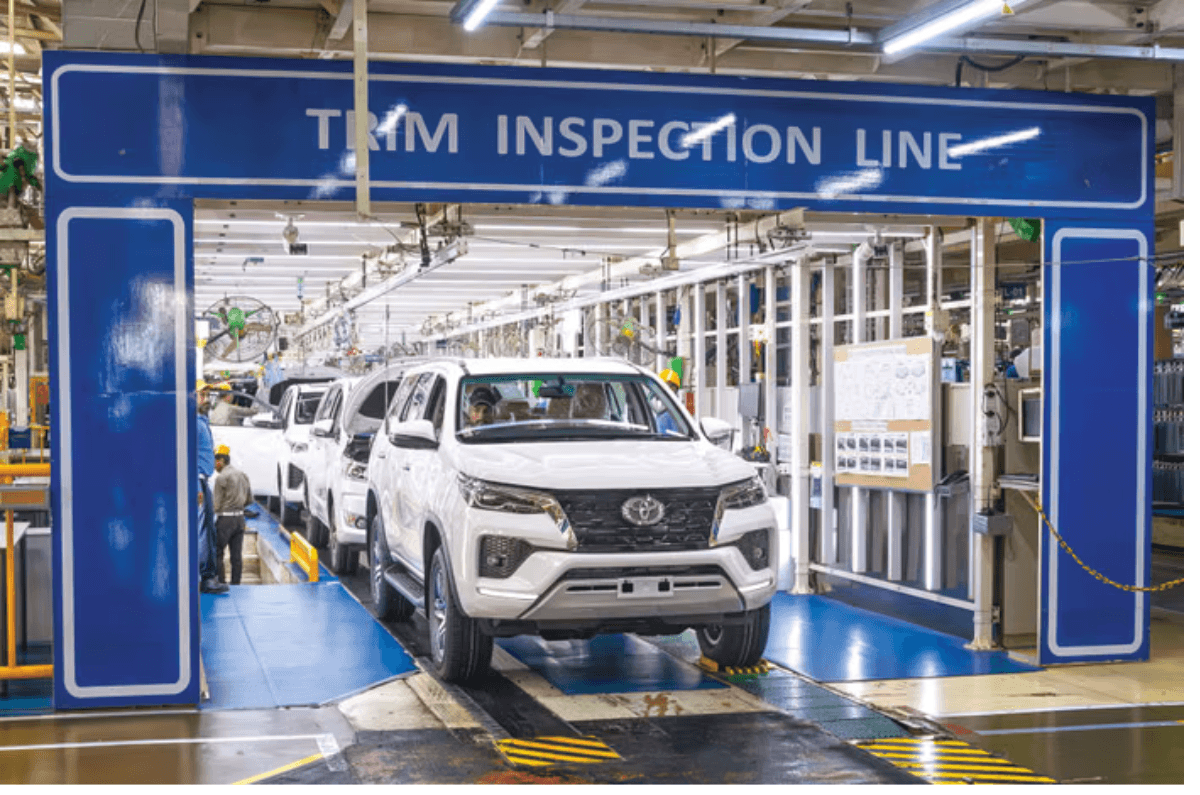
(Above image: A depiction of a Toyota vehicle assembly line, highlighting the precision and scale involved in modern automotive manufacturing. This imagery resonates with the future operations at the upcoming Bidkin facility.)
The announcement from Toyota Kirloskar Motor today marks a pivotal moment, not just for the automaker, but for the entire Indian industrial ecosystem. The chosen location, the Bidkin Industrial Area in Maharashtra, positions Toyota strategically within one of India's most economically vibrant and industrially progressive states. Set to commence production in the first half of 2029, this facility is slated to initially boast an impressive annual capacity of 1 lakh (100,000) vehicles. While the specific model remains cloaked in mystery, Toyota has confirmed that the maiden vehicle to roll off the Bidkin assembly line will be a new SUV – a segment that continues to dominate the Indian market's purchasing preferences. This move is not merely about meeting domestic demand; the plant is also designed to cater to nearby regions, cementing India's role in Toyota's broader global supply chain and export strategy.
A New Dawn for Toyota Kirloskar Motor: The Bidkin Investment Unpacked
Toyota's decision to establish a third manufacturing plant in India, following its two existing facilities in Bidadi, Karnataka, underscores the burgeoning importance of the Indian market. The Bidkin Industrial Area, strategically located in Maharashtra, is poised to become a hotbed of industrial activity, benefiting from the state's robust infrastructure, skilled workforce potential, and proactive government policies aimed at fostering manufacturing growth. Maharashtra already hosts a significant cluster of automotive industries, making it an ideal location for an OEM looking to leverage existing supply chains and logistics networks.
The initial annual capacity of 1 lakh vehicles is a substantial figure, indicating Toyota's confidence in sustained market growth. This expansion aligns perfectly with the Indian government's \"Make in India\" initiative, encouraging local manufacturing, job creation, and technological transfer. For Toyota, it means greater localization, potentially reducing production costs, mitigating currency fluctuations, and shortening supply chain lead times. The promise of a \"new SUV\" as the first model is particularly exciting. The SUV segment in India has witnessed an unprecedented surge in popularity, driven by factors like aspirational value, higher ground clearance for diverse road conditions, and increasing disposable incomes. Toyota, with its strong reputation for SUVs like the Fortuner and Innova Crysta (though not strictly an SUV, it shares a similar robust appeal), is well-positioned to capitalize on this trend. A new SUV, likely tailored specifically for Indian tastes and road conditions, could be a significant volume driver.
Strategic Imperatives: Why Bidkin, Why Now?
The timing and location of Toyota's new plant are far from arbitrary; they are the result of meticulous strategic planning aimed at addressing several key imperatives:
- Market Growth & Demand: India is projected to become the world's third-largest automotive market, and its trajectory continues to impress despite global headwinds. Demand for personal mobility, particularly in the SUV segment, remains robust. Toyota's existing plants are operating at high utilization, and this new facility provides the necessary capacity to meet future demand surges and reduce waiting periods for popular models.
- Supply Chain Optimization & Localization: Local manufacturing reduces reliance on imported components, protecting against geopolitical risks and supply chain disruptions. It also fosters the development of a local vendor ecosystem, further strengthening the \"Make in India\" ethos. This localization also presents opportunities for cost efficiencies that can be passed on to consumers or reinvested into product development.
- Export Potential: By stating the plant will \"cater to nearby regions,\" Toyota is explicitly signaling its intent to leverage India as an export base. This could include markets in Southeast Asia, Africa, and the Middle East, where Indian-made vehicles, particularly SUVs, often find strong resonance due to their durability and cost-effectiveness. This strategy transforms India from merely a consumer market into a vital production and export hub within Toyota's global network.
- Technological Advancement & Skill Development: Modern automotive plants are highly automated and incorporate advanced manufacturing techniques. The Bidkin facility is expected to bring state-of-the-art technology to Maharashtra, fostering skill development in robotics, advanced manufacturing, and quality control among the local workforce. This contributes significantly to human capital development in the region.
- Government Support & Infrastructure: Maharashtra has actively courted industrial investments, offering various incentives and developing world-class industrial parks like Bidkin. The availability of land, access to ports, and a burgeoning talent pool make it an attractive proposition for large-scale manufacturing projects.
This multifaceted approach ensures that the Bidkin plant is not just an isolated investment but a strategic cornerstone for Toyota's future growth in India and its expanding role in the global automotive landscape.
The Road Ahead: Potential Impact and Future Outlook
The ramifications of Toyota's Bidkin investment will be far-reaching, touching various facets of the Indian economy and automotive sector.
- Economic Impact: The most immediate impact will be significant job creation – direct employment at the plant and indirect jobs across the supply chain, logistics, and service sectors. This influx of economic activity will spur infrastructure development around Bidkin, from housing to commercial establishments, significantly boosting regional growth.
- Competitive Landscape: Increased production capacity and potentially more India-specific models will intensify competition within the already crowded Indian automotive market. This could lead to more aggressive pricing, richer feature sets, and faster product cycles from all manufacturers, ultimately benefiting the consumer. Toyota's stronger presence, particularly in the SUV segment, will put pressure on rivals like Maruti Suzuki, Hyundai, and Mahindra.
- Product Strategy Evolution: While the first model is confirmed as an SUV, this new plant opens doors for a broader product portfolio. We could see more locally developed products, potentially including hybrid and electric vehicles, reflecting Toyota's global commitment to sustainability and India's growing focus on green mobility. The expanded capacity also allows TKM to experiment with niche segments or higher volume models without overstretching existing facilities.
- Community and Social Impact: Beyond economics, the plant will likely lead to improved social infrastructure in the Bidkin area, including better educational facilities and healthcare, as companies often invest in community development around their large-scale operations.
Pros & Cons of Toyota's Bidkin Expansion
While the announcement is overwhelmingly positive, a balanced journalistic perspective requires acknowledging both the advantages and potential challenges or criticisms that come with such a massive undertaking.
Pros:
- Boosted Market Share: The increased production capacity, especially for the high-demand SUV segment, positions Toyota to significantly grow its market share in India, which has historically been a challenging market for the Japanese giant compared to its global dominance.
- Significant Economic Benefits: Massive investment translates into thousands of direct and indirect jobs, substantial revenue generation for the state through taxes, and infrastructure development, particularly in a developing industrial zone like Bidkin.
- Enhanced Local R&D and Customization: Greater local production often leads to more localized R&D efforts, resulting in vehicles better suited to Indian driving conditions, consumer preferences, and cost structures.
- Reduced Lead Times & Improved Availability: For popular models, customers often face long waiting periods. This new plant should alleviate such issues, leading to quicker deliveries and higher customer satisfaction.
- Stronger Export Base: Establishing India as a manufacturing hub for nearby regions enhances the nation's reputation as a reliable and competitive automotive exporter, bringing in valuable foreign exchange.
Cons (Potential Challenges & Negative Views):
- Intense Competition: The Indian market is fiercely competitive, with established players and new entrants battling for every percentage point of market share. Despite increased capacity, gaining significant ground will require aggressive marketing, compelling products, and a strong dealer network. The initial investment may not yield immediate, overwhelming returns given the market dynamics.
- Environmental Concerns: Large-scale industrial projects inevitably raise environmental questions. Construction impact, water usage, waste management, and potential carbon footprint will be under scrutiny. While modern plants adhere to strict environmental norms, public perception and ongoing monitoring are crucial.
- Potential for Labor Disputes: Historically, large manufacturing facilities, especially in new industrial areas, can face challenges related to labor relations, wage expectations, and unionization. Managing a large workforce harmoniously will be critical for smooth operations.
- Dependency on Policy Stability: Long-term investments of this magnitude are sensitive to government policy changes regarding taxation, land acquisition, labor laws, and trade agreements. Any instability could impact the project's profitability and feasibility over its operational lifespan.
- Infrastructure Development Lag: While Bidkin is being developed, ensuring seamless connectivity, power supply, and social infrastructure (housing, schools, hospitals for employees) keeps pace with the plant's operational readiness will be a continuous challenge that the government and developers must address effectively.
- High Initial Investment & Long Gestation Period: Setting up a greenfield facility demands substantial capital and a significant lead time (production starts in 2029). The return on investment will be long-term, requiring sustained commitment and weathering market fluctuations over nearly a decade before full benefits are realized.
Conclusion: Toyota's Bold Bet on India's Automotive Future
Toyota Kirloskar Motor's announcement of a new manufacturing facility in Bidkin Industrial Area, Maharashtra, is more than just an expansion; it's a profound declaration of confidence in India's economic potential and its strategic importance in the global automotive landscape. With an initial annual capacity of 1 lakh vehicles, starting with a new SUV in 2029, this plant is poised to bolster Toyota's presence in the fiercely competitive Indian market and solidify its role as a regional export hub. The investment carries with it immense potential for job creation, economic growth, and technological advancement, aligning perfectly with India's \"Make in India\" vision.
While challenges such as intense competition, environmental considerations, and the long gestation period for returns must be acknowledged, Toyota's proven track record of quality, efficiency, and long-term vision positions this project for success. The Bidkin plant is set to be a cornerstone of Toyota's strategy for decades to come, promising not just more vehicles on Indian roads, but a significant acceleration of India's journey towards becoming a global automotive powerhouse. As the first half of 2029 approaches, all eyes will be on Bidkin, anticipating the dawn of a new era for Toyota Kirloskar Motor and a vibrant future for the Indian automotive industry.
