
The roar of internal combustion engines has long defined the thrill of motorcycling, but a new, silent revolution is steadily gaining momentum. As the automotive world accelerates towards an electric future, iconic manufacturers like Honda are diligently carving their niche in the burgeoning EV landscape. While the global unveilings often capture headlines, a recent development concerning Honda’s WN7 electric motorcycle has sparked considerable interest in the Indian two-wheeler sector: the patenting of its design here in India. Is this a precursor to a grand electric debut, or merely a strategic chess move in the intricate game of intellectual property? Let’s delve into the layers of this fascinating development, exploring what the WN7 brings to the table and its potential (or lack thereof) for the vibrant Indian market. The Honda WN7 first made waves as the enigmatic \"Fun concept\" at EICMA 2024, promising a glimpse into Honda's electrified future. A year later, at EICMA 2025, the production-ready specifications of the WN7 were officially revealed, cementing its status as the brand's first full-size electric motorcycle. The nomenclature itself holds an intriguing story: 'W' signifying 'Wind,' a nod to its development theme focusing on aerodynamic efficiency and fluid design; 'N' for its unmistakably 'Naked' motorcycle aesthetics; and '7' to denote its power class, placing it firmly in the mid-to-high performance category of electric two-wheelers. From a technical standpoint, the WN7 boasts impressive credentials. It is powered by a robust 9.3kWh fixed battery pack, a significant capacity that suggests a substantial range, though official figures for typical riding conditions are yet to be fully detailed. For context, many leading electric motorcycles offer ranges upwards of 150-200 km on a single charge with similar battery sizes, positioning the WN7 as a viable option for urban commuting and spirited weekend rides. Honda offers the WN7 with two distinct motor options tailored for different performance expectations: an 11kW variant delivering an output of 11.2kW (approximately 15 hp) and a more potent 18kW version, which unleashes a formidable 50kW (around 67 hp). This power differential is crucial. While the 11kW model caters to riders seeking efficient, city-friendly performance, the 18kW option pushes the boundaries, offering exhilarating acceleration and higher top speeds, akin to a mid-range internal combustion engine motorcycle. Intriguingly, both versions maintain a constant torque output of 100Nm. This high, instantly available torque is a hallmark of electric powertrains, promising swift off-the-line acceleration and a thrilling riding experience that even seasoned riders appreciate. Charging flexibility is another strong suit of the WN7. It supports both the common Type 2 charger, prevalent for AC charging, and the faster CCS2 units, typically found at public DC fast-charging stations for electric cars. This dual compatibility offers convenience, allowing riders to top up at home or quickly on the go. Furthermore, the WN7 comes equipped with four distinct riding modes – Standard, Sport, Rain, and Econ – each meticulously calibrated to adjust traction control levels, power delivery, and regenerative braking, optimizing the ride for varying conditions and rider preferences. The inclusion of these modes not only enhances safety but also allows for a more personalized and engaging riding experience. On the equipment front, the WN7 leaves little to be desired. A crisp 5-inch TFT display serves as the nerve center, offering vital ride information and featuring Honda's RoadSync smartphone pairing system. RoadSync provides seamless connectivity, allowing riders to access navigation, calls, messages, and even specific EV-related menus directly on the display. Full LED lighting ensures excellent visibility and a contemporary aesthetic. A design highlight inherited from the concept is the elegant single-sided swingarm, which not only looks futuristic but also simplifies wheel maintenance. The WN7 is presented in a sophisticated palette of three colors: gloss black with striking copper accents, matte black for a stealthier look, and a refined grey, appealing to diverse tastes. Here’s where the plot thickens for the Indian market. Honda has priced the WN7 at GBP 12,999 in the UK. At current exchange rates, this translates to approximately Rs 16.80 lakh. This figure, while competitive in Western markets, immediately raises eyebrows when considering the Indian two-wheeler landscape. The question then becomes: why patent a product that appears prohibitively expensive for a market known for its price sensitivity? The answer, in most cases, lies in Intellectual Property Rights (IPR). Major global manufacturers frequently patent their designs, technologies, and names across various jurisdictions, including India, even if there are no immediate plans for local launch. This strategic move serves several crucial purposes: This isn't an isolated incident for Honda in India. The Japanese marque has a well-documented history of patenting global products solely for IPR protection, with many unlikely to ever grace Indian showrooms. Previous instances include patents for the NPF125 scooter, the CB190TR neo-retro bike, and the CG160, among a host of other international models. These precedents strongly suggest that the WN7’s patenting is more about safeguarding Honda's innovations rather than signaling an immediate launch in India. India's electric two-wheeler market, while growing at an impressive pace, is largely driven by affordability and practicality. The segment is dominated by electric scooters and commuter-focused motorcycles from brands like Ola Electric, Ather Energy, TVS, and Bajaj, all priced significantly lower than the WN7's likely imported cost. Premium electric motorcycles, despite their allure, remain a niche within a niche, with sales numbers dwarfed by their more accessible counterparts. Furthermore, the charging infrastructure for electric motorcycles, particularly fast-charging options like CCS2, is still nascent in India. While the overall EV charging network is expanding, dedicated two-wheeler fast-charging points are scarce, which could be a deterrent for potential buyers of a premium, long-range electric bike. The preference for swappable battery technology, especially in the scooter segment, also poses a challenge to the WN7's fixed battery approach, even if fixed batteries typically offer higher energy density and better performance. While the immediate launch prospects appear dim, it's essential to analyze the WN7’s attributes through the lens of the Indian market, highlighting its strengths and weaknesses should Honda ever reconsider its strategy for this dynamic country. In essence, while the WN7 represents a compelling vision of Honda’s electric future, its current form and pricing position it as a luxurious dream rather than a practical reality for the Indian masses. The negative view PR angle here isn't about the bike's inherent quality, but its profound disconnect from the economic realities and market dynamics of India. The patenting of the Honda WN7 electric bike in India is a clear testament to the global automotive giant's commitment to protecting its intellectual property and maintaining strategic flexibility. While the WN7 showcases Honda's technological prowess and design philosophy for the electric era, its current specifications and, more importantly, its converted price point, render it largely unsuitable for the mainstream Indian market. The significant cost, coupled with the nascent premium electric motorcycle segment and Honda's generally conservative EV approach in India, suggests that this sleek electric naked is unlikely to see the light of day in Indian showrooms anytime soon. However, the mere existence of such a patent, and the continuous evolution of India's EV ecosystem, leaves a sliver of possibility. Should Honda decide to deeply localize production, scale down specifications, or if government incentives dramatically shift to support premium electric two-wheelers, then perhaps a future iteration of the WN7, or a model derived from its technology, could emerge. For now, the Honda WN7 remains a compelling vision of electric motorcycling, a benchmark for innovation, and a powerful statement of IPR, but predominantly a distant dream for Indian enthusiasts. The road to electrification is long and winding, and Honda, true to form, is navigating it with caution and calculated strategy. Indian riders will have to wait patiently for a more tailored, and critically, more affordable, electric offering from the winged brand. All GBP to INR conversions based on current exchange rates at the time of writing.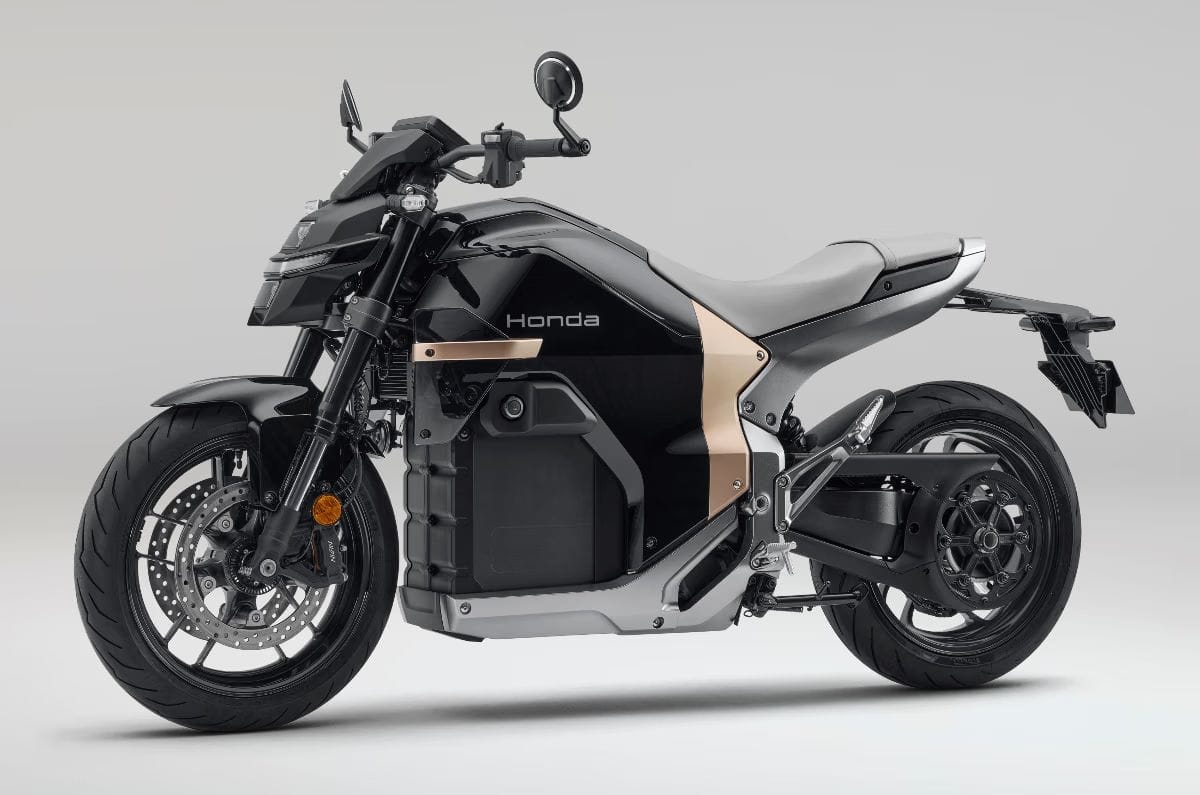
Honda WN7 Electric Motorcycle: A Patenting Puzzle for the Indian Market
Unveiling the WN7: Honda's Electric Naked Ambition
The Indian Conundrum: Patenting vs. Launching
The Reality of India's Electric Two-Wheeler Market
Honda WN7: Pros and Cons for the Indian Horizon
Pros:
Cons:
Conclusion: A Glimmer of Hope or a Distant Dream?